How to choose a gift box? Start with the gift, not the box. A good gift box makes the present feel considered before it is even opened: the lid lifts cleanly, the gift sits snugly inside, and the whole thing looks like part of the present. A bad one is too small, so the gift bulges the sides; or too big, so it rattles around; or so flimsy that it collapses when picked up. This guide explains how to choose gift boxes that fit, hold their shape and suit the occasion.
A gift box is a rigid container with a lid, made to present a gift. A gift bag is a paper carrier with handles: quick and reusable, but it sags and tips. Wrapping paper covers a gift completely, but it takes time and skill. A gift box sits in between: faster than wrapping, sturdier than a bag, and reusable in a way paper never is.
Key Takeaways
- Measure the gift first, then buy the box: a box should fit the gift with a little room for tissue, never so tight it bulges or so loose it rattles.
- Rigid boxes hold their shape best, while folding boxes save storage space and suit gifts you post or carry flat.
- Magnetic lids look smart and close with a satisfying snap, but a simple lift-off lid is cheaper and just as good for most gifts.
- Match the box to the occasion, not just the gift: plain kraft suits almost anything, while glossy and patterned boxes suit celebrations.
- Keep a small stock of three sizes at home, and you will almost never need to rush out for wrapping again.
Gift Boxes 2026 at a Glance
| Best for | Box type | Lid | Standout strength |
|---|---|---|---|
| Best overall | Rigid kraft box | Lift-off | Strong, cheap, suits any occasion |
| Best for special gifts | Magnetic-lid rigid box | Magnetic flap | Premium feel, snaps shut neatly |
| Best for posting | Folding mailer box | Tuck-in flap | Flat storage, tapes shut securely |
| Best for small gifts | Small rigid box | Lift-off | Stops small gifts getting lost in tissue |
| Best for parties | Glossy patterned box | Lift-off | Looks finished with no ribbon needed |

How to Choose the Right Size
Size is the first decision and the one most people get wrong. Measure the gift in all three directions, then add two or three centimetres on each side for tissue paper and a little air. A box that fits exactly is too small: the tissue has nowhere to go, the lid will not sit flat, and the gift will look crammed in. A box much bigger than the gift is worse: the present slides around, the tissue collapses, and the recipient can tell at once that the box was bought for something else.
Shape matters as much as size. A square box suits a folded scarf or a mug. A long, flat box suits a book or a shirt. A deep box suits a bottle or a bundle of small things. If the gift is awkwardly shaped, such as a handmade item or a set of odd pieces, choose a box a size up and fill the gaps with tissue, so nothing moves when the box is carried.
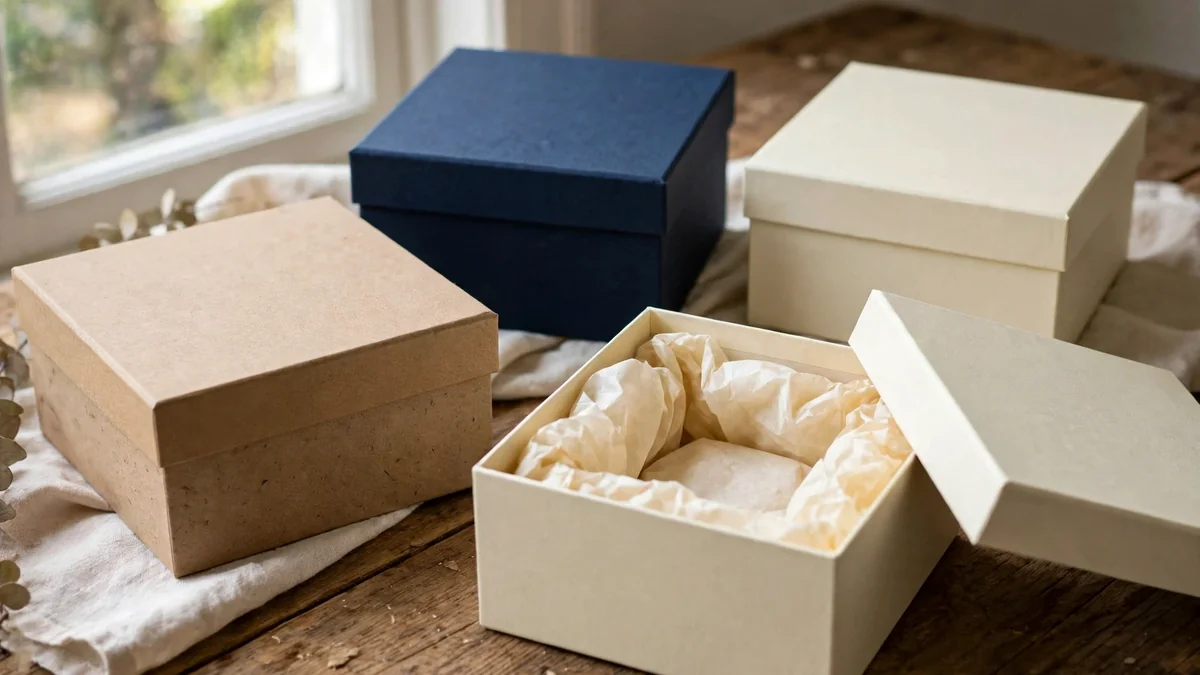
For most households, three sizes cover almost everything: a small box about 15 centimetres square for jewellery, small toys and vouchers; a medium box about 25 centimetres square for clothes, books and mugs; and a large box about 35 centimetres square for bigger gifts and hampers. Buy them in a plain colour and they will suit birthdays, weddings and Christmas alike.
The Main Types of Gift Box
Rigid boxes are the workhorses. Made from thick board, they arrive ready to use, hold their shape under a heavy gift, and stack neatly. Kraft rigid boxes are the most versatile: plain brown board that suits almost any occasion and takes a ribbon well. A matt finish feels more expensive than a glossy one, though glossy boxes wipe clean more easily.
Magnetic-lid boxes are rigid boxes with a flap that closes with hidden magnets. They feel premium and are the best choice when the box itself is part of the gift, such as a hamper. Their weakness is price and weight: they cost several times a plain rigid box, and they are heavier to post.
Folding boxes arrive flat and fold up when needed. They save storage space, which matters if you buy in bulk, and they are the cheapest option per box. Their weakness is strength: the folds are weak points, so they suit light gifts rather than heavy or fragile ones. They are also the best choice for posting, since they pack flat and tape shut securely.
Window boxes have a clear panel in the lid so the gift shows through. They suit food gifts, candles and handmade items, where seeing the contents is part of the pleasure. Check the window is real plastic or acetate, not thin film, because film tears and clouds. Window boxes are a poor choice for surprises, for obvious reasons.
Shaped and themed boxes, such as house-shaped, heart-shaped or Christmas-themed boxes, look charming but are the least practical. They fit only certain gifts, they waste shelf space, and they date fast. Buy one for a specific gift, not as a general stock item.

Lids, Closures and Materials
The lid is where cheap gift boxes fail. A good lift-off lid sits flat, covers the base by at least three centimetres, and lifts off without sticking. A lid that is too shallow slides off in the bag; a lid that is too tight tears at the corners when prised off. Lift the box by its lid: if the base drops away, the fit is too loose.
Board thickness is the best guide to quality. Hold the box by one edge and squeeze gently: a good box resists, while a poor one flexes. Board around two millimetres thick suits most gifts; thinner board suits only light items. Check the corners: glued and taped corners last, while corners held only by a fold split after a few uses.
Materials are simple. Cardboard and rigid board are the standard, and kraft board is the easiest to recycle. Glossy laminated board looks polished but is harder to recycle, and foil or glitter finishes cannot be recycled at all. If the recipient is likely to reuse the box, choose plain board in a good colour: it is the kind of box that gets kept, not thrown away.
Gift Box vs Gift Bag: Which One to Use?
The nearest alternative is the gift bag: a structured paper or fabric bag with handles, into which a present is placed, usually with tissue paper on top. It is faster than a box and reusable, but it sags under weight, tips over on a crowded table, and offers no protection if the gift is fragile. Our guide to gift bags that carry presents in style explains how to pick a good one: thick paper, a reinforced base and twisted handles.
Choose a gift box when the gift is fragile, heavy or oddly shaped, when the presentation matters, or when you want the recipient to keep the box. Choose a gift bag when the gift is light, the occasion is casual, or you are short of time. Many people keep both at home, using bags for quick gifts and boxes for the ones that matter.
Hat boxes are a useful comparison, too. A hat box is a rigid, round box shaped to hold a hat without crushing it, and our guide to hat boxes that store hats without crushing covers them in full. A gift box is the general-purpose version of the same idea: rigid, lidded and protective, but square and sized for gifts rather than hats.
Finishing, Filling and Reuse
A gift box needs very little finishing. A sheet of tissue paper in the bottom, the gift on top, and a second sheet folded over it is enough for most presents: tissue cushions the gift and hides it until the lid comes off. Our guide to tissue paper that makes gifts look finished covers colours and weights; as a rule, plain white or kraft tissue suits everything, and two sheets beat one thin one.
Ribbon is the simplest upgrade. A single ribbon around the box, tied in a bow, makes even a plain kraft box look considered. Satin ribbon looks smart but slips, so tie it firmly; grosgrain grips better on heavier boxes. A gift tag tied to the ribbon, rather than stuck to the box, means the box can be reused without a sticky patch. Avoid glitter ribbon, which sheds, and never tape ribbon to the lid, which tears the board when removed.
Reuse is the quiet advantage of a gift box over wrapping paper. A good rigid box can be used five or six times, and many recipients keep the nicest ones for their own gifts. Store empty boxes flat or nested inside each other, lids separate from bases, in a dry cupboard. A box that has been crushed, stained or torn at the corners should be recycled, not passed on: a reused box should look as good as a new one.

Checklist: Choosing a Gift Box
- Measure the gift in all three directions, then add two or three centimetres on each side for tissue.
- Choose a rigid box for heavy or fragile gifts, and a folding box for light gifts and posting.
- Check the lid fits: it should cover the base by at least three centimetres and lift off cleanly.
- Squeeze the board gently: a good box resists, while a poor one flexes at the corners.
- Match the box to the occasion, and keep plain kraft in stock for gifts that suit no theme.
- Finish with tissue and a ribbon, and store empty boxes nested and dry so they can be reused.
Frequently Asked Questions
What size gift box do I need?
Measure the gift, then add two or three centimetres on each side for tissue. A small box about 15 centimetres square suits jewellery and vouchers, a medium box about 25 centimetres suits clothes and books, and a large box about 35 centimetres suits hampers and bigger gifts.
Are gift boxes better than gift bags?
For fragile, heavy or oddly shaped gifts, yes: a rigid box protects the gift and holds its shape. For light, casual gifts, a bag is faster and just as good. Many people keep both at home and choose by the gift.
What is the difference between a rigid box and a folding box?
A rigid box arrives ready to use and holds its shape under weight, while a folding box arrives flat, saves storage space and costs less. Rigid boxes suit heavy gifts; folding boxes suit light gifts and posting.
Can gift boxes be reused?
Yes. A good rigid box can be used five or six times. Store empty boxes nested inside each other, lids separate from bases, in a dry cupboard, and recycle any box that is crushed, stained or torn.
Do I need ribbon on a gift box?
No, but a single ribbon tied in a bow makes even a plain kraft box look considered. Satin looks smart but slips, so tie it firmly; grosgrain grips better on heavier boxes. Tie the tag to the ribbon so the box stays reusable.
What should I put inside a gift box?
A sheet of tissue paper in the bottom, the gift on top, and a second sheet folded over it. Tissue cushions the gift and hides it until the lid comes off, and plain white or kraft tissue suits everything.
Bottom Line
Choose a gift box by the gift, not by the shelf. Measure first, pick a rigid box for anything heavy or fragile, check the lid fits and the board resists a squeeze, and finish with tissue and a ribbon. Keep three plain sizes at home and the right box will always be there when you need it.