Wall-Mounted vs Freestanding: The Best Toilet Brush Holders of 2026
The best toilet brush holders of 2026 have one job: store a wet brush so it dries, keep dirty water off your floor, and hide the whole thing from view. A badly designed holder turns into a small pool of dirty water that smells, breeds bacteria and stains the floor, while a good one is something you forget exists.
The first decision is wall-mounted vs freestanding, and it shapes everything else: drying, tipping, cleaning, and floor space. This guide compares the two, then explains the materials, ventilation and stability that separate the best holders from the ones that cost you twice.
Key Takeaways
- Ventilation and drainage matter most: a brush that never dries is a brush that breeds bacteria and smells.
- Wall-mounted holders keep the brush off the floor and never tip over, while freestanding holders need a heavy, wide base to stay put.
- Stainless steel and glazed ceramic clean easily and resist stains; raw plastic absorbs odours and discolours within months.
- A removable drip tray or draining base stops dirty water pooling inside the holder.
- Buy for your bathroom: small bathrooms suit wall mounts, family bathrooms suit heavy freestanding holders, rentals suit freestanding.
Wall-Mounted vs Freestanding: The Big Decision
A wall-mounted holder is fixed to the wall beside the toilet, usually with screws into a solid bracket, lifting the brush off the floor entirely. It frees floor space for cleaning, keeps the brush out of reach of children and pets, and cannot tip over. The trade-off is fitting: you need a solid wall, a drill and the confidence to put two holes in the tiles. In a small bathroom, that is usually worth it.
A freestanding holder sits on the floor beside the toilet and needs no fitting, which makes it the right choice for rentals and anyone who will not drill tiles. Its weakness is stability: a light, narrow cup tips over at the slightest knock, spilling dirty water across the floor. The fix is weight and width: a heavy base, ideally weighted with a metal or ceramic core, and a wide footprint so it cannot be knocked over by a child, a pet or a careless foot in the night. Our comparison of the best vs worst toilet brush holders of 2026 judges both styles head to head; this guide goes further, picking the best holders by bathroom type.
The Toilet Brush Holder Types Worth Knowing
Holders come in four main forms, differing on drying, cleaning and stability rather than looks. Most households need one of the first two.
Vented freestanding holders
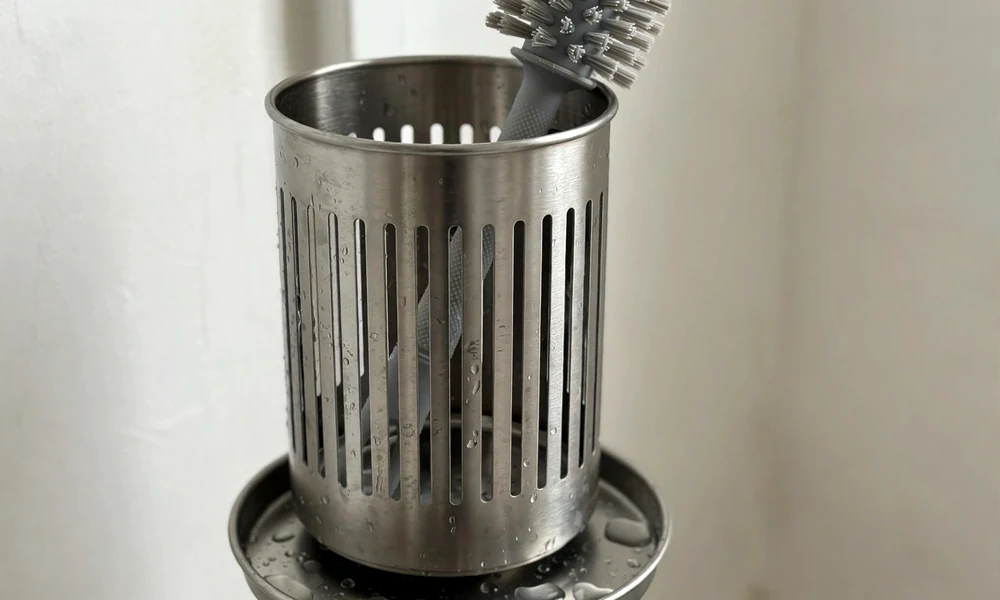
The classic freestanding holder is a tall cup with slots, vents or an open top that lets air circulate around the brush. Stainless steel versions with vertical slots are the standard: the brush dries within a few hours and there is nowhere for dirty water to collect. Look for a removable drip tray at the base, which catches the water and lifts out for rinsing.
Wall-mounted holders
Wall-mounted holders bolt to the wall or stick on with a heavy-duty adhesive pad. Screw-fixed brackets hold for years; suction cups and sticky pads give way within weeks in a steamy bathroom. A wall mount suits small bathrooms best, where every centimetre of floor matters.
Ceramic holders
Glazed ceramic holders look most at home in a traditional bathroom, and the glaze wipes clean and resists stains well. They are heavy, which helps stability, but they chip if knocked and break if dropped. Ceramic suits a guest bathroom; in a busy family bathroom, steel survives better.
Holder-only vs brush-and-holder sets
Some holders are sold alone, and some come as a set with a matching brush. A set guarantees the brush fits, with the head clearing the sides instead of scraping them; a brush that scrapes bends its bristles and sheds fibres. Buying holder-only suits you if you already own a good brush; check the opening is wide enough for your brush head first.

Toilet Brush Holders Compared
| Type | Best for | Drying | Watch out for |
|---|---|---|---|
| Vented freestanding, steel | Most bathrooms | Fast, slots let air in | Light bases that tip |
| Wall-mounted, screw-fixed | Small bathrooms | Fast, off the floor | Needs drilling into tiles |
| Ceramic freestanding | Guest and calm bathrooms | Moderate | Chips and breaks if dropped |
| Plastic freestanding | Budget, rentals | Slow if sealed | Stains, smells, tips easily |
| Brush-and-holder set | Starting from scratch | Depends on holder | Brush may be the weak part |
Ventilation and Drainage: The Feature That Matters Most
A holder has one job above all: let the brush dry. A wet brush in a closed plastic cup sits in a warm, dark, damp environment, exactly what bacteria and mould need to grow. Within days the water at the bottom turns cloudy and starts to smell, and every time you lift the brush out, a little drips onto the floor. A good holder breaks that cycle with airflow and drainage.
Look for slots, vents or an open top that lets air circulate around the brush head, and a base that drains rather than seals: a raised drip tray, a draining base or a removable inner cup you can rinse. The test is simple: after use, the brush should feel dry by the next morning, and the inside of the holder should smell of nothing. If it smells, the holder is not drying, and no scented cleaner will fix a design that traps dirty water. Our guide to the best toilet brushes for a cleaner bowl in 2026 covers the brush itself: bristle material, head shape and handle length. The holder is the other half of the same hygiene question, and a good brush in a bad holder still smells.
Materials: Stainless Steel vs Ceramic vs Plastic
Stainless steel is the safest material for a holder. It wipes clean, resists stains, holds no odours, and a brushed finish hides water spots. It is also heavy enough to help stability. The weakness is cheap thin steel, which dents and can rust at the welds; check the base and seams before you buy.
Glazed ceramic cleans just as easily and suits traditional bathrooms, but it is brittle: a knock can chip the rim, and a drop onto a tiled floor usually ends it. Plastic is the cheapest option and the weakest. Raw plastic absorbs odours, discolours within months, and the white cup turns yellow with a brown ring at the waterline that no scrubbing removes. Plastic can still work as a short-term or rental choice, but only in a vented design with a drip tray; a sealed plastic cup is the single worst holder you can buy.
Stability: Heavy Bases, Wall Mounts and Tipping
The most common complaint about cheap freestanding holders is tipping. A thin plastic cup with a narrow base tips over at the slightest knock, spilling dirty water across the floor and sending the brush skidding under the sink. The best freestanding holders are heavy, wide, or both: a weighted base with a metal or ceramic core, a footprint wider than the brush head, and a low centre of gravity. Pick it up before you buy; it should feel heavier than it looks.
Wall-mounted holders solve tipping completely, their strongest argument in a family bathroom. The mount is the weak point instead: a solid bracket with proper screws holds for years, while a suction cup or sticky pad gives way within weeks in steam. If you rent and cannot drill, a freestanding holder with a genuinely heavy base beats a suction mount that will fall off at the worst moment.
Keeping the Holder Clean
Even the best holder needs a weekly rinse. Empty and rinse the drip tray once a week, because the water that collects there is the main source of smell. Once a month, soak the holder in hot water with a capful of bathroom disinfectant for ten minutes, then rinse and dry it fully. Wipe the outside with your usual bathroom cleaner, and check for the brown ring that marks a holder that is not draining.
The brush matters too. After each use, rinse the head under the flush, shake it over the bowl, and let it dry before it goes back into the holder. A nylon brush used twice a week in a family home is done after three to six months, when the bristles splay; a silicone head lasts longer, often a year, because it does not absorb water. Replace the brush on schedule, because even the best holder cannot keep a worn-out brush fresh. Our guide to the best toilet cleaners of 2026 covers the cleaners that do the bowl work; the holder’s job is to keep the brush dry between those cleans.
Matching the Holder to Your Bathroom
A small bathroom suits a wall-mounted holder: it frees the floor, makes mopping easy, and keeps the brush out of the way. A family bathroom suits a heavy freestanding steel holder with a wide base and a vented design, because it will be knocked and must not tip. A guest bathroom suits ceramic, where looks matter and use is light. A rental suits a freestanding holder, since nothing may be drilled. In a hard-water home, pick a holder that rinses easily and a brush that dries fast, because limescale and damp together are what make a holder smell. With small children, a wall mount is worth the drilling: it keeps the brush out of reach entirely.
Your Toilet Brush Holder Checklist
- Ventilation first: slots, vents or an open top that lets air reach the brush, so it dries by morning.
- Drainage: a removable drip tray or draining base, so dirty water never pools inside the holder.
- Stability: a heavy, wide freestanding base, or a screw-fixed wall mount that cannot tip.
- Material: stainless steel or glazed ceramic that wipes clean, never raw plastic that absorbs odours and stains.
- Fit: an opening wide enough for your brush head to go in and out without scraping the sides.
- Cleaning: a design you can rinse weekly and soak monthly, with no sealed corners you cannot reach.

Frequently Asked Questions
Should a toilet brush holder be wall-mounted or freestanding?
Wall-mounted suits small bathrooms and families: it never tips and frees the floor. Freestanding suits rentals and anyone who will not drill tiles, provided the base is heavy.
Why does a toilet brush holder smell?
Because the brush is not drying. A sealed holder traps dirty water at the bottom, where bacteria grow within days. Switch to a vented holder with a draining base and rinse the drip tray weekly, and the smell goes away.
Are silicone toilet brushes better than nylon ones?
Silicone heads rinse cleaner, dry faster and hold no odours, but stiff nylon scrubs dried-on stains better. In soft water, silicone is the easier choice; in hard water, nylon cleans better and needs replacing sooner.
How often should you clean a toilet brush holder?
Rinse the drip tray weekly and soak the holder in hot water with disinfectant once a month. Replace the holder if the inside stays stained or smelly after a soak.
Can you put a toilet brush holder in a dishwasher?
Most steel and hard plastic holders survive a dishwasher, but ceramic can chip and coatings can fail. Hand washing with hot water and disinfectant is safer and takes two minutes.
When should you replace a toilet brush holder?
Replace it when it stains permanently, smells after cleaning, wobbles, or its mount no longer holds. A good steel holder lasts years; a cheap plastic one is usually done within a year.
The Bottom Line
The best toilet brush holder lets the brush dry, stays where you put it, and rinses clean in a minute. For most homes that means a vented stainless steel holder with a heavy base and a removable drip tray, or a screw-fixed wall mount in a small bathroom. Spend a little more on ventilation and stability, and the holder disappears: no smells, no stains, no tipped-over spills, and a brush that lasts.