The Worst Dance Studios of 2026
The worst dance studios of 2026 are not the ones with the plainest walls or the cheapest floors. They are the studios where the business comes before the dancing: the converted room too small for the class it sells, the timetable that crams forty dancers onto a floor built for twelve, the contract that locks you in for a year before you have taken a single class, and the teacher who changes every month because nobody stays. A bad dance studio is worse than no studio at all, because most students give up rather than unlearn bad habits. This guide ranks the worst types of dance studio in 2026, by pattern rather than by name, so you can spot one before you sign up.
Key takeaways
- A studio floor is the first thing to judge: a sprung wooden floor protects knees and ankles, while concrete or thin laminate over concrete punishes every landing.
- Class size is the clearest warning sign: forty dancers on a floor built for twelve means nobody gets a correction.
- Hidden fees matter more than the headline price, because costume charges, exam entries and show tickets can double what a term actually costs.
- A teacher who changes every month is a studio problem, not a staffing accident, and it means your progress resets with every new face.
- Watch a whole trial class, not the first ten minutes: the worst studios are warmest at the door and weakest in the middle of the hour.
How the worst dance studios of 2026 were chosen
Every type below was scored on four measures that matter to anyone who pays for dance classes. The floor and the room come first: is the floor sprung and safe, is there space to move, and are there mirrors and barres that actually work? Teaching quality is second: do students get corrections, is there a plan for the term, and does anyone track progress? Safety is third, judged on warm-ups, sensible pushing and floors that do not injure. Value is fourth: the real cost of a term once fees, costumes and shows are added, not the headline price.
Two notes before the list. First, this guide is about dance studios as businesses and rooms, which is a different question from the people who teach in them, and our guide to the worst dance coaches covers the counting, the favouritism and the unsafe pushing that belong to the teacher rather than the room. Second, no real studio is named here, because the same seven patterns turn up everywhere.
Comparison table: the worst dance studios of 2026
| Rank | Studio type | Worst for | Watch out for |
|---|---|---|---|
| 1 | The cramped converted room | Any dancer who needs space | Hard floors, no sprung surface |
| 2 | The mirrorless, barre-less box | Technique and posture | Wobbly barres, no mirrors |
| 3 | The oversold class | Anyone who wants to improve | Forty dancers, no corrections |
| 4 | The fee-trap studio | Family budgets | Lock-in contracts, hidden charges |
| 5 | The revolving-door studio | Steady progress | A new teacher every month |
| 6 | The unsafe studio | Young and older dancers | No warm-up, forced stretches |
| 7 | The recital machine | Learning to dance well | Shows over teaching, costume fees |
The worst dance studios of 2026
1. The cramped converted room: too small for the class it sells
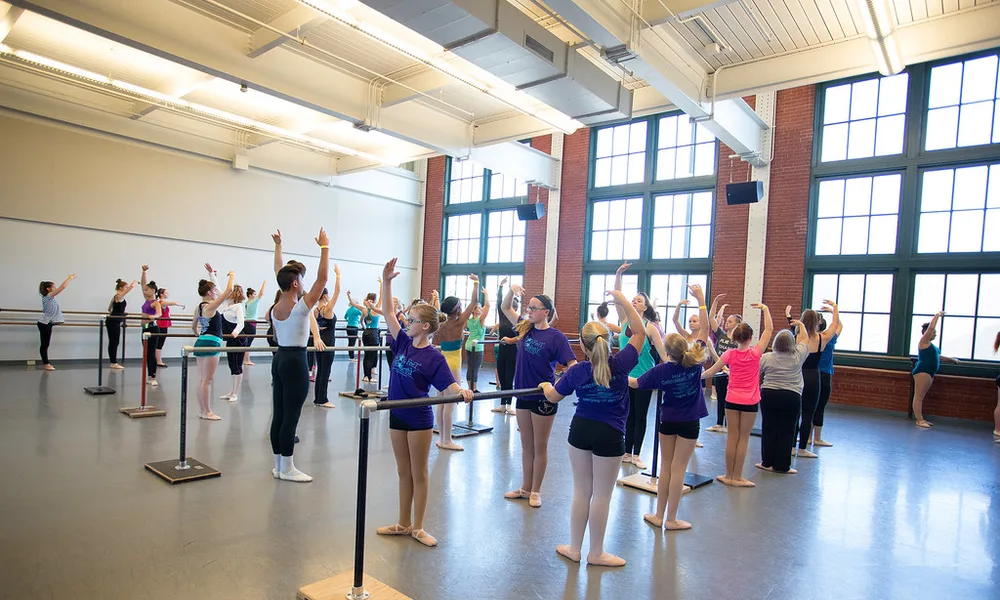
Every town has one: a shop unit or an office above a takeaway, hastily converted, with a floor that was never built for dancing. The floor is the deeper problem. A proper dance floor is sprung, which means it gives a little under each landing and returns the energy instead of sending it straight into knees and ankles. A converted room usually has laminate or vinyl laid straight onto concrete, and a term of jumping on it leaves shin splints and sore knees. Watch the floor during a busy class, not the teacher. If dancers are shortening their steps to fit, the room is failing them.
2. The mirrorless, barre-less box: no tools for technique
A dance studio without mirrors is like a classroom without a blackboard, and yet plenty of studios operate without them, or with one cracked panel that reflects half the room. Barres matter just as much. A proper barre is fixed to the wall or freestanding on a heavy base, at the right height, and it does not move when a dancer leans on it. The worst studios have a wobbly portable barre that slides across the floor, or nothing at all, so the class does its barre work holding onto a chair. Add poor lighting and a crackling sound system, and the room stops being a studio at all.
3. The oversold class: forty dancers, no corrections
The oversold class is the most common bad studio pattern, and the easiest to miss, because a full room looks like a popular room. The difference is what happens once the music starts. In a class of thirty or forty, the teacher can only demonstrate from the front and count, and the dancers at the back teach themselves, which means they practise their mistakes. The studio benefits, because forty fees are better than twelve. The honest check is to count the dancers in the trial class and count the corrections. If the teacher corrects the same three confident dancers and never reaches the rest, the class is oversold.
4. The fee-trap studio: cheap to join, expensive to stay
The fee-trap studio advertises a low monthly price and then charges for everything else. Costume fees, exam entries, show tickets, photographs and compulsory uniform all follow in turn. None of these is itemised when you sign up, and by the time the total appears, the contract has locked you in for a year with a cancellation fee that costs more than staying. The defence is paperwork. Before you sign anything, ask for the full-year cost in writing, including every fee, every costume, every exam and every ticket, and ask what happens if you leave after one term. A good studio answers both questions plainly. A fee-trap studio changes the subject, and that is the answer.
5. The revolving-door studio: a new teacher every month
Progress in dance depends on a teacher who knows you: your strengths, your weak ankle, the correction you were working on last term. The revolving-door studio destroys that, because the teacher changes every few weeks and each new one starts from scratch. Students feel it as confusion, and parents see a child who stops improving. Ask how long the current teacher has been there, and how long the last three stayed. If the answer is measured in weeks, or if nobody will answer at all, the studio has a retention problem, and your dancing will pay for it.
6. The unsafe studio: where injuries are treated as normal
The unsafe studio is the one pattern on this list that can do real harm, and it is the one to take most seriously. The signs are easy to spot once you know them: classes that start straight into jumps with no warm-up, teachers who push young dancers into splits or pointe work before their bodies are ready, floors that are slippery when wet or hard enough to jar every landing, and no first-aid kit, no incident book and no plan for what happens when someone gets hurt. If a trial class skips the warm-up, or if the teacher laughs off a fall, leave. No class is worth an injury that follows a dancer for years.
7. The recital machine: shows over teaching, all year long
The recital machine is the studio where the show never ends. From September the class rehearses for the Christmas show, from January it rehearses for the spring show, and from Easter it rehearses for the summer show, and in between there is no time left to teach anything new. The dancers lose, because repetition is not progress. The pattern is familiar from other arts too: our guide to the worst ballet dancers makes the same point about performance without technique, and the worst contemporary dancers shows what happens when style replaces training. A good studio performs once or twice a year and teaches the rest of the time.
What to avoid when choosing a dance studio
The most common mistake is choosing on the strength of the photos, the website or the showreel, none of which shows the floor, the class size or the contract. The second mistake is signing a long contract before a trial class, because a studio that is confident in its teaching does not need to lock you in. Avoid both by doing the visit properly: watch a full class at the level you would join, count the dancers, check the floor and the mirrors, and ask for the full-year cost in writing.
Checklist: choosing a dance studio
- Watch a full trial class at your level and count the dancers: twelve to sixteen is a good class, thirty or more is a crowd.
- Check the floor is sprung wood, not laminate on concrete, and that there is room to travel across it without collisions.
- Look for full-length mirrors, a fixed barre that does not move, and lighting bright enough to see alignment.
- Ask for the full-year cost in writing, including costumes, exams, shows, tickets and the cancellation terms.
- Ask how long the teacher has been there and how long the last three teachers stayed.
- Check the class starts with a proper warm-up and that the room is clear, heated and safe.
Frequently asked questions
What is the most important thing to check in a dance studio?
The floor. A sprung wooden floor protects joints and lets dancers jump and land safely, while laminate or vinyl on concrete punishes every landing. If the floor is wrong, nothing else about the studio can make up for it.
How many dancers should be in a class?
Twelve to sixteen is a good size for most classes, because the teacher can watch and correct everyone. Once a class passes twenty-five, corrections stop reaching most dancers, and past thirty it is a crowd rather than a lesson.
Should a dance studio make me sign a year-long contract?
No. A good studio offers a term at a time, or a monthly rolling payment, and lets the teaching speak for itself. A year-long lock-in with a cancellation fee is a sign the studio is selling the contract, not the class.
How do I know if a studio is safe for my child?
Watch a class and check for a proper warm-up, gradual progress, no forced stretches, a safe floor and a teacher who stops a child who is in pain. Ask about first aid, and walk away from any studio that treats injury as normal.
Are expensive dance studios always better?
No. Some of the worst studios charge the most, because the price pays for the building, the branding or the show, not the teaching. Judge the floor, the class size, the teacher and the full-year cost, not the headline fee.
What should a good dance studio teach in a year?
Measurable progress: new steps, better alignment, stronger technique and a clear next level. If a year of classes leaves a dancer doing the same routine they started with, the studio is rehearsing, not teaching.
Bottom line
The worst dance studios of 2026 share one habit: they sell the idea of dancing rather than the dancing itself. The best defence is a visit: watch a full class, check the floor and the mirrors, count the dancers, and get the full-year cost in writing. A good studio will welcome all of that, because it has nothing to hide, and a bad one will hurry you past it, which tells you everything you need to know.