Beware the Worst Music Schools of 2026
The worst music schools of 2026 are not the ones with the oldest pianos or the plainest rooms. They are the schools where the lesson has become a transaction: twenty minutes with a different teacher every term, a syllabus that never moves past the same three pieces, an instrument so out of tune that a child learns the wrong notes by heart. A bad music school is worse than no school at all, because most students stop playing rather than unlearn bad habits. This guide ranks the worst types of music school in 2026, by pattern rather than by name, so you can spot one before you enrol.
Key takeaways
- A music lesson needs time and a plan: twenty rushed minutes with no syllabus is childcare with a piano, not teaching.
- Check the teacher before the brochure: qualifications, checks and how long the teacher has actually stayed at the school.
- Hidden fees matter more than the headline price: exams, books, hire and tickets can double a term.
- An instrument that is out of tune teaches wrong notes, and a school that will not fix its pianos does not care what its students learn.
- Sit in on a whole trial lesson, not the first ten minutes: the worst schools are warmest at the door and weakest in the middle of the hour.
How the worst music schools of 2026 were chosen
Every type below was scored on four measures that matter to anyone who pays for music lessons. Teaching quality comes first: is there a plan, does the teacher correct technique, and do students improve? The teacher is second: qualifications, experience, and whether the same teacher stays long enough to know the student. Instruments and rooms are third: tuned pianos, playable instruments and a room where a lesson can be heard. Value is fourth: the real cost of a term with fees, books, hire and concerts added.
Two notes before the list. First, this guide is about music schools as institutions, which is a different question from the rooms where music is performed, and our guide to the worst music venues covers the bad sound, the blocked views and the crowded rooms that ruin a concert. Second, no real school is named here, because the same seven patterns turn up everywhere.
Comparison table: the worst music schools of 2026
| Rank | School type | Worst for | Watch out for |
|---|---|---|---|
| 1 | The conveyor-belt school | Anyone who wants to learn | Twenty-minute lessons, no plan |
| 2 | The unqualified-teacher school | Beginners and children | No credentials, no checks |
| 3 | The fee-trap school | Family budgets | Exam fees, lock-in contracts |
| 4 | The broken-instrument school | Ears and technique | Out-of-tune pianos, cracked violins |
| 5 | The exam-only school | Love of music | Grades over musicianship |
| 6 | The revolving-door school | Steady progress | A new teacher every term |
| 7 | The concert-factory school | Learning to play well | Shows over teaching, costume fees |
The worst music schools of 2026
1. The conveyor-belt school: twenty minutes, no plan, next pupil
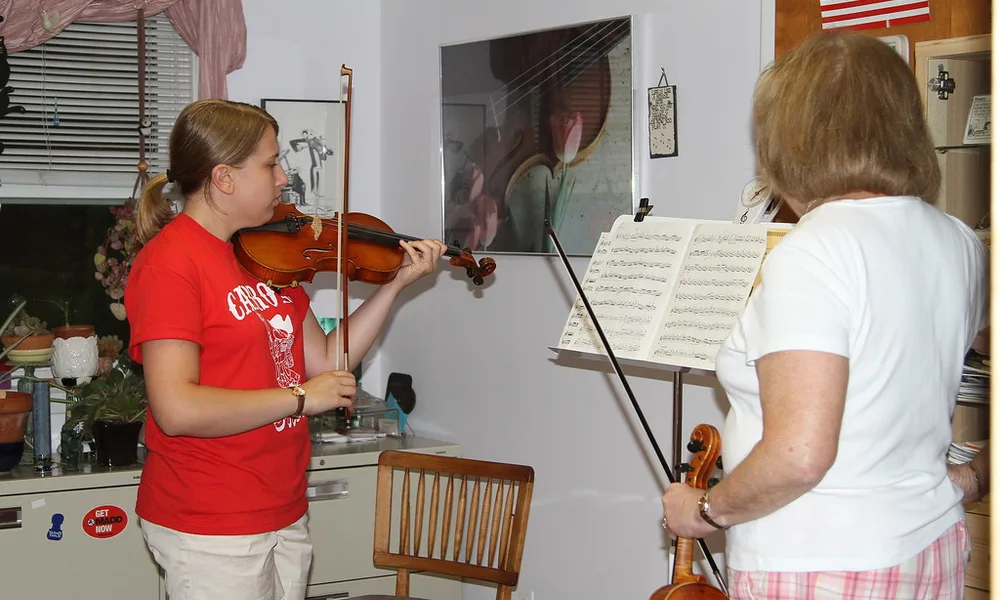
The conveyor-belt school runs on volume. Lessons are twenty minutes long, back to back, with no gap between pupils, so the teacher has no time to prepare, no time to write notes, and no time to remember what happened last week. The student arrives, plays the same piece as last week, gets the same two comments, and leaves. The model suits the school, because three twenty-minute slots fit into an hour. It does not work for the student, who makes no progress and slowly stops practising, because practice without progress feels pointless. The honest check is the lesson itself: if the lesson ends the moment it gets interesting and nobody can tell you what the student will work on next month, the school is a conveyor belt.
2. The unqualified-teacher school: no credentials, no checks, no answers
Anyone can call themselves a music teacher, and the worst schools rely on exactly that. Their teachers may play well, or they may not, but nobody at the school has checked, because the school does not ask for qualifications, does not check references, and does not run the background checks that any school working with children should run as a matter of course. Ask what qualifications the teacher holds, how long they have taught, and what checks the school has run. A good school answers all three plainly and in writing. A bad school changes the subject, and passion is not a qualification.

3. The fee-trap school: cheap to join, expensive to stay
The fee-trap school advertises a low lesson price and then charges for everything else. Exam entries, book fees, instrument hire, concert tickets and compulsory uniform all follow in turn. None of these is mentioned when you enrol, and by the time the total appears, the contract has locked you in for a year with a cancellation fee that costs more than staying. The defence is paperwork. Before you sign anything, ask for the full-year cost in writing, including every fee, every exam, every book and every ticket, and ask what happens if you leave after one term. A good school answers both questions plainly and in writing. A fee-trap school changes the subject, and that is the answer.
4. The broken-instrument school: out of tune, and nobody cares
A piano that has not been tuned in two years teaches a child the wrong notes, and a child who practises on wrong notes learns them by heart. That is the quiet damage of the broken-instrument school, where the pianos are out of tune, the violins have cracked bridges, the guitars have rusted strings, and nobody on staff thinks any of it matters. Beginners need a true sound most, because they have no experience to correct a wrong one. The test is simple: play a note on the school piano and listen, then ask when it was last tuned and who the tuner is. If nobody knows, the school does not care what its students hear.
5. The exam-only school: grades over musicianship
The exam-only school measures everything in grades and nothing in music. From the first lesson, the student works towards the next exam, and every piece, every scale and every hour of practice is chosen because it appears on the syllabus. The student passes, sometimes with distinction, and cannot play anything that is not on the exam list, cannot play with other people, cannot improvise, and does not enjoy playing. The student loses, because a child who only plays for exams stops the moment the exams stop. The pattern is familiar wherever a single measure replaces the real thing: our guide to the worst flutes makes the same point about instruments bought for a label rather than a sound, and the worst French horns shows what happens when a purchase is judged by the badge instead of the playing. A good school uses exams as a milestone on a longer road.
6. The revolving-door school: a new teacher every term
Progress in music depends on a teacher who knows you: your strengths, your weak hand, the piece you were working on last term. The revolving-door school destroys that, because the teacher changes every term and each new one starts from scratch. Students feel it as confusion, and parents feel it as a child who stops improving and stops enjoying the lessons. Ask how long the current teacher has been there, and how long the last three stayed. If the answer is measured in weeks, or if nobody will answer at all, the school has a retention problem, and your playing will pay for it.
7. The concert-factory school: shows over teaching, all year long
The concert-factory school is the school where the show never ends. From September the pupils rehearse for the Christmas concert, from January they rehearse for the spring concert, and from Easter they rehearse for the summer concert, and in between there is no time left to teach anything new. The pupils lose, because repetition is not progress, and a child who has spent a year rehearsing the same piece is a year behind a child who spent it learning. A good school performs once or twice a year and teaches the rest of the time. A concert factory performs all year and teaches almost never, and the applause at the end hides the fact that nothing new was learned.
What to avoid when choosing a music school
The most common mistake is choosing on the strength of the brochure, the website or the concert video, none of which shows the lesson length, the teacher or the contract. The second mistake is signing a long contract before a trial lesson, because a school that is confident in its teaching does not need to lock you in. Avoid both by doing the visit properly: sit in on a full lesson at the level you would join, play a note on the school piano, and ask for the full-year cost in writing.
Checklist: choosing a music school
- Sit in on a full trial lesson and check it lasts at least thirty minutes, with a plan and practice notes.
- Ask for the teacher’s qualifications, experience and background checks, in writing, before you enrol.
- Play a note on the school piano and ask when it was last tuned; check hire instruments are playable.
- Ask for the full-year cost in writing, including exams, books, hire, concerts, tickets and the cancellation terms.
- Ask how long the teacher has been there and how long the last three teachers stayed.
- Check the room is quiet and the student gets individual attention, not a group too large.
Frequently asked questions
How long should a music lesson be?
Thirty minutes is the minimum for a real lesson, and forty-five to sixty minutes suits older children and adults. Twenty minutes back to back with no gap is a conveyor belt, not a lesson, because the teacher has no time to prepare or to follow up.
What qualifications should a music teacher have?
A recognised teaching or performance qualification on the instrument, plus teaching experience and background checks for work with children. Ask for all three in writing, and walk away from any school that will not answer.
Should a music school make me sign a year-long contract?
No. A good school offers a term at a time, or a monthly rolling payment, and lets the teaching speak for itself. A year-long lock-in with a cancellation fee is a sign the school is selling the contract, not the lesson.
How do I know if a school piano is in tune?
Play a note and listen for a clean, steady sound, and ask when the piano was last tuned and who tuned it. A piano that has not been tuned in a year or more is teaching wrong notes, and a school that does not know the date does not care.
Are expensive music schools always better?
No. Some of the worst schools charge the most, because the price pays for the building, the branding or the concert, not the teaching. Judge the lesson length, the teacher, the instruments and the full-year cost, not the headline fee.
What should a good music school teach in a year?
Measurable progress: new pieces, better technique, stronger reading and a clear next level, plus playing for pleasure. If a year of lessons leaves a student playing the same three pieces they started with, the school is rehearsing, not teaching.
Bottom line
The worst music schools of 2026 share one habit: they sell the idea of music rather than the music itself. The best defence is a visit: sit in on a full lesson, play the piano, ask about the teacher, and get the full-year cost in writing. A good school will welcome all of that, because it has nothing to hide, and a bad one will hurry you past it, which tells you everything you need to know.