What Is an Outdoor Rocking Chair, and Which One Survives Outside in 2026?
An outdoor rocking chair is a rocking chair built to live outside, on a porch, deck or patio, through sun, rain and frost. Unlike an indoor rocker, it is judged first on weather resistance and second on comfort: a beautiful chair that rots in two winters is not a bargain, however cheap it was. The best outdoor rocking chairs of 2026 pair the slow, settling motion that makes rocking chairs so loved with frames, joints and finishes that can stand a full season outdoors without cracking, rusting or fading. This guide explains what makes a rocker truly outdoor-proof, compares the main types, and picks the best outdoor rocking chair for every porch in 2026.
It is worth drawing the line clearly at the start. A general rocking chair guide covers rockers for every room, and outdoor use is only one small part of that story. Our companion guide to the best rocking chairs does exactly that, and it is the right place to start if your chair will mostly live indoors. This guide is narrower and deeper: every chair here is judged on how it survives outside.
Key Takeaways
- An outdoor rocking chair must be weatherproof first: teak, cedar, poly lumber and powder-coated metal last longest, while untreated softwood and bare steel fail fastest.
- Rocker curve decides the feel: a gentle, long curve gives a slow, lazy rock, while a tight curve rocks faster and can tip on uneven decking.
- Seat height of 43 to 46 centimetres suits most adults for sitting down and standing up without a struggle.
- Rockers need flat ground: check your deck boards and patio slabs before you buy, because a rocker on a slope or a warped board will never glide smoothly.
- Budget for a cover and cushions at the same time as the chair, not afterwards, and oil wooden chairs once a year.
What Makes a Rocking Chair an Outdoor Rocking Chair
A rocking chair becomes an outdoor rocking chair when every part of it is chosen for the weather. The frame must resist rot and insects, the joints must not loosen in the damp, and the finish must not peel in the sun. An indoor rocker can get away with softwood, screws alone and a pretty varnish. An outdoor rocker cannot, and that is why the purchase is worth thinking about properly.
The Main Types of Outdoor Rocking Chair Compared
Most outdoor rocking chairs fall into five types, and each suits a different porch and a different way of sitting. The table gives the quick comparison.
| Type | Best for | Rock feel | Watch out for |
|---|---|---|---|
| Traditional wooden rocker | Covered porches, classic looks | Long, lazy glide | Needs yearly oiling |
| Poly lumber rocker | Full sun and rain, no maintenance | Steady and firm | Heavy to move |
| Metal frame rocker | Modern patios, small spaces | Smooth and light | Can feel cold, check the coating |
| Resin wicker rocker | Sheltered porches, comfort | Gentle, cushioned | Cushions need dry storage |
| Folding outdoor rocker | Small porches, seasonal use | Shorter, quicker rock | Hinges wear first |
Traditional Wooden Rockers
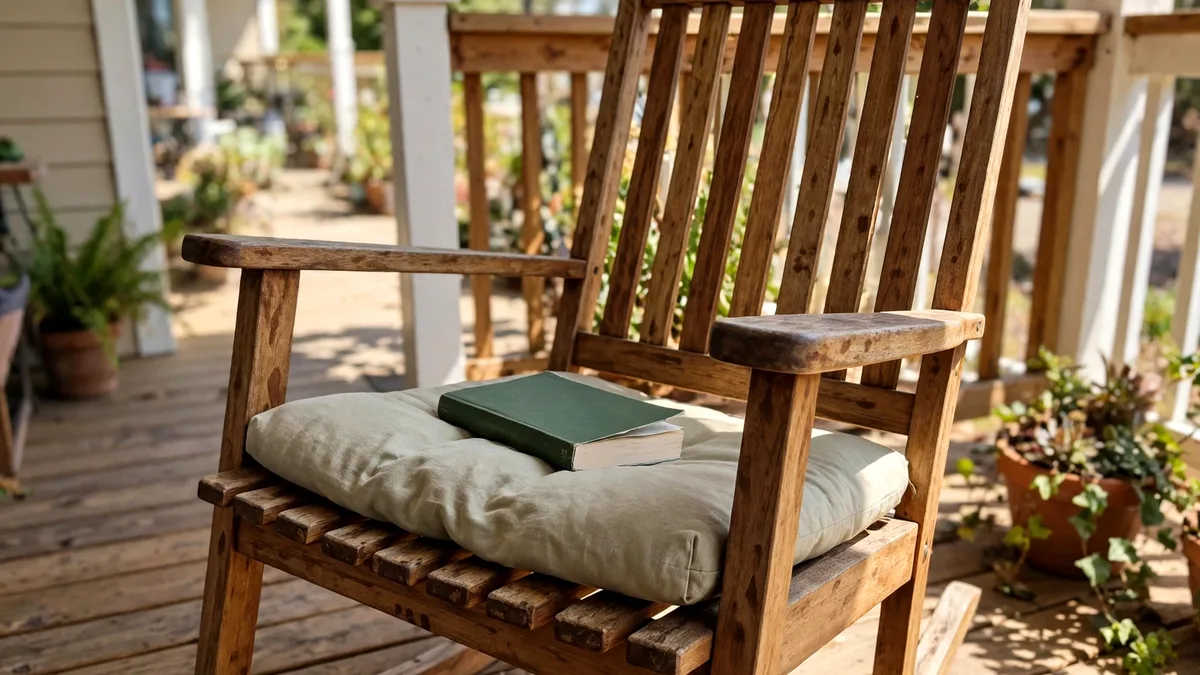
The traditional wooden rocker is the classic porch chair: a solid wood frame, curved runners and a slatted or woven seat. Teak and cedar are the woods that earn their place outside, because their natural oils repel water and insects. A well-made teak rocker can last twenty years, and it looks better with age.
Poly Lumber Rockers
Poly lumber, made from recycled plastic, is the low-maintenance champion of outdoor rocking chairs. It never rots, never needs oiling, and holds its colour for years. The trade-off is weight and feel: poly rockers are heavy, and they lack the warmth of real wood.
Metal and Wicker Rockers
Powder-coated metal rockers suit modern patios and small spaces: slim, light, quick to dry after rain. Check the coating carefully, because a chip is where rust starts. Resin wicker rockers are the comfortable option, with a woven seat that gives under weight, but they suit a sheltered porch, and their cushions need a dry store.

Choosing the Right Material
Material decides how long an outdoor rocking chair lasts and how much care it asks for. Teak is the classic outdoor wood: its natural oils repel water and insects, and a well-made teak chair can last twenty years with almost no care. Cedar is lighter and cheaper and suits covered porches, though it greys in full sun unless oiled.
Poly lumber is the practical choice for anyone who wants to forget about maintenance: it never rots, never splinters, and holds its colour through years of sun. It is heavy, which is good on a windy porch. Powder-coated aluminium is the light option: it never rusts and is easy to carry, but it can feel cold and needs a cushion for long sits.
Rocker Geometry: Why the Curve Matters
The curve of the rockers sets the rhythm of the chair, and it matters more outdoors than in. A long, gentle curve gives a slow, lazy rock that suits long evenings and stiff joints. A tight curve rocks faster and further, which feels lively at first but can tip on uneven ground.
Flat ground is the other half of the equation: a rocker on a slope will always drift to one side, and a rocker on a warped board will clunk at the same point in every rock. Check the spot with a long straight board before you buy. Our guide to the top outdoor chairs covers the same ground problem for fixed patio seating, and the advice applies here too.
Our Picks: The Best Outdoor Rocking Chairs for Every Porch in 2026
The chairs below were chosen for what makes a rocker worth sitting in outside: a smooth, quiet rock, a seat that stays comfortable for an hour, and a build that survives weather. Each pick leads in one area.
Best Overall: Solid Teak Porch Rocker
The best all-round outdoor rocking chair is a solid teak porch rocker with a wide seat, a gently curved back, and runners shaped for a slow, even motion. Teak is heavy enough to feel planted, hard enough to resist dents, and handsome enough to suit almost any house. Add a quick-drying cushion and it is comfortable for hours.
Best for Low Maintenance: Poly Lumber Rocker
For a chair that will sit in full sun and full rain with no cover, a poly lumber rocker is the pick. It needs no oiling, no sanding and no winter routine beyond a wash. Choose a model with stainless fixings and a contoured seat, because a flat poly seat can feel hard without a cushion.
Best for Small Porches: Folding Outdoor Rocker
A folding outdoor rocker suits a small porch or balcony, where a full-size chair would dominate the space. It folds flat for storage, which also makes winter simple. The rock is shorter and quicker than a full-size rocker, and the hinges are the part that wears first, so keep them oiled.
Best for Comfort: Cushioned Resin Wicker Rocker
If you plan to sit for hours, a cushioned resin wicker rocker is the most comfortable choice. The woven seat gives under your weight, the thick cushions forgive long evenings, and the high back supports your head. It suits a sheltered porch best, because the cushions need a dry store for wet nights.
What to Check Before You Buy
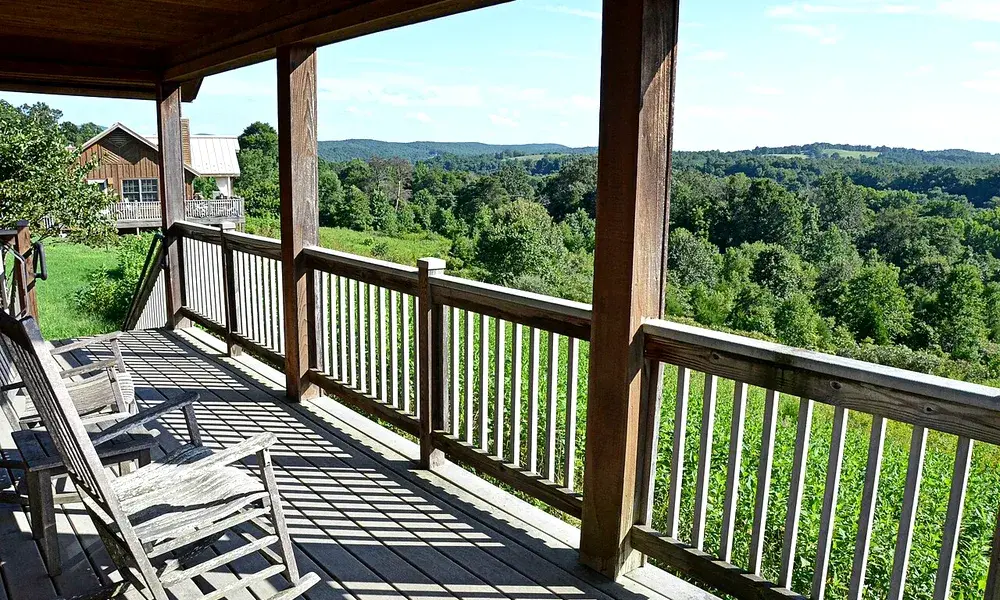
Seat height comes first. Around 43 to 46 centimetres lets most adults sit down and stand up without a struggle, and it leaves your feet flat on the deck so you can push the rock gently. A seat much lower turns standing up into a heave, while a seat much higher leaves your feet dangling and the rock hard to control.
Armrests matter more outdoors than in, because you use them to steady yourself on a moving chair and to hold a mug while you rock. Wide, flat armrests are the most useful: they hold a book and a cup without a side table, and they give your elbows a proper rest.
Looking After an Outdoor Rocking Chair
A little care goes a long way outdoors. Oil wooden chairs once a year, in spring, with an exterior oil suited to the wood, and wash the chair with warm soapy water at the start of the season, checking every joint and bolt while you do it. A cover is worth buying even for a weatherproof chair, because it keeps off the worst of the rain and the bird mess.
Winter is the real test. In a hard frost, water in a small crack can freeze, expand, and split the wood, so bring cushions indoors, cover the chair, and move it under cover for the coldest months if you can. If you want shared seating for two on the porch as well, a swing is the natural companion to a rocker, and our guide to the best porch swings covers hanging hardware and weight ratings in full.
Checklist: Buying an Outdoor Rocking Chair
- Measure the spot first, and leave clear space in front and behind for the rock.
- Check the deck or patio is flat where the rockers will sit.
- Choose teak, cedar, poly lumber or powder-coated metal for full exposure.
- Look for mortise-and-tenon joints and stainless steel fixings.
- Sit in it and rock: smooth, quiet, no tipping and no squeak.
- Buy the cover and the cushion at the same time as the chair.
Frequently Asked Questions
Can an indoor rocking chair be used outside?
Only on a covered porch, and only for a season. Indoor rockers use softwood, ordinary steel fixings and indoor varnish, and the finish will crack and the joints will loosen within a season or two of real weather. If the chair will live outside, buy one built for it.
What is the best wood for an outdoor rocking chair?
Teak is the best all-round choice, because its natural oils repel water and insects and it needs almost no care. Cedar is lighter and cheaper and suits covered porches. Eucalyptus and acacia are budget options that need yearly oiling to avoid cracking.
How do I stop my rocking chair from tipping?
First check the ground is flat, because a slope or a warped deck board is the usual cause. A gentle rocker curve is more stable than a tight one, and a heavier chair resists tipping better than a light one. If the chair still tips, check the rockers are the same curve on both sides.
Do outdoor rocking chairs need cushions?
Not for the rock, but for comfort on long sits. A slatted wooden seat is firm, so most owners add a quick-drying outdoor cushion. Choose solution-dyed fabric and quick-drying foam, and store cushions dry when it rains.
How long should an outdoor rocking chair last?
A well-made teak or poly lumber rocker should last fifteen to twenty years with basic care. A cedar rocker lasts around ten years, and a cheap flat-pack softwood rocker often fails within two or three seasons. The joints and the finish decide the lifespan more than the shape does.
Should I cover my rocking chair in winter?
Yes, even a weatherproof chair benefits from a cover, and wooden chairs benefit most. A cover keeps off rain and frost, and moving the chair under cover for the coldest months prevents freeze damage in small cracks. Bring cushions indoors for winter.
The Bottom Line
The best outdoor rocking chair in 2026 is the one that rocks smoothly, supports you for an hour, and survives the weather without a yearly rescue. For most porches, that is a solid teak rocker with a gentle curve, stainless fixings and a cover bought at the same time. Measure the space, check the ground is flat, and sit in the chair before you buy.