
A rocking chair is one of the few pieces of furniture that does something no other chair can do: it moves with you, and the gentle motion settles the body in a way that still furniture never manages. The best rocking chair in 2026 is not the prettiest one in the shop window, though. It is the one with a smooth, even rock, a seat that supports you for an hour rather than ten minutes, and a frame built to survive years of daily use on a porch, in a nursery, or beside the fire.
Choosing well means looking past the romance of the idea and checking the things that decide whether a chair gets used or gathers dust. The curve of the rockers sets the rhythm. The seat height decides whether you can stand up again without a struggle. The wood, or the upholstery, decides how it ages. This guide compares the main types and picks the best rocking chair for every home in 2026.
Key Takeaways
- A traditional wooden rocking chair with a gentle, even rock suits porches and living rooms, while a padded glider suits nurseries and anyone who wants a quieter motion.
- Seat height matters more than most buyers expect: around 45 centimetres lets most adults sit down and stand up without a struggle.
- Solid hardwood frames, with mortise-and-tenon joints rather than screws alone, last years longer than softwood or flat-pack frames.
- Outdoor rocking chairs need weather-resistant wood or a covered porch, or the finish will crack and the joints will loosen within a season or two.
- Test the rock before you buy: a good chair glides smoothly from front to back without tipping, squeaking, or needing a push to keep going.
Why a Rocking Chair Still Earns Its Place
Rocking chairs have survived every change in furniture fashion for a simple reason: the motion works. A slow rock soothes babies to sleep, eases stiff joints after a long day, and gives restless hands something to do while you read or talk. It is the only chair that invites you to sit for longer, and that is exactly why it earns its floor space.
The best rocking chairs also age better than most furniture. A well-made wooden rocker can be re-oiled, re-cushioned, and handed down, while a cheap flat-pack chair usually ends up at the kerb within a few years. That is why the purchase is worth thinking about properly: a good rocking chair is a ten-year buy, not a one-season buy, and the difference between a good one and a bad one shows up within the first week.
The Main Types of Rocking Chair Compared
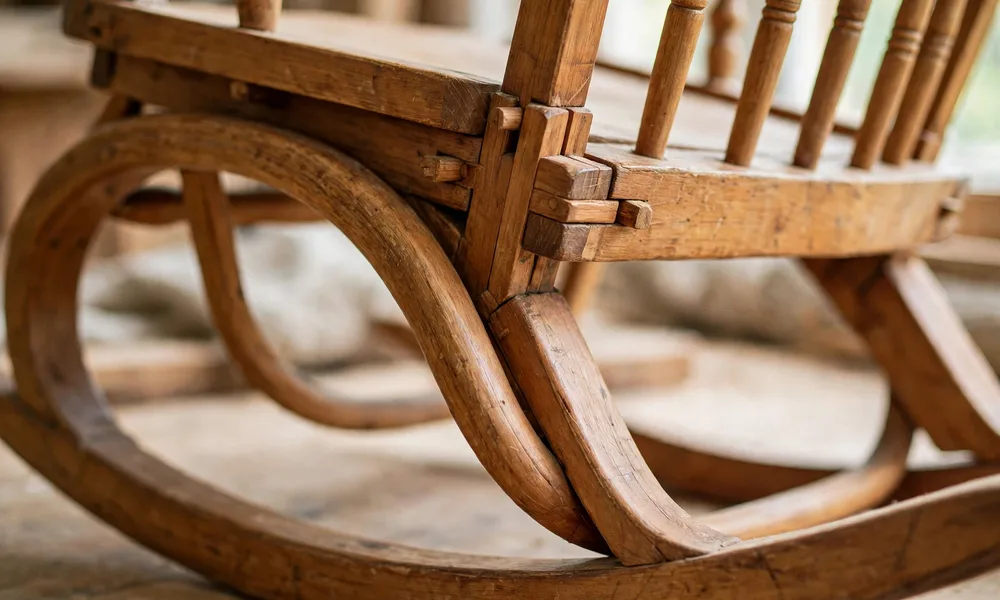
Almost every rocking chair falls into one of four families. Traditional wooden rockers are the classic porch chair: a solid wood frame, curved runners, and a slatted or woven seat. They look wonderful, last for decades, and rock with a long, lazy rhythm. Their weakness is comfort on a bare seat, which is why most owners add a cushion.
Glider rocking chairs move on a mechanism rather than curved runners, sliding smoothly back and forth on a fixed base. They are quieter than traditional rockers, take up less floor space because they do not travel, and are the standard choice for nurseries. Their weakness is the mechanism itself, which can wear and needs occasional tightening.
Upholstered rocking chairs wrap a rocking frame in padding and fabric, making them the most comfortable option for long sits. They suit living rooms and bedrooms, and many come with a matching ottoman. Their weakness is size and weight, and fabric that stains more easily than wood.
Outdoor rocking chairs are built for porches and gardens, usually from teak, cedar, or weather-resistant resin. They trade some refinement for durability, and the best ones can stay outside all summer with only a cover for winter. If your chair will live outside, our guide to patio furniture covers the other pieces that complete the space.
| Rocking chair type | Best for | Rock feel | Upkeep |
|---|---|---|---|
| Traditional wooden rocker | Porches and living rooms | Long, lazy glide | Oil or wax yearly |
| Glider rocker | Nurseries and small rooms | Smooth, short slide | Tighten mechanism yearly |
| Upholstered rocker | Long sits indoors | Gentle, cushioned | Clean fabric regularly |
| Outdoor rocker | Porches and gardens | Steady and firm | Cover in winter |
Our Picks: The Best Rocking Chairs for Every Home
Best Overall: Solid Oak Porch Rocker
The best all-round rocking chair is a solid oak porch rocker with a wide seat, a gently curved back, and runners shaped for a slow, even motion. Oak is heavy enough to feel planted, hard enough to resist dents, and handsome enough to suit almost any room. It is the safest choice if you only want to buy one rocking chair and use it everywhere.
Best for Nurseries: Padded Glider Rocker
For a nursery, a padded glider rocker is the clear winner. The gliding motion is almost silent, which matters at three in the morning, and the padded arms support your elbows while you hold a baby. Look for a model with a locking mechanism so the chair stays still when you want it to, and washable covers, because nursery furniture gets more spills than any other furniture in the house. Our guide to nursery essentials covers the other pieces worth buying before the baby arrives.
Best for Small Spaces: Compact Bentwood Rocker
A compact bentwood rocker suits flats and small living rooms, where a full-size chair would dominate the room. Bentwood frames are light, strong, and graceful, with runners steam-bent from a single piece of wood. The seat is narrower than a porch rocker, so check the width before you buy, but for one person reading in a corner, nothing else fits the space so well.
Best for Comfort: Upholstered Wingback Rocker
If you plan to sit for hours, an upholstered wingback rocker is the most comfortable choice. The high back supports your head, the wings cut draughts, and the thick seat cushion forgives long evenings. It is the closest thing to a favourite armchair that also rocks, and it pairs well with a footstool. For comparison, our guide to the best recliners covers the other way to sit back properly when you want to put your feet up.

What to Look For: Wood, Weight and the Rock
The rock itself is the first thing to test. Sit in the chair and rock gently without pushing. A good chair keeps going on its own for several seconds, with the same effort in both directions. If it stops quickly, tips forward, or needs a hard push to get moving, the runners are the wrong shape or the chair is badly balanced. A squeak usually means a loose joint, which is a warning sign on a new chair.
The frame is the second thing to check. Solid hardwood, such as oak, maple, or teak, lasts far longer than pine or softwood, and far longer than a frame held together with screws alone. Look for mortise-and-tenon joints, where one piece of wood slots into another, and feel for wobble by rocking the chair from side to side. A new chair should not wobble at all.
Seat height and depth decide comfort more than the cushion does. A seat around 45 centimetres high suits most adults, while a seat deeper than 50 centimetres can leave shorter legs dangling. Armrests should sit at a height that lets your elbows rest without hunching your shoulders, roughly 20 centimetres above the seat.
Porch, Nursery or Living Room: Where Will It Live?
Where the chair lives decides almost everything about which one to buy. On a porch, the chair faces weather, so teak, cedar, or a good outdoor finish matters more than the exact style. A covered porch is far kinder than an open one, and a simple chair cover doubles the life of any outdoor rocker. Measure the porch too: a rocker needs about 90 centimetres of clearance behind it to rock fully, and many porches are shallower than people think.
In a nursery, quiet matters more than looks. A glider with a smooth mechanism and no squeaks is worth paying extra for, because a chair that creaks will undo the work of settling a baby.
In a living room, the chair has to earn its place among the other furniture. An upholstered rocker in a fabric that matches the sofa looks deliberate rather than accidental, while a wooden rocker works best when its wood tone echoes another piece in the room.

Care and Maintenance
A wooden rocking chair needs very little care, but the little it needs matters. Oil or wax the frame once a year to stop the wood drying out, and tighten any bolts or screws every few months, because rocking slowly loosens them. Keep the chair out of direct sun where possible, since ultraviolet light fades the finish and dries the wood, and wipe up spills quickly rather than letting them soak in.
Upholstered rockers need vacuuming with a soft brush attachment and prompt attention to stains, while glider mechanisms benefit from a drop of light oil on the moving parts once a year. With that small amount of care, a good rocking chair will still be rocking smoothly in ten years.
Buying Checklist
- Measure the space, allowing about 90 centimetres behind the chair for a full rock.
- Sit in the chair and test the rock: it should glide evenly without tipping or squeaking.
- Check the frame is solid hardwood with proper joints, not softwood held by screws alone.
- Confirm the seat height is around 45 centimetres and the depth suits the people who will use it.
- Match the chair to its room: weather-resistant wood for porches, quiet gliders for nurseries.
- Ask about the warranty and whether cushions, covers, and spare parts are available.
Frequently Asked Questions
Are rocking chairs good for your back?
Yes, for most people. The gentle rocking motion keeps the spine moving slightly, which can ease stiffness, and a well-shaped chair supports the lower back better than a soft sofa.
What is the best wood for a rocking chair?
Oak is the best all-round choice: hard, heavy, and handsome, with a grain that suits any room. Maple is similarly durable, teak is the best choice for outdoor use because it resists rot, and bent beech suits compact chairs. Avoid soft pine for a chair that will be used daily.
How much space does a rocking chair need?
Allow about 90 centimetres of clear space behind the chair so the rockers can move fully, plus the footprint of the chair itself, usually around 70 by 100 centimetres.
Are glider rocking chairs better than traditional rockers?
Gliders are quieter, need less space, and suit nurseries, while traditional rockers have a longer, lazier motion and usually last longer because there is no mechanism to wear out. Neither is better overall; the right choice depends on the room and who will use the chair.
Can a rocking chair stay outside all year?
Teak and cedar chairs can stay outside in summer, but even the toughest outdoor rocker lasts longer with a cover in winter.. Bring cushions inside when it rains.
How do I stop a rocking chair from squeaking?
First tighten every bolt and screw, since rocking loosens them over time. If the squeak remains, rub a little beeswax or candle wax into the joints, and add a drop of light oil to any metal parts. A squeak on a brand-new chair is a fault, so ask for a replacement.
The Bottom Line
The best rocking chair is the one that fits your room, your body, and the way you will actually use it. For a porch, buy a solid oak or teak rocker with a slow, even motion. For a nursery, buy a quiet padded glider with washable covers. For long evenings indoors, buy an upholstered rocker that supports your back properly. Test the rock, check the joints, and measure the space first.


