A bed tray is a small thing that decides whether breakfast in bed feels like a treat or a balancing act. The best bed tray for breakfast in bed in 2026 is not the prettiest one in the shop window. It is the one that sits flat on a soft mattress, holds a full mug without wobbling, and folds away flat when the morning is over. Get those three things right and the rest is decoration.
Think of the tray as a small table: the legs decide stability, the size decides whether plate, mug and book fit at once, and the rim keeps everything in place. This guide compares the main types, explains what to measure, and picks the best bed tray for breakfast in bed, working from bed and Sunday reading in 2026.
Key Takeaways
- The best bed tray for breakfast in bed has folding legs at least 20 centimetres tall, a raised rim of 2 centimetres or more, and a flat surface of 50 by 30 centimetres or larger.
- Bamboo is the best all-round material: light and rigid under a full breakfast, while solid hardwood suits buyers who want a tray that lasts decades.
- Measure before you buy: a tray wider than your lap by more than a few centimetres will tip when you shift your weight.
- A tilting top helps for reading and laptop work, but a flat top is better for breakfast, because plates and mugs need a level surface.
- The worst bed trays flex in the middle, splay under weight, or slide on smooth bedding; test rigidity by pressing one corner before you commit.
What a Good Bed Tray Actually Does
A bed tray has three jobs. First, it creates a flat surface where there is none: a mattress is soft and uneven, and a tray turns a patch of it into a table. Second, it contains: the rim keeps a mug from sliding off and catches small spills. Third, it carries: with handles, you bring everything from the kitchen in one trip and take it all back again.
Trays fail at the first job more than any other. A tray that flexes in the middle tilts a mug the moment you put weight on one side, and legs that splay outwards under load slowly spread until the tray sits crooked. Rigidity matters most, and you can test it by holding the tray by one edge with a book on it: if it bends, it will bend in bed too. Weight matters too: a heavy tray is tiring to lift with breakfast on it, while a very light one feels flimsy and slides on smooth sheets. Bamboo and light hardwoods land in the right range; thick marble tops and heavy metal trays do not.
The Main Types of Bed Tray, Compared
Most bed trays fall into four types. A folding-leg bamboo tray is the classic: legs that fold flat for storage, a light frame and a price that suits most buyers. A solid hardwood tray is heavier, usually with fixed or short legs; it looks better and lasts longer, but takes up more room in a cupboard. A tilting-top tray angles up for reading or a laptop, often with a ledge to stop things sliding down. A metal or lacquered tray is the formal choice: easy to wipe clean, but cold and quick to show scratches.
| Type | Best for | Legs | Weight | Watch out for |
|---|---|---|---|---|
| Folding bamboo | Everyday breakfast in bed | Folding, 20–25 cm | Light | Thin slats that flex |
| Solid hardwood | A tray that lasts decades | Fixed or short | Medium to heavy | Needs more storage space |
| Tilting top | Reading and laptop work | Folding, adjustable | Medium | Plates slide on the tilt |
| Metal or lacquer | Drinks and formal mornings | Usually none or short | Medium | Scratches and cold surface |
For most buyers, folding bamboo is the right starting point: it does the main job well, stores flat, and costs little enough to replace without regret. Buy hardwood for daily use, and the tilting version only if working or reading in bed is your main use.
Size and Fit: Measure Before You Buy
Bed trays look bigger in photographs than in real life, so measure before you order. A tray of 50 by 30 centimetres fits a plate, a mug and a small bowl, which is a realistic breakfast. Smaller and you will be juggling, with the mug on the bed and the plate on the tray. Larger than 60 by 35 centimetres and the tray overhangs your lap, which makes it tip when you shift your weight or reach for something.
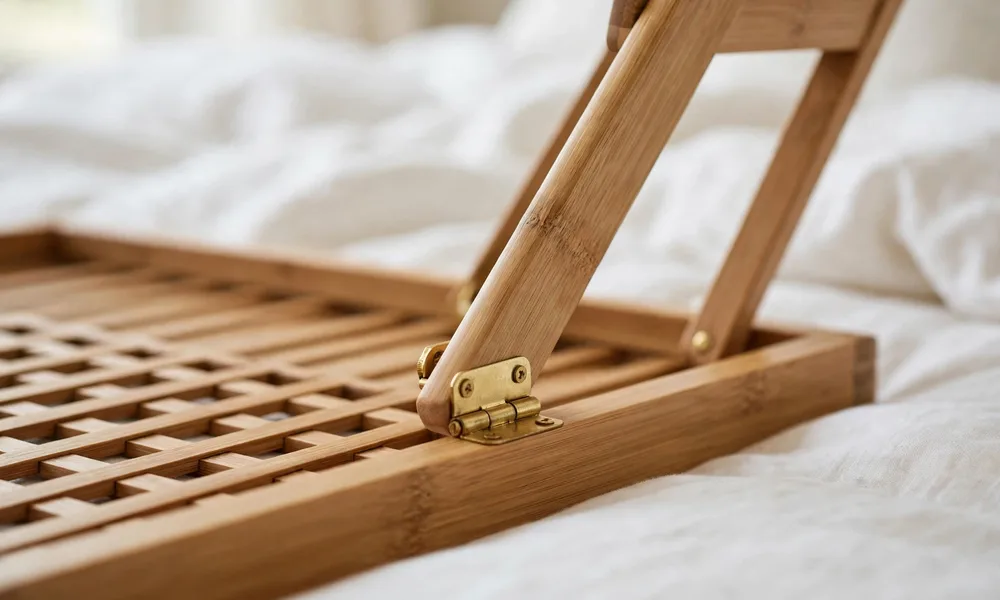
Legs of 20 to 25 centimetres clear a folded duvet and leave room for your legs without forcing you to sit bolt upright. Shorter legs mean the tray rests on your knees and slides whenever you move; taller legs make it feel like a table over your lap, which suits working but not eating. Also think about storage: a folding tray slides under a bed, while a fixed-leg tray needs a shelf. The best bed tray is the one you can reach in ten seconds on a Saturday morning.
Materials Compared
Bamboo is the most popular bed tray material for good reason. It is light, naturally rigid in the thicknesses used for trays, and it looks warm without trying. It wipes clean and ages gracefully if you oil it once a year. Its weakness is cheap construction: thin bamboo slats glued rather than joined will separate over time, so check the joints before you buy.
Solid hardwood, usually walnut, oak or acacia, is the upgrade. It is heavier and more stable, it feels substantial in the hands, and a well-made hardwood tray can last decades and be sanded back if it gets marked. The trade-off is weight and price: it is a two-handed lift with breakfast on it, and costs two or three times as much as bamboo.
Metal trays suit buyers who care most about cleaning: nothing sticks and they wipe down in seconds, but they are cold on winter mornings, show fingerprints, and with no rim are a slide waiting to happen. Lacquered trays scratch easily and hate heat. Plastic trays are the cheapest and the ones to avoid: they flex, stain and rarely survive a year.
Bed Trays for Breakfast in Bed
Breakfast in bed has stricter requirements than reading or working: food needs a level surface, drinks need a rim, and everything must survive the small movements of someone sitting up in bed. A tray that works well as a laptop stand can be a poor breakfast tray, because the tilt that helps a screen hurts a plate.
Look for a rim of at least 2 centimetres all round, with handles you can grip with a full hand: carrying a loaded tray from the kitchen is when most spills happen, and no handles means gripping the edges, which tilts it. A small cup holder is a genuine bonus, because a mug is the item most likely to slide. Think about the rest of the bedroom too: a tray works best with a nightstand at the right height beside the bed, and a good mattress topper changes how a tray sits, because a softer surface lets the legs sink unevenly while a firmer surface keeps it level.

Bed Trays for Working and Reading in Bed
Working from bed suits a different tray. A tilting top lifts the screen towards your eyes, saving your neck, and a ledge stops the laptop sliding down. Ventilation matters too: a laptop flat on a solid tray can overheat, so look for a ventilated or slatted surface. For reading, the same tilt helps, and a small lip holds a book open. The tray needs to be wide enough for a book and a mug side by side, usually 55 centimetres or more.
One warning applies to both uses: a bed is not a desk, and no tray changes that. Use a tray for the first coffee, the morning emails and the chapter before sleep, and save long sessions for a proper desk. Our guide to laptop trays covers the desk-based options for a full working day.
What to Avoid
The worst bed trays share a few faults, and they are easy to spot. The first is flex: if the tray bends when you press down on one corner, it will bend under a breakfast. The second is splaying legs, which spread a little more every week until the tray wobbles. The third is a slippery surface: a glossy lacquer or polished metal top looks smart, but plates slide on it at the slightest tilt.
Also avoid trays with tiny legs that lift the surface only a few centimetres off the bed: they leave no room for your legs and no clearance over a duvet. Avoid trays with no rim at all, however beautiful the wood: a rim is the feature that keeps breakfast on the tray. And be honest about frequency: a daily ritual justifies spending more, while once a month calls for a simple folding tray.
Buying Checklist
- Measure your lap and mattress: aim for a tray 50 to 60 centimetres wide with legs 20 to 25 centimetres tall.
- Press one corner to check for flex; a good tray stays rigid under a book and a mug.
- Check the rim is at least 2 centimetres high all round, with handles you can grip with a full hand.
- Choose bamboo for everyday use, hardwood for a tray you want to keep for decades, and a flat top for breakfast.
- Make sure the legs fold flat and the tray has a home under the bed or behind a door.
- Test the tray on your own bed: soft mattresses let legs sink unevenly, so stability there matters more than on a shop floor.

Frequently Asked Questions
What size bed tray is best for breakfast in bed?
About 50 by 30 centimetres suits most people: a plate, a mug and a small bowl, without overhanging your lap. Go up to 55 or 60 centimetres for a full cooked breakfast, but avoid wider trays, as they tip easily.
Are folding legs or fixed legs better?
Folding legs suit most buyers because the tray stores flat under a bed or behind a door. Fixed legs are sturdier but harder to store. Check that folding legs lock firmly open and do not wobble at the hinge.
Is bamboo or wood better for a bed tray?
Bamboo is lighter, cheaper and rigid enough for everyday breakfasts. Hardwood is heavier, more stable and longer-lasting. Choose bamboo first, and hardwood when breakfast in bed is a habit you will keep.
Can I use a bed tray for a laptop?
Yes, but choose a tilting-top tray with a ledge and ventilation, not a flat breakfast tray. A laptop on a flat tray sits too low and can overheat. Keep breakfast and laptop use on separate trays if you can.
How do I stop a bed tray sliding on the bed?
Choose rubber feet or a non-slip base, and avoid glossy surfaces. A firmer mattress helps, as does placing the tray across your lap. If it still slides, a thin non-slip mat under the legs solves it cheaply.
How do I clean a wooden bed tray?
Wipe it with a damp cloth and dry it straight away; never soak a wooden tray. Oil bamboo or hardwood once or twice a year with food-safe mineral oil. Avoid harsh detergents, which strip the finish and leave the wood grey.
The Bottom Line
The best bed tray for breakfast in bed in 2026 is a folding bamboo tray, about 50 by 30 centimetres, with legs 20 to 25 centimetres tall, a rim of at least 2 centimetres, and handles you can grip properly. It carries with one hand, holds a full breakfast, and stores flat under the bed. Spend more on hardwood only for a daily habit, and test any tray on your own mattress before trusting it with a full mug of coffee.