What is the best bar stool for a kitchen island in 2026? It is the stool that fits your counter height, supports you for a full meal rather than five minutes, and slides under the island without scraping the floor. Get the height wrong and your knees hit the underside of the counter. Get the seat wrong and nobody sits there twice. Get the base wrong and the stool wobbles every time someone turns round.
A kitchen island stool is not a dining chair, and judging it like one is the most common mistake buyers make. Dining chairs suit a 75-centimetre table; island stools suit counters at 90 or 105 centimetres, which changes the seat height, footrest and balance. The best bar stool matches your counter, your floor and how your household eats, from quick weekday breakfasts to long Sunday lunches.
Key Takeaways
- The best bar stool for a kitchen island is a counter stool, not a bar stool: 60 to 65 centimetres seat height for a 90-centimetre counter, with 25 to 30 centimetres of leg room underneath.
- Measure your counter before you shop: a stool that is even 5 centimetres too tall or too short makes the island uncomfortable to eat at.
- A footrest is not optional. Without one, your legs dangle, your back aches, and nobody stays seated for more than ten minutes.
- Swivel seats suit islands where people turn to talk or cook, while fixed seats suit small kitchens where a spinning stool would hit the cabinets.
- Backless stools tuck fully under the island and save space, but stools with a low back are far more comfortable for meals longer than twenty minutes.
Counter Stool or Bar Stool? The Height Question
The first thing to get right is the height, because everything else follows from it. Kitchen islands come in two standard heights. A kitchen counter island is usually about 90 centimetres high and needs a counter stool with a seat height of 60 to 65 centimetres. A raised bar-height island is usually about 105 centimetres high and needs a proper bar stool with a seat height of 75 to 80 centimetres. Confusing the two is the single most common buying mistake, and it is easy to avoid: measure the counter, subtract 25 to 30 centimetres, and that is your seat height.
That gap is the leg room, and it matters more than the seat. Too little and your knees press the underside of the counter; too much and you hunch over your plate. If your island has a knee overhang, measure to its underside, not the counter top. Adjustable gas-lift stools cover both heights across 15 centimetres or more, but gas lifts wear out and rarely look as good as fixed wood. Buy adjustable if the height is uncertain; buy fixed once you know the number.
The Main Types of Bar Stool, Compared
Most island stools fall into four types. Wood with a fixed seat is the classic: simple, sturdy and easy to clean. Metal is the industrial choice: a steel frame, often with a wooden or leather seat, built for a busy kitchen. Upholstered is the comfortable one: a padded seat, sometimes with a padded back, for long meals. A swivel stool, in any material, adds a rotating seat.
| Type | Best for | Comfort | Cleaning | Watch out for |
|---|---|---|---|---|
| Wooden, fixed | Everyday family kitchens | Good | Easy | Hard seat on long meals |
| Metal frame | Busy kitchens, modern rooms | Fair | Very easy | Cold seat, noisy on hard floors |
| Upholstered | Long meals, entertaining | Excellent | Harder | Stains and absorbs smells |
| Swivel | Islands facing the room | Good | Depends on seat | Mechanism wears, needs space |
For most households, a wooden stool with a low back and a metal footrest is the best compromise: comfortable for breakfast and homework, easy to wipe clean, and sturdy enough to last years. Choose upholstered if the island is where dinner happens nightly, and metal for a high-traffic kitchen that shrugs off spills and knocks.
Back or Backless? How Long Will You Sit?
The back question is really about time. A backless stool tucks fully under the island, keeping the kitchen tidy, and suits quick breakfasts, coffee and homework. But after twenty minutes without back support, most people slouch, shift and stand up. If the island is where dinner happens, a backless stool quietly pushes everyone to the dining table.
A low back, 15 to 25 centimetres above the seat, is the sweet spot: it supports your lower back, tucks mostly under the overhang, and does not block the view like a full-height back. A full back is most comfortable but rarely fits under an island. Children and older relatives benefit most from a back and armrests; allow 60 centimetres of counter width per stool with arms, against 50 to 55 without.
Seats, Footrests and Bases
The seat is where comfort lives. A flat wooden seat looks clean but hardens after half an hour; a scooped or saddle-shaped seat spreads your weight and stays comfortable far longer. Leather upholstery is most comfortable and ages best in a kitchen, wiping clean without holding cooking smells. If you choose fabric, pick one rated for stain resistance.
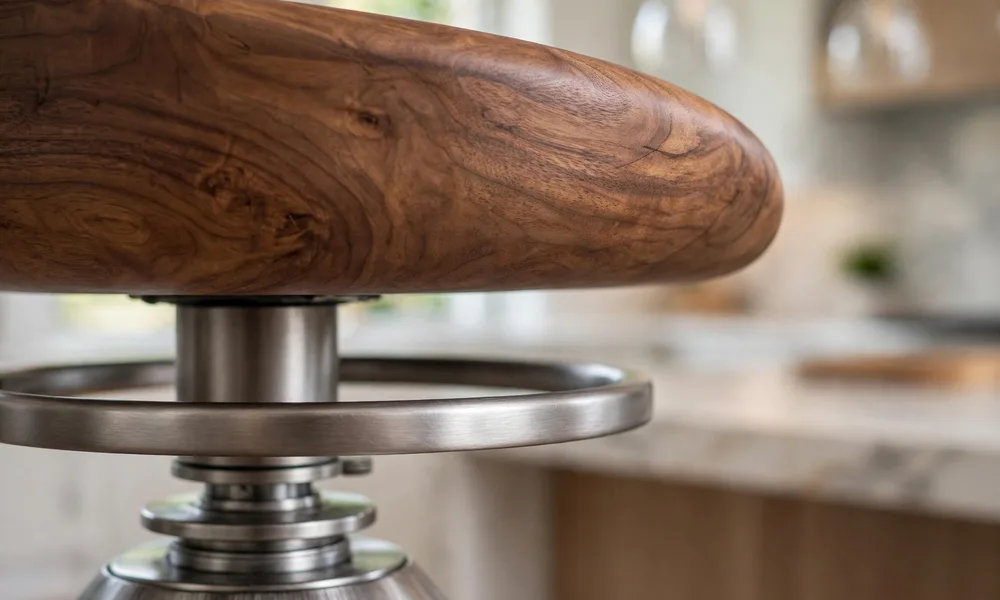
The footrest is the most underrated part of a bar stool. Without one, your legs dangle, your lower back takes the strain, and you will not sit still for long. A good footrest is a ring or a bar at the right height for your feet, usually 30 to 40 centimetres below the seat. Test it before you buy: sit on the stool, put your feet on the rest, and check that your knees are not higher than your hips.
The base decides stability. Four legs are most stable and easiest to level on an uneven floor. A pedestal base looks smarter and swivels, but needs weight to stop it tipping when someone leans. A sled base, two flat rails, is kindest to floors and will not scratch tiles or wood. Whatever the base, check the floor protectors: felt for wood, rubber for tiles, replaced when worn thin.
How Many Stools, and How Much Space?
Count stools by the counter, not the family. Allow 55 to 60 centimetres per stool, with at least 15 centimetres between them so elbows do not collide. Three stools fit a 180-centimetre island; four need at least 220. Stools too close together are worse than too few, because nobody sits comfortably.
Leave space behind the stools too: at least 90 centimetres of clear floor to pull a stool out and sit down, and 110 if a walkway runs behind it. This is the measurement most buyers forget, and it decides whether the island feels spacious or cramped. Stools that tuck fully under the island keep the room tidy and the floor easy to clean. Our guide to dining tables covers the bigger seating decisions, and a good ottoman nearby gives guests somewhere to perch when the island is full.
Materials and Cleaning
Kitchens are messy, and a bar stool lives in the middle of it. Wood wipes clean and ages well, but marks under hot plates and needs oiling once a year. Metal is easiest to clean and hardest to damage, but cold in winter, noisy on hard floors, and quick to show fingerprints.
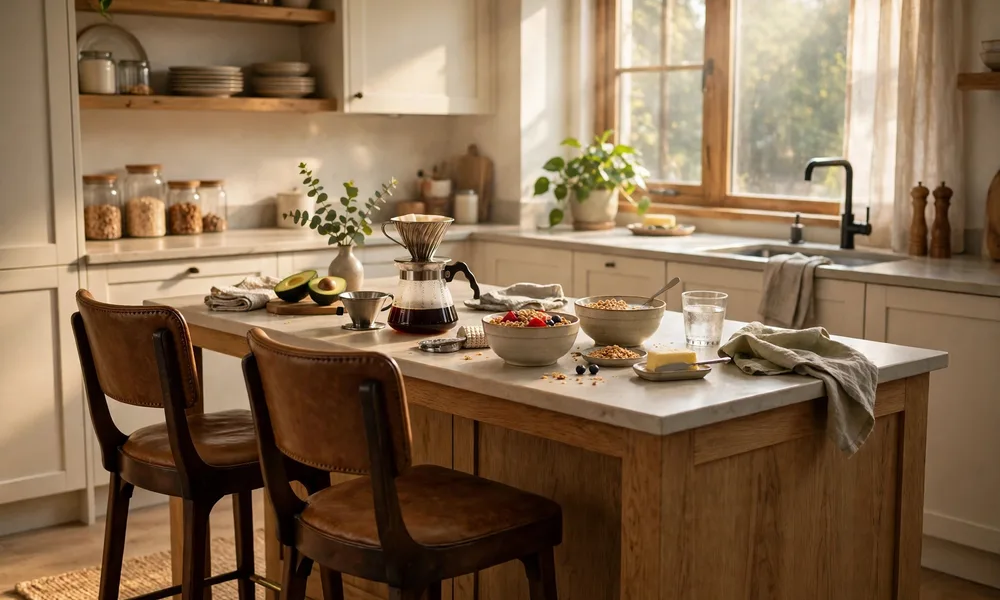
Leather is the best upholstery for a kitchen stool: it wipes clean, holds no smells, and improves with age. Faux leather is cheaper but cracks after a few years of daily use. Fabric is most comfortable and hardest to keep clean; choose a dark, stain-resistant one with removable covers. Velvet looks wonderful in photographs and terrible after a month of real breakfasts. Whatever the material, check the joints: a stool is sat on, leaned on, spun and dragged, so look for solid fixings rather than glue alone, and rock it gently in the shop, as any wobble will be worse at home.
What to Avoid
The worst bar stools share a few faults. The first is the wrong height, which no amount of comfort can fix. The second is a missing or badly placed footrest, which makes the stool unusable for more than a few minutes. The third is a wobbly base: a stool that rocks on a flat shop floor will rock worse on a kitchen floor that is never perfectly level.
Also avoid stools too wide for your island: a wide stool with no elbow room is worse than a narrower one that fits, and arms that cannot slide under the counter stick out into the walkway. Avoid very light stools with children, as they tip easily when climbed on. And do not buy before the island is installed: heights vary by a few centimetres between installers, and that is the difference between comfortable and unusable. Measure the finished counter first. A comfortable rocking chair nearby also gives the kitchen a seat that is not the island, worth having when the stools are taken.

Buying Checklist
- Measure the finished counter and subtract 25 to 30 centimetres: that is your seat height, and 5 centimetres either way matters.
- Sit on the stool for five minutes and check the footrest: your feet should rest flat and your knees should not sit higher than your hips.
- Allow 55 to 60 centimetres of counter width per stool and 90 centimetres of clear floor behind the island.
- Choose a low back for meals and a backless stool only if the island is used for quick breakfasts and coffee.
- Check the base for wobble, the joints for solid fixings, and the floor protectors for your floor type.
- Pick a seat material you can clean in ten seconds: leather, wipe-clean fabric or wood, not velvet or pale cloth.
Frequently Asked Questions
What is the best bar stool height for a kitchen island?
For a standard 90-centimetre counter, the best seat height is 60 to 65 centimetres, leaving 25 to 30 of leg room. For a raised 105-centimetre island, choose 75 to 80. Measure your own counter, because installed heights vary.
Should I buy counter stools or bar stools?
Buy counter stools if your island is standard counter height, which most are. Buy bar stools only if it is raised to bar height. The names describe height, not style, so a bar stool will be too tall for a normal island.
Are swivel bar stools worth it?
Swivel stools suit islands facing the room, letting you turn to talk or watch cooking without moving. They are less useful in small kitchens, where a spinning stool hits cabinets, and the mechanism wears faster, so check it turns smoothly.
How many bar stools fit on a kitchen island?
Allow 55 to 60 centimetres per stool: three fit a 180-centimetre island, four need at least 220. Leave a 15-centimetre gap between stools, and 90 centimetres of clear floor behind the island.
What seat material is best for a kitchen island stool?
Leather is best all-round: comfortable, easy to wipe clean and long-lasting. Wood is easiest to maintain. Fabric is comfortable but stains easily, so choose a dark, stain-resistant fabric with removable covers.
Do bar stools damage kitchen floors?
They can, if the feet have no protectors or they have worn thin. Use felt pads on wood and rubber on tiles, checked every few months. Sled bases and wide feet spread the weight and are kindest to floors; narrow metal legs concentrate it.
The Bottom Line
The best bar stool for a kitchen island in 2026 is a counter stool with a 60 to 65-centimetre seat for a standard 90-centimetre counter, a low back, a proper footrest, and a leather or wood seat that wipes clean in seconds. Measure the finished counter, allow 55 to 60 centimetres per stool, and sit on it for five minutes first. Get the height and footrest right and the island becomes the best seat in the house; get them wrong and it becomes the seat nobody uses.