Finding the best tea kettles for small kitchens in 2026 is less about chasing the biggest brand name and more about finding a kettle that boils quickly, pours cleanly, and leaves room on the counter. In a compact kitchen, a kettle that is too tall, too wide, or too heavy can turn a simple cup of tea into a daily annoyance.
A good small-kitchen kettle does three things well. It heats only the water you need, so you are not waiting for a full litre when you only want one mug. It sits neatly in a corner without blocking the hob, the tap, or the cupboard doors. And it pours without drips, because there is no spare worktop to mop up.
This guide compares the kettle styles that work best in tight spaces, from compact electric goosenecks to slim stovetop whistlers, and explains what to check before you buy.
Key takeaways
- A 0.8 to 1 litre capacity is the sweet spot, enough for two mugs without wasting water or counter space.
- Electric kettles boil faster and free up the hob; stovetop kettles suit homes with limited plug sockets.
- Measure first: check the height under wall cabinets and the depth of your worktop before ordering.
- A gooseneck spout gives the most controlled pour for loose leaf tea and pour over coffee.
- Lightweight kettles with cool-touch handles are safer in tight, busy kitchens.

Why Size Matters More Than Brand in a Small Kitchen
In a large kitchen, almost any kettle will do. In a small kitchen, a bulky kettle can block a cupboard or crowd the hob, so size, shape, and weight deserve more attention than the logo on the side.
Height is the most common surprise: many wall cabinets sit only 45 to 55 centimetres above the worktop. A kettle under 22 centimetres tall, handle included, slides in and out easily.
Footprint matters just as much. A wide, round kettle can eat up a quarter of a small worktop, while a slim design takes up no more space than a large mug. Look for a base under 15 centimetres wide and a handle close to the body.
Weight is the third factor people forget. A full kettle is heavy, and lifting it one-handed in a cramped space is tiring and risky. Stainless steel and glass are lighter than cast iron, and a smaller capacity means less water weight. Aim for under one kilogram when empty.
What to Look for in a Tea Kettle for a Small Kitchen
Before comparing individual kettles, here are the five features that matter most in a compact space.
Capacity
For one or two people, 0.8 to 1 litre is ideal: enough for two generous mugs, quick to heat, and light when full. Larger 1.7 litre kettles are made for families and offices. If you host guests often, keep a larger kettle in a cupboard instead.
Footprint and Height
Measure the spot where the kettle will live, including the height under any cabinet above it. A base under 15 centimetres wide and a height under 22 centimetres fits almost any small kitchen. Cordless electric kettles tuck easily into a corner, since the base stays put while the kettle lifts away.
Spout Design
The spout decides how cleanly a kettle pours. A gooseneck gives a slow, precise stream for loose leaf tea and pour over coffee, and it almost never drips. A short, wide spout pours faster but splashes more, a nuisance when the sink is a metre away. For tea bags, either style works.
Heat Source
Electric kettles boil fastest and need no hob space, making them the default choice for most small kitchens. Stovetop kettles suit homes where plug sockets are scarce, or where a kettle that works during a power cut is useful. Induction hobs need a magnetic base, so check compatibility first.
Materials and Safety
Stainless steel is the most durable and easiest to clean, glass lets you watch the water boil, and enamelled steel looks beautiful but chips if knocked. Look for a cool-touch handle, a secure lid, and automatic shut-off on electric models.
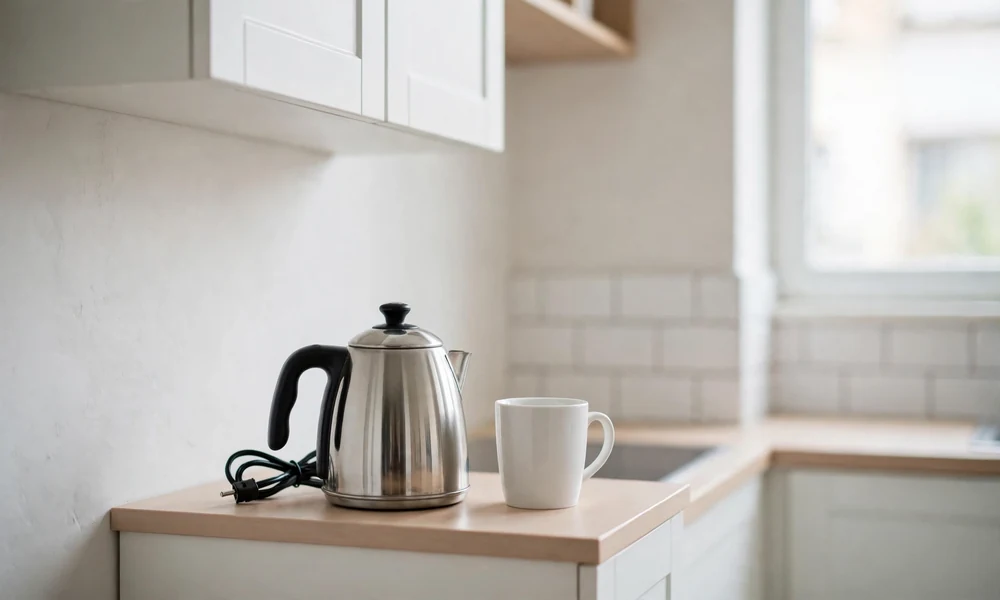
The Best Tea Kettles for Small Kitchens 2026
The kettles below were chosen for compact size first, then for boiling speed, pour control, build quality, and value.
| Kettle style | Capacity | Best for | Heat source |
|---|---|---|---|
| Compact electric gooseneck | 0.8–1.0 L | Loose leaf tea | Electric |
| Slim stainless electric | 1.0 L | Everyday boiling | Electric |
| Stovetop whistling kettle | 1.0–1.2 L | Gas hobs | Gas, electric hob |
| Glass teapot kettle | 0.8 L | Brewing and serving | Stovetop |
| Mini travel kettle | 0.5 L | One mug | Electric |
| Induction-compatible kettle | 1.0 L | Induction hobs | Induction, gas, electric |
Compact Electric Gooseneck
The compact electric gooseneck is the best all-round choice for a small kitchen in 2026. Its slim body takes up very little counter space, its narrow spout pours with total control, and most models boil a litre in under four minutes. Many offer variable temperatures, which matter for green and white teas that taste best below boiling point. See our guide to the best electric kettles for tea lovers for a deeper look at electric options.
Slim Stainless Steel Electric
If you want speed above all else, a slim stainless steel electric kettle is hard to beat. It boils faster than any stovetop option, switches itself off when done, and fits neatly beside a toaster or coffee maker. Stainless steel resists stains and odours, and a brushed finish hides fingerprints. Choose a concealed heating element, which is quieter, easier to descale, and safer than an exposed coil.
Stovetop Whistling Kettle
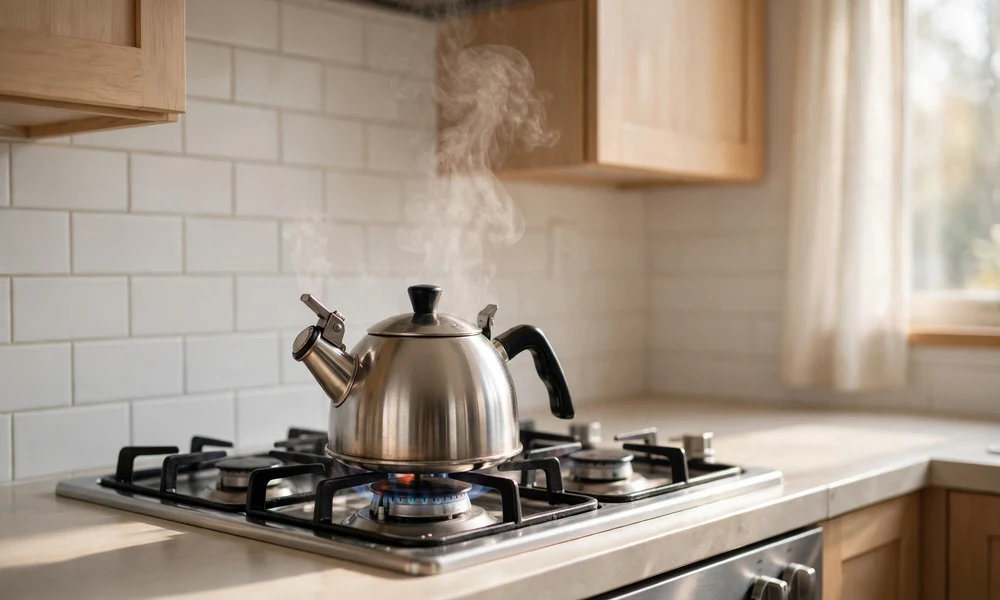
The stovetop whistling kettle is the classic choice, and it still makes sense in a small kitchen. It needs no plug socket and no electricity, freeing up the worktop for other appliances. The whistle tells you when the water is ready, so you never boil a kettle dry. Modern models are slimmer and lighter than the heavy kettles of the past, and many work on induction hobs as well as gas. Our roundup of the best tea kettles for gas stoves explains which designs heat fastest and pour cleanest on gas.
Glass Teapot Kettle
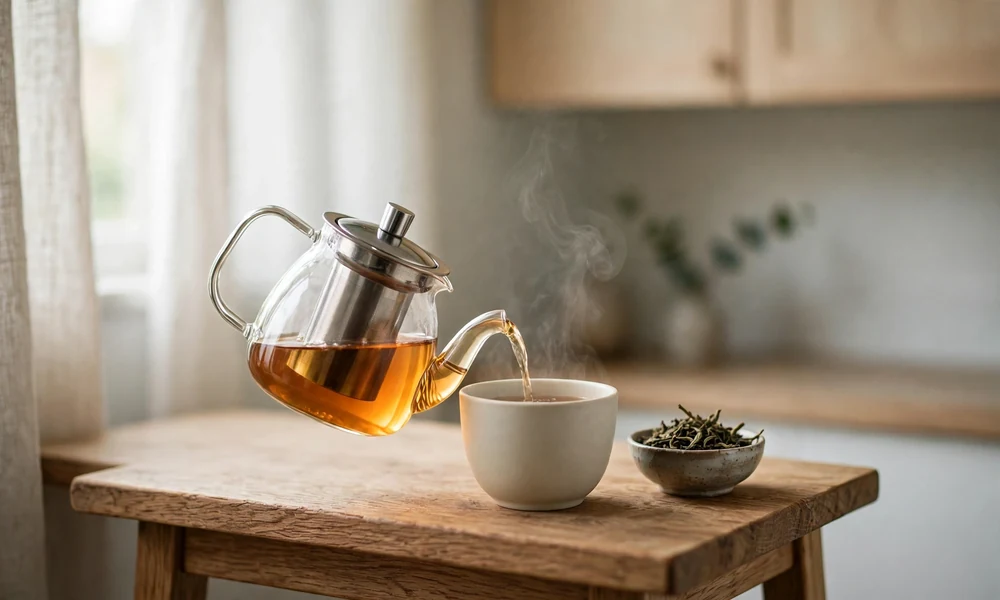
A glass teapot kettle does two jobs at once: it boils the water and brews the tea. A built-in infuser holds loose leaves, and the clear glass shows the brew’s colour so you can judge its strength. In a small kitchen, one vessel replaces both a kettle and a teapot. Glass suits gentle brewing rather than rushed mornings, but for slow weekend teas it is a lovely, space-saving choice.
Mini Travel Kettle
For a single person in a very small space, a mini travel kettle is worth considering. At half a litre, it boils one large mug in about two minutes and takes up no more room than a water bottle. Many have dual voltage and foldaway handles, so they pack flat for trips. It will not serve two people at once, but if you live alone in a genuinely tiny kitchen, it is the most space-efficient way to make tea.
Induction-Compatible Kettle
Induction hobs are common in modern small kitchens, and they need a kettle with a magnetic stainless steel base. An induction-compatible kettle heats quickly and evenly, works on gas and electric hobs too, and suits whatever hob you meet next. Check the base against your smallest hob ring: a base wider than the ring heats unevenly, while one too narrow wastes energy.
Electric vs Stovetop: Which Wins in a Small Kitchen?
Electric kettles win on speed and convenience. They boil water in three to four minutes, switch off automatically, and need no hob space, a real advantage with only two or four rings. They do need a plug socket and a patch of counter, though a cordless model with a short, tidy cable solves most of that problem.
Stovetop kettles win on flexibility. They work on any hob, need no electricity, and can live on the hob itself between uses, saving counter space entirely. They are slower, usually taking five to seven minutes, though a whistling model removes the need to watch them.
For most small kitchens, an electric kettle is the better daily choice, with a small stovetop kettle as a useful backup. If you have only one spare socket, or you like the ritual of a whistling kettle on gas, the stovetop option may suit you better.
How to Fit a Kettle Into a Tiny Kitchen
A kettle does not have to live on the counter. Store it in a cupboard and bring it out only when needed, or keep a stovetop model on the hob. A small shelf, a hook under a wall cabinet, or a rolling cart can all hold a kettle without stealing counter space.
Think about the whole morning routine, not just the kettle. If your kettle, toaster, and coffee maker fight for the same corner, give the prime spot to the one you use most. In many small kitchens the kettle wins, and the rest can live in a cupboard. If coffee is part of your morning too, our guide to the best espresso machines for small kitchens shows how to fit a proper coffee setup into the same tight space.
Cables deserve attention too. A long cord draped across a small counter is messy and unsafe. Choose a kettle with cord storage in its base and place it near the socket so the cord never crosses the worktop.
Small-Kitchen Tea Kettle Checklist
Run through this checklist before you buy.
- Measure the height under your wall cabinets and the depth of your worktop.
- Choose 0.8 to 1 litre unless you regularly serve three or more people.
- Pick a base under 15 centimetres so the kettle fits a crowded counter or small hob ring.
- Check that the kettle suits your heat source: electric, gas, or induction.
- Look for a cool-touch handle, a secure lid, and automatic shut-off on electric models.
- Test the pour if you can: a drip-free spout matters most in a tight space.
Frequently Asked Questions
What size kettle is best for a small kitchen?
A 0.8 to 1 litre kettle is best for most small kitchens. It boils enough for two mugs, heats quickly, stays light when full, and takes up far less space than a standard 1.7 litre family kettle.
Are electric kettles better than stovetop kettles for small kitchens?
Electric kettles are faster and free up the hob, making them the better daily choice for most people. Stovetop kettles suit homes where sockets are scarce, or where a kettle that works during a power cut is useful.
Can I use a tea kettle on an induction hob?
Yes, but only with a magnetic stainless steel base. Check for induction compatibility before buying, and match the base to your hob ring for even heating.
How do I stop my kettle from taking up too much counter space?
Store it in a cupboard between uses, keep a stovetop kettle on the hob, or use a small shelf or rolling cart.
Is a gooseneck kettle worth it for tea?
Yes, if you drink loose leaf tea or pour over coffee. The narrow spout gives a slow, controlled pour that brings out the best flavour and never drips. For tea bags, a standard spout works just as well.
How often should I descale a kettle?
In hard water areas, descale every four to six weeks with white vinegar or citric acid. It keeps boiling fast, improves taste, and extends the kettle’s life.
The Bottom Line
The best tea kettles for small kitchens in 2026 are the compact ones: a 0.8 to 1 litre electric gooseneck for most homes, a slim stainless electric for pure speed, or a small whistling kettle for gas hobs and power cuts. Measure your space, match the kettle to your hob and sockets, and choose a drip-free pour over a big brand name. Get those basics right, and even the smallest kitchen can make a very good cup of tea.