
The worst convertibles for city driving in 2026 are not bad cars in the usual sense. Most are beautiful machines, and on an open road with the roof down they feel wonderful. But a city is not an open road: it is a narrow street with cars parked on both sides, a tight multi-storey car park, traffic that barely moves, and a sudden shower that arrives while you are three lanes from anywhere. A convertible that is a joy on a Sunday coastal drive can be a daily punishment in that world, and this guide names the six types that cope worst with it.
City driving punishes a convertible in ways that have nothing to do with speed. Length decides whether you can park at all, turning circle decides whether you can turn around in one move, a slow roof decides whether a shower soaks your seats, and a soft fabric roof parked on a public street is an open invitation to thieves. This guide judges each type on the same city measures: length, turning circle, parking ease, roof speed, boot space, visibility, and how it copes with stop-start traffic and street parking.
Key takeaways
- A turning circle over 12 metres is the biggest problem, turning every U-turn into a three-point shuffle.
- Convertibles longer than 4.8 metres struggle to fit into standard city parking bays and narrow residential streets.
- A roof that takes more than 25 seconds to close will leave you and your seats soaked in a sudden shower.
- Soft-top convertibles parked on the street are far easier targets for theft and vandalism than hard-top cars.
- The best city convertible is short, narrow, quick to close, and easy to see out of.
How we judged the worst convertibles for city driving
Every type here was judged on city life, not on how it feels on a country road. We looked at length and width first, because they decide whether a car fits into the parking spaces a city actually has, then at turning circle, roof time, boot space with the roof folded, rear visibility, low-speed ride, and fuel use in stop-start traffic. A car that scores badly on three or more of those measures earns its place here. We also weighed kerb damage, fuel use at walking pace, and secure parking for a soft-top left on the street.
1. Long grand tourers: too much car for the street
The long grand tourer is the worst city convertible of all, because it fails the most basic city test: it does not fit. At more than 4.8 metres long and nearly 2 metres wide, it overhangs standard parking bays and cannot turn into the narrow entrances of older multi-storey car parks. Its turning circle is often over 12 metres, so a simple U-turn becomes a three-point turn that holds up a queue behind you.
Its long bonnet makes it hard to judge where the front ends, so kerb scrapes are a matter of time, and its big engine is sluggish and thirsty at 20 miles per hour. The doors are too long to open fully in a tight bay. A grand tourer is wonderful for a long journey and poor for a city street.
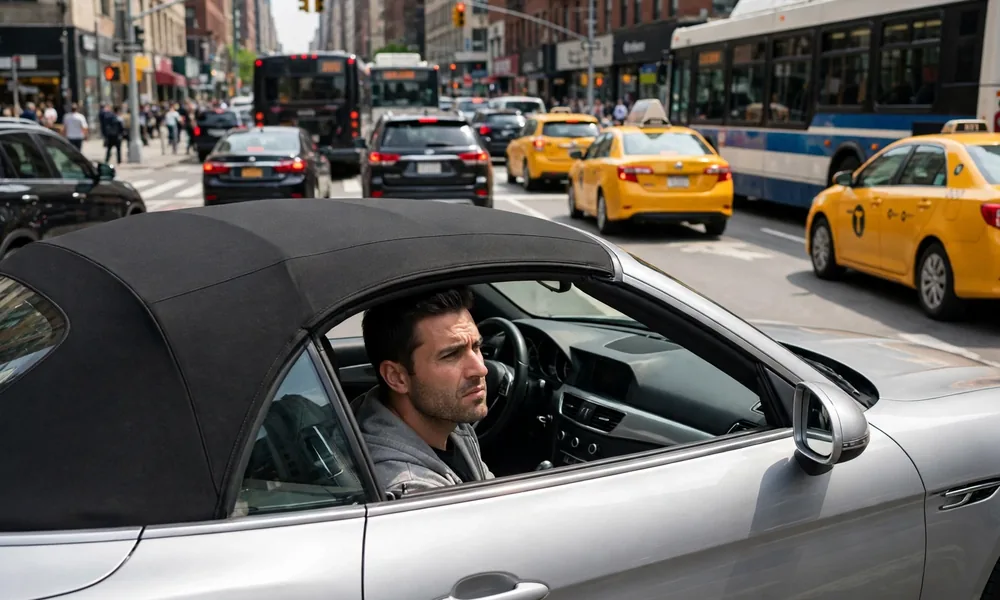
2. Wide performance convertibles: power you cannot use
Wide performance convertibles are built for speed, and a city gives them nowhere to use it. Their wide track and stiff suspension feel planted on a smooth road, but over speed bumps and potholes the ride is harsh, and the low front splitter scrapes on steep car-park ramps. You pay for performance with discomfort on every trip.
The width is the deeper problem. At close to 2 metres across the mirrors, it cannot slip through gaps a normal car takes for granted, and it is a constant worry on narrow streets with cars parked on both sides. Its steering is heavy at parking speeds, and its thirsty engine burns fuel while idling in traffic.
3. Slow-roof soft-tops: soaked before the roof closes
A convertible roof is only useful in a city if it closes fast, and many soft-tops do not. Some take 25 to 30 seconds to fold up, and some only operate with the car completely stopped. In a city, rain does not wait for you to find a safe place to stop: it arrives in moving traffic, and by the time the roof has closed, your seats and dashboard are wet.
The slow roof creates a second problem: it discourages you from putting the roof down at all. If every shower means a stressful stop and a wet interior, most owners leave the roof up for months, driving a heavier, noisier, less practical coupe that cost more to buy. A fabric roof also insulates poorly and is easy to cut through.
4. Two-seat roadsters with no boot: beautiful and useless
A two-seat roadster is a wonderful toy and a terrible city car, because a city car has to carry things. With the roof folded, many roadsters have less than 150 litres of boot space, barely enough for a weekly shop. The boot is shallow and awkwardly shaped, and the cabin has nowhere to put a bag except on the passenger seat.
The small size helps with parking, but it does not make up for the rest. Roadsters sit very low, so you cannot see over the traffic ahead and other drivers cannot see you, which makes junctions feel exposed. Visibility with the roof up is poor, and a small, light car with a fabric roof is a tempting target on a dark street.
5. Heavy luxury convertibles: thirsty, wide, and hard to park
Heavy luxury convertibles wrap you in leather and quiet comfort, then make you pay for it on every city journey. At well over 1,800 kilograms, they are slow to stop, heavy on their brakes, and thirsty in traffic. Their fuel economy in stop-start driving can be half of what the official figures promise, and their brakes and tyres wear out far faster than a lighter car’s.
The weight comes with size. These cars are long and wide, with long doors and a turning circle that belongs on a motorway. Street parking is a particular worry, because a luxury convertible with a soft top is a magnet for attention, and attention in a city is not always friendly. You end up paying for secure parking everywhere.

6. Big-engine cruisers: built for the highway, lost in town
The big-engine cruiser fails for the simplest reason of all: its engine is wrong for the job. A large engine needs open road, and in a city it spends its life idling, crawling, and stopping. It drinks fuel, runs hot in summer traffic, and its exhaust note, glorious on an empty road, is an embarrassment in a quiet residential street at night.
The rest of the car follows the same pattern. Cruisers are long, softly sprung, and vague to steer at low speed, so they wallow over speed bumps and feel clumsy in tight corners. Their roofs are often slow, their boots are small, and they are expensive to insure in a city. A cruiser is a car for long, lazy journeys on open roads.
Comparison table: the worst convertibles for city driving
| Type | Typical length | Turning circle | Roof close time | Biggest city problem |
|---|---|---|---|---|
| Long grand tourers | Over 4.8 m | Over 12 m | 20–25 seconds | Does not fit parking bays |
| Wide performance convertibles | 4.4–4.7 m | 11–12 m | 15–20 seconds | Harsh ride and kerb damage |
| Slow-roof soft-tops | 4.2–4.6 m | 10–11 m | 25–30 seconds | Soaked in sudden rain |
| Two-seat roadsters | Under 4.2 m | Under 10 m | 12–18 seconds | Almost no boot space |
| Heavy luxury convertibles | 4.7–5.0 m | Over 12 m | 20–25 seconds | Thirsty and hard to park |
| Big-engine cruisers | 4.6–4.9 m | 11–12 m | 20–28 seconds | Wrong engine for traffic |
The numbers tell the story plainly. Length and turning circle matter more than horsepower in a city, and a roof that takes 25 seconds to close is a real weakness in a shower. The roadster is the only type that fits easily into a parking space, but its boot holds almost nothing. A city convertible needs to be short, narrow, quick to close, and frugal.
What to buy instead
If you love open-top driving but live in a city, do not give up convertibles entirely. Choose the opposite of everything in this guide: a short car under 4.5 metres, a turning circle under 11 metres, a roof that closes in under 20 seconds, and a boot that still holds a weekly shop with the roof down. Light steering, a reversing camera, and parking sensors matter far more than horsepower. The best city convertibles make a crowded street feel easy, and you can read about them in our guide to the best convertibles for city driving.
The same city measures apply to other body styles too. If you are weighing a coupe instead, our guide to the worst coupes for city driving shows how the same problems appear in a hard-top car, and our guide to the worst pickup trucks for city driving shows what happens when the car is even bigger. Measure your parking space before you sign anything, and test drive with the roof up in the rain.
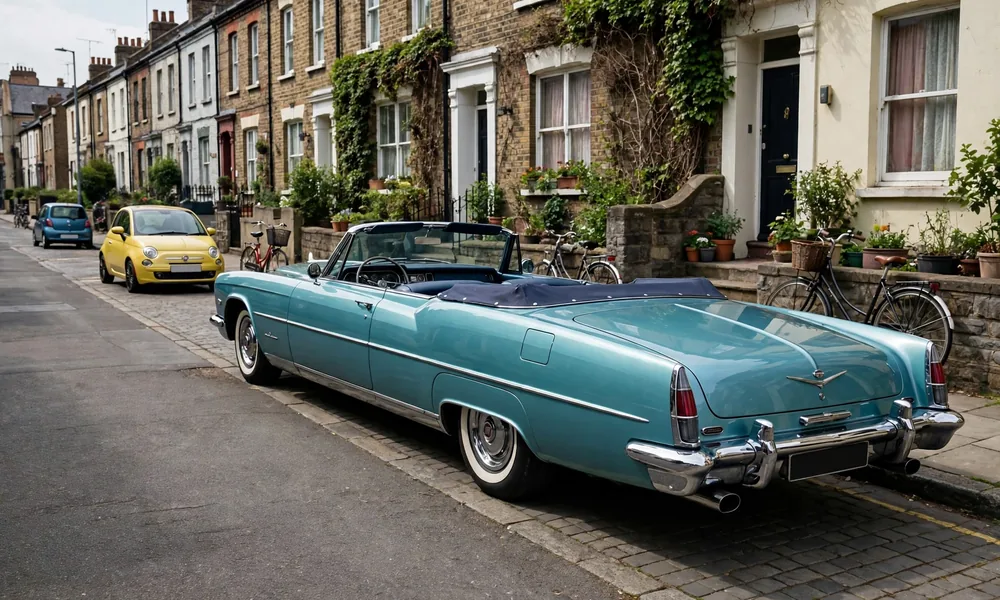
City convertible checklist: 6 questions before you buy
- Is the car under 4.5 metres long, and does it fit your regular parking space?
- Is the turning circle under 11 metres, so you can turn around without a three-point shuffle?
- Does the roof close in under 20 seconds, and can it operate while the car is moving slowly?
- Does the boot hold at least 200 litres with the roof folded, enough for a weekly shop?
- Can you see clearly out of the back with the roof up, without thick pillars blocking the view?
- Is the car cheap enough to insure and park on the street?
Frequently asked questions
Are convertibles bad for city driving in general?
No. Short, narrow convertibles with fast roofs and decent boots can be good city cars. The worst ones are the long, wide, heavy, slow-roofed types in this guide, which fail on size, turning circle, roof speed, and practicality.
What is the worst thing about driving a convertible in a city?
Parking is usually the biggest daily frustration, because long convertibles do not fit standard bays and long doors cannot open fully in tight spaces. Close behind are slow roofs in sudden rain and the risk of theft when a soft-top is parked on the street.
How long should a city convertible be?
Under 4.5 metres is a good target: cars in that range fit most city bays, turn easily, and feel manageable on narrow streets. Anything over 4.8 metres starts to cause real problems.
Is a fabric soft top safe in a city?
A fabric roof is the weakest point of any convertible for city security, because it can be cut open quickly and quietly. If you must park on the street, a hard-top convertible or a secure garage is safer, and never leave valuables visible inside.
Do convertibles use more fuel in city traffic?
Heavy convertibles with big engines use far more fuel in stop-start traffic than their official figures suggest. Smaller engines that are happy at low speed cope much better.
Should I buy a convertible as my only car in a city?
Only if it passes the checklist in this guide. A short, practical convertible with a fast roof can work as an only car, but a long grand tourer, a wide performance car, or a two-seat roadster will frustrate you daily.
The bottom line
The worst convertibles for city driving in 2026 are the long grand tourers, the wide performance cars, the slow-roof soft-tops, the bootless roadsters, the heavy luxury convertibles, and the big-engine cruisers. Each one is a fine car somewhere else, and each one is the wrong car for a crowded street. Measure your parking space, check the turning circle, time the roof, and test the boot before you buy.


