
The best patio furniture in 2026 does more than fill an empty terrace. It turns a garden into a second living room, a place where morning coffee tastes better, evening meals stretch a little longer, and guests settle in instead of drifting back inside. The right set feels as comfortable as the sofa in your lounge, yet it shrugs off rain, sun and pollen season after season. The wrong set looks fine in the shop and then fades, rusts, sags or wobbles within a single summer.
Choosing well is not about spending the most money. It is about matching the furniture to how you actually live outdoors: how many people you seat, how much sun and rain your garden gets, and how much maintenance you will honestly do. This guide covers the materials, layouts and details that separate a set you love from one you regret.
Key Takeaways
- Measure your patio before you shop: leave at least 90 centimetres of walking space around dining tables and 60 centimetres behind each chair.
- Teak, powder-coated aluminium and all-weather wicker last longest outdoors; untreated softwood and bare steel rust or rot fastest.
- Deep-seat cushions should be at least 10 centimetres thick, quick-drying and covered in solution-dyed fabric that resists fading.
- A modular lounge set suits large patios and changing groups, while a compact bistro or two-seater suits balconies and small gardens.
- Budget for covers and winter storage: even the toughest furniture lasts years longer when it is covered or stored in the cold months.
What Makes Patio Furniture Great
Great patio furniture starts with the frame, because that is what carries the weight and faces the weather. A strong frame does not flex when you sit down, does not creak when you shift, and does not wobble on uneven paving. Welded joints last longer than bolted ones, and a frame that feels heavy for its size usually means thicker metal or denser wood rather than thin tubing dressed up with cushions.
Comfort comes next, and it is mostly about the seat. A lounge chair should let you sit with your feet flat and your back supported, not perch on the edge or sink into a sagging sling. Dining chairs need a seat height of around 45 centimetres and enough depth to sit through a long meal without fidgeting. The best test is simple: sit in the chair for five minutes and see whether you want to stay. Shopping online, check seat depth, seat height and cushion thickness.
Finally, great patio furniture is honest about the weather. Every outdoor material ages, but the good ones age gracefully. Teak turns a soft silver grey. Aluminium keeps its shape and colour. All-weather wicker keeps its weave. Be wary of materials that fail suddenly: steel that rusts from the inside, cheap rattan that cracks in the sun, and cushions that stay damp for days.
The Materials That Last
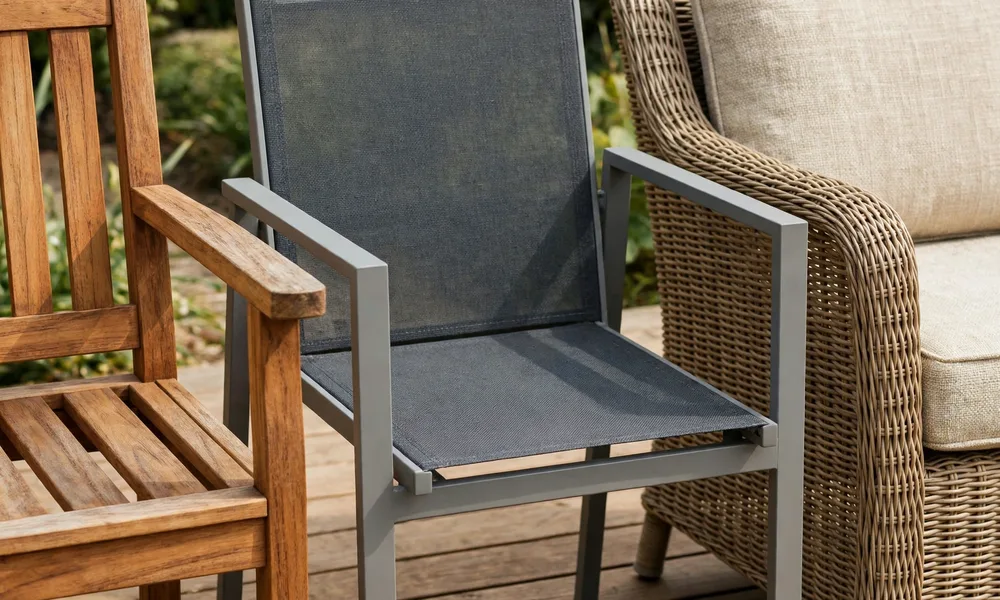
Teak is the classic choice. Its natural oils repel water and insects, and a well-made teak set can last twenty years with almost no care beyond an occasional wash. It will silver with age unless you oil it, but that grey patina is weathering, not damage. Eucalyptus and acacia look similar at first but need regular oiling to avoid cracking, and rarely match teak for longevity.
Powder-coated aluminium is the low-maintenance champion. It never rusts, it is light enough to move around the garden, and modern finishes hold their colour for years. Very light sets can blow over in strong wind, so look for a solid, well-braced design. All-weather wicker, woven over an aluminium frame, gives the warm look of natural rattan without the fragility, and a quick hose-down keeps it clean. Real rattan belongs indoors or under a fully covered porch, not out in the rain.
Patio Furniture Types Compared
There is no single best patio furniture layout for every garden, because the right choice depends on the size of your space and how you use it. A dining set is the workhorse for families who eat outside. A deep-seat lounge set is the choice for long, lazy evenings. A modular set bridges the two, letting you rearrange seats as the group grows or shrinks. Smaller spaces call for bistro sets and benches that tuck away.
| Set Type | Best For | Seats | Typical Price |
|---|---|---|---|
| Deep-seat lounge set | Relaxing, evening drinks, reading | 4–6 | $800–$2,500 |
| Outdoor dining set | Family meals, entertaining | 4–8 | $600–$2,000 |
| Modular sectional | Large patios, flexible groups | 5–8 | $1,200–$3,500 |
| Bistro set | Balconies, small patios, couples | 2 | $150–$500 |
| Daybed or swing | Sunbathing, lazy afternoons | 2–3 | $400–$1,200 |
| Adirondack chairs | Fire-pit corners, lawns | 1 each | $120–$350 each |
Price is a guide, not a verdict. A well-built mid-priced set often outlasts a flashy expensive one, because the difference is usually in the frame, the fabric and the joints rather than the label. Before you buy, check the weight limit per seat, the warranty, and whether replacement cushions are sold separately.
Measuring Your Patio and Planning the Layout
Measure twice and buy once. Sketch your patio on paper, mark the doors, the steps, the sunny and shaded corners, and the path people walk to the garden. Then mark out the set’s footprint with masking tape on the ground, walk around it, and pull out a chair. This prevents the most common patio mistake: a set that fits but leaves no room to move.
As a rule, allow 90 centimetres of clear space around a dining table so chairs can be pulled out and people can pass behind them. For a lounge set, leave 60 centimetres between the coffee table and the seats so legs fit comfortably, and keep at least a metre between the set and any fire feature. Think about the sun too: dining areas need afternoon shade, while a lounge corner is lovely in evening sun.
Comfort, Cushions and Fabric
Cushions decide whether your patio furniture gets used every day or sits empty. The best outdoor cushions use quick-drying foam that lets rain drain through instead of pooling inside, wrapped in solution-dyed acrylic fabric. Solution-dyed means the colour runs through the fibre, not just on the surface, so it resists fading in strong sun and stands up to spills and cleaning. Look for removable, washable covers and fabric rated for outdoor use.
Seat depth and back angle matter as much as cushion thickness. A lounge seat around 55 to 60 centimetres deep lets most adults sit back comfortably, while a dining seat of 40 to 45 centimetres keeps you upright at the table. If a set feels too shallow, no cushion will fix it. A rug under the set defines the space and softens hard paving under bare feet. Our guide to the best outdoor rugs for patios covers sizes, materials and what survives a wet summer.

Shade, Heating and the Evening Hours
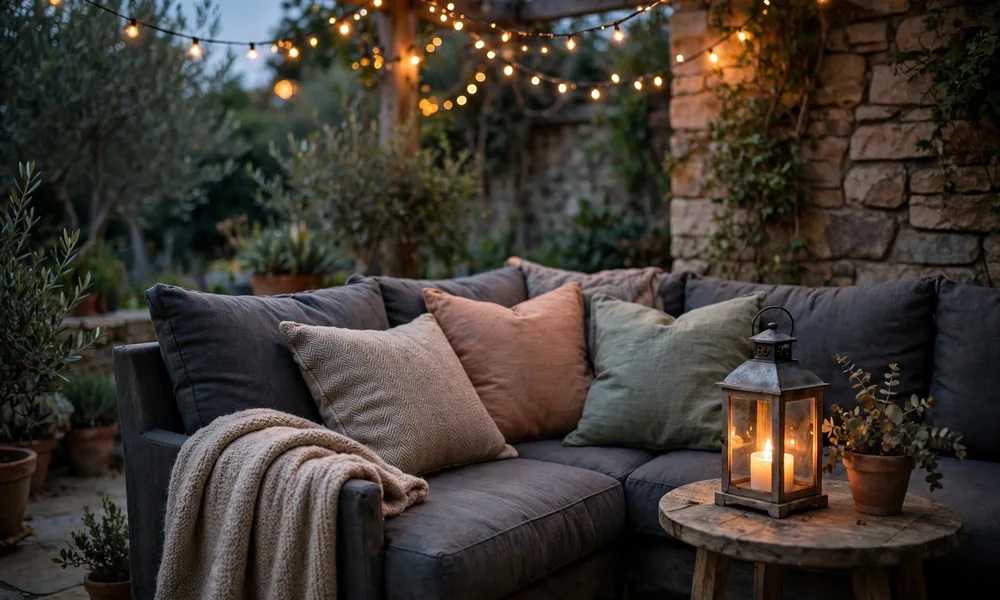
The best patio furniture earns its keep after sunset as well as at midday. A parasol shades a dining table through the afternoon, while a fire pit extends the season into cool evenings. If you plan evening gatherings, think about the furniture around the heat source: low lounge chairs suit a fire pit, while dining chairs suit a table heater. Our guide to the best fire pits explains fuel types and safe clearances, which matter as much as the chairs around them. String lights and lanterns finish the room for very little.
Caring for Patio Furniture Through the Seasons
In spring, bring the furniture out and wash it down. Teak gets a soft brush and soapy water; aluminium and wicker get a hose and mild detergent; cushions get a wash or a shake-out in the sun. Tighten bolts and replace missing glides, which let metal legs scratch paving and wobble.
In summer, rotate cushions so they fade evenly, keep a cover handy for storms, and bring cushions in during long wet spells. A cushion that stays damp grows mildew, which is far harder to remove than to prevent. In autumn, clean everything, let it dry fully in the sun, then cover or store it. Never cover damp furniture: trapped moisture is worse than rain.
Common Mistakes When Buying Patio Furniture
The first mistake is buying for the garden you wish you had rather than the one you have: a six-seater set on a balcony built for two will frustrate you every day. The second mistake is choosing by colour alone: a pale cushion looks wonderful in the showroom and shows every mark after one barbecue, while a dark frame shows dust and pollen. Mid-tones hide everyday wear best.
The third mistake is ignoring weight and wind: very light chairs are easy for a gust to throw across the garden, so check the weight and look for stackable designs. The fourth mistake is forgetting the extras: covers, cushions, a parasol and a rug can add a third to the cost of a set. Finally, do not buy a set you have never sat in without checking the return policy.
Patio Furniture Buying Checklist
- Measure the patio and mark the set footprint on the ground, leaving 90 centimetres around dining tables.
- Check the frame material and joints: teak, powder-coated aluminium or all-weather wicker over a metal core.
- Sit in the chairs, or check seat depth, seat height and cushion thickness in the specifications.
- Choose quick-drying foam and solution-dyed, removable, washable cushion covers.
- Confirm replacement cushions, covers and spare parts are sold separately.
- Budget for covers, shade and storage, and plan where cushions will live in winter.
Frequently Asked Questions
What is the best material for patio furniture?
Teak, powder-coated aluminium and all-weather wicker are the most reliable choices for most gardens. Teak lasts longest and needs the least care beyond washing, aluminium never rusts and is light to move, and all-weather wicker gives a warm look with very little maintenance. The best choice depends on your climate and how much upkeep you will do.
How much should I spend on patio furniture?
A good two-seater bistro set starts around $150, a quality four-seater dining set around $600, and a deep-seat lounge set around $800. Spending more usually buys a stronger frame, better fabric and a longer warranty. Budget an extra 20 to 30 percent for covers, cushions and shade.
Can patio furniture stay outside all year?
Frames made from teak or powder-coated aluminium can stay outside all year in most climates if they are covered, but cushions should come indoors in winter. Never cover damp furniture, and always let it dry fully first.
How do I stop patio cushions fading?
Choose solution-dyed acrylic fabric, rotate cushions regularly, and wash them with mild soap rather than bleach. A parasol over the seating area also slows fading.
What size patio table do I need?
Allow about 60 centimetres of table width per person and 90 centimetres of clear space around the table. A four-seater table is usually around 120 by 75 centimetres, a six-seater around 180 by 90 centimetres, and an eight-seater around 240 by 100 centimetres. Check them against your patio before you order.
Is wicker or rattan better for outdoors?
All-weather wicker, woven from synthetic resin over an aluminium frame, is far better outdoors than natural rattan, which cracks, fades and rots in rain and sun. Natural rattan belongs indoors or on a fully covered porch. If you love the woven look outside, choose resin wicker over a rust-proof aluminium frame.
The Bottom Line
The best patio furniture in 2026 is the set that fits your space, suits the way you actually spend time outdoors, and is built from materials that can handle your weather. Measure first, sit before you buy, choose teak, aluminium or all-weather wicker, and invest in cushions that dry fast and covers that keep the rain off. Soft cushions make the seats inviting, and our guide to the best throw pillows for outdoor use shows how to add colour without anything that fades or soaks through in the first shower. Buy for real life, and your garden will feel like a second living room for years.


