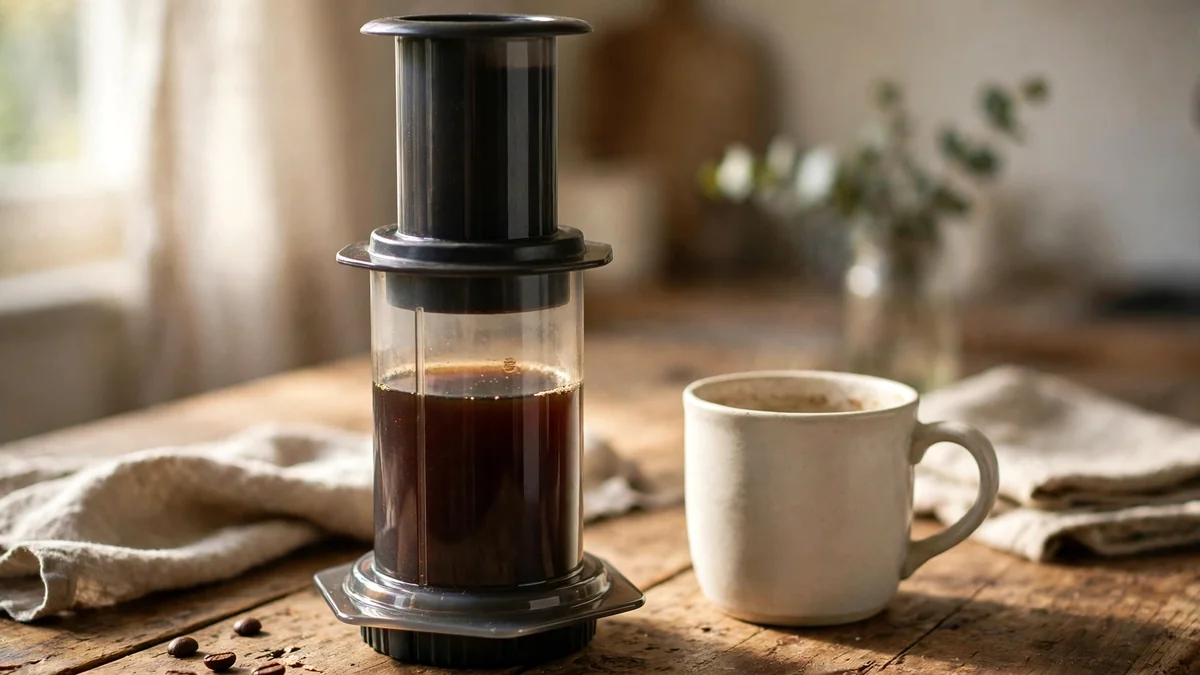
The AeroPress That Brews Clean, Strong Coffee Without a Machine in 2026
The AeroPress is a small plastic brewer that makes remarkably clean, strong coffee with nothing more than hot water, ground beans and a gentle push. It looks like a large syringe, costs far less than an electric machine, and fits in a drawer, a desk or a travel bag.
What makes the AeroPress different is the way it brews. Most coffee makers rely on gravity alone, letting water drip slowly through the grounds, while espresso machines force water through at high pressure. The AeroPress sits between the two: the grounds steep in hot water for a minute or two, like a French press, and then a plunger presses the coffee gently through a paper or metal filter.
Key Takeaways
- The AeroPress brews by immersion plus gentle pressure, so the cup is rich like a French press but clean like a pour-over, with almost no sediment.
- Start with 15 grams of coffee to 250 grams of water, ground fine like table salt, with water just off the boil at around 85 to 92 degrees.
- The inverted method gives a fuller, stronger cup and stops drips before you press, but it needs care because a knock can spill hot coffee.
- Paper filters make the cleanest, brightest cup; metal filters let more oils through for a heavier body, at the cost of a little fine sediment.
- Rinse the brewer and the filter cap straight after brewing, and the whole thing is clean in under a minute with no descaling ever needed.
AeroPress 2026 at a Glance
| Best for | Method | Grind | Standout strength |
|---|---|---|---|
| Best overall | Standard, paper filter | Fine, like table salt | Clean, sweet cup with almost no grit |
| Strongest cup | Inverted, two-minute steep | Fine | Full, espresso-like intensity for milk drinks |
| Brightest, fruity coffee | Standard, paper filter | Medium-fine | Clear acidity with no muddiness |
| Heaviest body | Inverted, metal filter | Fine | Rich oils and a syrupy mouthfeel |
| Travel and camping | Standard, paper filter | Fine | Light, unbreakable and needs no power |
| Iced coffee | Standard, over ice | Fine | Strong concentrate that stays bright when chilled |
What an AeroPress Actually Is
An AeroPress has only four parts: a brew chamber, a plunger with a rubber seal, a filter cap and a stirrer, plus a scoop and a pack of paper filters in the box. You put a filter in the cap, screw it onto the chamber, sit the chamber on a mug, add coffee and hot water, stir, wait, and press the plunger down slowly. The whole brew takes about two minutes, and the used puck of grounds pops out in one neat disc when you unscrew the cap.
The brewer was invented in 2005 by Alan Adler, an engineer who wanted a single cup of coffee that was less bitter than drip coffee and quicker than a French press. He settled on a short steep and a gentle press, and the design has barely changed since. The only part that ever needs replacing is the rubber seal, and that lasts for years.
Standard Method vs Inverted Method
The standard method is the one in the instructions, and the best place to start. Put the filter in the cap, rinse it with hot water, screw the cap onto the chamber and sit it on your mug. Add 15 grams of finely ground coffee, pour in 250 grams of water at about 90 degrees, stir for ten seconds, put the plunger in the top to stop the drip, wait a minute, then press down slowly for about thirty seconds. Stop when you hear a hiss: pressing further only squeezes bitterness out of the spent grounds.
The inverted method flips the brewer upside down. The plunger goes in first, the chamber stands on it like a cup, and the coffee and water go in from the top. Nothing drips while the coffee steeps, because the filter cap is on top and the seal holds everything in. After two minutes you screw on the cap, flip the whole brewer onto your mug in one confident movement, and press. The trade-off is safety: a flipped AeroPress full of hot water is an accident waiting for a careless moment. Beginners should stick to the standard method until the steps feel automatic.

Grind, Dose and Water Temperature
Grind size matters more with an AeroPress than with almost any other brewer, because the steep is so short. Too coarse and the water passes through without picking up enough flavour, leaving a thin, sour cup. Too fine and the press becomes a wrestling match, the coffee over-extracts and turns bitter. The sweet spot is fine, like table salt: finer than pour-over, coarser than espresso. If your coffee tastes sour and weak, grind finer; if it tastes bitter and dry, grind coarser.
Dose is the second lever. Fifteen grams of coffee to 250 grams of water is the classic ratio, roughly one heaped scoop to a full mug, and it makes a balanced cup most people like straight away. For a stronger cup, use 18 grams to 200 grams of water and top up with hot water afterwards, or drink it short with milk. A good coffee grinder matters more than any of this, because even particles extract evenly.
Water temperature is the third lever, and the AeroPress is forgiving about it. Water just off the boil, around 92 degrees, suits medium and dark roasts, while lighter roasts often taste sweeter at 85 to 88 degrees, because cooler water pulls less bitterness out of the beans. If you have no thermometer, boil the kettle and wait about a minute.
Paper Filters vs Metal Filters
The paper filters in the box make the cleanest cup the AeroPress can produce. They catch the fine particles and most of the oils, so the coffee tastes bright and clear, with the fruity or floral notes of a good bean easy to pick out. Rinse the filter with hot water before brewing to wash away any papery taste and to warm the brewer. Paper filters are cheap, compostable and easy, and most AeroPress owners never use anything else.
A metal filter is a thin steel disc with tiny holes that replaces the paper. It lets the coffee oils through, so the cup has a heavier body and a rounder, richer feel, closer to a French press but without the sludge. The trade-off is a little fine sediment in the last sip and a slightly muddier flavour, which suits dark roasts and milk drinks better than delicate light roasts.

Recipes Worth Learning First
The classic recipe is the one to master before anything else: 15 grams of fine coffee, 250 grams of water at 90 degrees, stir ten seconds, steep one minute, press for thirty seconds. It takes two minutes, works with almost any bean, and is the baseline every other recipe is judged against. Once it tastes good three days in a row, you own the brewer.
The inverted recipe is the classic with a longer steep: 18 grams of coffee, 200 grams of water, stir, steep for two minutes, flip and press. The cup is stronger and sweeter, with more body, and it takes milk well.
Iced AeroPress is the best summer use of the brewer. Brew 18 grams of coffee with 100 grams of hot water using the standard method, pressing directly onto 150 grams of ice in a sturdy glass. An espresso-style shot uses 18 grams of very finely ground coffee and only 90 grams of water, steeped for thirty seconds and pressed hard and slow.
How It Compares With Other Brewers
Against a French press, the AeroPress wins on cleanliness and speed. A French press steeps for four minutes and leaves sediment in every cup, while the AeroPress steeps for one or two and filters it all out. The French press still wins on volume: it makes a full pot for a household, while an AeroPress makes one cup at a time. Our guide to the best French press coffee makers covers the big-pot side of that choice in full.
Against a pour-over, the AeroPress wins on forgiveness. Pour-over needs a slow, careful pour and a precise grind, and a small mistake shows in the cup. The AeroPress tolerates a rough pour and a slightly wrong grind, because the immersion steep does most of the work.
Against a moka pot, the AeroPress wins on control and clean-up. A moka pot brews strong, rich coffee on the stove with steam pressure alone, but it is easy to overheat and turn bitter, and it needs the right grind and heat every time. The AeroPress lets you change steep time, temperature and grind independently, and it rinses clean in seconds.

Mistakes That Ruin the Cup
The most common mistake is pressing too hard and too fast. The plunger should take about thirty seconds to travel down, with steady, gentle pressure. Forcing it pushes bitter compounds out of the grounds and can crack the seal. If the press feels stiff, the grind is too fine; loosen the grind rather than pushing harder. The second mistake is water that is too hot for the bean: boiling water straight onto light-roast coffee scorches the delicate flavours. Let the kettle sit for a minute first. The third mistake is stale coffee, which shows more clearly in a clean AeroPress cup than in a French press: buy beans roasted within three weeks and grind them just before brewing.
Before You Buy: A Short Checklist
- Choose the original AeroPress for home use, or the Go if you travel and want the brewer to pack into its own mug.
- Check the rubber seal is soft and grips the chamber; a dry, stiff seal is the first thing to replace.
- Buy a spare pack of paper filters with the brewer so you never run out mid-week.
- Pair it with a burr grinder and a kitchen scale, because grind and dose decide the cup more than the brewer does.
- Decide paper or metal filters before your first brew, and rinse whichever you use with hot water first.
Frequently Asked Questions
Is an AeroPress better than a French press?
For a single clean cup, yes: the AeroPress steeps like a French press but filters out the sediment, so the coffee tastes brighter and the clean-up takes seconds.
Can an AeroPress make real espresso?
Not quite. It makes a short, strong shot that works well in milk drinks, but it brews at around one bar of pressure while an espresso machine uses nine, so it cannot produce true espresso crema.
How long does an AeroPress last?
Years. There are no electronics or heating parts to fail. The rubber seal is the only wearing part, and a replacement costs very little.
Do I need a special grinder for an AeroPress?
You need a burr grinder that can grind fine and evenly. A blade grinder makes dust and chunks that brew unevenly, and the cup shows it.
Can I use an AeroPress for cold coffee?
You can make iced coffee in two minutes by pressing a strong brew over ice, which most people prefer to cold brew.
Is the AeroPress good for travel?
It is one of the best travel brewers: light, unbreakable, needs no power, and packs into its own mug in the Go version.
The Bottom Line
Verdict: the AeroPress is the best single-cup brewer for most people in 2026, because it makes a clean, strong cup in two minutes with no machine, no descaling and almost nothing to go wrong. Start with the standard method, 15 grams of fine coffee to 250 grams of water at 90 degrees, paper filters and a slow thirty-second press. Buy it if you drink one or two cups a day and care about flavour; skip it if you need a full pot for a household every morning.


