Wall Lamps That Light a Bedside, a Reading Chair and a Dark Corner in 2026
Wall lamps are the lights that solve the rooms where a ceiling fitting is not enough and a table lamp has nowhere to sit. A wall lamp puts warm light exactly where you need it: beside a bed for reading, over a chair for an evening with a book, above a picture that deserves to be seen, or in a dark corner that the ceiling light never reaches.
The family is wider than most people realise. It includes plug-in lamps that need only a socket and two screws, hardwired lamps fitted by an electrician, swing-arm lamps that pull out over a book and fold flat when you are done, and battery lamps that stick to the wall with no wiring at all.
Key Takeaways
- Wall lamps beat table and floor lamps where surfaces and floor space are scarce: beside a bed, over a reading chair, or in a narrow corner.
- Plug-in and battery wall lamps need no electrician and suit renters; hardwired lamps look cleanest but need wiring and a professional fit.
- Swing-arm lamps are the best reading lights, because you can pull the shade over the page and fold it away when you are done.
- Warm bulbs between 2200K and 2700K suit bedrooms and living rooms best.
- Mount bedside wall lamps about 130 to 150 centimetres from the floor, so the shade sits just above shoulder height when you sit up in bed.
Wall Lamps 2026 at a Glance
| Best for | Type | Power | Standout strength |
|---|---|---|---|
| Best overall | Plug-in shaded lamp | Plug-in | Warm glow, no electrician, easy to move |
| Best for reading | Swing-arm lamp | Plug-in or hardwired | Pulls over the page, folds flat when done |
| Best for renters | Battery lamp | Battery | No wiring, no holes beyond two screws |
| Best for pictures | Picture light | Battery or hardwired | Narrow beam that washes the frame evenly |
| Cleanest look | Hardwired shaded lamp | Hardwired | No cord showing, built into the wall |
| Best on a budget | Plug-in spot lamp | Plug-in | Focused light for very little money |
Wall Lamps vs Wall Sconces: The Distinction That Matters
People use the two words as if they meant the same thing, and in a shop they often do, but the guides on this site draw a useful line between them. A wall sconce is a fixed fitting whose job is to wash a wall with light: it is the lamp you space along a dark hallway so the walls glow and the corridor feels wider. Our guide to the wall sconces that warm up a dark hallway covers that hallway job in full.
A wall lamp is the wider family, and this guide is about the whole family. It includes sconces, but it also includes the lamps a hallway guide never covers: the plug-in reading lamp beside a bed, the swing-arm lamp over a chair, the battery picture light above a painting, and the small spot lamp that lights a dark corner in a rented flat.
The Types, and Where Each One Belongs
Plug-in wall lamps are the easiest place to start. They screw to the wall, plug into a nearby socket, and hide the cable in a cord cover that paints to match the wall.
Hardwired wall lamps connect directly to the wiring in the wall, with no cord and no plug.
Swing-arm wall lamps have a jointed arm that pulls the shade out over a book or a pillow and folds flat against the wall when you are done. They are the best reading lamps in this guide, because the light follows the page instead of the page following the light. Our guide to the reading lamps that make night reading easy covers the same problem from the table-lamp side. Battery wall lamps run on rechargeable batteries and need no wiring at all. They are dimmer than mains lamps and need charging every few weeks, but they go where no other lamp can: above a picture in a hallway with no socket, inside a cupboard, or on a rented wall where you cannot chase a cable.
Picture lights are a type of their own. They sit above a frame and throw a narrow, even beam down across the artwork, with a shade that stops the bulb glaring into the room.
Bedside Wall Lamps: Getting the Height Right
The bedside is where wall lamps earn their keep, because they free the nightstand for a book, a glass of water and a phone. The height is the decision that matters most. Mount the lamp so the bottom of the shade sits about 130 to 150 centimetres from the floor, which puts it just above shoulder height when you sit up in bed.
The switch matters almost as much as the height. A bedside lamp needs a switch you can find in the dark without sitting up: a pull cord hanging beside the shade, a touch switch on the base, or a small rocker on the cord. A dimmer is worth paying for here more than anywhere else in the house: full brightness for reading, a low warm glow for winding down, and a light that does not wake the person beside you.
Reading Chairs, Corners and Pictures
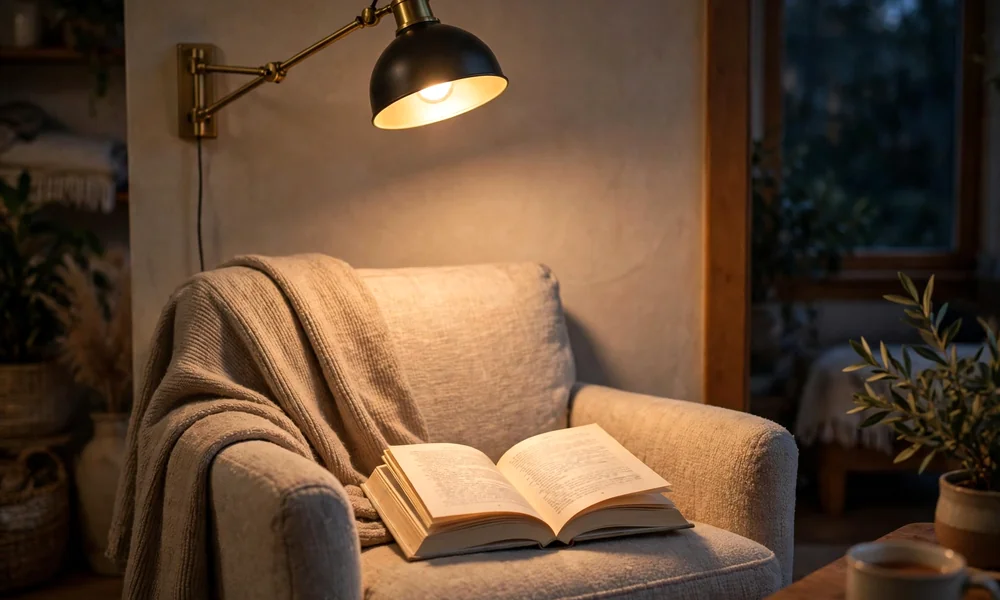
A reading chair needs a different lamp from a bed. The lamp should sit slightly behind and to the side of the chair, on the side of your reading hand, so the light falls over your shoulder onto the page without shining into your eyes. A swing-arm lamp is the natural choice here, because you can pull it out for a book and push it back for a conversation.
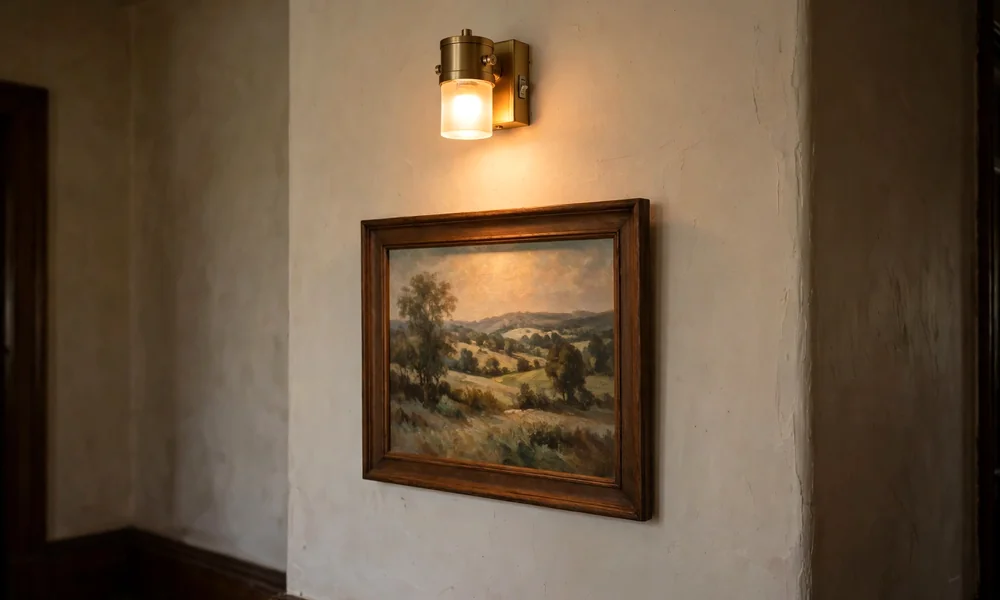
Dark corners are the second job. A corner the ceiling light never reaches usually needs only a small spot lamp aimed at the wall, which bounces soft light back into the room. Pictures are the third job, and the one people get wrong most often. A picture light should be warm, dimmable and narrow, and it should light the picture and nothing else. Cool white light makes oil paint look flat, so stay at 2700K or below.
How Bright and How Warm
A wall lamp does not need to be bright. A bedroom or living-room lamp giving 400 to 800 lumens is enough for reading, and a picture light needs fewer still. The mistake is chasing lumens instead of thinking about where the light lands: a 400-lumen bulb in a good shade on a pale wall looks brighter than an 800-lumen bulb in a dark shade on a dark wall.
Colour temperature is the number that decides whether a room feels warm or cold. A bulb rated 2200K to 2700K is warm, the colour of candlelight, and it flatters wood, plaster and skin. A bulb rated 4000K or higher is cool white, the colour of an office, and it will make a bedroom feel like a corridor. Shade material changes the light as much as the bulb does. Fabric and linen shades soften the light beautifully; metal shades throw a stronger, more focused pool for reading; opal glass diffuses without losing brightness.
Wall Lamps vs Desk and Floor Lamps
A desk lamp is the right lamp when the work sits on a desk. It gives focused light on a keyboard or a page, it moves with the work, and it switches off when the work ends. A wall lamp is the right lamp when there is no desk: beside a bed, over a chair, or in a hallway. The two rarely compete for the same job, and most homes need both. Our guide to the best desk lamps covers the desk side.
A wall lamp is the right lamp when the floor is full: a small bedroom, a narrow living room, or a hallway where a floor lamp would be kicked every day. The practical rule is to light a room in layers. A ceiling light gives general light, a wall lamp gives task light where you sit or read, and a small lamp gives accent light where you want warmth.
Mounting, Wiring and Renter-Friendly Fitting
Mounting a wall lamp is a small job, but it has a few rules that save trouble later. Mark the position with painter’s tape before you drill, and sit in the chair or lie in the bed to check the height from where you will actually use it.
Renters have the most to gain from wall lamps and the most to lose from a bad fitting. A plug-in or battery lamp needs only two small screw holes, which fill with a dab of filler when you leave. A hardwired lamp needs chasing, plastering and an electrician, and it belongs to the landlord’s wall, not yours. Cord covers deserve a mention, because they decide whether a plug-in lamp looks finished or improvised. A slim plastic channel, painted the colour of the wall, hides the cable from the lamp to the socket and costs very little.

Mistakes That Ruin the Effect
The most common mistake is mounting the lamp too high. A wall lamp mounted near the ceiling lights the ceiling and leaves the chair in shadow, which is the opposite of its job. Measure from where you sit, not from where you stand, and mark the height with tape before you drill. The second mistake is an exposed bulb at eye level, which throws glare into every face in the room; a shade, frosted glass or a dimmer fixes it. The third mistake is mixing colour temperatures in one room, which looks wrong even when each lamp is good on its own.
Before You Buy: A Short Checklist
- Decide the job first: bedside reading, chair reading, picture lighting or a dark corner, and buy the type that fits it.
- Choose plug-in or battery if you rent, and hardwired only if you own the home and can hire an electrician.
- Check the bulb fitting, buy warm bulbs between 2200K and 2700K, and buy a dimmable bulb even without a dimmer.
- Measure the mounting height from where you will sit or lie, and mark it with painter’s tape before drilling.
- Buy matching pairs together from the same batch, so finishes and light colour match on both sides.
Frequently Asked Questions
Are wall lamps the same as wall sconces?
Not quite. A sconce is a fixed fitting that washes a hallway wall with light, while a wall lamp is the wider family, including plug-in, swing-arm and battery lamps for bedsides, reading chairs and pictures.
Do wall lamps need an electrician?
Plug-in and battery wall lamps do not: they need a socket or a charged battery and two screws. Hardwired lamps do.
How high should a bedside wall lamp be?
About 130 to 150 centimetres from the floor, so the bottom of the shade sits just above shoulder height when you sit up in bed.
Can renters fit wall lamps?
Yes, with plug-in or battery lamps that need only two small screw holes, which fill easily when you leave. Hardwired lamps are not a renter’s job.
Are battery wall lamps bright enough to read by?
For a short read, yes, if you buy a good rechargeable one and keep it charged.
What colour temperature is best for a wall lamp?
Warm white between 2200K and 2700K for bedrooms and living rooms, which flatters wood and skin and feels restful at night.
The Bottom Line
Verdict: the best wall lamps in 2026 are the ones matched to a single job, not the prettiest fitting in the shop. A plug-in shaded lamp suits most bedrooms, a swing-arm lamp suits anyone who reads in bed or in a chair, a battery picture light suits art in a room with no socket, and a hardwired pair suits a home you own and are making your own. Get the job, the height and the warmth right, and a small lamp on the wall will do more for a room than a bright ceiling light ever will.