Vietnamese Coffee in 2026: Phin Brews, Robusta Beans and Condensed Milk
Vietnamese coffee is the boldest coffee most people will ever drink at home: dark-roast Robusta, dripped slowly through a small metal phin filter, poured over sweetened condensed milk and a full glass of ice. The result is strong, sweet and silky: the Robusta gives it an almost chocolatey intensity, the condensed milk softens the bitterness, and the ice makes it refreshing rather than heavy.
It is also one of the cheapest great coffees you can make: a phin filter costs a few pounds, the beans are robust and forgiving, and the whole ritual takes five minutes. This guide covers what Vietnamese coffee actually is, the phin, the beans, the milk, and how to brew ca phe sua da, the iced version, and ca phe sua nong, the hot version, at home.
5 Key Takeaways
- Vietnamese coffee is dark-roast Robusta brewed through a phin filter and sweetened with condensed milk.
- The phin drips slowly, one drop at a time, for four to five minutes.
- Robusta gives the drink its strength, body and chocolatey bitterness, with roughly twice the caffeine of Arabica.
- Condensed milk is both the sweetener and the milk: start with one to two tablespoons and taste before adding more.
- The classic serve is iced, ca phe sua da, but the same brew works hot, ca phe sua nong.
What Vietnamese Coffee Actually Is
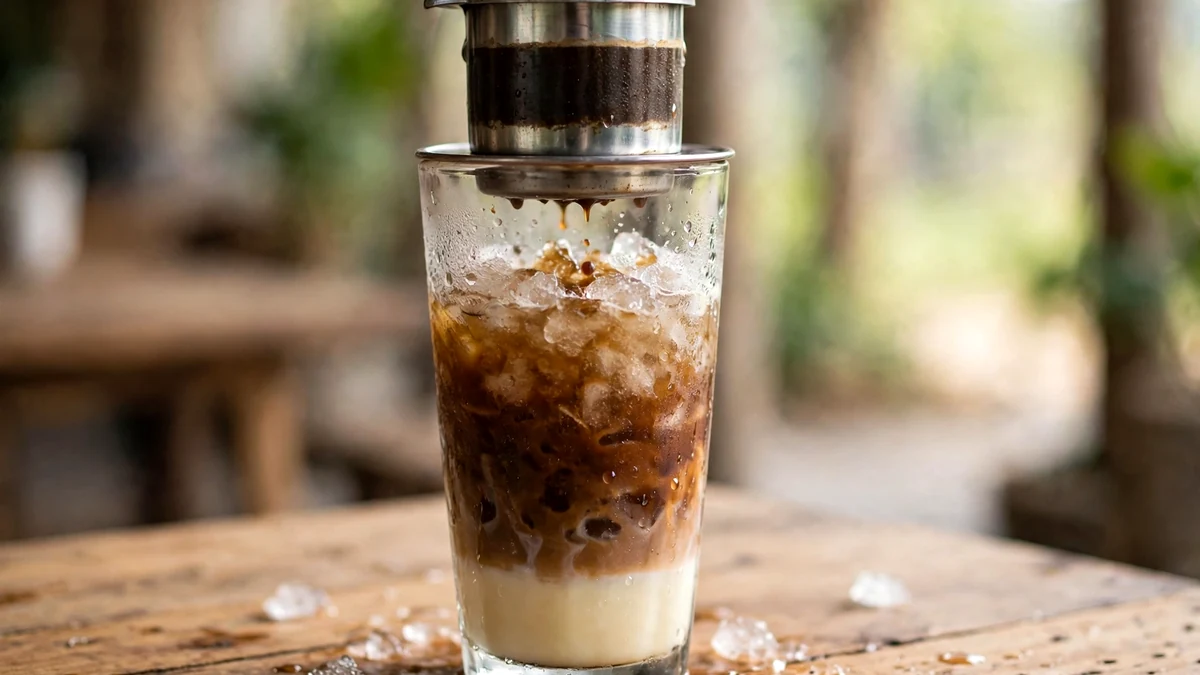
Vietnamese coffee starts with Robusta beans, grown in the Central Highlands of Vietnam, dark-roasted until they are oily and almost black, then ground medium-fine and brewed in a phin. A phin is a small stainless steel cup with a perforated base that sits on top of your glass: you add the grounds, press them lightly, pour in hot water, and wait while the coffee drips through, one drop at a time. The brew lands directly on condensed milk below, and you stir it and pour it over ice.
Three things make it different from every other coffee. The bean is Robusta, not Arabica, so the cup is stronger, heavier and more bitter, with a chocolatey depth rather than the bright fruitiness of a light roast. The brewer is the phin, a slow drip with no paper filter, so the coffee keeps its oils and body. And the sweetener is condensed milk, thick and caramel-sweet, which does the work of both sugar and milk at once.
Turkish coffee, the other famous strong coffee, is brewed in a cezve pot with powder-fine grounds and served unfiltered with foam, a different drink made a different way. And the iced-coffee roundups treat Vietnamese coffee as one style among many; this guide is the dedicated version, about the phin, the beans and the milk in full. Our guide to the best coffee beans of 2026 compares Arabica and Robusta in detail.

The Phin Filter: Slow Coffee by Design
The phin looks too simple to work, and that is the point. It has four parts: a cup with a perforated base, a press plate that sits on the grounds, a lid that keeps the heat in, and a small plate underneath that rests on the rim of your glass. There is no paper, no pump and no electricity. Hot water goes in the top, and gravity and patience do the rest over four to five minutes until a small, strong brew collects below.
Size matters more than brand. A small phin, around 100 millilitres, suits a single glass and is the one to buy first. Stainless steel is the standard: it holds heat, it does not rust, and it survives a kitchen drawer. Aluminium phins are cheaper and lighter, but they dent easily and lose heat faster. Avoid painted or coated phins, because the coating chips into the coffee.
The press plate is where most beginners go wrong. Press it down firmly and the water cannot get through, so the drip stalls and the coffee turns bitter. Leave it loose and the water rushes through, so the cup tastes thin. The right touch is a gentle press, just enough to level the grounds. If the first drips appear within a minute and the cup finishes in four to five, the press is right.
Robusta Beans: The Bold Base
Robusta is the heart of Vietnamese coffee, and the reason the drink is so strong. The bean has roughly twice the caffeine of Arabica, a heavier body, and a flavour of dark chocolate, earth and firm bitterness rather than fruit or flowers. That bitterness is not a flaw here: it is what the condensed milk is for, rounding off the bitter edge while the Robusta underneath keeps the drink from tasting like a milkshake.
Buy Vietnamese Robusta if you can find it, ideally dark-roasted and ground for phin, which is medium-fine, coarser than espresso and finer than French press. Pre-ground phin coffee from a Vietnamese brand is the easiest starting point, ground exactly for the drip speed a phin needs. If you grind your own, aim for the texture of coarse sand: too fine and the phin chokes, too coarse and the water runs straight through.
Freshness still matters, even with a dark roast. Robusta goes stale like any coffee, and stale Robusta tastes flat and ashy rather than bold. Buy small bags, use them within a few weeks of opening, and keep them sealed in a cool, dark cupboard.
Condensed Milk: The Sweet Counterweight
Condensed milk is not an optional extra in Vietnamese coffee: it is half the drink. It is milk with most of the water removed and sugar added, thick, pale and caramel-sweet, and it does two jobs at once: it sweetens the bitter Robusta, and it gives the drink a silky body that sugar and fresh milk never quite match. Stirred into hot coffee it dissolves cleanly; poured over ice it sinks in a slow ribbon and blends into a creamy, toffee-coloured glass.
The ratio is the whole skill. Start with one tablespoon of condensed milk for a small cup and two for a tall iced glass, stir well, and taste before adding more. It is easy to add more and impossible to take it away, and a drink that is too sweet hides the coffee completely. The right balance tastes like coffee first and sweetness second. Our guide to condensed milk worth stocking in 2026 covers which cans to buy and how to judge them.
Do not substitute fresh milk and sugar and expect the same drink: fresh milk thins the coffee and the sugar dissolves separately. Evaporated milk is closer, but it is unsweetened, so it gives the body without the sweetness. If you must cut the sugar, use half condensed milk and half evaporated milk.
Vietnamese Coffee Compared
| Vietnamese coffee style | How it is served | Flavour | Strength |
|---|---|---|---|
| Ca phe sua da (iced) | Over condensed milk and crushed ice | Bold, sweet, silky | Very high |
| Ca phe sua nong (hot) | Hot, stirred with condensed milk | Rich, chocolatey, warming | Very high |
| Ca phe den (black) | Black, hot or iced, no milk | Dark, bitter, intense | Very high |
| Ca phe trung (egg coffee) | Hot, topped with egg yolk foam | Creamy, custardy, sweet | High |
How to Brew Ca Phe Sua Da at Home
Brewing Vietnamese iced coffee takes five minutes and four things: a phin, dark-roast Robusta ground medium-fine, condensed milk, and ice. Put one to two tablespoons of condensed milk in the bottom of a tall glass. Set the phin on top, add two tablespoons of coffee grounds, about 20 grams, and level them with a gentle press. Pour in just enough hot water to wet the grounds, about 30 millilitres, and wait 30 seconds while the coffee blooms.
Then fill the phin with hot water, just off the boil, put the lid on, and wait. The first drips should appear within a minute, and the brew should finish in four to five minutes. If it drips faster, the grind is too coarse or the press is too loose; if it stalls, the grind is too fine or the press is too tight. When the dripping stops, lift the phin away, stir the coffee into the condensed milk until the glass turns a uniform caramel brown, and pour it over a full glass of crushed ice.

Crushed ice matters: it chills the drink fast and dilutes it just enough to soften the Robusta without watering it down. Large cubes melt too slowly and leave the drink strong and warm at the bottom. Stir once after pouring and adjust the milk next time. The first cup is a test; the second is the one you will remember.
Hot or Iced: Two Ways to Drink It
The classic Vietnamese coffee is iced, ca phe sua da, and it is the version to learn first. The ice chills a very strong brew into something refreshing and dilutes it just enough to make the strength drinkable. A hot Vietnamese coffee, ca phe sua nong, is the same brew stirred with condensed milk and drunk straight from the glass, richer and more intense, the version for cold mornings.
Black Vietnamese coffee, ca phe den, is the purist version: the same phin brew with no milk at all, hot or iced. Without the condensed milk the Robusta is uncompromising, dark, bitter and very strong. Egg coffee, ca phe trung, is the dessert version: hot coffee topped with a thick foam of whipped egg yolk and condensed milk, creamy and custardy. Our guide to the best iced coffees of 2026 puts the Vietnamese iced version alongside the other cold styles.
Your Vietnamese Coffee Checklist
- A small stainless steel phin, around 100 millilitres, with a press plate that fits snugly.
- Dark-roast Robusta, ground medium-fine for phin, fresh within a few weeks of opening.
- Sweetened condensed milk, thick and pale ivory, not dark gold.
- Water just off the boil, with a 30-second bloom before the main pour.
- A four to five minute drip, one slow drop at a time, with the first drips inside a minute.
- One to two tablespoons of condensed milk to start, tasted before adding more, and crushed ice for iced.

Vietnamese Coffee FAQs
Is Vietnamese coffee stronger than normal coffee?
Yes. Robusta has roughly twice the caffeine of Arabica, and the phin brews a small, concentrated cup, so a single glass carries considerably more caffeine than a mug of filter coffee.
Can I make Vietnamese coffee without a phin?
You can get close with a small pour-over dripper or a French press, but it will not taste quite the same: the phin’s slow drip and metal filter give the brew its body and oils. A phin costs very little, so buy the real thing.
What grind should I use for a phin?
Medium-fine, about the texture of coarse sand: coarser than espresso, finer than French press. Too fine and the phin chokes; too coarse and the cup tastes thin.
Can I use Arabica beans instead of Robusta?
You can, and the drink will be smoother and brighter, but it will not be Vietnamese coffee as it is usually made: Robusta is what gives the drink its strength, body and chocolatey bitterness. A blend with a little Arabica is a good compromise if pure Robusta tastes too harsh.
Is condensed milk the same as evaporated milk?
No. Condensed milk is sweetened and thick, while evaporated milk is unsweetened and thinner. Vietnamese coffee needs condensed milk for both sweetness and body.
How much caffeine is in a glass of Vietnamese iced coffee?
Roughly 200 to 300 milligrams per tall glass, against about 95 milligrams in a mug of filter coffee. The condensed milk and ice make it easy to drink fast, so treat it with respect.
Bottom Line
Vietnamese coffee is three simple things done well: dark Robusta, a slow phin drip, and condensed milk in the right ratio. Buy a small steel phin, find a fresh dark-roast Robusta, start with one tablespoon of condensed milk, and give the drip its four to five minutes.