
A dark hallway is the one part of a home most people walk through without ever really looking at, and that is exactly the problem. The ceiling light, if there is one at all, throws a flat glare down the middle and leaves the walls in shadow, so the space feels like a tunnel. The wall sconces that warm up a dark hallway in 2026 fix that from the sides, putting soft light where your eyes fall as you walk.
Wall sconces work differently from other hallway lights because they light the walls themselves. A ceiling fitting shines down and away from you, while a sconce washes the wall beside it with warm light, and that reflected glow makes a narrow space feel wider and calmer. The best sconces of 2026 are not the brightest you can buy, but the ones with the right shade, bulb and position.
Key Takeaways
- Wall sconces warm a dark hallway by lighting the walls, not the floor, and that reflected glow makes a narrow corridor feel wider.
- Warm bulbs between 2200K and 2700K suit hallways best, because cooler white light makes plaster and paint look cold and flat.
- Mount sconces at eye level, roughly 150 to 170 centimetres from the floor, so the light falls across the wall instead of into your eyes.
- Space sconces 180 to 240 centimetres apart, and put one on each side of a doorway or mirror rather than crowding one wall.
- Fabric and linen shades soften the light beautifully, while open bulbs and clear glass suit modern hallways that need more punch.
Wall Sconces 2026 at a Glance
| Best for | Style | Shade | Standout strength |
|---|---|---|---|
| Best overall | Brass arm sconce | Linen taper | Warm, even glow on any wall colour |
| Best for narrow halls | Slim flush sconce | Opal glass | Sits close to the wall, never snags a shoulder |
| Best for modern homes | Black metal sconce | Exposed bulb | Strong pools of light with a clean silhouette |
| Best for bedrooms | Paired bedside sconce | Fabric drum | Soft reading light that frees the nightstand |
| Best for period houses | Candle-style sconce | Clear glass | Classic shape that suits old plaster and wood |
| Best on a budget | Simple swing-arm sconce | Metal shade | Adjustable direction for very little money |
Why Hallways Go Dark in the First Place
Most hallways are dark for the same three reasons. They rarely have windows, so they get no daylight. Builders treat the hallway as leftover space, so it gets one ceiling fitting, often the cheapest in the house. And dark doors, floors and walls swallow light faster than a single ceiling bulb can provide it.
That is why a brighter ceiling light almost never fixes a dark hallway: a stronger bulb just makes the glare worse while the walls stay gloomy. Sconces change the geometry, putting light low and to the side, at the height where you look, and bouncing it off the wall so it spreads softly. Two modest sconces warm a hallway more than one powerful ceiling light ever will, while using less electricity.
How Much Light a Hallway Actually Needs
A hallway does not need the brightness of a kitchen. It needs enough light to see where you are going, find the right door, and feel safe at night. A single sconce with a 40-watt-equivalent bulb gives roughly 400 lumens, and two of those cover an average hallway comfortably. The mistake is chasing lumens instead of thinking about where the light lands: a 400-lumen bulb in a good shade on a pale wall looks brighter than an 800-lumen bulb in a dark shade on a dark wall.
The other number that matters is colour temperature, in kelvin. A bulb rated 2200K to 2700K is warm, the colour of candlelight, and it flatters wood, plaster and skin. A bulb rated 4000K or higher is cool white, the colour of an office, and it will make a hallway feel like a hospital corridor. Check the box before you buy: swapping a cool bulb for a warm one is the cheapest hallway upgrade there is.
Spacing Them Along the Hall
In a straight hallway, space sconces 180 to 240 centimetres apart, with the first about a metre from the end wall, so the pools of light overlap instead of leaving dark gaps. In a very short hallway, one good sconce on the long wall is often enough, especially with a mirror opposite. In a long hallway, alternate sides if the corridor is wide enough, or keep them all on one side if the other side is lined with doors.
Styles That Suit a Dark Hallway
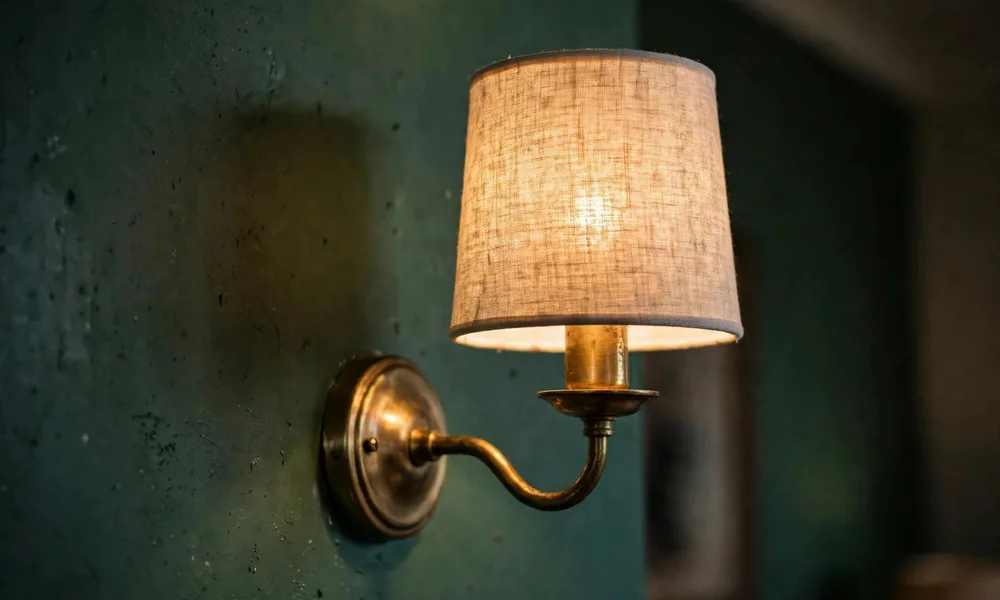
Style matters more in a hallway than in almost any other room, because you see the fitting up close every time you pass. Brass arm sconces with linen shades are the safest choice for most homes: the brass warms with age, the linen softens the bulb, and the shape suits modern and traditional hallways alike.
Modern Black and Exposed Bulbs
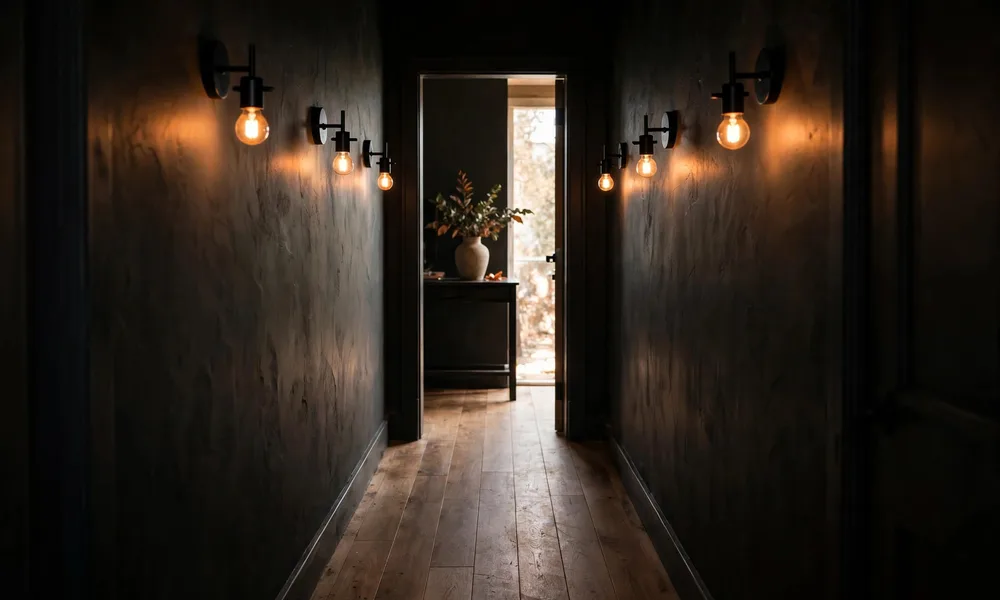
Black metal sconces with exposed filament bulbs suit dark walls or a modern feel, and they throw stronger pools of light than shaded sconces because nothing sits between bulb and wall. The trade-off is glare, so mount them slightly higher, or pair them with a dimmer. In a very narrow hallway, choose a slim design that sits close to the wall, because a deep fitting is something you will bump into within a week.
Whatever style you pick, buy the pair together. Sconces sold singly can drift in finish between batches, and two brass sconces in slightly different shades of gold will look wrong every time you walk past. Our guide to how to pick pendant lights that suit your room in 2026 covers the same problem for hanging lights: buy the set, not the single.
Bulbs, Dimmers and the Warmth Question
Most sconces sold in 2026 take standard LED bulbs, which run cool, last for years, and come in every colour temperature. Choose a dimmable bulb even if you do not own a dimmer yet, because it costs almost nothing extra. A dimmer is the best accessory for hallway sconces: full brightness when you are carrying laundry, and a low warm glow in the evening when the hallway only needs to guide you to bed.
One warning: not every LED bulb dims smoothly, and a cheap bulb on a good dimmer will flicker or buzz at low settings. Buy one bulb first, test it at every setting, and only then buy the rest. The same applies to smart bulbs, which you can set to come on at dusk and off at bedtime without touching a switch.
Where to Put Them: Height, Doors and Mirrors
Height is the decision most people get wrong, and the easiest to fix before you drill. Mount a sconce so the centre of the shade sits at eye level, roughly 150 to 170 centimetres from the floor, and the light will wash the wall evenly above and below it. Too high and the light pools on the ceiling while the floor stays dark; too low and the bulb glares into your eyes as you pass.
Doors and mirrors decide the exact positions. A sconce on each side of a mirror doubles the light, bouncing it back across the hallway without a single extra bulb. One beside a door lights the handle and the keyhole. Avoid putting an exposed-bulb sconce directly opposite a bedroom door, because the light will spill in every time someone passes at night. And never mount a sconce where a door swings into it: check every door swing before you mark the wall, not after drilling.
A hallway that turns into a staircase needs a sconce at the top and at the bottom, because the change of level is where people trip. A low, warm sconce at the foot of the stairs doubles as a night light for the whole house. Our guide to the best table lamps for warm, layered light in 2026 covers the same low-and-warm principle for living rooms.
Common Mistakes to Avoid
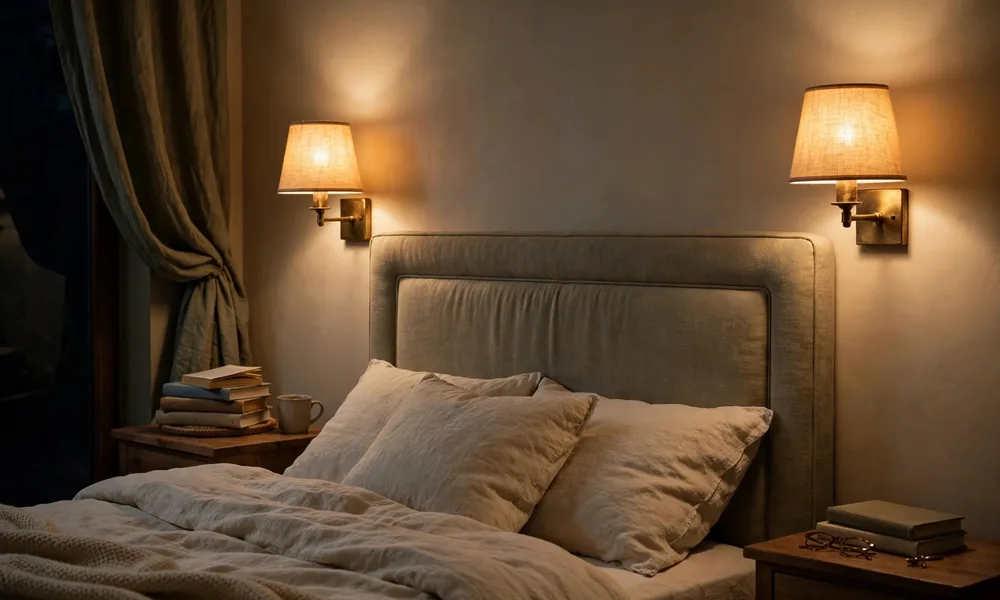
The most common mistake is buying sconces for how they look switched off, and forgetting to imagine them switched on: a beautiful fitting can throw harsh shadows once it is on the wall, so check the shape of the light, not just the metal. The second is mixing colour temperatures, which looks wrong even if you cannot say why. The third is spacing them too far apart, leaving dark gaps. The fourth is a shade that is too dark, absorbing the light you bought the sconce to provide. The fifth is forgetting the dimmer. Our guide to chandeliers worth hanging in your dining room in 2026 makes the same point about testing light before committing.
Before You Buy: A Short Checklist
- Measure the hallway and mark sconce positions with painter’s tape before buying.
- Check the bulb fitting and buy warm bulbs between 2200K and 2700K.
- Hold a sample shade against the wall in the evening, when artificial light changes how it looks.
- Confirm the fitting depth so it will not snag shoulders or doors in a narrow hall.
- Decide plug-in or hardwired first, and budget for an electrician and dimmer if hardwired.
- Buy all sconces and bulbs at once, from the same batch, so finishes and light match.
Frequently Asked Questions
How high should wall sconces be in a hallway? Aim for the centre of the shade at roughly 150 to 170 centimetres from the floor, at eye level, so the light washes the wall evenly.
How many sconces does a hallway need? A short hallway needs one or two; a long one needs one every 180 to 240 centimetres. Start with fewer and add one if dark gaps remain.
Are wall sconces enough light on their own? Usually yes, if the bulbs are warm and the spacing is right. In a very long or dark hallway, add a discreet ceiling light on a separate switch.
Do sconces work in a hallway with no wiring? Yes, plug-in sconces need only a nearby socket and two screws, with a cord cover hiding the cable. Battery sconces exist, but are dimmer and need recharging.
What colour temperature is best for a hallway? Warm white between 2200K and 2700K, which flatters wood and plaster and feels welcoming at night. Avoid cool white above 4000K.
Can I put sconces on both sides of a hallway? You can, and in a wide hallway it looks excellent, but in a narrow hallway keep them on one side so the fittings stay out of the way.
The Bottom Line
The best wall sconces for a dark hallway in 2026 put warm light on the walls at eye level, spaced evenly so no dark gaps remain, with bulbs you can dim in the evening. A brass arm sconce with a linen shade suits most homes, black metal suits modern hallways, and candle-style flatters period houses, but style matters less than position, spacing and light colour.
Start with the hallway, not the catalogue: measure the length, mark positions with tape, check the wall colour in the evening, and buy warm dimmable bulbs before falling in love with a fitting. Get that right and the darkest hallway becomes the warmest part of the house, for the price of two sconces and a dimmer.


