
A hungry baby does not wait for a bottle to warm up slowly, and a bottle that is too hot is worse than one that is still cool. That is the whole job of a baby bottle warmer: to take milk from the fridge, or from room temperature, and bring it to a comfortable warmth evenly, without hot spots, and without turning a two-minute job into a ten-minute one at three in the morning. The best baby bottle warmers of 2026 do that quietly and predictably, night after night, and the worst ones guess, overheat, or take so long that the baby is crying before the bottle is ready.
What a Bottle Warmer Actually Does
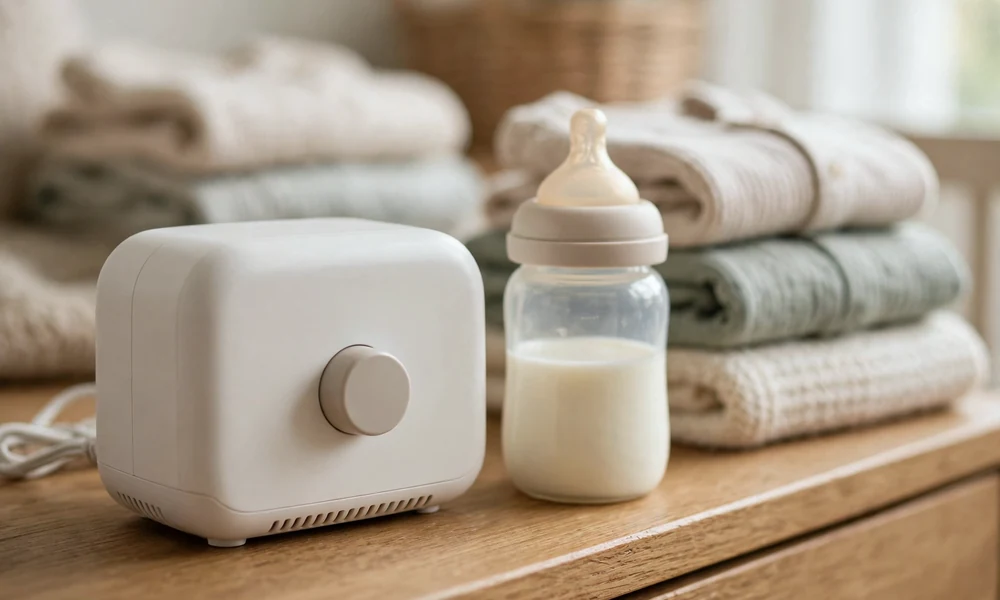
A bottle warmer is a small heated chamber that holds a baby bottle and warms the milk inside it to around body temperature. Most models use either steam or a warm water bath. Steam warmers heat quickly and suit parents who want speed, while water-bath warmers heat more gently and are often better for breast milk, which should never be overheated. Some warmers also keep a bottle warm once it is ready, thaw frozen milk, warm baby food jars, or sterilise a dummy in a quick steam cycle. Those extras are useful, but they are not the reason to buy one. The reason is a bottle at the right temperature, every time, without standing over a pan of hot water.
How to Choose: The Five Things That Matter Most
Start with speed, but measure it honestly. A warmer that claims three minutes may take five with a full eight-ounce bottle straight from the fridge, and it may take far longer with a wide bottle that does not sit properly in the chamber. Look for models that give realistic times for different bottle sizes and starting temperatures, and check whether the warmer remembers the last setting or forces you to start from scratch every time. At night, the difference between a warmer that starts with one touch and one that needs five button presses is the difference between a baby who settles again and a baby who is wide awake.
Next, look at fit. Bottles come in narrow, wide, tall and short shapes, and a warmer with a fixed narrow chamber will not take a wide-neck bottle without an adapter, or may not take it at all. The best warmers come with an insert or a lift-out basket that adapts to different bottle sizes, and they leave room for the bottle to be lifted out easily with one hand while you hold a baby with the other. If you use more than one brand of bottle, bring them to mind when you choose. Our guide to the best nursery essentials of 2026 covers the wider set-up, but the warmer itself has to fit the bottles you actually own.
Temperature control comes third, and it is the feature that matters most for safety. A warmer with a clear temperature setting, or a simple low, medium and high choice that is labelled in plain language, is easier to use correctly than one with a single mysterious dial. Digital displays help, because they show what the warmer is doing instead of leaving you to guess, and an automatic shut-off is worth having so a forgotten bottle does not keep heating. Some models also have a keep-warm mode that holds the bottle at temperature for a while, which is handy if the baby falls asleep mid-feed and wakes up hungry again.
Capacity is fourth, and it is easy to overlook until the baby grows. A warmer that only fits a four-ounce bottle is fine for a newborn, but a six-month-old drinking eight ounces will outgrow it within weeks. A chamber that takes larger bottles, and also fits a baby food jar or a small storage bag of milk, will last far longer. Travel matters too: a compact warmer that works in the car, or one with a portable battery pack, is worth considering if you spend time away from home, though a countertop model will always warm faster than a portable one.
Finally, check how easy the warmer is to clean. Warmers that use water develop limescale, especially in hard-water areas, and a chamber that cannot be reached with a cloth will start to smell and heat unevenly. Look for a removable basket, a smooth inner surface, and clear descaling instructions from the maker. A warmer that is easy to rinse and dry after each use will stay hygienic and keep working properly for far longer than one that hides its water tank behind a fixed panel.
The Main Types of Bottle Warmer
Steam warmers are the fastest. They turn a small amount of water into steam, which surrounds the bottle and heats it quickly, often in three to five minutes. They are a good choice for formula, where speed matters and the milk is made fresh, and for parents who want a warmer that also sterilises. The trade-off is that steam can be fierce: it can overheat a small amount of milk if the timing is wrong, and it needs descaling more often. Always add exactly the amount of water the maker specifies, because too much water means a longer, hotter cycle than you expected.
Water-bath warmers are slower but gentler. The bottle sits in warm water, which rises to the target temperature gradually and holds it there without sudden spikes. They suit breast milk, because gentle, even warming helps protect the milk, and they are more forgiving if you leave the bottle in for a minute too long. The trade-off is time: a water-bath warmer can take eight to twelve minutes from fridge temperature, which feels long at night. Some models combine both methods, starting with steam and finishing with a gentle hold, which gives a useful middle ground.
Warming Milk Safely
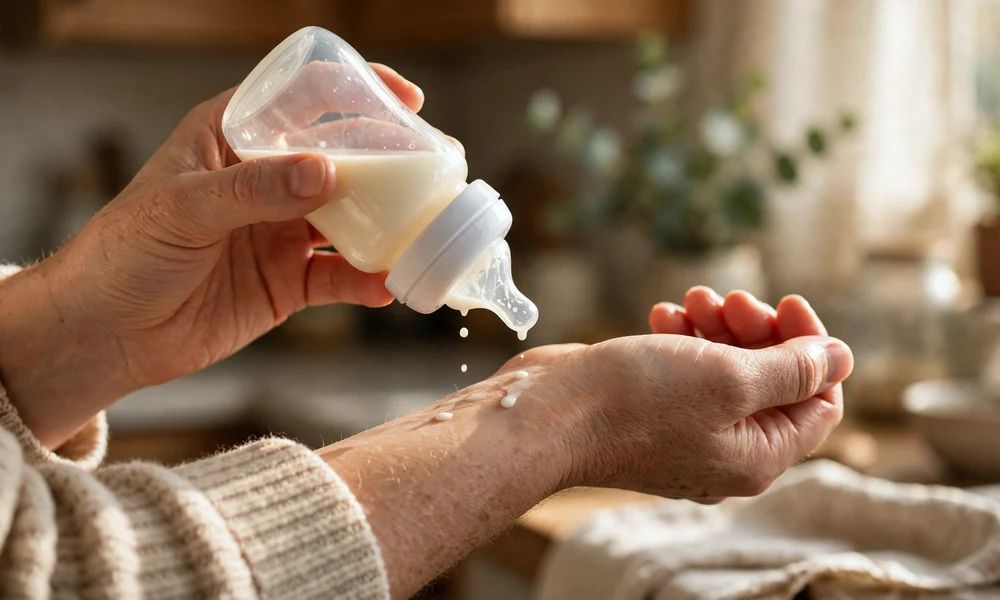
Safe warming starts with the temperature check, and it is a step worth doing every single time. Shake the bottle gently after warming so the temperature evens out, then test a few drops of milk on the inside of your wrist. It should feel comfortably warm, never hot, and never cold enough to make the baby pull away. A thermometer can help while you are learning a new warmer, but your wrist is the test that matters, because it feels the milk the way the baby’s mouth will. If the milk feels hot on your wrist, let the bottle cool before offering it, and run the next cycle for less time.
Never warm a bottle in the microwave. A microwave heats unevenly and can create pockets of very hot milk inside a bottle that feels only lukewarm on the outside, and those hot spots can burn a baby’s mouth and throat. Microwaves can also damage the nutrients in breast milk and can overheat the bottle itself. The same warning applies to boiling water poured over a bottle: it is hard to control, easy to get wrong, and it wastes time that a warmer would have spent doing the job properly. If you are ever in doubt about a bottle’s temperature, throw caution into the equation and test again rather than guessing.
There are a few other safety habits worth keeping. Never reheat milk that has already been warmed and partly drunk, because bacteria can grow in milk that has been kept warm and then cooled again; make a fresh bottle instead. Do not leave a bottle sitting in a warmer for hours, even on a keep-warm setting, and always follow the maker’s guidance on how long warmed milk can safely be kept. If your baby was born early, has a health condition, or you are unsure about any part of feeding, ask your paediatrician or health visitor for advice. They can give guidance that fits your baby, which no guide or warmer manual can replace.

Night Feeds and Everyday Use
A bottle warmer earns its place at night, when everything is harder. The best night-time warmers are quiet, with no loud beeps, and they have a small light or a simple display that can be read in the dark without waking the baby fully. A warmer that remembers your usual setting is a gift at three in the morning, when no one wants to read a manual or count button presses. Keep the warmer on the same surface every night, with water already measured and a clean bottle nearby, so the whole routine takes seconds rather than minutes.
Cleaning, Descaling and Care
Cleaning a bottle warmer is simple, but it is also the job most often skipped. Empty the water chamber after each day of use, wipe it dry, and let it air before the next use. A chamber left full of water will grow limescale and, in time, a stale smell that no amount of fresh water will fix. Once a month, or more often in hard-water areas, run a descaling cycle with the solution the maker recommends, which is usually a mild vinegar or citric acid mix. Rinse thoroughly afterwards, because any descaling residue left behind can end up in the next bottle.
The bottles themselves need just as much care as the warmer. Wash bottles, teats and rings in hot soapy water after every feed, rinse well, and let them dry on a clean rack. A bottle brush that reaches the bottom of the bottle makes this far easier, and our guide to bottle brushes that reach every corner covers the ones worth buying. If you use a steriliser as well, follow its instructions rather than assuming the warmer’s steam cycle does the same job; a quick steam in a warmer is a convenience, not a full sterilising routine.
What to Avoid
The most common mistake is buying the cheapest warmer without checking whether it fits your bottles. A warmer that cannot hold the bottle you use is not a bargain, it is a paperweight, and it will be replaced within weeks. Measure your bottles, check the chamber size, and read reviews from parents who use the same brand. The second mistake is choosing a warmer with so many features that it needs a manual every time you use it. A warmer with twenty settings sounds impressive, but a tired parent needs two or three clear choices, not a control panel.
Putting It Together
A good bottle warmer is not the most exciting thing you will buy for a baby, but it is one of the most used. It is the small machine that turns a cold bottle into a warm one at the moment it matters, without fuss, without hot spots, and without a long wait. Choose one that fits your bottles, warms gently and evenly, is easy to clean, and is simple enough to use with one hand in the dark. Keep the safety habits alongside it: test every bottle on your wrist, never use the microwave, never reheat a half-finished bottle, and ask your paediatrician if anything about feeding worries you. Get those choices right, and the warmer disappears into the routine, which is exactly what the best baby gear does. The rest of the feeding kit matters too, and our guide to the best baby bottles cleaners covers keeping everything the milk touches spotless, so the bottle that comes out of the warmer is as clean as it is warm.


