A good baby rocker is one of the quietest workhorses in a nursery. It is not a bed, not a chair for you, and not a toy. It is a small, curved-base seat that holds a newborn at a gentle recline and rocks with a slow, soothing motion, giving a tired parent two free hands for a few precious minutes. The top baby rockers of 2026 do that job with a steady base, a secure harness, a comfortable seat and a motion that calms a baby without jolting them.
Some rockers are simple curved-base seats with no batteries at all. Some add vibration, music and a toy bar, some fold flat for travel, and some convert into a toddler seat. This guide compares the main types, explains what matters when you choose, and picks the best baby rocker for every home in 2026.
Key Takeaways
- A baby rocker is a curved-base reclined seat for supervised awake time, not a place for a baby to sleep.
- Stability comes first: a wide, low base that does not tip when you press on one side matters more than any extra feature.
- Use the harness every single time, even for a minute, and stop using the rocker when your baby reaches the weight limit or can sit up unaided.
- Vibration and sounds are a bonus, not a necessity: many babies settle just as well with a gentle manual rock.
- A washable seat cover is worth paying for, because a rocker is used daily and cleaned constantly.
What a Baby Rocker Is, and What It Is Not
A baby rocker is a low seat with a curved or rocking base that sits on the floor. The baby reclines in a padded fabric seat, usually with a three-point or five-point harness, and the seat rocks back and forth, either pushed gently by a parent or powered by a small vibration unit. Most rockers recline to several positions, so a newborn can lie almost flat and an older baby can sit up and watch the room.
It is not a bouncer, though the two are often confused. A bouncer has a fixed frame and bounces when the baby kicks, while a rocker moves on a curved base and rocks whether the baby kicks or not. Our guide to the best baby bouncers covers that alternative in full. It is also not a swing: a swing is a larger, motorised seat that hangs from a frame, and our guide to the best baby swings explains when the bigger machine is worth the floor space. And it is certainly not a rocking chair, which is adult furniture for the parent.
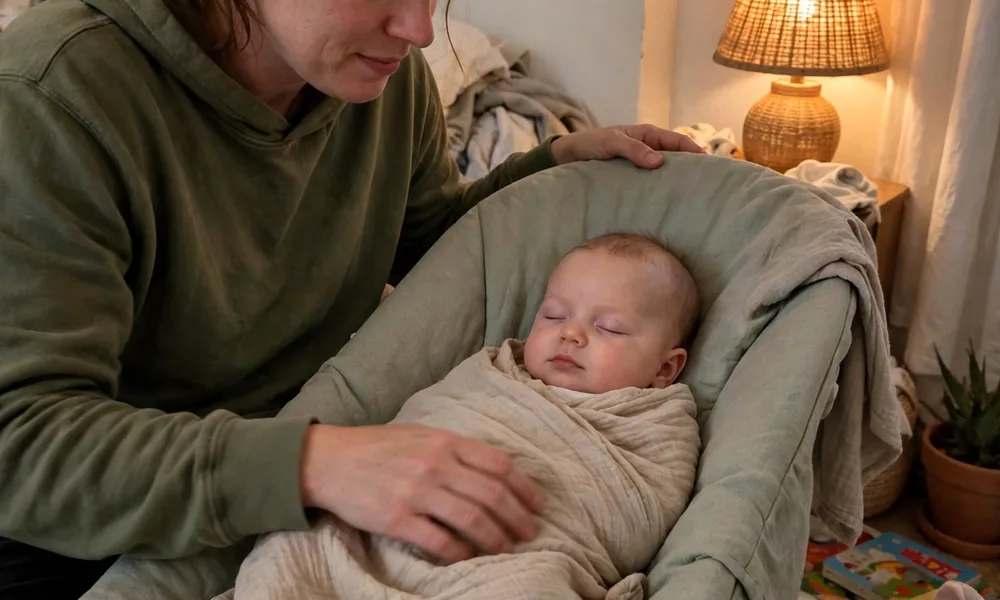
Above all, a rocker is not a bed. It is for short, supervised periods of awake time, and the baby should always be within sight and hearing of an adult while using it. If a baby falls asleep in the rocker, move them to a flat, firm sleep surface as soon as you can, on their back, with no loose blankets, pillows or toys.
The Main Types of Baby Rocker Compared
Almost every baby rocker falls into one of five families. Classic curved-base rockers are the simplest: a fabric seat on a curved frame, rocked by hand, with no batteries and nothing to go wrong. They are light and cheap, and their weakness is that the rocking stops when you stop pushing. Vibrating rockers add a battery-powered vibration unit and often a toy bar and music, which can help a fussy baby settle, though some babies ignore it entirely.
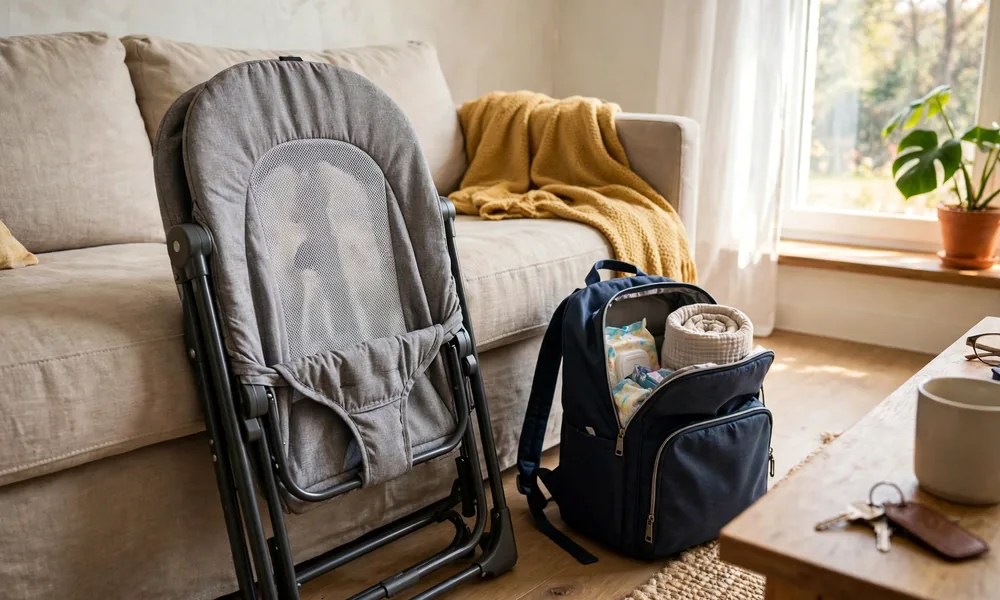
Convertible rocker seats grow with the baby, starting as a reclined newborn rocker and turning into a more upright toddler seat. They cost more but are used for longer, which can make them the best value overall. Portable and folding rockers are built for travel and small flats: they fold flat, weigh very little and fit in a car boot, though the seat is usually smaller. Wooden rockers are the premium option, with a solid wood frame and a fabric sling, though they are heavier and harder to fold away.
| Rocker type | Best for | Motion | Watch out for |
|---|---|---|---|
| Classic curved-base rocker | Everyday use at home | Manual rocking | Stops when you stop pushing |
| Vibrating rocker | Fussy babies who need soothing | Rocking plus vibration | Batteries and a noisier motor |
| Convertible rocker seat | Long-term value, newborn to toddler | Rocking, then fixed seat | Higher price and more weight |
| Portable folding rocker | Travel and small flats | Light manual rocking | Smaller seat, outgrown sooner |
| Wooden rocker | Living rooms and style | Smooth manual rocking | Heavy and hard to fold away |

How to Choose: What Matters Most
Start with stability. A good rocker sits flat on the floor with a wide, low base, and it should not tip, slide or lift when you press gently on one side. Put it on a hard floor, not on a bed, a sofa or a raised surface, and make sure there is clear space around it so it cannot hit a wall or a table as it rocks.
Next, look at the harness. A three-point or five-point harness, with straps over the shoulders and between the legs, is the standard to look for. The straps should adjust easily, lie flat without twisting, and fasten with a buckle an adult can open with one hand but a baby cannot. Use the harness every single time, even for a short sit: a rocker without a harness in use is a seat a baby can slide out of.
Recline comes third. A newborn needs a gentle recline that keeps the head supported and the airway open, while an older baby wants to sit up more and see the room. Look for at least two recline positions that lock firmly into place. A seat that sags in the middle leaves a baby curled up, which is uncomfortable and makes it harder to lift their head and look around.
Then check the weight and age limits, and the fabric. Respect the limits printed by the maker, and stop using the rocker when the baby reaches either one. The fabric should be soft, breathable and firm enough to hold its shape, and the cover should come off and go in the washing machine, because a rocker is used every day.
Our Picks: The Top Baby Rockers for Every Home
Best Overall: Padded Vibrating Rocker
The best all-round baby rocker is a padded vibrating rocker with a wide curved base, a five-point harness and a removable toy bar. The vibration is gentle enough to soothe without jolting, the seat reclines to two positions, and the cover is fully washable.
Best for Small Spaces: Compact Folding Rocker
For a small flat, a compact folding rocker is the clear winner. It folds flat enough to slide behind a sofa or under a bed, weighs little enough to carry from room to room with one hand, and still rocks smoothly on its curved base. The seat is narrower than a full-size rocker, so check the width before you buy.
Best for Travel: Lightweight Portable Rocker
A lightweight portable rocker is the one to pack for grandparents’ houses and holidays. It folds flat, fits in a car boot beside the luggage, and sets up in seconds without tools. The trade-off is a simpler motion and a smaller seat.
Best Value: Classic Manual Rocker
If you want the lowest price without giving up safety, a classic manual rocker is hard to beat. There are no batteries to replace, no motor to fail, and nothing electronic to go wrong. You rock it with a foot while you sit nearby.
Safety First: The Rules That Matter
Safety is not a feature on a baby rocker. It is how the rocker is used, every time. Always stay in the same room while the baby is in the rocker, and keep the baby where you can see them. A rocker is for supervised awake time, not for naps and never for overnight sleep. If a baby falls asleep in it, move them to a flat, firm sleep surface on their back as soon as you can.
Place the rocker on a flat, stable surface on the floor, never on a table, a bed, a sofa or a raised surface of any kind. A rocker on a raised surface can fall, and a baby in it can be hurt badly. Keep it away from stairs, heaters, open fires and dangling cords, and never put it near water. A rug or mat underneath it can help it grip and soften the rocking motion.
Check the weight and age limits before the first use, and check them again as the baby grows. Stop using the rocker when the baby reaches the limit, can sit up unaided, or can climb out, whichever comes first. Never add blankets, pillows or soft toys to the seat, and never hang toys from the frame in a way that could fall onto the baby. Before the first use, put the rocker together exactly as the instructions show and test it empty. Check the frame, straps and buckle regularly for wear or cracks, and stop using the rocker if anything is damaged. If you are buying second-hand, ask for the instructions and check whether the model has been recalled. Set the rocker up where you can see the baby while you work, and check on them often. Our guide to the best nursery essentials covers the other pieces worth buying before the baby arrives.
Baby Rocker Checklist: Before You Buy
- Wide, low base that stays put when you press firmly on one side.
- Three-point or five-point harness that adjusts easily and fastens with a firm click.
- At least two recline positions, each locking firmly into place.
- Weight and age limits that suit your baby now, with room to grow.
- Removable, machine-washable seat cover in a soft, breathable fabric.
- Clear space on a flat floor where the rocker can move without hitting furniture.
Frequently Asked Questions
Can a baby sleep in a baby rocker?
No. A rocker is for supervised awake time only. If your baby falls asleep in it, move them to a flat, firm sleep surface on their back as soon as you can.
What is the difference between a baby rocker and a baby bouncer?
A rocker moves on a curved base and rocks back and forth, while a bouncer has a fixed frame and bounces when the baby kicks. Rockers suit babies who like a steady motion; bouncers suit babies who like to bounce themselves.
How long can a baby use a rocker?
Most rockers suit babies from birth until they reach the weight limit, can sit up unaided, or can climb out, usually around six to nine months. Convertible seats can last longer, but always follow the maker’s limits.
Do I need a vibrating rocker?
Not necessarily. Vibration can help a fussy baby settle, but many babies are just as happy with a gentle manual rock. If your baby settles easily, a classic manual rocker saves money and has no batteries to replace.
Is a baby rocker safe for a newborn?
Yes, if you use it correctly: a gentle recline with the head supported, the harness fastened every time, the rocker on a flat floor, and an adult in the same room. Never add pillows or blankets to the seat.
Can I take a baby rocker travelling?
Yes, if you choose a portable folding rocker: it folds flat, fits in a car boot and sets up in seconds. Full-size rockers are too bulky for travel.
Bottom Line
The top baby rocker is the one that is stable, comfortable and easy to use every day: a wide base, a secure harness, a gentle recline and a washable cover matter far more than music or a toy bar. Buy the padded vibrating rocker for the best all-round choice, the compact folding rocker for a small home, and the classic manual rocker for the best value. Use it for short, supervised awake time only.