The first tooth is a small milestone with a big job attached to it. Once that tiny white edge appears, usually somewhere around six months, it needs looking after, and the toothpaste you choose matters more than most parents expect. Adult toothpaste is too strong, too minty and too foamy for a baby who cannot spit yet, so the market has grown a whole category of gentle training pastes made for first teeth. This guide sorts through them to find the ones worth buying in 2026.
A good baby toothpaste does a simple job well. It cleans the first teeth and gums without harsh abrasives, it tastes mild enough that a baby will accept it, and it is safe when swallowed, because swallowing is exactly what a baby will do. The best options keep their ingredient lists short, skip strong mint, and come in flavours a baby recognises, like banana, strawberry or a plain mild sweetness. They also come in tubes a parent can control, because a pea-sized smear is all you need and a tube that gushes makes that hard.
What Makes a Baby Toothpaste Different
The main difference is what is left out. Baby toothpastes are almost always fluoride-free training pastes, made for children under two who swallow everything they are given. They skip sodium lauryl sulfate, the foaming agent that makes adult paste feel soapy, and they use very gentle cleaning agents instead. Flavours stay mild and fruity rather than sharp and minty, which is why so many babies who refuse adult paste will happily accept a banana or berry training paste.
The texture matters too. A baby toothpaste should be smooth and easy to spread across a tiny brush head, not gritty or thick. Some come as gels, which spread easily and feel light on the gums, while others are soft creams. Neither is better in principle; what matters is that your baby tolerates it. If the first tube you buy gets spat out or refused, try a different flavour before you try a different brand, because taste is usually the problem, not the formula.
When Should You Start Brushing a Baby’s Teeth?
Start as soon as the first tooth breaks through the gum. Before that, wiping the gums with a damp cloth after feeds is enough, and it gets your baby used to having something in their mouth. Once a tooth appears, brush it twice a day with a smear of fluoride-free training paste on a soft baby brush or a silicone finger brush. Morning and bedtime work best, with bedtime the more important of the two, because milk and food residue sitting on teeth overnight is what causes most early decay.
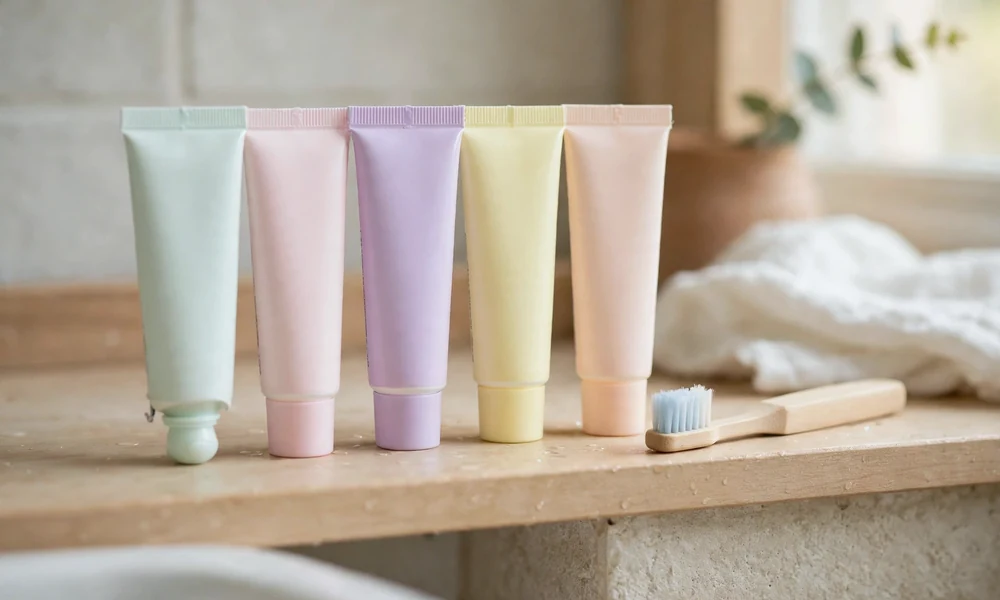
The Best Baby Toothpastes of 2026
1. Tom’s of Maine Children’s Fluoride-Free Toothpaste
This is the steady favourite that many parents start with and never leave. It is fluoride-free, made without artificial flavours or colours, and comes in a mild fruity flavour that most babies accept without a fuss. The paste is smooth, spreads easily on a small brush, and the tube has a sensible nozzle that makes a rice-grain smear easy to control. It is widely available, reasonably priced, and a safe first choice if you want one tube that does the job without any fuss.
2. Burt’s Bees Kids Fruit Fusion Toothpaste
Burt’s Bees brings its natural-care approach to a paste that tastes of fruit rather than mint, which is exactly what a baby needs. It is fluoride-free, made without sodium lauryl sulfate, and the flavour is gentle enough for the youngest brushers. The tube is a good size for a bathroom shelf, the paste is a soft gel that spreads well, and parents often report that this is the flavour their baby asks for by name once they can talk.
3. Hello Kids Fluoride Free Toothpaste
Hello makes a cheerful, simple paste in flavours like natural watermelon and dragon fruit that babies tend to like on the first try. It is fluoride-free, safe to swallow, and free from artificial sweeteners and dyes, with a clean ingredient list that parents can read at a glance. The packaging is bright without being garish, the nozzle is easy to control, and the price sits in the middle of the range, making it a good everyday choice.
4. Jack N’ Jill Natural Toothpaste
Jack N’ Jill is an Australian favourite that has found a loyal following among parents who want a truly minimal formula. It is fluoride-free, sugar-free and safe to swallow, with flavours like banana, strawberry and blueberry that taste like the real fruit. The paste is a soft gel, the tube is small and easy to handle, and it pairs naturally with the brand’s soft baby toothbrushes. It costs a little more than supermarket options, but the ingredient list is one of the shortest you will find.
5. Radius Pure Baby Toothpaste
Radius makes a gentle, organic-leaning paste designed specifically for babies from six months. It is fluoride-free, free from foaming agents, and comes in a mild flavour that does not overwhelm a first-time brusher. The tube is slim and easy to squeeze precisely, which helps when you are aiming for a tiny smear on a tiny brush. It is a quiet, no-nonsense option for parents who want a clean formula and a calm brushing routine.
6. Dr. Brown’s Baby Toothpaste
Best known for its baby bottles, Dr. Brown’s also makes a fluoride-free training paste that fits neatly into a first-teeth routine. The flavour is mild and slightly sweet, the paste is smooth and easy to spread, and it is designed to be safe when swallowed, as every baby paste should be. It is a sensible choice if you already use the brand’s finger brush or training toothbrush, since the whole set works together and keeps bath time simple.
7. Weleda Children’s Tooth Gel
Weleda’s tooth gel is a long-standing European favourite, made with natural ingredients and a gentle, slightly herbal flavour that some babies love and others need a few tries to accept. It is fluoride-free, free from foaming agents, and the gel texture spreads beautifully across a small brush. If your baby turns their nose up at fruity pastes, this is the one to try, and its natural formulation has earned it a devoted following over many years.
8. Colgate Kids Fluoride-Free Toothpaste
Colgate’s fluoride-free kids paste is the easy supermarket pick: cheap, everywhere, and made by a brand most parents already trust. The flavours are mild and fruity, the paste is smooth, and the tube is a practical size that lasts a long time at baby-sized doses. It is not the most natural formula on this list, but it is reliable, affordable and easy to find, which counts for a lot when you need a replacement in a hurry.
9. Aquafresh Kids Toothpaste
Aquafresh makes a mild, fruity kids paste that is fluoride-free in its training versions, with a soft texture that suits a first toothbrush. The flavour is gentle rather than sharp, the tube is easy to control, and the price is among the lowest on this list. It is a solid budget choice for families who want a dependable paste without paying a premium, and it is stocked in most supermarkets and pharmacies.
10. Cleure Toothpaste for Kids
Cleure is the specialist pick for babies with sensitive mouths or parents who want the shortest possible ingredient list. It is fluoride-free, free from flavourings that can irritate, and made without foaming agents or artificial colours. The taste is very mild, almost plain, which suits babies who reject sweet flavours. It costs more than the supermarket brands, but for a baby who has reacted to other pastes, its simplicity is worth the price.
How to Pick the Right One for Your Baby
Start with flavour, because a paste your baby refuses is useless no matter how good its ingredients are. Banana and strawberry are the safest first guesses, while plain or very mildly flavoured pastes suit babies who dislike sweetness. Buy a small tube first and watch how your baby reacts over a week before committing to a larger size, and do not be surprised if the first choice fails; most parents try two or three before finding the one their baby accepts.
Check the label for three things: fluoride-free, safe to swallow, and no sodium lauryl sulfate. Those three cover the safety basics for a baby under two. Beyond that, look for a short ingredient list you can understand, a nozzle that gives you control, and an age guide that matches your baby. If your baby has any ongoing dental concerns, or you are unsure when to move to a fluoride paste, a paediatric dentist can advise on the right timing for your child, and that conversation is worth having at the first dental visit.
Price is the last thing to worry about. A tube of baby toothpaste lasts months at baby-sized doses, so the difference between the cheapest and the dearest option on this list is only a few pounds or dollars a year. Spend the money on the flavour your baby likes and the tube you can control, not on the fanciest label, and remember that the brush matters as much as the paste. A soft, small-headed brush or a silicone finger brush makes the paste work better and keeps sore gums happy. If you are choosing a brush too, our guide to the best electric toothbrushes for kids covers the options that work well once your baby grows into a toddler who wants to brush alone.
How Much Toothpaste Should You Use?
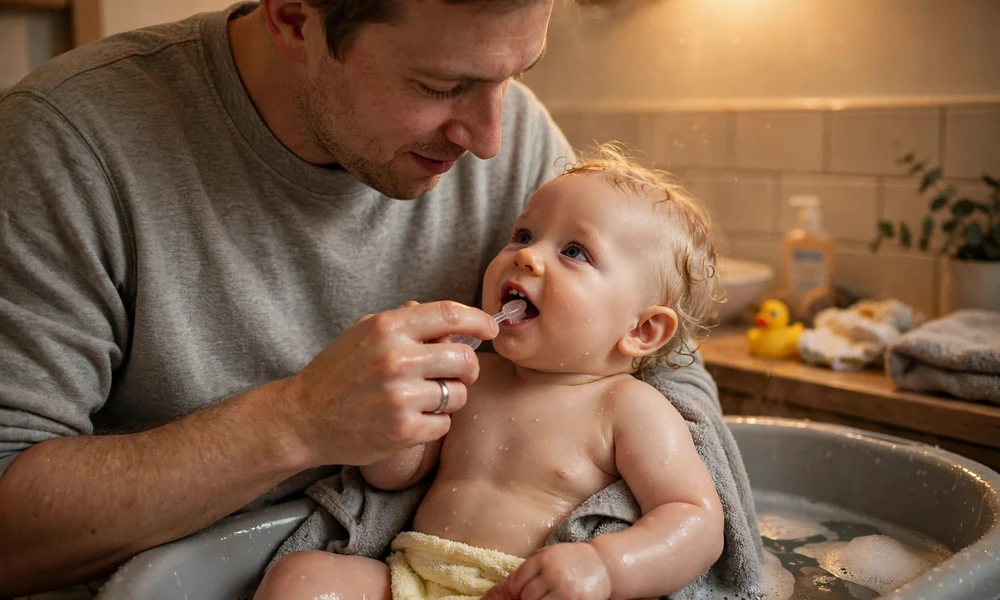
For a baby under two, a smear the size of a grain of rice is enough. It looks like almost nothing on the brush, and that is the point; a baby swallows what you put on the brush, so more paste does not mean cleaner teeth. Spread the smear thinly across the bristles rather than leaving it in a blob, and brush each tooth gently, front and back, along with a light pass over the gums.
Mistakes to Avoid With Baby Toothpaste
The most common mistake is using too much paste, usually because a parent copies the long stripe they see in toothpaste adverts. That stripe is for adults; a baby needs a smear. The second mistake is using an adult paste, which is too strong, too minty and too foamy, and can put a baby off brushing for months. The third is skipping the bedtime brush, which is the one that matters most, because milk residue left overnight is the main cause of early decay.

The Verdict
The best baby toothpaste in 2026 is the one your baby will happily accept twice a day, and for most families that will be Tom’s of Maine Children’s Fluoride-Free Toothpaste, with its mild flavour, clean formula and easy-to-control tube. If your baby prefers a fruitier taste, Burt’s Bees Kids or Hello Kids are the natural next tries, while Jack N’ Jill and Cleure suit parents who want the shortest ingredient lists available. Whichever you choose, pair it with a soft brush, a rice-grain smear, and a calm twice-a-day routine, and round out the bath-time shelf with a gentle wash; our guide to the best baby shampoo covers the mildest options. For the wider picture of how toothpastes compare once your child grows up, see our best vs worst toothpastes guide, and if anything about your baby’s teeth worries you, ask a paediatric dentist rather than guessing.