A Guide to the Best Banana Pudding in 2026: Creamy, Classic, and Crowd-Pleasing
The best banana pudding in 2026 is a study in balance: ripe bananas that are sweet but not mushy, a custard that is thick enough to hold its shape yet light enough to spoon easily, vanilla wafers that soften into cake-like layers without dissolving, and a cloud of whipped cream on top. It is one of the most forgiving desserts in the American repertoire, and also one of the easiest to get slightly wrong.
This guide explains what makes a banana pudding great, how the classic versions differ, and how to avoid the mistakes that turn a crowd favourite into a brown, soupy disappointment. Whether you make it from scratch or assemble it from a box mix, the same principles decide whether it is the best banana pudding on the table.
Key Takeaways
- The best banana pudding uses just-ripe bananas: yellow with a few brown speckles, firm enough to slice cleanly.
- Homemade custard beats instant pudding mix on flavour, though a good mix can work in a hurry.
- Vanilla wafers need time to soften, so chill the pudding for at least four hours before serving.
- A little lemon juice and the right layering order keep the bananas from browning.
- Serve it cold, in a glass dish if you can, so the layers show.
What Makes a Great Banana Pudding
A great banana pudding is built from four parts, and each one has to pull its weight. The bananas provide the flavour, so their ripeness is the first decision. Under-ripe bananas taste starchy and bland, while overripe ones turn to mush and brown quickly. The sweet spot is a banana that is mostly yellow with a scattering of brown speckles, sweet to eat, and firm enough to hold a clean slice.
The custard is the second part. A proper custard, made from milk, eggs, sugar, and vanilla, is rich and silky, with a depth of flavour that instant mixes cannot match. It should be thick enough to coat a spoon and hold the layers together, but not so stiff that it feels like a set jelly. If you use a mix, choose a good one and whisk it thoroughly, because lumps are the most common flaw in a shortcut pudding.
The wafers are the third part, and their job is to turn into something cake-like. Vanilla wafers absorb moisture from the custard and soften over a few hours in the fridge, becoming tender layers that separate the banana and cream. The fourth part, the topping, is traditionally either whipped cream or meringue. Whipped cream is the safer choice: it is stable, it tastes better cold, and it does not weep the way meringue can.
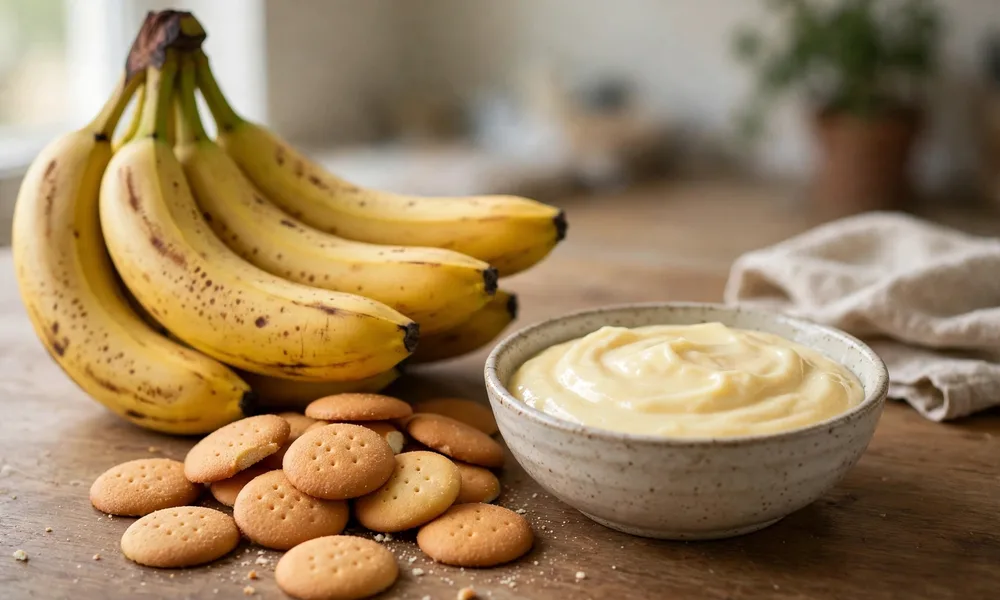
Good ingredients, simply assembled: ripe bananas, vanilla wafers, and a proper custard.
The Best Banana Pudding Styles, Compared
Banana pudding has two great traditions, and the rivalry between them is friendly but real. The first is the classic Southern version, made with homemade custard, layered in a dish, and topped with meringue or whipped cream. The second is the modern deli-style version, made with instant pudding, sweetened condensed milk, and whipped topping, often served in a trifle bowl.
| Style | Custard | Topping | Best For |
|---|---|---|---|
| Classic Southern | Homemade egg custard | Meringue or whipped cream | Traditional flavour and texture |
| Deli-style | Instant pudding and condensed milk | Whipped topping | Speed and a lighter, sweeter result |
| No-bake | Instant pudding, cream cheese | Whipped cream | Hot days and beginners |
| Baked | Homemade custard, baked in the oven | Meringue, browned | Old-fashioned presentation |
| Individual cups | Any custard, layered in glasses | Whipped cream and a wafer | Parties and portion control |
The classic Southern version wins on flavour, because a real custard tastes of eggs, milk, and vanilla rather than of a packet. But the deli-style version has its own fans, and its lightness and sweetness suit a hot day and a big crowd. If you are short on time, the no-bake version is the best compromise: it uses a mix but adds cream cheese for body, and it comes together in minutes.
How to Layer Banana Pudding Properly
Layering is where most banana puddings are won or lost. Start with a thin layer of custard on the bottom of the dish, so the first wafers have something to sit in. Then add a layer of wafers, a layer of sliced banana, and a generous layer of custard. Repeat until the dish is full, and finish with custard and topping. Two or three full layers are ideal; more than that and the bottom layers get crushed.
Two details matter. First, keep the banana slices even, about half a centimetre thick, so they soften at the same rate. Second, make sure every banana slice is coated in custard or pressed against a wafer, because exposed banana browns fast. A light squeeze of lemon juice over the slices helps too, though too much will change the flavour, so use it sparingly. The goal is a pudding where every spoonful has banana, wafer, and custard in the same bite.
Keeping Bananas from Browning
Browned bananas are the most common complaint about banana pudding, and they are almost entirely preventable. Bananas brown when their flesh meets air, so the fix is to limit that exposure. Slice the bananas at the last possible moment, layer them quickly, and cover them with custard immediately. A thin brush of lemon juice slows browning further, and so does a tight layer of plastic wrap pressed directly onto the surface of the finished pudding.
Chilling helps as well, because cold slows the browning reaction. A pudding that goes straight into the fridge after assembly will look fresher the next day than one left on the counter. Even so, banana pudding is best eaten within a day or two. After that, the bananas darken no matter what you do, and the wafers turn from tender to soggy.
Choosing Your Ingredients
The bananas are the star, so choose them carefully. Buy them a day or two before you need them and let them ripen on the counter. If your bananas are still green, a paper bag with an apple speeds things up. If they are already overripe, save them for baking instead: our guide to the best banana bread in 2026 is the right home for bananas that have gone too soft for pudding.
For the wafers, the classic vanilla wafer is the standard, and it earns its place. It is crisp enough to hold its shape during assembly and softens into a cake-like layer overnight. Shortbread or graham crackers can work in a pinch, but they change the flavour, so stick with vanilla wafers for the classic result. For the custard, vanilla is the key flavour. A little cinnamon adds warmth, and our guide to cinnamon that smells like the real bark in 2026 will help you pick a good one. A pinch of nutmeg is the other classic spice, and the best nutmeg in 2026 guide covers the difference between fresh-grated and pre-ground.

Every spoonful should have banana, wafer, and custard together. That is the whole point.
How Long to Chill, and How to Serve
Chilling is not optional. The pudding needs at least four hours in the fridge for the wafers to soften and the flavours to come together, and overnight is even better. Serve it cold, straight from the fridge, in a glass dish or trifle bowl if you have one, because the layers are half the appeal. A clear dish turns the dessert into a display.
For a party, individual cups are the smartest option. They are easy to serve, easy to portion, and every guest gets the same ratio of banana, wafer, and cream. Top each cup with a dollop of whipped cream and a single wafer just before serving, so the garnish stays crisp. A sprinkle of crushed wafer over the top adds texture and looks the part.
Common Mistakes to Avoid
The most common mistake is using overripe bananas. They look fine when sliced, but they collapse into mush overnight and brown much faster than firmer fruit. The second mistake is skimping on the chill time. A pudding served after an hour will have crunchy wafers and a custard that has not set, and it will taste like its separate parts rather than a finished dessert.
The third mistake is a runny custard. If you make it from scratch, cook it until it coats the back of a spoon and leaves a clear line when you draw a finger through it. If you use a mix, follow the milk measurement exactly, and do not add extra liquid to stretch it. The fourth mistake is assembling the pudding too early. More than two days in the fridge and the wafers dissolve, the bananas darken, and the whole thing turns to soup. Make it the day before you serve it, and no earlier.

Individual cups are the easiest way to serve banana pudding at a party, and every guest gets the same layers.
Your Banana Pudding Checklist
- Choose bananas that are yellow with a few brown speckles, firm enough to slice cleanly.
- Slice the bananas at the last moment and cover them with custard right away.
- Layer custard, wafers, banana, and custard again, two or three layers deep.
- Cook homemade custard until it coats a spoon, or whisk instant pudding until smooth.
- Chill for at least four hours, overnight if you can, before serving.
- Serve cold, in a glass dish or individual cups, with whipped cream on top.
Frequently Asked Questions
Can I make banana pudding the day before?
Yes, and you should. Overnight chilling lets the wafers soften and the flavours come together. Make it the day before serving, and eat it within two days for the best texture.
How do I stop the bananas going brown?
Slice them last, cover them with custard immediately, brush them lightly with lemon juice, and press plastic wrap onto the surface. Chilling the finished pudding promptly also helps.
Can I use instant pudding instead of homemade custard?
Yes. It is faster and still good, especially with cream cheese or condensed milk added for body. Homemade custard tastes richer, but a well-made instant version is a fine shortcut.
What can I use instead of vanilla wafers?
Shortbread, graham crackers, or ladyfingers all work, but they change the flavour and texture. Vanilla wafers are the classic choice and soften into the best cake-like layer.
Should banana pudding be served warm or cold?
Cold, always. The custard needs to set, the wafers need time to soften, and the dessert is meant to be refreshing. A warm banana pudding is a different dish entirely.
How long does banana pudding keep?
Two days in the fridge is the limit for good quality. After that the bananas darken and the wafers turn soggy. It does not freeze well, so make only as much as you will eat.
The Bottom Line
The best banana pudding in 2026 is the classic one done properly: just-ripe bananas, a good custard, vanilla wafers given time to soften, and a cold serve in a dish that shows off the layers. It is a simple dessert, but it rewards care in the small things, from the ripeness of the fruit to the hours in the fridge. Get those right and it will be the first dessert to disappear from the table.