How to Choose the Best Pecan Pie in 2026 Without Buying a Sugar Bomb
Choosing the best pecan pie in 2026 comes down to one question: does the filling taste like pecans, or does it taste like sugar? A great pie is rich and nutty, with a caramel-like filling that supports the pecans rather than drowning them, and a flaky crust that stays crisp underneath. A bad one is a sugar bomb, where the pecans are an afterthought and the crust has gone soggy.
Pecan pie is one of the simplest desserts to make and one of the easiest to get wrong. The filling is little more than sugar or syrup, butter, eggs, and pecans, so the quality of each ingredient shows. Cheap corn syrup, stale nuts, and a pale, underbaked crust are the usual suspects in a disappointing pie. The best versions use fresh pecans, a filling with real depth from brown sugar or a good syrup, and a crust that is baked until golden. They are sweet, certainly, but the sweetness has somewhere to go.
Key Takeaways
- The best pecan pie tastes of toasted pecans first, with sweetness as the supporting act, never the star.
- A proper filling sets firm and glossy, never runny in the middle or gritty with undissolved sugar.
- Fresh pecans are non-negotiable: stale nuts taste flat, oily and faintly bitter.
- The crust must be flaky and fully baked underneath, not pale, soft or soggy.
- Serve pecan pie warm or at room temperature, in thin slices, with unsweetened whipped cream or vanilla ice cream.
What a Great Pecan Pie Tastes Like
A great pecan pie opens with butter and toasted nuts. The pecans on top should be glossy and caramelised, with a crunch that gives way to a soft, almost chewy centre. The filling underneath should taste like caramel and brown sugar, with a hint of vanilla and salt, and the nuts running through it should still be distinct, not lost in a uniform sweetness. The finish should be rich but clean, with the salt keeping the sugar in check.
Texture is the giveaway. The filling should be set enough to hold a slice, with a slight jiggle in the centre when it comes out of the oven that firms up as it cools. It should not be liquid, or so firm it cuts like fudge. If the slice collapses, the filling was underbaked or the pie was cut too soon; if it is grainy, the sugar never fully dissolved.
The Pecans: Fresh, Toasted and Plentiful
Pecans are the most expensive ingredient, which is why cheap pies skimp on them. A good pie is generous with nuts, both on top and mixed through the filling, and the nuts should look plump and glossy rather than shrivelled or pale. Fresh pecans taste buttery and sweet; stale ones taste flat and oily, and rancid ones are bitter and unmistakable.
Toasting matters too. Pecans that are toasted before they go into the pie develop a deeper, nuttier flavour, while raw pecans can taste soft and a little bland after baking in the filling. The best bakers toast the nuts lightly and let the oven finish the job. If you are baking at home, a few minutes in a dry pan or a low oven makes a noticeable difference, and it is worth doing even if the recipe does not mention it.
The Filling: Syrup, Sugar and Salt
The classic filling uses corn syrup, but the best pies do not taste of it alone. Brown sugar, a little molasses, or a splash of bourbon give the filling depth, while a good pinch of salt stops it tasting one-dimensionally sweet. Some bakers use golden or maple syrup instead; both can work, though maple changes the flavour more. What matters is balance: the filling should taste like caramel, not straight sugar.
Eggs do the setting, and the bake does the rest. Too many eggs and the filling turns cakey; too few and it never sets. The pie needs a long, moderate bake, usually fifty to sixty minutes, until the centre is set but still moves slightly when you nudge the pan. Covering the edges with foil partway through keeps the crust from burning while the centre catches up. That patience is the difference between a pie that slices cleanly and one that runs across the plate.

A clean slice with a glossy, set filling and a crisp crust is the sign of a well-baked pecan pie.
Store-Bought vs Bakery vs Homemade
Supermarket pecan pies are everywhere in the autumn, and the gap between the best and the worst of them is enormous. The better ones use real butter, plenty of pecans, and a filling that tastes of caramel rather than syrup alone. The worst are mostly corn syrup and sugar, with a scattering of pecans on top and very few inside, in a pale, soft crust. A pie that is heavy for its size and lists pecans high up is a better bet than a light one that lists syrup first.
Bakery pies are usually the safest buy, especially from a bakery that bakes in small batches and sells the pie the same day. Ask whether the pecans are fresh and whether the filling uses brown sugar as well as syrup. A bakery that is proud of its pie will happily tell you. Price is a useful signal here, because pecans are expensive and a very cheap pie has almost certainly cut back on them. A pie that costs noticeably more than the supermarket version usually earns the difference in nuts alone.
Homemade pecan pie is the best option if you like to bake, because the recipe is short and the result is far better than most shop-bought pies. The two mistakes to avoid are underbaking and impatience. The centre should still wobble slightly when the pie comes out, and it needs at least two hours to cool and set before you cut it. A pie cut while warm will run, however well it was baked. Serve it warm or at room temperature, never straight from the fridge, or the filling will taste dull.
How to Judge a Pecan Pie Before You Buy
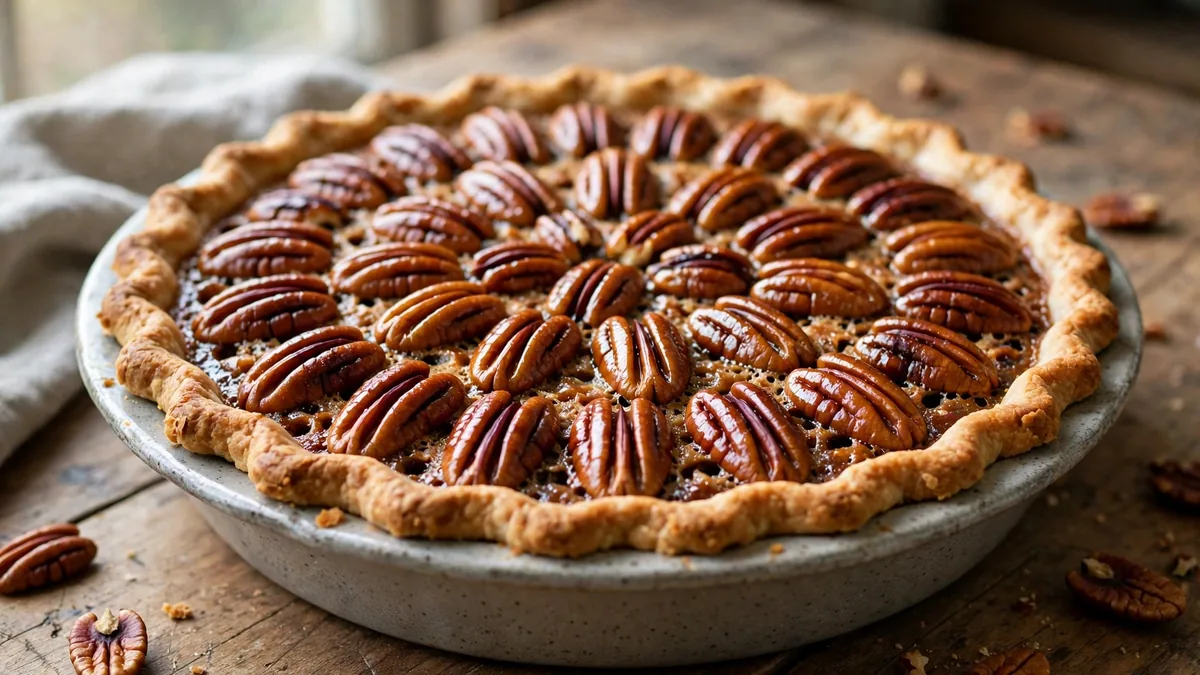
Start with the top. The pecans should be arranged in a full, even layer, glossy and deep brown, not sparse and pale. A pie with a bare patch in the middle or nuts only around the edge is telling you where the maker saved money. The crust edge should be golden and flaky, not pale or burnt, and the filling should be level with the crust rather than sunken in the middle, which suggests it was underbaked or made with too little egg.
Pick the pie up if you can. A good pecan pie feels heavy for its size, because the filling is dense and the nuts are plentiful. A light pie is usually mostly syrup and pastry. Look underneath if the packaging allows: the base should be golden, not pale and doughy. If you are buying a slice, look at the cut edge. The filling should be glossy and set, with nuts visible all the way through, and the crust should be distinct from the filling, not merged into a soggy layer.
Pecan Pie Comparison
| Type | Flavour | Texture | Price | Best For |
|---|---|---|---|---|
| Good bakery pie | Nutty, caramel depth | Firm, glossy, flaky crust | Higher | Holidays and gifts |
| Supermarket pie | Sweet, syrup-forward | Soft crust, few nuts | Low | Quick dessert |
| Homemade pie | Exactly as you like it | Depends on the bake | Medium | Weekend baking |
| Chocolate pecan pie | Rich, cocoa depth | Slightly softer filling | Medium to high | Chocolate lovers |
Serving and Storing Pecan Pie
Serve pecan pie in thin slices, because it is very rich, with unsweetened whipped cream or vanilla ice cream. The cream or ice cream cuts the sweetness and gives the slice a cool contrast. Avoid sweetened toppings, which push an already sweet pie over the edge.
Leftovers keep in the fridge for three to four days, covered, and the pie is still good cold, though it is best brought back to room temperature or warmed briefly before serving. Pecan pie freezes well for up to a month, wrapped tightly, and thaws overnight in the fridge. Warm a thawed slice in a low oven for a few minutes to bring back the crispness of the crust.

Fresh pecans and real butter are the two ingredients a cheap pie cuts first, and you can taste the difference.
Common Mistakes to Avoid
The biggest mistake is underbaking, which leaves a runny centre that never sets properly. The second is cutting the pie too soon, which has the same result. The third is using stale pecans, which no amount of sugar can rescue.
When you are buying, the mistake to avoid is choosing the cheapest pie on the shelf. Pecans are expensive, and a pie that is far cheaper than the others has almost certainly used fewer of them. A better test is the weight and the look of the top: a heavy pie with a full, glossy layer of pecans is worth more than a light one with a sparse topping, whatever the price tag says.
For a lighter bake, see the best banana bread in 2026, and for a rich, custard-style alternative, our guide to the best bread pudding in 2026. If you want a creamy, sliceable dessert for a crowd, the best cheesecake in 2026 is another strong choice.
Pecan Pie Checklist
- Full, glossy layer of pecans on top, with nuts all through the filling
- Filling tastes of caramel and brown sugar, not straight syrup
- Filling sets firm and glossy, never runny or grainy
- Crust is golden, flaky and fully baked underneath
- Pie feels heavy for its size, a sign of generous nuts and dense filling
- Serve in thin slices with unsweetened cream or vanilla ice cream
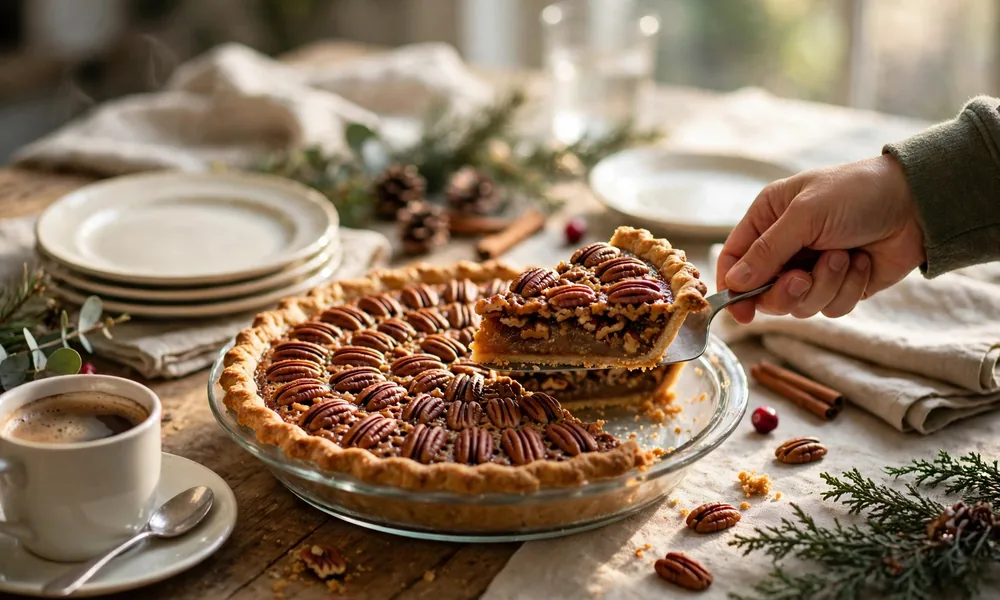
Thin slices, warm pie, cold cream: the serving combination that keeps a rich pie from feeling too sweet.
Frequently Asked Questions
Why is my pecan pie runny in the middle?
It was underbaked or cut too soon. The centre should still wobble slightly when the pie comes out of the oven, then firm up as it cools for at least two hours. If it is still runny after cooling, it needed more time in the oven.
Can I make pecan pie without corn syrup?
Yes. Golden syrup, maple syrup, or a brown sugar and honey mixture can all work, though each changes the flavour a little.
How do I stop the crust from going soggy?
Bake the crust until it is truly golden underneath, and let the pie cool on a rack so steam escapes. A metal pie tin helps, because it conducts heat better than glass or ceramic.
How long does pecan pie last?
Three to four days in the fridge, covered, or up to a month in the freezer, wrapped tightly. Bring a refrigerated slice back to room temperature, or warm it briefly, before serving for the best flavour.
Should pecan pie be served warm or cold?
Warm or at room temperature is best. Cold pie tastes duller, and the filling firms up too much. A warm slice with cold vanilla ice cream or unsweetened whipped cream is the classic pairing.
Are pecans supposed to be on top or mixed in?
Both. The best pies have a full layer of pecans arranged on top and plenty mixed through the filling, so every bite has nuts in it. A pie with nuts only on top is a sign the maker was saving money.
Bottom Line
The best pecan pie in 2026 is a nutty, caramel-flavoured pie with a firm, glossy filling and a flaky, fully baked crust, served in thin slices with unsweetened cream. Buy a heavy pie with a full layer of fresh, glossy pecans, or bake one yourself with toasted nuts and brown sugar, and skip the light, syrup-heavy pies with a sparse topping.