Best Key Lime Pie in 2026: Tart, Creamy and Worth Every Bite
The best key lime pie in 2026 is the one that gets the balance right: bright, sharp lime flavour against a sweet, silky filling, all sitting on a buttery graham cracker crust that holds together when you cut it. It sounds simple, but most pies you can buy fall down on one of those three things: too sweet, too soft, or a crust that crumbles before the slice reaches the plate.
Key lime pie has a short ingredient list and nowhere to hide. Real key limes, or at least real lime juice, sweetened condensed milk, egg yolks, and a graham cracker crust are the whole story. That simplicity is why small differences matter: the juice, the bake, and the chill decide whether you get a clean, tangy slice or a pale imitation. We tasted bakery, supermarket and home-baked versions, and the winners shared the same traits: a firm set, a genuine citrus bite, and a crust that tastes of toasted crumbs and butter.
Key Takeaways
- The best key lime pie balances sharp lime tang with sweet condensed milk, never letting either side win outright.
- A proper filling sets firm enough to slice cleanly but stays silky, never rubbery or runny.
- Graham cracker crust should be buttery and crisp, with a toasted flavour that stands up to the filling.
- Real key lime juice beats bottled regular lime juice for the floral, slightly bitter edge that defines the pie.
- Chill the pie for at least four hours, and serve it cold with lightly whipped cream, not a sweet topping.
What a Great Key Lime Pie Tastes Like
A great key lime pie announces itself in the first bite. The lime hits first, bright and a little sharp, then the condensed milk rounds it out into something creamy and mellow. The finish should be clean, with a faint bitterness from the lime zest that keeps the sweetness from cloying. If sugar hits first, it has too little lime; if your mouth stays puckered, it has too much acid and not enough body. The best pies live in the middle.
Texture matters as much as flavour. The filling should be smooth and dense, like a soft custard that holds its shape on the fork. It should not wobble like jelly, and it should not be so firm that it feels like a cheesecake. A runny filling usually means underbaking or too short a chill; a rubbery one means it was baked too hot or too long.
The Filling: Lime, Milk and Yolks
The classic filling is just three ingredients, and each one earns its place. Sweetened condensed milk gives the pie its body and sweetness, and it reacts with the lime juice to thicken even before baking. Egg yolks add richness and help the filling set in the oven. Lime juice provides the flavour and the acid that makes the whole thing work. Too much condensed milk and it tastes like sweet milk with a hint of lime; too much juice and it turns thin and aggressively sour.
Key limes themselves are smaller, rounder, and more aromatic than the Persian limes in most supermarkets. Their juice is more floral and slightly more bitter, which gives an authentic pie its character. Fresh key limes are worth it in summer, but good bottled key lime juice is a fair substitute and far better than bottled regular lime juice. Avoid old juice from concentrate and any filling that relies on green food colouring: a real key lime pie is pale yellow-green, not bright green.
The Crust: Graham Cracker Done Right
The crust is half the pie, and the best versions treat it that way. Graham crackers, melted butter, and a little sugar, pressed firmly into the pan and baked until fragrant, make a crust that is crisp at the edges and sturdy enough to support a slice. The butter matters: it should taste like butter, not like oil or shortening. The crumbs should be fine enough to hold together but coarse enough to give a little crunch.
Watch out for crusts that are too thick or too sweet. A crust that is half an inch deep overwhelms the filling and turns the pie into a biscuit with lime topping. A crust with too little butter falls apart the moment you cut it. The best pies press the crust evenly and bake it just until it smells toasted; chilling a home-pressed crust for twenty minutes before baking helps it hold.
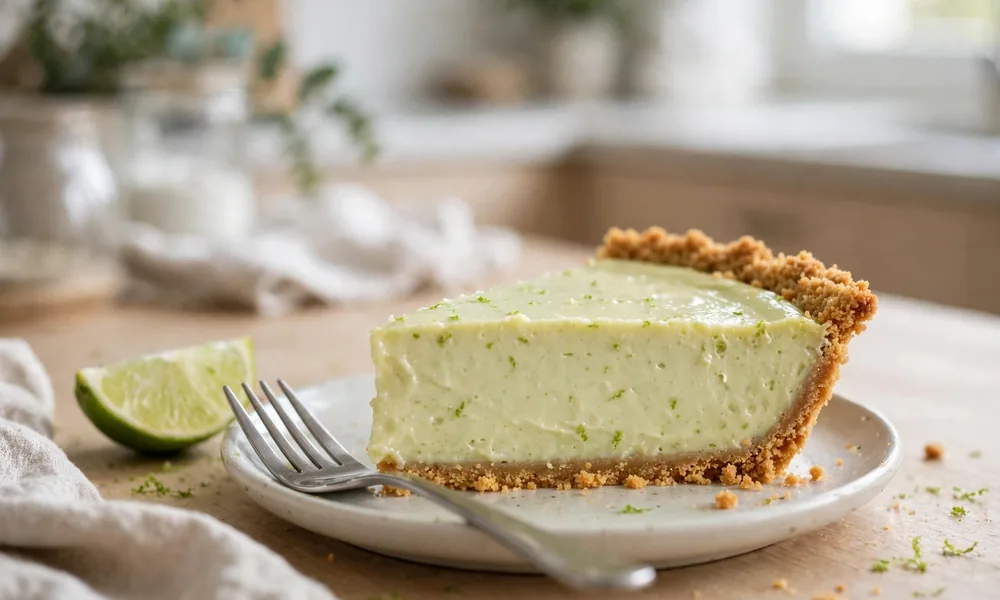
A clean slice is the first test: the filling should hold its shape and the crust should stay intact.
Store-Bought vs Bakery vs Homemade
Not every good key lime pie comes from a bakery, and not every bakery pie is good. Supermarket pies are convenient and cheap, and some are genuinely decent, but they often lean on stabilisers and extra sugar to survive transport and a long shelf life, so the filling can taste flat and the lime flavour can come from flavouring rather than juice. A well-chosen frozen pie, thawed slowly in the fridge, can still beat a mediocre fresh bakery pie.
Bakery pies are usually the safest bet when you are buying. A good bakery makes the pie in small batches, uses real lime juice, and sells it within a day or two. Ask how it is made: a bakery that talks about key limes, condensed milk and a baked graham crust is a good sign, and one that cannot tell you what is in the filling probably is not making it from scratch.
Homemade is the best option if you enjoy baking, because the recipe is forgiving and the ingredient list is short. You control the lime, the sweetness, and the bake. The most common home mistake is overbaking: ten to fifteen minutes in a moderate oven is enough, just until the edges set and the centre still wobbles. The second is impatience: a pie cut after one hour will be soft and messy, so give it four hours, or overnight.
How to Judge a Key Lime Pie Before You Buy
You can learn a lot before you taste a slice. Look at the colour first: pale, creamy yellow with a hint of green is right. Bright green means food colouring, and pure white means there is very little lime in it. Look at the surface: it should be smooth, with no cracks and no watery sheen. Cracks suggest overbaking, and a wet surface suggests the pie has been sitting too long or was frozen and thawed badly.
Check the crust through the side of the tin or the slice. It should look golden and compact, not pale and crumbly. If the pie is topped, whipped cream is the classic choice, and it should be real cream, lightly sweetened, not a stiff white topping from a tub. Meringue is a traditional alternative, but it must be baked properly or it weeps and slides off.
Key Lime Pie Comparison
| Type | Flavour | Texture | Price | Best For |
|---|---|---|---|---|
| Good bakery pie | Bright, real lime | Firm, silky | Higher | Parties and gifts |
| Supermarket pie | Sweet, mild lime | Soft, sometimes runny | Low | Quick dessert |
| Homemade pie | Exactly as you like it | Depends on the bake | Low to medium | Weekend baking |
| Frozen premium pie | Good if thawed slowly | Firm after chilling | Medium | Keeping on hand |
Serving and Storing Key Lime Pie
Serve key lime pie cold, straight from the fridge, with a dollop of lightly whipped cream and a little lime zest on top. A hot knife, wiped clean between cuts, gives the neatest slices, and cutting just before serving keeps the edges clean and the crust crisp.
Leftovers keep well in the fridge for three to four days, covered loosely so the topping does not stick. The crust softens a little each day, but the flavour holds up. It also freezes well for up to a month, wrapped tightly without topping; thaw overnight in the fridge and add fresh cream. Do not refreeze a thawed pie.
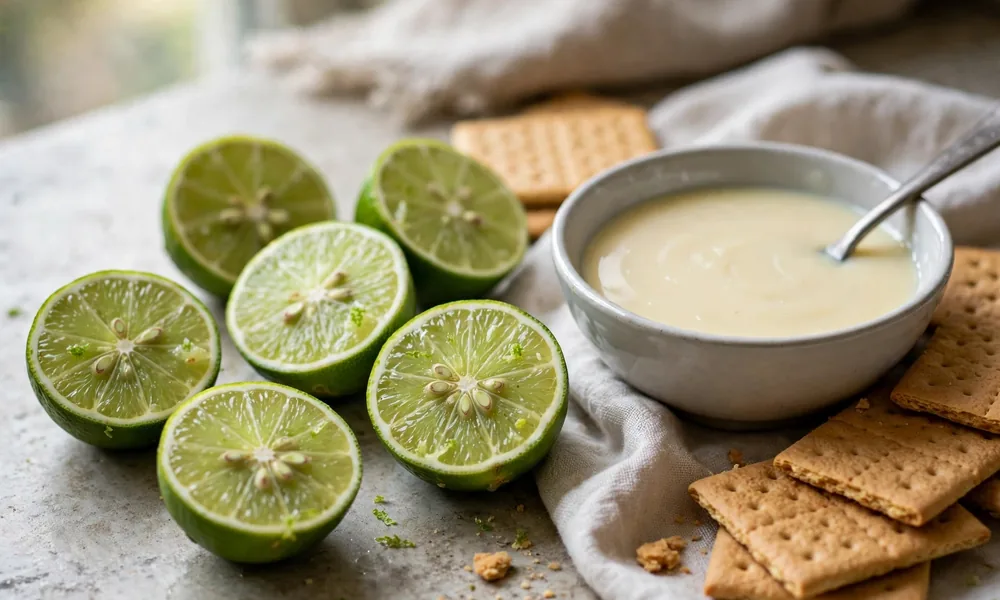
Short ingredient list, big difference: real key lime juice and good butter are what set the best pies apart.
Common Mistakes to Avoid
The most common mistake is treating key lime pie like a cheesecake and baking it for forty minutes. It needs a short, gentle bake, and it should still tremble in the centre when it comes out. The second mistake is using regular lime juice and expecting key lime flavour. It will taste pleasant, but it will not taste like key lime pie. The third is skipping the chill. A warm pie is a soft pie, and no amount of cream will save a slice that slides apart on the plate.
When you are buying, the mistake to avoid is choosing by looks alone. A pie with a perfect green colour and a tall swirl of topping can hide a bland filling, while a plain-looking pie from a small bakery can be superb. If you are ordering for an event, buy one pie to try first.
If you love citrus desserts, a good key lime pie sits happily alongside other classics. For a richer, custard-based option, read our guide to the best bread pudding in 2026, and for a lighter bake, see the best banana bread in 2026. If you want a creamy, sliceable dessert for a crowd, our pick of the best cheesecake in 2026 is a useful comparison.
Key Lime Pie Checklist
- Pale yellow-green filling, never bright green from colouring
- Real key lime juice listed or confirmed, not lime flavouring
- Filling sets firm but stays silky, with no cracks or weeping
- Graham crust is golden, buttery, crisp and holds a slice
- Pie is served cold, chilled at least four hours before cutting
- Topping is real whipped cream, lightly sweetened, or a proper meringue
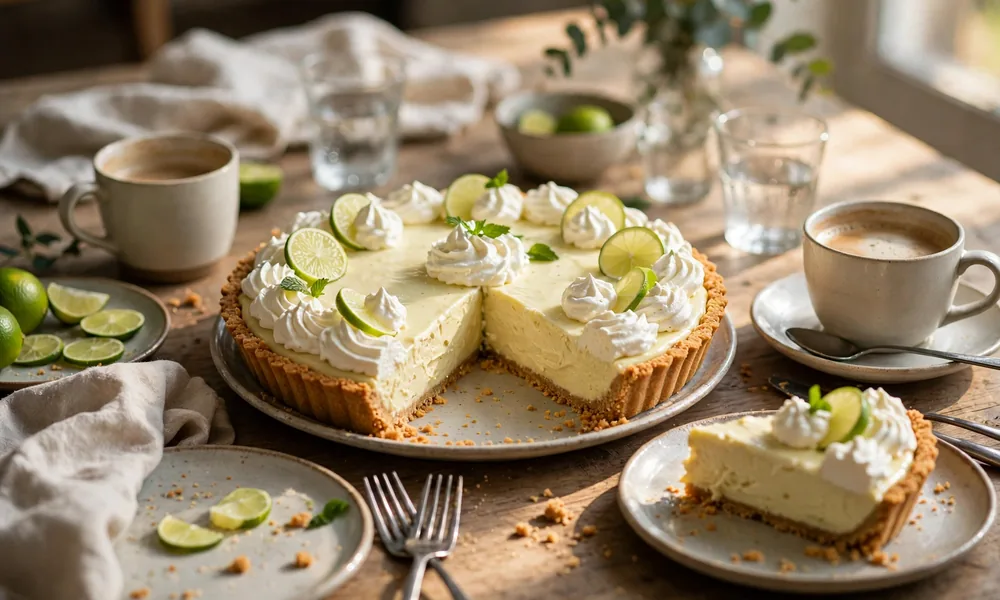
Cold, clean slices and real cream: the finishing touches that make a good pie feel like a great one.
Frequently Asked Questions
What is the difference between key lime pie and regular lime pie?
Key limes are smaller and more aromatic than regular Persian limes, giving a floral, slightly bitter edge that regular lime pie lacks; it often tastes sharper and less rounded.
Can I use bottled key lime juice instead of fresh key limes?
Yes. Good bottled key lime juice is a solid substitute and far better than bottled regular lime juice. Fresh key limes are best when in season, but a quality bottled juice will still give you a pie that tastes right.
How long should key lime pie chill before serving?
At least four hours in the fridge, and overnight is even better. The filling finishes setting as it cools, and the flavour improves as the lime mellows into the condensed milk.
Why is my key lime pie runny?
It was probably underbaked or cut too soon. The pie needs a short bake until the edges set, then a long chill. If it is still runny after a night in the fridge, the ratio had too much juice for the yolks and milk to set.
How long does key lime pie last in the fridge?
Three to four days, covered loosely. The crust softens over time, but the flavour holds up well, and many people enjoy it even more on the second day.
Is key lime pie supposed to be green?
No. A real key lime pie is pale yellow-green, the natural colour of lime juice mixed with condensed milk and yolks. Bright green means food colouring was added, which is a sign the maker is dressing up a weak filling.
Bottom Line
The best key lime pie in 2026 is a simple pie done properly: real key lime flavour, a silky filling that slices cleanly, and a buttery graham crust that holds together. Buy from a bakery that makes it fresh with real lime juice, or bake it yourself with a short bake and a long chill, and skip the bright green pies and runny fillings.