What Is the Best Peach Cobbler in 2026? A Classic Dessert, Ranked and Explained
The best peach cobbler in 2026 is the one that gets the balance right: juicy, fragrant peaches that hold their shape, a golden topping that stays crisp on top and tender underneath, and just enough sweetness to let the fruit shine. It is a simple dessert, but the gap between a great cobbler and a soggy one is wide, and it comes down to a handful of decisions made before the dish ever reaches the oven.
This guide walks through what separates the best peach cobbler from the rest. We cover the peaches, the topping, the baking, and the serving, so you can judge any recipe, bakery version, or homemade attempt with confidence. Whether you bake from scratch or buy a ready-made cobbler, the same rules apply.
Key Takeaways
- The best peach cobbler uses ripe, flavourful peaches and a topping that stays crisp, never soggy.
- Fresh peaches win on flavour, but good frozen peaches beat mediocre fresh ones every time.
- A biscuit topping is the classic choice; a crumble topping is the easiest way to guarantee crunch.
- Butter matters more than most people think, so choose a good one and use it generously.
- Serve cobbler warm, with ice cream or cream, and eat it the day it is baked for the best texture.
What Makes a Great Peach Cobbler
A great peach cobbler starts with the fruit. Peaches should taste like peaches, not like sugar syrup. The filling needs enough juice to bubble and thicken, but not so much liquid that the topping turns to mush. Ripe summer peaches, slightly soft to the touch and fragrant at the stem, are the ideal. Under-ripe peaches stay firm and tart, while overripe ones collapse into a jammy puddle that drowns the topping.
The topping is the second half of the equation. A biscuit topping should bake up golden and crisp on the outside, soft and steamy where it meets the fruit. A crumble topping should be buttery and crunchy, with distinct pieces rather than a flat sandy layer. Either way, the topping must be thick enough to cover most of the fruit while leaving gaps where the bubbling filling can peek through. Those gaps are not a flaw; they are how steam escapes and how the topping stays crisp.
Sweetness is the third factor, and restraint is what separates good bakers from great ones. Peaches vary enormously in sweetness, so a recipe that calls for a fixed cup of sugar will be too sweet for ripe fruit and too tart for early-season fruit. Taste the peaches first, then adjust. A squeeze of lemon juice brightens the flavour and keeps the filling from tasting flat, and a pinch of salt sharpens everything else.
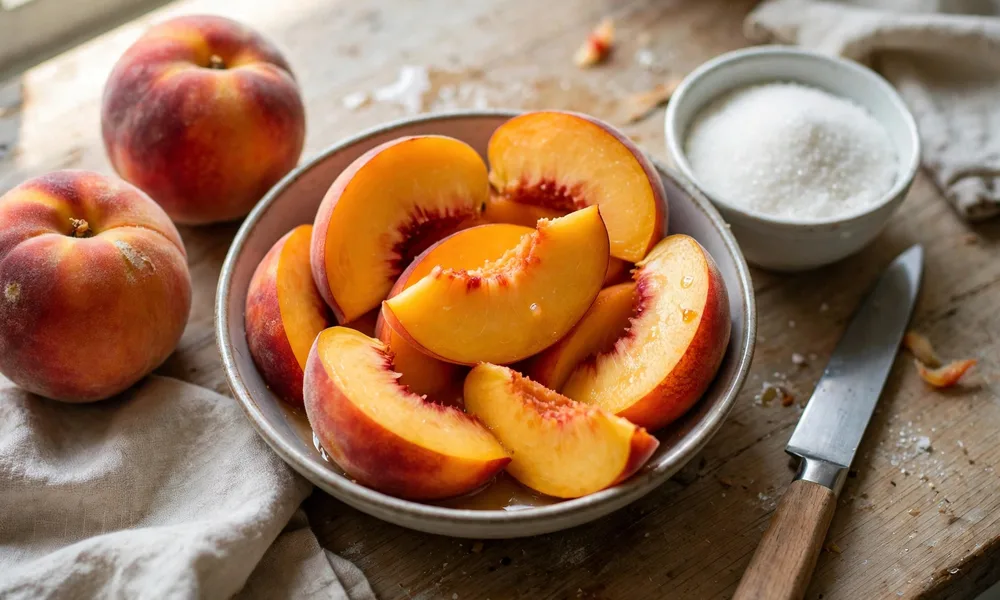
Start with ripe, fragrant peaches. The fruit does most of the work in a good cobbler.
The Best Peach Cobbler Styles, Compared
Cobbler is not one recipe. Across the American South, where the dessert is most at home, several distinct styles compete, and each has loyal defenders. The differences come down to the topping and the ratio of fruit to crust.
| Style | Topping | Texture | Best For |
|---|---|---|---|
| Biscuit-topped | Dropped biscuit dough | Crisp top, soft underside | The classic Southern cobbler |
| Crumble-topped | Butter, flour, sugar rubble | Crunchy and golden | Beginners and crunch lovers |
| Cake-mix cobbler | Dry cake mix and butter | Sweet, cakey, uniform | Quick weeknight desserts |
| Double-crust | Pastry top and bottom | Rich and pie-like | Special occasions |
| Skillet cobbler | Biscuit or crumble, baked in cast iron | Caramelised edges | Serving at the table |
For most home bakers, the biscuit-topped version is the one to master first. It is the most forgiving, because the dough absorbs some of the fruit juices without collapsing, and it gives the clearest contrast between crisp top and juicy filling. The crumble version is a close second and the safest choice if you worry about soggy dough, since the topping stays crunchy even if the filling is generous. Cake-mix cobblers are popular for their speed, but they tend to be sweeter and less interesting than the real thing.
Fresh, Frozen, or Canned Peaches?
The peach question is the one that matters most, and the honest answer is that the best choice depends on the season. In peak summer, fresh peaches are unbeatable. Look for fruit that smells sweet, yields slightly to gentle pressure, and has no green patches near the stem. Freestone varieties are easier to slice, since the flesh pulls cleanly away from the pit.
Outside of summer, frozen peaches are usually the smartest buy. They are picked and frozen at ripeness, so they often taste better than the hard, flavourless fresh peaches shipped in winter. Thaw them, drain off some of the liquid, and they behave almost exactly like fresh fruit in the oven. If you are weighing the options, our guide to frozen peaches worth stocking in 2026 explains which bags to look for and which to skip.
Canned peaches have their place too. They are consistent, available all year, and already soft, which suits a cobbler filling well. The catch is the syrup: peaches packed in heavy syrup make the filling too sweet, so choose fruit in juice and drain it well. For a full rundown, see our guide to canned peaches worth serving in 2026. Whatever you choose, taste before you sweeten, and remember that the peaches, not the sugar, should carry the flavour.
The Topping Debate: Biscuit, Crumble, or Cake Mix?
Biscuit topping is made from flour, baking powder, butter, sugar, and milk or cream, dropped in spoonfuls over the fruit. The key is cold butter and a light hand. Overmixing develops gluten and turns the biscuits tough, so stir only until the dough comes together. A little coarse sugar sprinkled on top before baking adds crunch and sparkle.
Crumble topping is simpler: rub cold butter into flour, sugar, and a pinch of salt until the mixture looks like coarse crumbs, then scatter it thickly over the fruit. Adding oats or chopped nuts gives extra texture. The advantage is reliability. There is almost no way to ruin a crumble, and it stays crisp even when the filling is very juicy.
Cake-mix cobbler, sometimes called dump cobbler, skips the homemade topping entirely. Dry cake mix is scattered over the fruit, butter is sliced on top, and the oven does the rest. It is fast and it works, but the result is sweeter and more uniform than a scratch cobbler, and the topping can turn patchy where the butter does not melt evenly. It is a fine shortcut for a busy night, not the best peach cobbler you will ever eat.
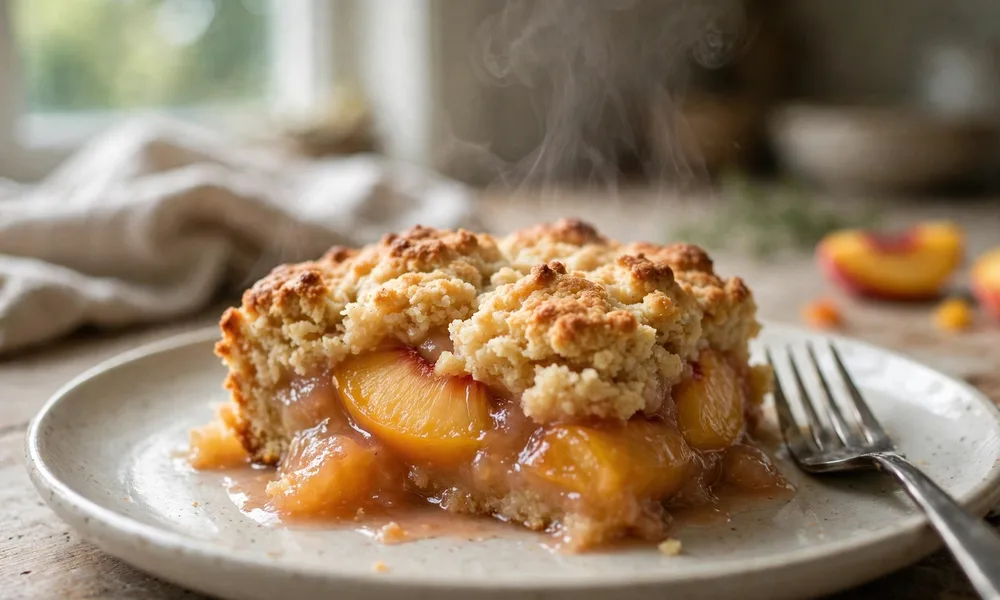
A good slice holds together on the plate, with golden topping and fruit that still has shape.
How to Serve Peach Cobbler
Peach cobbler is at its best served warm, about fifteen to twenty minutes out of the oven. That rest lets the filling thicken slightly, so it spoons neatly instead of running across the plate. A scoop of vanilla ice cream is the classic partner, and the contrast of cold cream against warm fruit is half the pleasure. Lightly whipped cream or a pour of cold cream works just as well, and a sharp cheddar cheese on the side is an old Southern habit that sounds odd until you try it.
Portion generously but not enormously. Cobbler is rich, and a modest serving with plenty of topping and fruit is more satisfying than a huge one. If you are serving a crowd, bake in a wide, shallow dish rather than a deep one, so everyone gets a good share of topping. A skillet looks wonderful brought straight to the table, and the cast iron keeps the cobbler warm while people help themselves.
Common Mistakes to Avoid
The most common mistake is a watery filling. Peaches release a lot of juice as they bake, and without a thickener the filling turns soupy. A tablespoon or two of cornstarch or flour tossed with the fruit solves the problem, as does draining canned or thawed fruit before it goes into the dish. Baking the cobbler long enough matters too: the filling should be visibly bubbling, especially in the centre, before it comes out of the oven.
The second mistake is under-seasoning. Cobbler needs salt, lemon, and a little spice to taste like more than sweet fruit. A pinch of cinnamon or nutmeg adds warmth, and a splash of vanilla deepens the flavour. The third mistake is baking at too low a temperature, which leaves the topping pale and soft. A hot oven, around 190 to 200 degrees Celsius, gives the topping the colour and crunch it needs.
Finally, do not skip the rest. Cutting into a cobbler straight from the oven gives you a runny mess and a burnt tongue. Fifteen minutes of patience is the difference between a cobbler that holds together and one that falls apart on the plate.

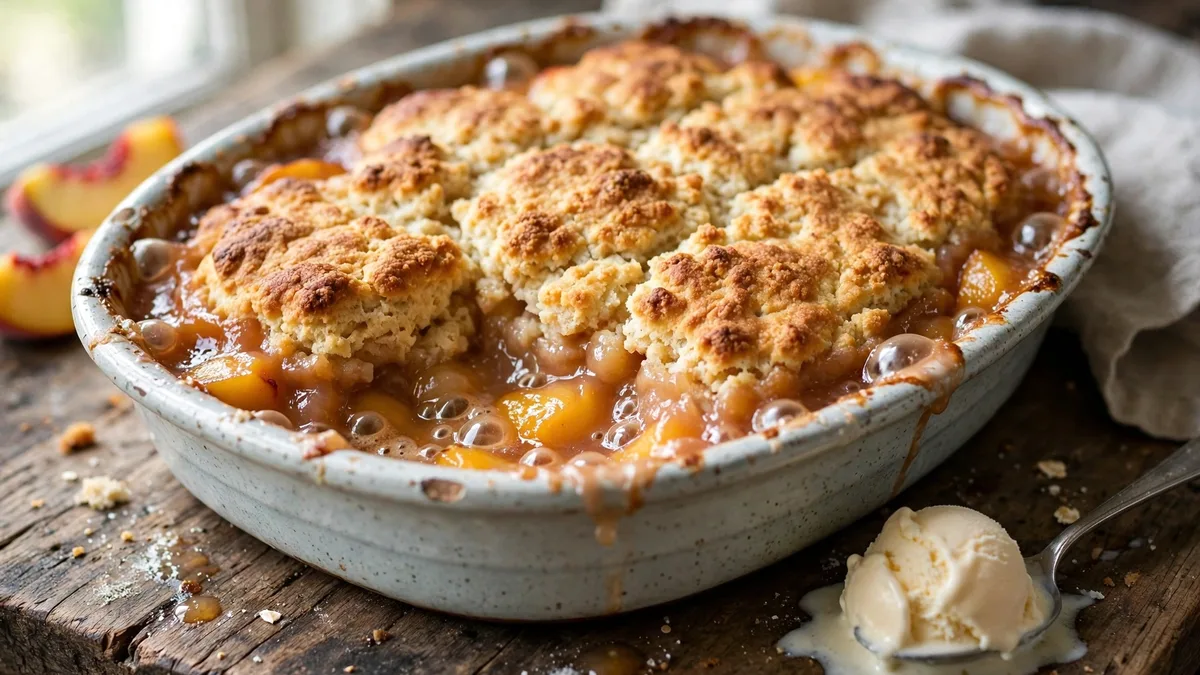
Drop the topping in spoonfuls and leave gaps so steam can escape and the filling can bubble.
Your Peach Cobbler Checklist
- Taste the peaches before adding sugar, and adjust sweetness to the fruit.
- Toss the fruit with a little cornstarch or flour so the filling thickens.
- Use cold butter and a light hand for a tender, crisp topping.
- Leave gaps in the topping so steam escapes and the filling bubbles through.
- Bake until the filling bubbles in the centre and the topping is deep golden.
- Rest for fifteen minutes, then serve warm with ice cream or cream.
Frequently Asked Questions
Can I use frozen peaches for peach cobbler?
Yes. Thaw them first, drain off excess liquid, and use them exactly as you would fresh peaches. Good frozen peaches often taste better than out-of-season fresh ones.
How do I keep my cobbler topping from getting soggy?
Thicken the filling with cornstarch, leave gaps in the topping for steam, and bake until the filling bubbles in the centre. A hot oven and a thick topping both help.
What is the difference between cobbler, crisp, and crumble?
A cobbler has a biscuit or pastry topping, a crisp has a streusel topping that usually includes oats, and a crumble has a similar topping without oats. The names overlap, but the topping is what sets them apart.
Can I make peach cobbler ahead of time?
You can assemble it a few hours ahead and bake it just before serving. Baked cobbler keeps for a day, but the topping softens, so reheat it in the oven to crisp it up again.
Do I need to peel the peaches?
Peeling gives a smoother filling, and it is worth doing for fresh peaches. The skins can turn tough and curl during baking. A quick blanch in boiling water makes peeling easy.
What butter is best for peach cobbler?
A good-quality butter with high fat content gives the topping its flavour and tenderness. Our guide to the best butter in 2026 covers the brands that perform best in baking.
The Bottom Line
The best peach cobbler in 2026 is not the fanciest or the sweetest. It is the one built on ripe, well-chosen peaches, a topping that stays crisp, and a baker who tastes before sweetening and waits for the filling to bubble. Master those basics and any style of cobbler, biscuit or crumble, fresh or frozen fruit, will turn out well. Serve it warm, keep the ice cream cold, and let the peaches do the talking.