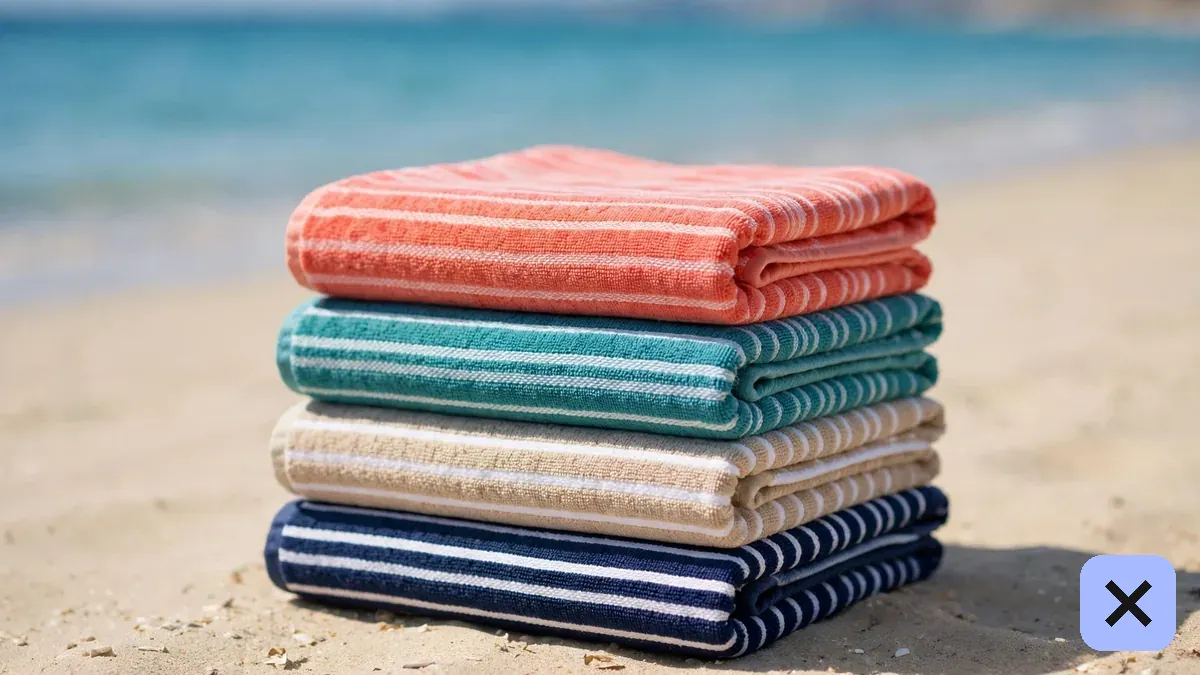
The best beach towels in 2026 are bigger, lighter and faster drying than the thin, scratchy towels most of us grew up with. A good beach towel should soak up water after a swim, shake free of sand in seconds, dry before you pack up, and still feel soft against sun-warmed skin. The wrong one stays damp, collects sand, and wastes bag space.
Towel technology has moved on. Turkish cotton, waffle weaves, microfibre and recycled blends now compete with classic terry cotton, and each one suits a different kind of beach day. Families need oversized towels that double as picnic blankets. Backpackers need something that folds to the size of a paperback. Style-conscious beachgoers want bold stripes and colours that photograph well.
This guide compares the main types of beach towel, explains what to look for before you buy, and rounds up the features that separate the best beach towels of 2026 from the rest. Whether you are planning a fortnight at one of the best beach destinations in Europe or a single afternoon at your local beach, you will find the right towel here.
Key takeaways
- Oversized towels, at least 150 by 75 centimetres, give you room to stretch out and double as a beach blanket.
- Microfibre dries fastest and packs smallest, but classic cotton feels softer and more luxurious.
- Turkish towels are light, sand-resistant and double as a sarong, scarf or picnic throw.
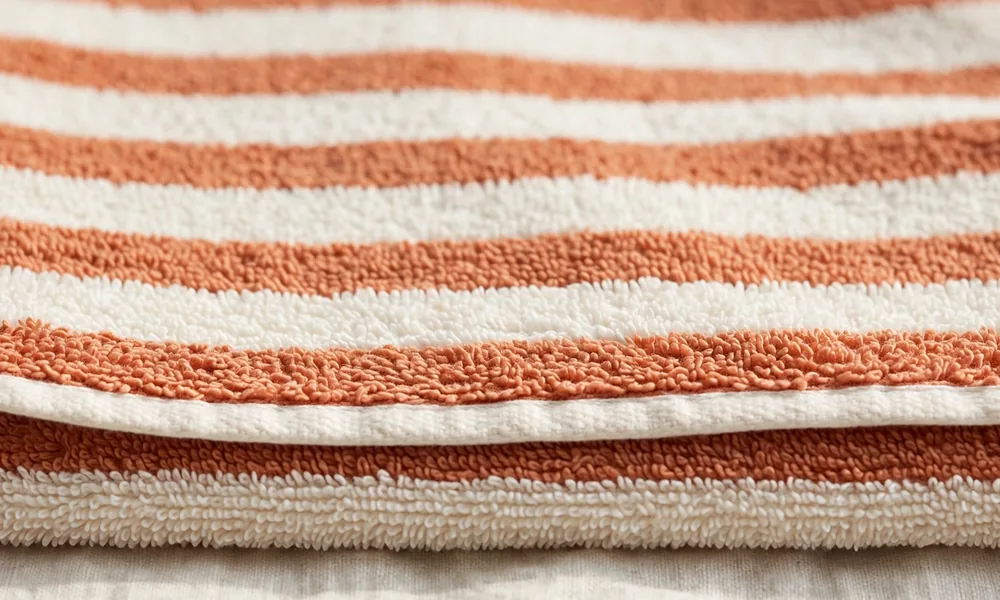
- Look for tightly woven loops, reinforced edges and a weight of 400 to 600 GSM for the best balance.
- Shake your towel out before folding, rinse out salt and sunscreen, and dry it flat in the shade.
What Makes a Great Beach Towel
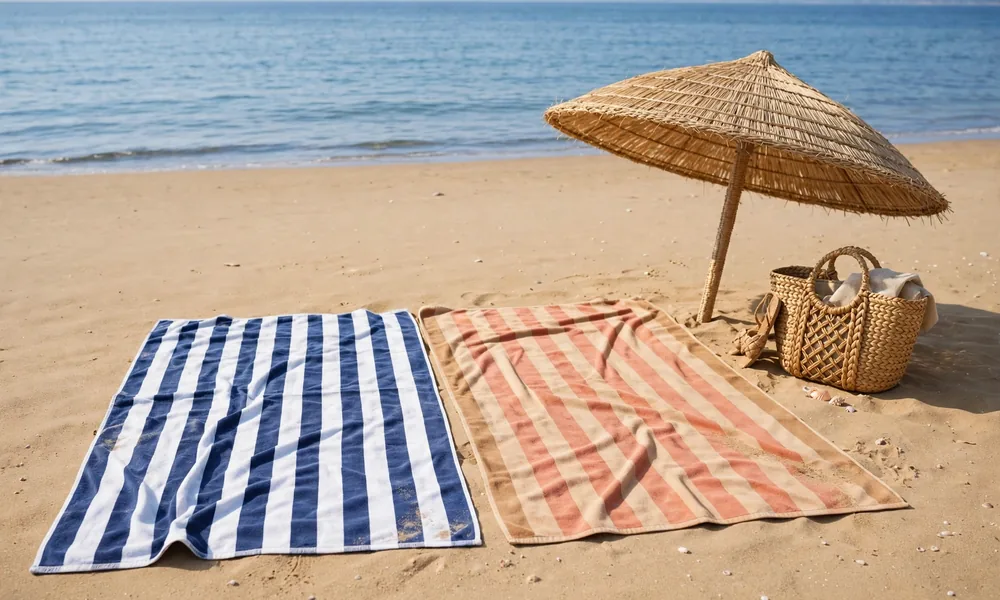
A beach towel has a harder job than a bath towel. It has to handle salt water, sand, sunscreen, sun and repeated folding into a crowded beach bag, and it has to do it day after day on holiday. The best beach towels are built for that life: strong fibres, dense weaving and edges that do not fray after a few washes.
Size Matters More Than You Think
Standard bath towels are usually around 140 by 70 centimetres, which sounds generous until you try to lie on one. Your feet hang off the end, your shoulders spill over the sides, and the moment you shift position you are lying on hot sand. A proper beach towel should be at least 150 by 75 centimetres, and oversized options reach 180 by 90 centimetres. That extra space is the difference between a comfortable afternoon and a gritty one. The trade-off is bulk, so if you travel light, a large flat-weave towel gives you the coverage without the weight.
Absorbency Versus Drying Speed
The classic tension in beach towels is absorbency against drying speed. Thick terry cotton absorbs the most water and feels wonderful after a swim, but it stays damp for hours and gets heavy when wet. Microfibre absorbs surprisingly well for its weight and dries in a fraction of the time, yet some people find it less pleasant against the skin. Turkish cotton sits in the middle: it absorbs well, dries faster than terry, and gets softer with every wash. If you swim repeatedly and pack up quickly, a fast-drying towel will serve you better.
The Best Beach Towels of 2026
The best beach towels of 2026 fall into four broad types, and the right choice depends on how you spend your time by the sea. None of them is the best for everyone, which is why the comparison below matters more than any single recommendation. Look at the strengths of each type, match them to your trips, and you will end up with a towel you actually enjoy using.
Classic Cotton Terry Towels
Classic cotton terry is the towel most of us picture: thick loops, a soft plush feel and serious absorbency. It is still the best choice for comfort, and a good quality cotton towel with a weight of 500 to 600 GSM feels genuinely luxurious after a cold swim. The downsides are weight and drying time: a wet terry towel is heavy and slow to dry. Choose terry cotton if you drive to the beach, stay in one place, and value comfort above everything else.
Microfibre Travel Towels
Microfibre towels are the lightest and fastest-drying option on the market. A full-size microfibre beach towel folds down to the size of a paperback book and weighs a fraction of a cotton equivalent, which makes it the favourite of backpackers, festival goers and anyone flying with hand luggage only. Modern microfibre is far softer than the early versions, and the best ones absorb several times their own weight in water. The main compromise is feel: microfibre can cling to skin and some people dislike its slightly synthetic texture.
Turkish and Flat-Weave Towels
Turkish towels, also called peshtemal, are flat-woven cotton towels that have become the most fashionable beach choice of recent years. They are thin, light and quick to dry, they shake sand off easily, and they double as a sarong, a scarf, a picnic throw or a light cover-up on the walk home. Their absorbency improves with washing, so a Turkish towel that feels thin at first becomes impressively thirsty after a few cycles. Pair one with a light mat if you plan to lie on pebbles.
Oversized and Round Towels
Oversized and round towels are the statement pieces of the beach. Rectangular oversized towels give tall people room to stretch out properly, while round towels, typically 150 centimetres across, look striking and work brilliantly as a shared space for two. The practical drawback is packing: round towels fold awkwardly and take up more bag space than a rectangle of the same area. Buy one for car trips and lazy resort days rather than for a backpacking holiday.
| Towel type | Best for | Drying speed | Packs down |
|---|---|---|---|
| Cotton terry | Comfort and absorbency | Slow | Bulky |
| Microfibre | Travel and backpacking | Very fast | Tiny |
| Turkish flat-weave | Versatility and style | Fast | Compact |
| Oversized or round | Lounging and photos | Slow to medium | Bulky |
How to Choose the Right Beach Towel for You
Choosing a beach towel is simpler than it looks once you are honest about your beach habits. Start with how you travel, how often you swim, and how much space you have.
For Families
Families should buy oversized cotton or Turkish towels in bright, distinct colours so each child can spot their own from a distance. Big towels double as picnic blankets and changing screens, which means fewer things to carry. Buy at least one towel per person plus a spare, because children get wet constantly and a damp towel is a miserable towel. Pair your setup with some of the best camping chairs and you have a comfortable base camp that lasts all day.
For Solo Travellers and Backpackers
Solo travellers should prioritise weight, pack size and drying speed above all else. A microfibre towel or a lightweight Turkish towel will fit in a daypack and dry on a balcony railing overnight. Avoid thick terry cotton, which eats luggage space and stays damp in a hostel room. Look for a towel with a hanging loop and a carry pouch, and choose a darker colour or a bold pattern that hides sand and stains between washes. Pack one of the best travel cameras alongside your towel for a full day on the coast.
For Style-Led Beach Days
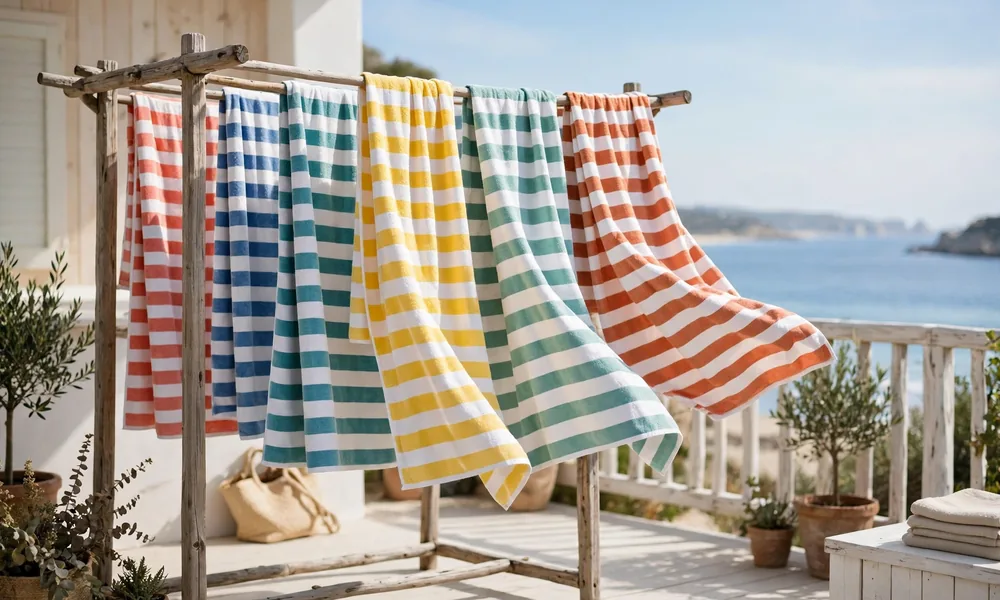
If the look of your beach setup matters to you, choose a Turkish towel or a round towel in a bold stripe or a rich solid colour. Coordinate your towel with your bag and umbrella for a put-together look, but do not sacrifice function for fashion: check the GSM and the fibre content before you fall for a pattern. A beautiful towel that does not dry you properly is just an expensive picnic blanket.
Beach Towel Care: Keep Yours Soft and Sand-Free
A good beach towel can last for years if you treat it well, and most towels are ruined by simple mistakes rather than wear. Always shake your towel out thoroughly before you fold it, because sand trapped in the fibres grinds away at the loops every time the towel is folded and unfolded. Rinse out salt water and sunscreen as soon as you can, since both stiffen fibres and fade colours over time. Wash beach towels in cool or warm water with a small amount of detergent, skip the fabric softener, which coats fibres and reduces absorbency, and dry them flat or on a line in the shade. Store towels loosely folded in a dry place, never sealed in a plastic bag while still damp.
The Best Beach Towels 2026 Checklist
- Size of at least 150 by 75 centimetres, or larger for tall users and families.
- Fibre that matches your trip: cotton for comfort, microfibre for travel, Turkish for versatility.
- Weight between 400 and 600 GSM for the best balance of softness and drying speed.
- Tightly woven loops and reinforced stitched edges that will survive repeated washing.
- Sand-resistant weave that shakes clean instead of trapping grains in the fabric.
- A hanging loop and a carry pouch or mesh bag for easy packing and drying.
Frequently Asked Questions
What size beach towel should I buy?
Choose a towel of at least 150 by 75 centimetres so you can lie down comfortably without your feet or shoulders touching the sand. Tall users and families should look at oversized towels of 180 by 90 centimetres, which also work as picnic blankets.
Are microfibre beach towels better than cotton?
Microfibre towels dry faster and pack much smaller than cotton, which makes them better for travel. Cotton towels feel softer and more luxurious, so they are better for comfort on car trips and resort holidays.
How do I stop sand sticking to my beach towel?
Choose a flat-weave or Turkish towel, which sheds sand far more easily than thick terry cotton. Shake the towel out before folding, and let it dry fully before you pack it away, since sand clings far more to a damp towel than to a dry one.
How often should I wash a beach towel?
Wash your beach towel after every beach day if it has been in salt water or covered in sunscreen. If it was only used for sunbathing on clean sand, you can air it out and reuse it once, but do not let a damp towel sit folded for days.
What does GSM mean on a beach towel?
GSM stands for grams per square metre and measures how thick and heavy the fabric is. A towel of 400 to 600 GSM offers the best balance for beach use: thick enough to feel soft and absorbent, but light enough to dry in reasonable time.
Can I use a beach towel as a bath towel?
You can, but a beach towel is usually thinner and larger than a bath towel, so it may feel less plush in the bathroom. Turkish towels work well as bath towels because they dry quickly and take up little space, while thick terry beach towels are a good substitute in a pinch.
The bottom line: the best beach towels of 2026 are the ones that match how you actually spend your time by the sea. Choose oversized cotton for comfort, microfibre for travel, or a Turkish towel for versatility, check the size and GSM before you buy, and look after it with a good shake, a rinse and a proper dry. Get that right and your towel will be the simplest, most reliable piece of kit in your beach bag for years.