Body lotion is one of the most widely used products in the bathroom and one of the least thought about. Most people buy the same bottle out of habit, apply it when they remember, and wonder why their skin still feels tight by the afternoon. The truth is that body lotion works best when it matches your skin type, and the difference between a lotion that suits you and one that does not is not subtle: one sinks in and keeps skin comfortable all day, while the other sits on the surface, feels sticky, or leaves dry patches untouched.
This guide explains how to choose body lotion for your skin type in 2026, from dry and sensitive skin to oily and combination skin, and how to use it so it actually works. It covers the ingredients that matter, the textures that suit each skin type, and the small habits that make more difference than the brand on the bottle.
Key Takeaways
- Body lotion traps moisture and repairs the skin barrier, so it works best on skin that is still slightly damp after a shower.
- Dry skin needs rich creams with ceramides, shea butter and urea; oily skin needs light, fast-absorbing lotions.
- Sensitive skin should start with a fragrance-free formula and a patch test, since fragrance is the most common irritant.
- One or two pumps per body section is usually enough; more product does not help if the formula is wrong for your skin.
- Apply lotion within a few minutes of showering, and reapply to very dry areas such as shins and elbows in winter.
How Body Lotion Actually Works
Your skin is constantly losing water to the air, and the outer layer, the barrier, is what slows that loss. When the barrier is healthy, skin feels smooth. When it is damaged by hot showers, harsh soap, cold air or age, water escapes faster than it can be replaced, and skin becomes dry, rough and itchy. Body lotion seals in the water already in your skin and gives the barrier the fats it needs to repair itself.
That is why timing matters more than most people realise. Applied to dry skin hours after a shower, a lotion has little moisture to trap. Applied within a few minutes of showering, while the skin is still slightly damp, the same lotion can keep skin comfortable for far longer. The ingredients fall into three groups: humectants such as glycerin, which draw water in; emollients such as shea butter, which smooth the surface; and occlusives such as petrolatum, which seal water in. A good lotion combines at least two.
Lotion, Cream and Butter Are Not the Same Thing
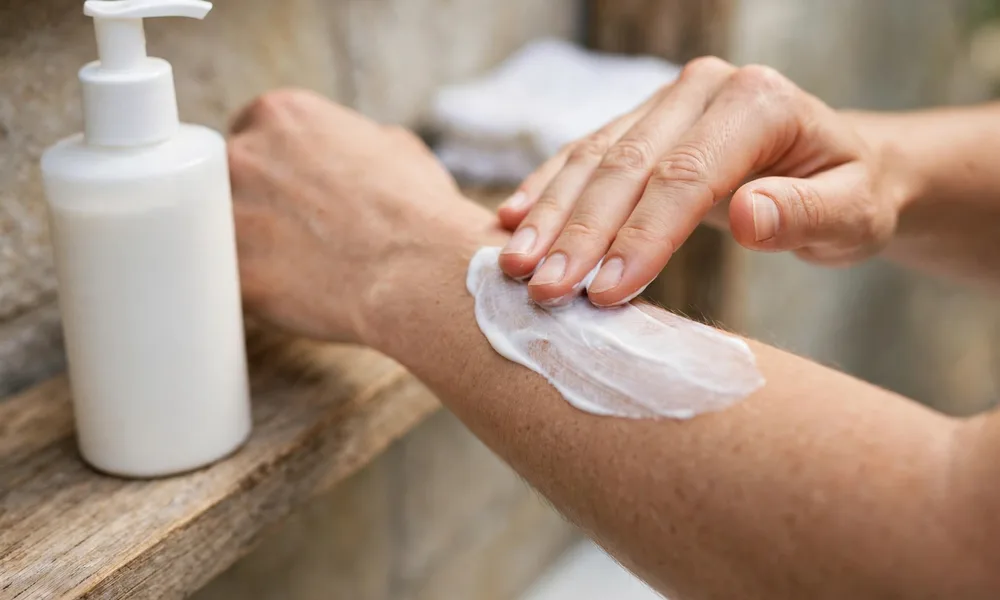
The words on the bottle describe texture, and texture tells you a lot about how a product will behave. A lotion is light and watery, spreads easily over a large area, and absorbs quickly. It suits normal and oily skin, warm weather and daytime use. A cream is thicker and richer, and it suits dry skin and winter. A body butter is the richest of all, almost solid in the tub, and it suits very dry skin, elbows, knees and heels, but it can feel heavy if used all over.
There is no hierarchy, only fit. A light lotion used twice a day can work better for oily skin than a rich cream used once, because the cream will feel uncomfortable and get skipped. Choose the texture you will actually enjoy using.
Finding Your Skin Type
Before choosing a lotion, it helps to know your skin type, and the simplest test takes a few minutes. Wash with a gentle cleanser, pat your skin dry, and wait for an hour without applying anything. If your skin feels tight and looks flaky, especially on the shins and forearms, it leans dry. If it feels comfortable, it is probably normal. If it feels slick on the chest and back, it leans oily. If some areas are dry and others oily, it is combination skin.
Sensitive skin changes everything about the choice. If your skin stings, reddens or itches easily with new products, or if you have eczema, you need a fragrance-free formula with a short ingredient list, patch-tested first. Skin type can also change with the seasons: many people who are normal in summer become dry in winter.
Choosing Body Lotion by Skin Type
Dry skin needs the richest care. Look for creams and butters with ceramides, shea butter, urea and petrolatum, applied while the skin is still damp after a shower. Very dry areas such as shins, elbows and heels often need a second layer. Avoid hot showers and harsh soaps, which undo the lotion’s work within minutes.
Normal skin has the most choice. A medium-weight lotion with glycerin and a little shea butter, applied once a day after a shower, is usually enough. The main mistake is inconsistency: a light lotion used every day beats a rich one used occasionally.
| Skin type | Best texture | Look for | Avoid |
|---|---|---|---|
| Dry | Rich cream or butter | Ceramides, shea butter, urea | Hot showers, harsh soap |
| Normal | Medium lotion | Glycerin, light emollients | Skipping days, then overdoing it |
| Oily | Light, fast-absorbing lotion | Glycerin, hyaluronic acid | Heavy butters, mineral oil all over |
| Sensitive | Fragrance-free cream | Colloidal oatmeal, ceramides | Fragrance, essential oils, acids |
| Combination | Medium lotion, richer on dry areas | Glycerin, ceramides | One heavy product everywhere |
Oily skin still needs moisture, even though it feels like it should not. The difference is texture: a light, fast-absorbing lotion with glycerin and hyaluronic acid hydrates without adding oil or leaving a heavy film. Heavy butters can feel uncomfortable on oily skin. Apply a thin layer after showering and let it absorb before dressing.

Sensitive and Combination Skin
Sensitive skin needs the simplest formula you can find: fragrance-free, with few ingredients, and no essential oils, strong acids or retinol in a body product. Colloidal oatmeal and ceramides are genuinely soothing, and a cream usually seals the barrier better than a lotion. If a product stings or reddens the skin, stop using it.
Combination skin is best handled in zones: a light lotion over most of the body and a richer cream on the dry areas, usually the shins, elbows and forearms. In winter the dry zones need more help; in summer the lighter product often does the whole job.
Ingredients Worth Looking For
Glycerin is the single most useful ingredient in body lotion. It is cheap, effective and suits almost every skin type, drawing water into the upper layers of skin. Ceramides occur naturally in the skin barrier, and lotions containing them help repair it rather than just covering it.
How to Apply Body Lotion Properly
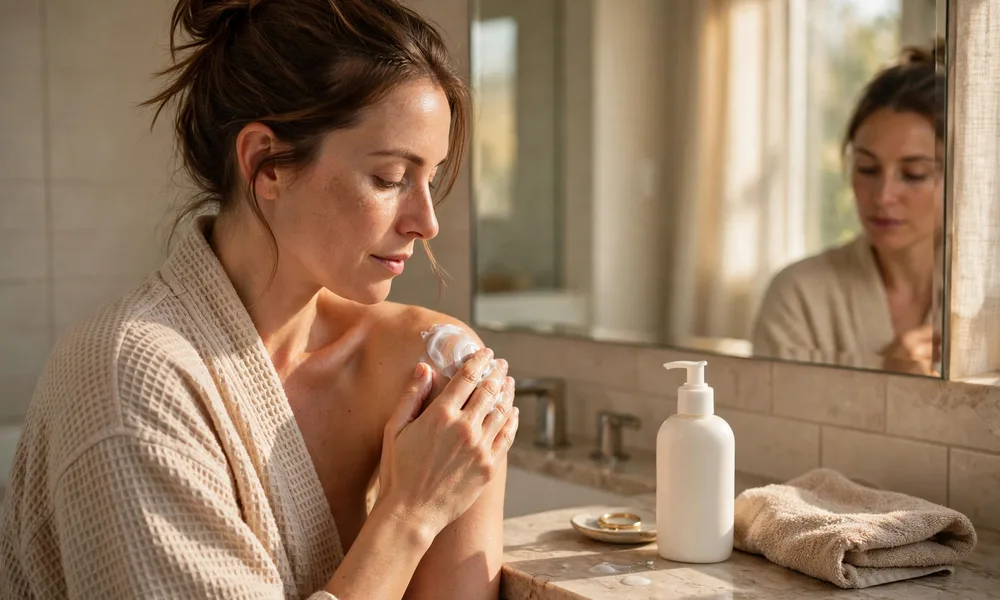
The best time to apply body lotion is within three minutes of stepping out of the shower, when the skin is still slightly damp. Pat yourself dry with a towel rather than rubbing, then apply the lotion in sections: one or two pumps per arm, per leg, and for the torso. Warm it between your hands first so it spreads evenly, and use long, gentle strokes. Pay extra attention to the shins, elbows, knees and heels, which dry out first.
A standard bottle should last about a month if you apply it once a day. If it lasts three months, you are using too little; if it lasts a week, you are using too much or the formula is too light. Skin left soft but not greasy is the right amount.
The Shower Matters Too
No lotion can keep up with a shower routine that strips the skin barrier every morning. Hot water is the biggest culprit: it feels good and it dissolves the skin’s natural oils far faster than lukewarm water. Keep showers warm rather than hot, and choose a gentle cleanser rather than a harsh antibacterial soap. Our comparison of shower gel vs bar soap explains the trade-offs, and the same principle applies throughout: the gentler the wash, the less repair the lotion has to do.
Drying matters as well. Rubbing with a rough towel irritates skin and removes the moisture the lotion needs to trap. Pat dry instead, and leave the skin slightly damp before applying lotion. Our guide to the best bath towels in 2026 covers which towels dry well without feeling rough on sensitive skin.
Body Lotion, Sun and the Seasons
Body lotion is not sunscreen, and a lotion with a low sun protection factor is not a substitute for one. In summer, apply lotion first, let it absorb for a few minutes, and then apply sunscreen over the areas that will be exposed. Our guide to the best sunscreens in 2026 covers which formulas layer well over lotion without pilling or feeling greasy.
Seasons change what your skin needs. In winter, switch to a richer cream and apply it twice a day if your shins are dry. In summer, a lighter lotion is usually enough.
Common Mistakes With Body Lotion
The most common mistake is applying lotion to completely dry skin, hours after showering, when there is no moisture left to trap. The second is using the wrong texture: a light lotion on very dry skin, or a heavy butter on oily skin, will both disappoint. The third is using too little, a thin smear that never reaches the shins and elbows. The fourth is choosing by scent rather than by formula, and then wondering why a beautifully fragranced lotion stings sensitive skin.
Your Body Lotion Checklist
- Work out your skin type with the one-hour test, and re-check it in winter and summer.
- Match the texture to your skin: light lotion for oily skin, rich cream for dry skin, fragrance-free for sensitive skin.
- Check the label for glycerin, ceramides or shea butter before you check the scent.
- Apply within a few minutes of showering, while skin is still slightly damp.
- Use one or two pumps per body section, and give dry areas such as shins and elbows an extra layer.
- Switch to a richer cream in winter, and layer sunscreen over lotion in summer.
Frequently Asked Questions
How often should I apply body lotion?
Once a day after a shower is enough for most people. Dry skin may need a second application in the evening, especially in winter.
Can I use body lotion on my face?
It is not ideal. Facial skin is thinner and more prone to breakouts, and body lotions are often too heavy or too fragranced for it. Use a face moisturiser on your face and keep body lotion for the body.
Why does my skin still feel dry after using lotion?
Usually because the lotion is too light, it is applied to dry skin, or the shower strips the barrier faster than the lotion can repair it. Try a richer cream on damp skin.
Is body lotion the same as body cream?
Not quite. Lotion is lighter, cream is thicker, and butter is the richest of all. They contain similar ingredients in different proportions, so the choice is about texture and how much moisture your skin needs.
Should sensitive skin use scented lotion?
It is better not to. Fragrance and essential oils are the most common causes of irritation in body products. Choose a fragrance-free formula, patch-test it first, and look for colloidal oatmeal or ceramides on the label.
Does expensive body lotion work better?
Not necessarily. The most effective ingredients, such as glycerin, ceramides and petrolatum, are inexpensive. A modest lotion used daily beats a luxury one used once a week.
The Bottom Line
Choosing body lotion for your skin type is simpler than the shelves make it look. Work out whether your skin is dry, normal, oily, sensitive or combination, match the texture to it, and apply it to damp skin after a shower, every day. The right lotion is the one that keeps your skin comfortable until the next shower, and the right habit is the one you will actually keep. Start with a formula that fits and give it two weeks.