
A good bronzer is the difference between looking rested and looking made up. It adds the warmth a face loses under foundation, the way skin looks after a weekend outside, without changing the shape of anything or adding colour where colour does not belong. A bad bronzer does the opposite. It turns orange by lunchtime, sits in a stripe along the cheek, and announces itself from across the room. The difference is rarely the price: it is the shade, the finish, and a light hand.
Bronzer is often misunderstood, and that is where most of the orange comes from. It is not contour, it is not blush, and it is not foundation in a darker shade. Its job is narrower: to warm the high points of the face where the sun would naturally touch it. When it works, nobody can tell you are wearing it; they only notice that you look rested and a little sun-kissed.
Key Takeaways
- A bronzer should warm the face, not colour it: if it looks orange, the shade is too warm or too dark for your skin.
- Choose a bronzer only one or two shades deeper than your natural skin tone, with an undertone that matches your own.
- Matte bronzer looks most natural in daylight; shimmer belongs on the high points, in a thin layer, or not at all.
- Place bronzer where the sun hits: forehead, temples, cheekbones, nose, and a touch on the jawline and neck.
- Blend upward and outward with a light hand, and check the result in daylight before you leave the house.
What a Bronzer Actually Does
Foundation evens the skin, but it also takes away the natural variation that makes a face look alive: the forehead is warmer, the cheeks brighter, the edges deeper. Bronzer puts a little of that variation back, where warmth would naturally sit, which is why a face with bronzer looks healthier than a face with foundation alone.
The effect is subtle by design. Bronzer does not cover anything or change the shape of a nose or a jaw, and it does not add the pink flush that belongs to blush. It adds depth and warmth, which stops a made-up face from looking flat in daylight. It will not give you a tan. A bronzer three or four shades darker than your skin will look like makeup, because a real tan develops evenly, while bronzer applied in one layer sits on the surface.

Powder, Cream, and Liquid: Which Formula Suits You
Powder bronzer is the classic choice and the easiest to control. It goes over foundation and powder, blends with a brush, and can be built up in thin layers or swept away if you overdo it. It suits normal, combination, and oily skin best, and it is the most forgiving formula for a beginner, because a powder mistake can be softened with a clean brush in seconds.
Cream bronzer behaves differently. It melts into the skin, leaves a softer, more skin-like finish, and suits dry and mature skin far better than powder, which can settle into fine lines and look dry by the afternoon. Cream goes on before powder, over foundation or bare skin, applied with fingers, a sponge, or a dense brush, then blended at the edges until there is no visible line. Cream is harder to take off than powder, so start with less than you think you need.
Liquid and gel bronzers sit between the two. They are sheer, blend quickly, and work well mixed into moisturiser or foundation for an all-over warmth, or dotted onto the high points for a targeted glow. They suit almost every skin type, but they set fast, so blend quickly with a damp sponge. Whatever the formula, the product should disappear into the skin, leaving warmth behind.
Matte or Shimmer: The Finish Decides the Look
A matte bronzer is the safest option for daytime, for oily skin, and for anyone who wants warmth without shine. It reads as shadow and warmth, it photographs well, and it never draws attention to pores or texture. If you are buying one bronzer and one only, buy a matte one, in a shade one or two steps deeper than your skin. A shimmer bronzer adds light as well as warmth, and can be beautiful in the evening, but in daylight it shows every pore and fine line it sits on. The middle ground is a satin finish, with the faintest sheen rather than visible sparkle.
Choosing the Right Shade by Undertone
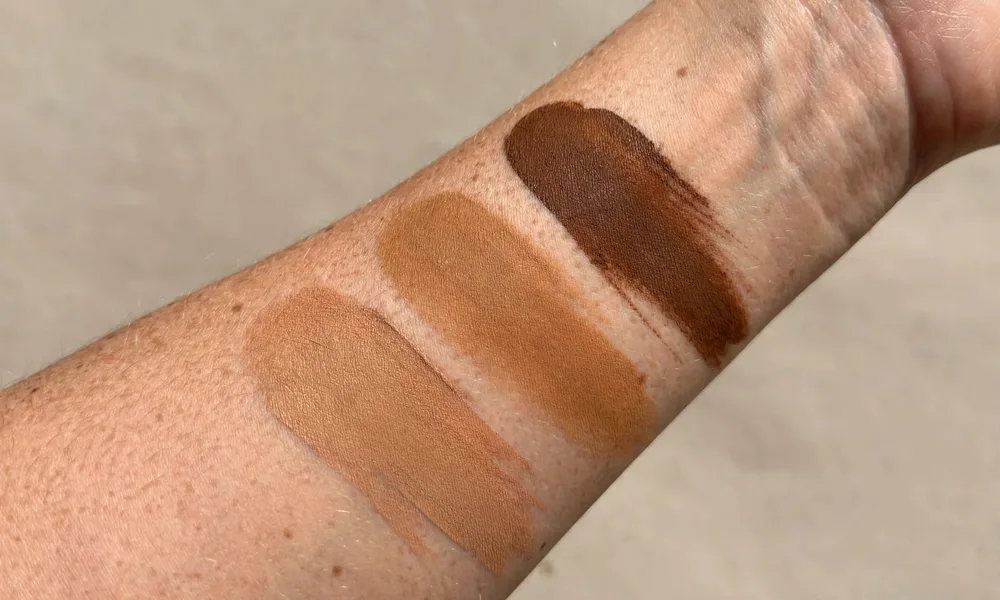
Shade is where most bronzer goes wrong, and undertone is the reason. Your skin has a surface tone, which is how light or dark you are, and an undertone, which is the warm, cool, or neutral cast underneath it. A bronzer that matches your surface tone but fights your undertone will look orange, muddy, or grey, however carefully you apply it. Look at the veins on the inside of your wrist in daylight: greenish veins usually mean a warm undertone, bluish veins a cool one, and a mix of both a neutral one. Gold flatters warm undertones, silver flatters cool ones.
Warm undertones suit golden, honeyed, or caramel bronzers. Cool undertones need a bronzer with less red and more neutral brown, because a golden bronzer on cool skin is what turns orange. Pick a bronzer one or two shades deeper than your skin, never more, swatch it on the jawline, and check it by a window. A good bronzer looks like a slightly warmer version of your own skin. Our guide to foundations that match your skin explains undertone in more detail, and the same test works here.
Where to Place Bronzer, and Where Not To
Placement is the whole trick, and it is simpler than the diagrams make it look. The sun hits the high points first, so that is where bronzer belongs: forehead near the hairline, temples, tops of the cheekbones, lightly down the nose, and a whisper along the jawline. The classic shape is a loose figure three on each side of the face, following the places light would naturally fall.
What matters more than the shape is the restraint. Bronzer should never be painted in a stripe, never taken too far down the cheek, and never applied to the whole face like foundation. The apples of the cheeks belong to blush, the hollows belong to contour, and the centre of the face should stay lighter, because that is how light actually falls. A face bronzed all over looks flat, while a face bronzed only on the high points looks dimensional. Do not forget the neck: a light sweep of what is left on the brush down the neck ties the look together.
How to Apply Bronzer Without the Orange
Start with a clean, fluffy brush, not a dense one: a big, soft brush picks up less product and spreads it more evenly. Tap the brush into the pan once, tap off the excess, and sweep lightly over the forehead first. Then move to the cheekbones, blending upward toward the temple, never downward toward the mouth. Finish with the jawline and nose, using what is left on the brush rather than reloading it.
Blend is a verb, not a step you do once. After the first pass, take a clean brush and sweep over the edges in soft circles until there is no line where the bronzer starts or stops. Then wait a minute and look again in daylight, because bronzer settles as it warms on the skin. If it looks orange, a little translucent powder will soften it, and a damp sponge will lift the worst of it without removing your foundation. Our guide to makeup brushes worth adding to your kit covers the brush shapes that make this easiest, and a large fluffy brush is the one tool no bronzer routine should be without.

Bronzer, Blush, and Contour: Keeping Them Apart
Bronzer, blush, and contour are often confused, but they do three different jobs. Bronzer warms the high points, where the sun would fall. Blush adds a flush of colour to the cheeks. Contour adds shadow to the hollows, under the cheekbones and along the sides of the nose. One warms, one colours, one shadows, and a face that uses one product for all three jobs looks muddy.
The order matters too. Foundation first, then bronzer on the high points, then blush on the apples of the cheeks, then contour only if you want it, in the hollows, in a shade that is cool and grey-brown rather than warm. Blush and bronzer can overlap slightly at the top of the cheekbone, but they should never be the same product. Our guide to why the right blush makes all the difference explains the blush side in full.
Comparison Table
| Formula | Best for | Finish | Ease of blending |
|---|---|---|---|
| Powder bronzer | Normal, combination, oily skin | Matte to satin | Easiest, most forgiving |
| Cream bronzer | Dry and mature skin | Skin-like, dewy | Needs a light hand |
| Liquid or gel bronzer | All skin types, sheer warmth | Sheer, natural | Fast-setting, blend quickly |
| Shimmer bronzer | Evening, smooth skin | Warm with light | Shows texture if overdone |
| Matte bronzer | Daytime, oily skin, photographs | Warm, no shine | Very forgiving |
Checklist
- Pick a shade only one or two steps deeper than your skin, with an undertone that matches your own.
- Choose matte for daytime and satin for a little life; save visible shimmer for the evening.
- Use a large, fluffy brush, tap off the excess, and build in thin layers.
- Place bronzer on the high points only: forehead, temples, cheekbones, nose, and jawline.
- Blend the edges until there is no visible line, then check the result in daylight.
- Sweep what is left on the brush down the neck, so the face and neck match.
Frequently Asked Questions
Can bronzer replace contour?
No. Bronzer warms the high points of the face, while contour adds cool shadow to the hollows. A warm bronzer used as contour looks orange and muddy, because shadow on a real face is cool, not warm. Use bronzer for warmth and a cool, grey-brown product for contour.
Why does my bronzer turn orange by lunchtime?
Usually the shade is too warm or too dark for your undertone, or your foundation is oxidising underneath it. Try a cooler bronzer one shade lighter, and test it with the foundation you actually wear.
Should I apply bronzer before or after blush?
Bronzer first, then blush. Bronzer goes on the high points, blush on the apples of the cheeks, and bronzer first lets you see where the warmth ends and the flush begins.
Is powder or cream bronzer better for mature skin?
Cream is usually the better choice, because it melts into the skin and does not settle into fine lines the way powder can. Apply it with fingers or a damp sponge, and set only the areas that go shiny.
How do I fix bronzer that is too dark?
Take a clean, damp sponge and press it gently over the area to lift the excess, then dust a little translucent powder over the top to soften what is left. If it is still too dark, the shade is wrong for you.
Can I wear bronzer without any other makeup?
Yes. A light sweep over the high points on moisturised skin looks like a day outside rather than makeup, as long as the shade is close to your own skin and the edges are blended into the hairline and neck.
The Bottom Line
Bronzer works when it is treated as warmth, not colour. Choose a matte shade one or two steps deeper than your skin, with an undertone that matches your own, place it where the sun would fall, and blend it until there is no edge to find. Do that, and it will look like you have just come in from outside, even on the greyest day of the year.

