
Cabinet pulls that feel right in the hand in 2026 are the handles you reach for without thinking, dozens of times a day, and the difference between a good one and a bad one is felt before it is seen. A good pull fits the whole hand: fingers wrap around it, the drawer opens in one smooth movement, and nothing pinches, slips, or rattles. A bad pull fights you every time, too thin to grip, too sharp at the edges, or fixed so loosely that it rocks. Choosing the best cabinet pull is about matching the handle to the drawer, the load, and the hands that use it.
This guide explains how cabinet pulls work, which styles suit which drawers, and how to measure the hole spacing, fit them straight, and look after them. The right pull makes a kitchen feel calm and well made; the wrong one makes even a new kitchen feel awkward within weeks.
Key Takeaways
- A cabinet pull is a two-screw handle, which spreads the load and suits wide, heavy drawers that a single knob cannot carry.
- Bar pulls suit almost every kitchen; cup pulls suit traditional drawers, and edge pulls suit flat, handleless fronts.
- Measure the hole spacing before you buy: 96, 128, and 160 millimetres are the common sizes, and they are not interchangeable.
- A pull should be about a third of the drawer width, and your fingers should clear the drawer front comfortably.
- Solid brass and stainless steel last longest; hollow pulls feel light, bend under load, and loosen fastest.
What a Cabinet Pull Actually Does
A cabinet pull is a handle fixed to a door or drawer front with two screws, one at each end. The two fixings are the whole point: they spread the force of the pull across a wider area, so a heavy drawer full of pans opens without the handle working loose. Your fingers wrap around the bar or hook under the cup, and the shape of the pull decides how comfortable that grip feels. A pull that fits the hand makes a heavy drawer feel light; a pull that does not makes a light drawer feel like hard work.
Pulls are often confused with knobs, and the difference matters. A knob is a single-point grip fixed with one screw, and our guide to cabinet knobs that finish a kitchen covers those. Knobs suit doors and small drawers, where the load is light and the look is quiet. Pulls suit wide drawers and heavy doors, where one screw would work loose and the grip needs to be bigger. The hinge carries the door and moves it, and our guide to cabinet hinges that close softly every time covers that half of the job. The pull is the half you grab, and on a drawer you open fifty times a day, the grip matters more than the look.
The test of a pull is simple: close your eyes, reach for it, and open the drawer. A good pull is where your hand expects it to be, deep enough for four fingers, with no sharp edge and no wobble. A bad pull makes you adjust your grip, catches a ring or a sleeve, or flexes under the load. If you cannot try before you buy, choose a bar pull: it is the shape most hands find most comfortable, and the hardest to get wrong.

The Main Types of Cabinet Pull
The Bar Pull: Best All-Rounder
The bar pull is the strongest all-round choice, and the one most kitchens should start with. A straight metal bar held off the drawer front by two short posts, it fits any hand, suits any door from plain white slab to panelled shaker, and comes in every finish from brushed nickel to matte black. The best are solid brass or stainless steel, heavy enough to feel substantial and rigid enough not to flex. They are easy to clean and never snag clothing. A bar pull that feels light and hollow is a cheap copy, and it will bend under a heavy drawer within a year.
The Cup Pull: Best for Traditional Drawers
The cup pull, also called a bin pull, is the best choice for traditional kitchens. Its half-moon cup shape lets your fingers hook underneath and lift, which suits deep drawers full of heavy things. The best are solid brass or bronze, with a warm look that suits painted wood and farmhouse kitchens. They hide crumbs and dust inside the cup, so they need wiping more often, and they look out of place in very modern kitchens. On the right drawer, though, they are the most comfortable pull you can buy.
The Edge Pull: Best for Flat Fronts
The edge pull is the best choice for flat, handleless drawer fronts. It is a slim metal channel fixed to the top edge of the drawer, so almost nothing shows from the front and the kitchen keeps its clean lines. Your fingers hook behind the lip and pull. The best are solid aluminium or brass, with a smooth, rounded edge. They suit modern kitchens and small rooms, where a bar pull would stick out too far. Their weakness is grip: on a very heavy drawer, the shallow lip gives your fingers less to hold than a bar.
The T-Bar Pull: Best for a Lighter Look
The T-bar pull is the best choice when a full bar pull feels too heavy for the room. A slim horizontal bar on a single central post, it reads as a smaller, lighter version of the bar pull, and suits narrow drawers and small doors. The best are solid stainless steel, with a bar thick enough to grip without digging into the fingers. They are fixed with one central screw, so check the fixing on heavy drawers, where the single post can work loose.
The Appliance Pull: Best for Heavy Doors
The appliance pull is the best choice for heavy doors: integrated fridges, dishwashers, and tall pantry doors. It is a long, thick bar, often 300 millimetres or more, fixed with two or three heavy screws, and built to carry real weight. The best are solid stainless steel, at least 20 millimetres thick, so the grip fills the hand. They are too much handle for a small drawer, but on a heavy door nothing else feels as sure. Measure the door first, because a pull that is too short looks lost and one that is too long fouls the neighbouring door.

Cabinet Pulls Compared
| Pull | Fixing | Best material | Best for | Watch out for |
|---|---|---|---|---|
| Bar pull | Two screws | Stainless steel | Most kitchens | Hollow copies that bend |
| Cup pull | Two screws | Solid brass | Traditional drawers | Collects dust inside the cup |
| Edge pull | Top edge | Aluminium | Flat, handleless fronts | Shallow grip on heavy drawers |
| T-bar pull | One central screw | Stainless steel | Narrow drawers | Can loosen under load |
| Appliance pull | Two or three screws | Stainless steel | Heavy doors | Too big for small drawers |
What to Avoid
The worst cabinet pulls share the same faults. The first is hollow metal: if a pull feels light and flexes when you squeeze it, it is a thin shell, and it will bend and loosen under a heavy drawer within months. The second is a sharp edge, because a pull is gripped hard dozens of times a day, and a sharp lip will sore the fingers within a week. The third is a fixing that does not sit flat, which rocks on the drawer front and marks the paint.
Unbranded multi-packs are the worst offenders. They often mix hole spacings in one box, use screws too soft to hold, and arrive with finishes that flake within a year. A pull is a small purchase, but it carries a heavy drawer every day, and replacing a failed one means filling two holes and re-drilling the front. Buy from a known maker, buy solid metal, and buy one spare. The drawer below the door moves on different hardware, and our guide to drawer slides that glide without sticking covers the runners that carry it.
How to Measure and Fit a Cabinet Pull
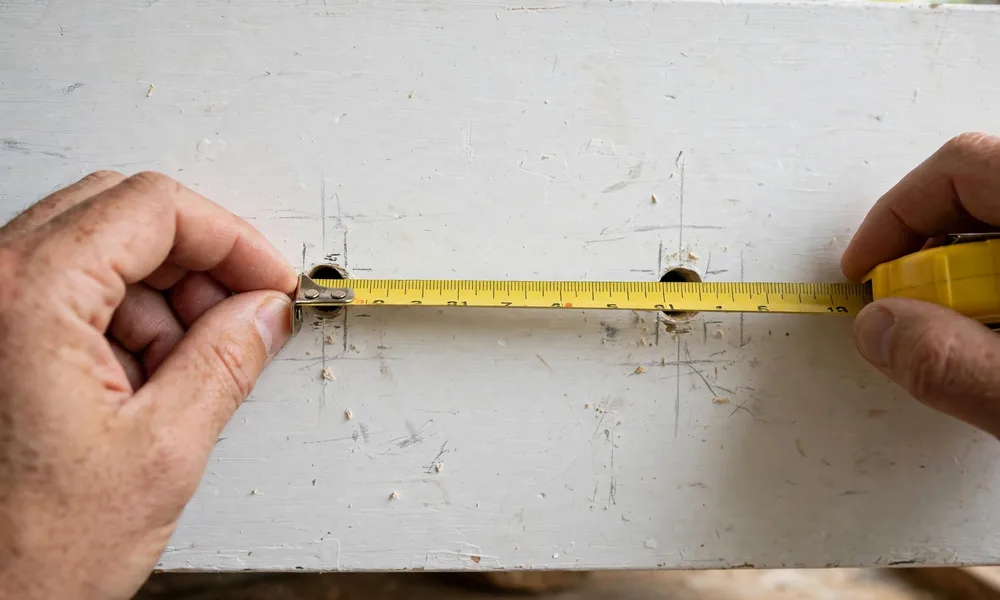
Fitting a cabinet pull starts with one measurement: the hole spacing, the distance between the two screw centres. Common sizes are 96, 128, 160, and 192 millimetres, and they are not interchangeable, so measure the pull you are replacing, or the holes already drilled, before you order. If you are drilling fresh holes, choose the spacing first, then the pull. A pull should be about a third of the drawer width.
Mark the position before you drill. On a drawer front, the pull sits dead centre, level, with the holes the right distance apart. Use a template or a strip of card with the holes marked, so every drawer matches. Drill clean pilot holes from the front so the back does not splinter, then tighten both screws from behind, a little at a time, alternating between them, so the pull sits flat and level. Check the pull after a week, and again after a month, because new screws settle and a quarter-turn then keeps them tight for years.
Buying Checklist
- Measure the hole spacing before you order anything.
- Choose solid brass or stainless steel, never hollow pulls.
- Pick a pull about a third of the drawer width.
- Check your fingers clear the drawer front comfortably.
- Match the finish to the knobs, hinges, and tap.
- Buy one spare pull and four spare screws.
Frequently Asked Questions
Are cabinet pulls or knobs better?
Neither is better in general; they suit different doors. A pull uses two screws and suits wide, heavy drawers, where the load needs spreading and the grip needs to be bigger. A knob uses one screw and suits doors and small drawers, where the load is light and the look is quiet. Many kitchens mix them: pulls on drawers, knobs on doors.
What size cabinet pull should I buy?
Choose by hole spacing and by drawer width. Common hole spacings are 96, 128, 160, and 192 millimetres. As a rule, the pull should be about a third of the drawer width, so a 400-millimetre drawer suits a 128-millimetre pull.
Can I replace knobs with pulls?
Yes, but you will need to drill a second hole in every door, because a pull needs two fixings where a knob needed one. Fill the old hole first if the new pull does not cover it, and use a template so the new holes line up on every door.
How do I stop cabinet pulls coming loose?
Pulls loosen when the screws are too short or the holes have worn wide. Use screws that bite at least 10 millimetres into the pull, tighten both screws evenly, and check them after a week. If a hole is worn, fill it with a hardwood plug and re-drill it.
Do cabinet pulls work on doors as well as drawers?
Yes, on tall and heavy doors. A long bar pull suits a tall pantry door or an integrated fridge door, where the weight needs two fixings and the grip needs to be big. On a small, light door, a pull looks oversized, and a knob is the better choice.
How do I clean brushed nickel cabinet pulls?
Wipe them with a damp cloth and dry them straight away, and never use abrasive cleaner, which scratches the brushed finish. Sticky cooking grease comes off with a little washing-up liquid on a soft cloth. Polished finishes show fingerprints more than brushed ones, so wipe them more often.
The Bottom Line
The best cabinet pull is one your hand finds without thinking: it fits four fingers, sits flat, and opens the drawer first time, every time. For most kitchens, that is a solid stainless steel bar pull. Traditional drawers suit the cup pull, flat fronts suit the edge pull, and heavy doors need the appliance pull. Measure the hole spacing and buy solid metal.


