
Canola oil is the workhorse of the modern kitchen, and it earns the title without ever asking for attention. It is the big bottle by the stove, frying the weeknight chicken, roasting the Sunday vegetables, binding the mayonnaise and going into the cake batter without changing the flavour of any of them. It does all of that for less money than almost any other cooking oil, and it does it with a fat profile that is genuinely hard to fault.
Yet canola oil is also one of the most misunderstood bottles on the shelf. Some cooks distrust how it is made, others assume a cheap oil must be a bad one, and much of what circulates about it online is simply wrong. This guide explains what canola oil actually is, why it works so hard, where it beats the fancier bottles, and how to buy and store it well.
Key takeaways
- Canola oil is pressed from rapeseed bred to be low in erucic acid; it is not the industrial rapeseed oil of the past.
- Its neutral flavour and smoke point around 204 degrees Celsius make it suitable for frying, roasting, baking and dressings alike.
- Canola oil is low in saturated fat, rich in monounsaturated fat, and higher in plant omega-3 than any other common cooking oil.
- Buy refined canola oil in a dark bottle, check for a recent date, and use it within six months of opening.
- Keep a second, flavoured oil alongside it for salads and finishing, because canola oil brings no flavour of its own.
What canola oil actually is
Canola oil comes from the seeds of the canola plant, a variety of rapeseed developed by Canadian breeders in the 1970s. The name contracts Canadian oil, low acid, and the low acid part matters: traditional rapeseed oil was high in erucic acid, a compound considered undesirable in food, so breeders selected varieties with almost none of it. Modern canola oil contains under two per cent erucic acid, and the distinction from old-fashioned rapeseed oil is real, not marketing.
The oil is pressed from the tiny black seeds and then refined, which removes colour, odour and flavour. What remains is a pale, clear oil with almost no taste of its own. That neutrality is sometimes held against it, as though an oil without flavour must be an oil without quality, but in cooking it is a feature: a neutral oil disappears into the dish, which is exactly what you want when the food should carry the flavour.
Its fat profile is the strongest argument in its favour: about seven per cent saturated fat, the lowest of any common cooking oil, and roughly sixty per cent monounsaturated fat, the kind that dominates olive oil. It also contains around ten per cent alpha-linolenic acid, a plant omega-3 fat, more than any other everyday cooking oil offers. No single oil covers every nutritional base, but on fat quality alone canola oil is difficult to beat at its price.

Why it works so hard
The first reason is heat. Refined canola oil smokes at around 204 degrees Celsius, covering shallow frying, sautéing, roasting and most baking. It sits below sunflower and avocado oil on smoke point but above extra virgin olive oil, and in practice the difference rarely matters: home frying happens at 175 to 190 degrees, well inside its comfort zone. It heats evenly, does not foam, and leaves fried food crisp rather than greasy.
The second reason is versatility. The same bottle that fries fish on Friday can go into a Victoria sponge on Saturday and whisk into a vinaigrette on Sunday. It emulsifies well, making it a reliable base for mayonnaise and creamy dressings, and it stays liquid in the fridge, so a dressing pours straight from the bottle. Few oils cover that much ground, and none at canola oil’s price.
The third reason is cost. Canola oil is usually the cheapest cooking oil on the shelf, often by a wide margin, and that changes how you cook with it. You can afford enough oil for proper shallow frying, a generous roasting tray, and replacing frying oil instead of stretching it past its best. An expensive oil rationed too thinly performs worse than a cheap oil used properly, and this is where canola oil quietly wins. For cooks comparing the shelf, our guide to the best olive oil shows what the pricier bottle buys you, and when it is worth it.
Canola oil against the rest of the shelf
Set beside its neighbours, canola oil’s strengths and limits become clear. It is not the highest smoke point, the most flavoursome or the most fashionable oil, but it is the most useful all-rounder, as the table shows.
| Oil | Smoke point (refined) | Flavour | Best for | Watch out for |
|---|---|---|---|---|
| Canola | About 204°C | Neutral | Everyday frying, baking, dressings | No flavour for finishing |
| Sunflower (high-oleic) | About 232°C | Neutral | Frying, roasting | Almost no omega-3 |
| Olive (extra virgin) | About 190–210°C | Grassy, peppery | Dressings, finishing, sautéing | Costs much more |
| Avocado (refined) | About 250°C | Mild, buttery | Searing, roasting | Expensive, fakes exist |
| Coconut (refined) | About 204°C | Neutral | Curries, roasting | High in saturated fat |
| Sesame (light) | About 210°C | Mild, nutty | Stir-fries, dressings | Goes stale quickly |
Where canola oil shines
Frying is its home territory. Chips come out crisp and clean-tasting, fried chicken stays juicy inside its coating, and fritters brown evenly without absorbing excess oil. Because the oil is cheap, you can use a proper depth for shallow frying, which keeps food crisp: too little oil drops in temperature when food goes in, and the result is soggy rather than golden.
Baking is the second strength. Canola oil keeps cakes, muffins and quick breads moist for longer than butter does, and its neutral flavour means a lemon drizzle cake tastes of lemon rather than of the fat. It is the standard choice for recipes calling for vegetable oil, and it works in pastry and enriched doughs too. For dishes where a coconut note is welcome instead, the best coconut oil guide covers when that swap makes sense.
Roasting and dressings round out the list. Vegetables tossed in it crisp well at the edges in a hot oven, and a vinaigrette made with it lets the vinegar and mustard lead. It is also the practical choice for seasoning cast iron and oiling a grill, jobs where a flavoured or expensive oil would be wasted. The one place it does not shine is finishing: a drizzle of canola oil over a finished dish adds nothing, and that is the moment to reach for a flavoured oil instead.

The things people get wrong about canola oil
Three claims follow canola oil around, and each deserves a straight answer. The first is that it is toxic or industrial. Canola oil is a food-grade oil made under the same food safety rules as every other cooking oil, and the industrial rapeseed oil used in machinery is a different product with a different composition. The oil on supermarket shelves is not the industrial product.
The second is about genetic modification. Much of the canola grown in North America is genetically modified for herbicide tolerance, and some cooks prefer to avoid it. If that matters to you, look for organic or non-GMO certified canola oil, widely available for only a little more. The oil is refined the same way either way, and the choice is personal rather than a safety question.
The third is about processing. Canola oil is extracted with heat and usually a solvent, then refined, which sounds harsh next to a cold-pressed oil. But refining is what gives it a high smoke point and a neutral flavour, and the finished oil carries no meaningful residue from the process. Cold-pressed canola oil exists for those who prefer minimal processing, though it smokes at a lower temperature and costs more. For high-heat cooking, refined is the better tool, and the same logic applies to the toasted finishing oil in our guide to sesame oil, where processing defines the flavour.
How to buy and store canola oil
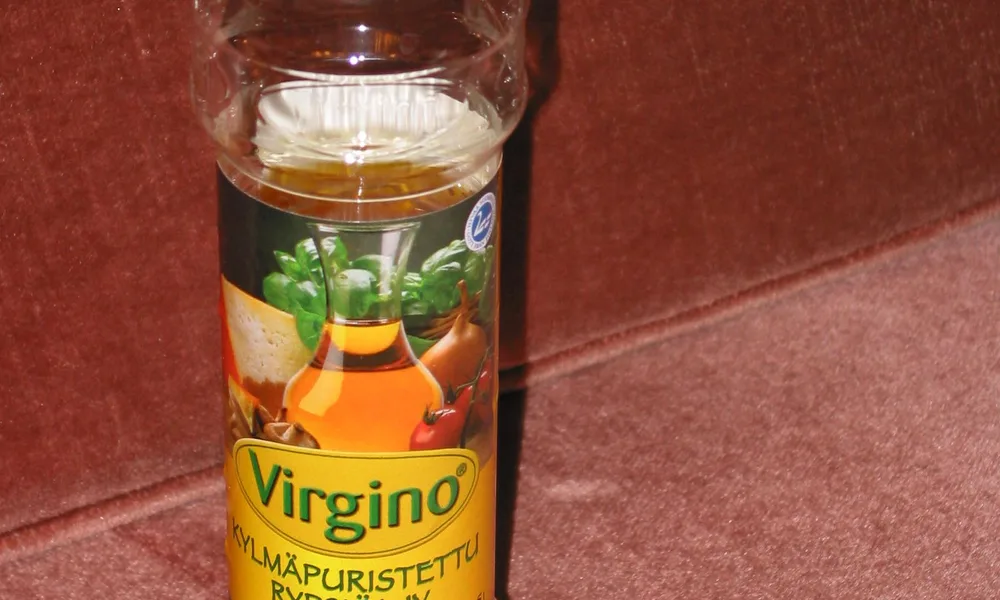
Canola oil does not reward overthinking. Buy refined oil from a brand you recognise, in a dark bottle or tin if you can find one, and check the best-before date. Clear plastic is fine if the oil is fresh and you use it quickly, but a dark bottle lasts longer in a bright kitchen. Choose a size you will finish within six months of opening; the big catering bottle is only good value if you cook with it most days.
Store it in a cool, dark cupboard away from the stove, cap on tight. Light and heat are what turn a fresh oil stale, and a bottle left beside the hob goes off far faster than one kept in a cupboard. An opened bottle stays fresh for about six months, unopened for a year or more. Smell it before use: fresh canola oil smells almost of nothing, stale oil smells waxy, paint-like or like old crayons. If in doubt, throw it out; it is the cheapest bottle in the kitchen.
Checklist: buying canola oil in 2026
- Choose refined canola oil for everyday cooking; cold-pressed only for low-heat use and dressings.
- Look for organic or non-GMO certification if avoiding genetically modified crops matters to you.
- Prefer a dark bottle or tin, and check the best-before date before you buy.
- Buy a size you will finish within six months of opening, not the largest bottle available.
- Store it in a cool, dark cupboard away from the stove, with the cap screwed on tight.
- Smell it before each use and discard it when it smells waxy, stale or like paint.
Frequently asked questions
Is canola oil healthy?
Canola oil has one of the best fat profiles of any common cooking oil: low in saturated fat, rich in monounsaturated fat, and the best plant source of omega-3 among everyday oils. It is still a calorie-dense fat, so the amount you use matters more than the choice of oil, but in normal quantities as part of a varied diet it is a sound everyday choice.
Is canola oil good for frying?
Yes. Refined canola oil smokes at around 204 degrees Celsius, covering shallow frying, sautéing and roasting. It heats evenly, barely foams, and leaves fried food crisp without adding flavour. For searing above 230 degrees, avocado or high-oleic sunflower oil is better.
Can I use canola oil instead of vegetable oil?
Yes, canola oil is the main ingredient in most generic vegetable oil blends, and it substitutes directly in any recipe calling for vegetable oil. Use the same quantity, whether for frying, baking or dressings.
Does canola oil go bad?
Yes. Unopened it keeps for a year or more in a cool, dark place; once opened, use it within about six months. Light, heat and air speed up rancidity. If it smells waxy, stale or like paint, it has gone off.
Can you bake with canola oil?
Yes. It keeps cakes, muffins and quick breads moist, and its neutral flavour lets the other ingredients lead. Use the same quantity the recipe calls for, and choose refined oil rather than cold-pressed.
What is the difference between canola oil and rapeseed oil?
Canola is a variety of rapeseed bred to be very low in erucic acid, and the name is used for food-grade oil from those varieties. Traditional rapeseed oil is higher in erucic acid and is not sold as a food oil in most countries. In shops, oil labelled rapeseed oil is usually the same low-erucic product.
The bottom line
Canola oil is the workhorse your kitchen needs because it does the most jobs for the least money with the fewest compromises. It fries, roasts, bakes and dresses without imposing flavour, and its fat profile is better than its price suggests. Buy it fresh, store it properly, and keep a flavoured oil beside it for finishing.


