Sesame oil is a small bottle with an outsized job. It is the oil that turns a plain stir-fry into something that smells like a restaurant kitchen, the finishing drizzle for noodle bowls, and the background note in dressings and dipping sauces. It is also one of the most misunderstood bottles in the pantry, because two very different oils share the same name.
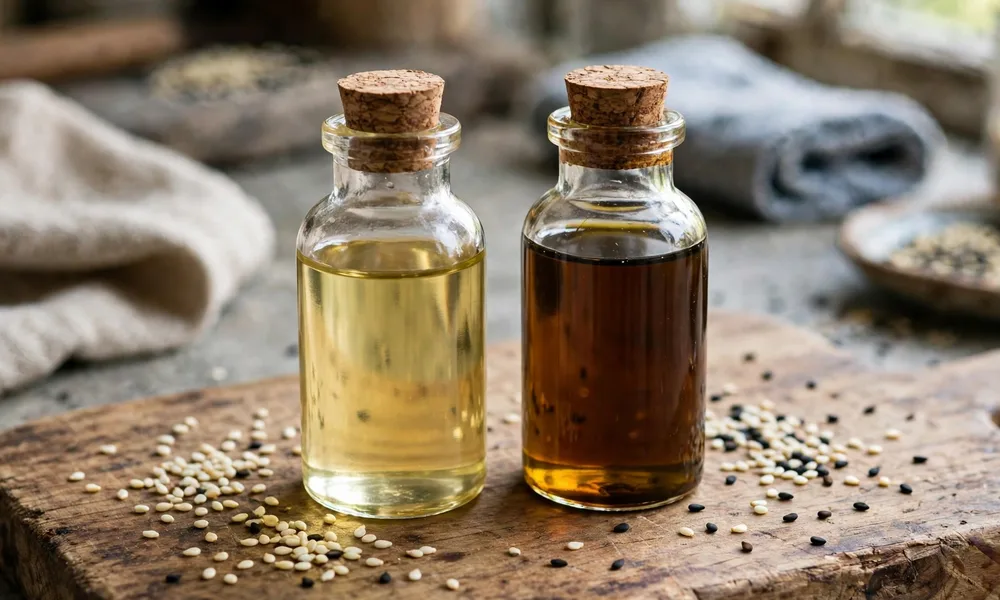
The bottle that changes stir-fries is toasted sesame oil, pressed from sesame seeds that have been roasted first, which gives it a deep amber colour and an intense nutty, almost smoky aroma. It is a finishing oil, used by the teaspoon, not a cooking oil for the pan. Its pale cousin, light sesame oil, is pressed from raw seeds, and it is a mild, neutral cooking oil with a much higher smoke point. Knowing which bottle you are holding is the whole secret of buying sesame oil well.
Key Takeaways
- Toasted sesame oil is a dark, nutty finishing oil used by the teaspoon; light sesame oil is a pale, mild cooking oil.
- Never fry with toasted sesame oil: it burns easily and turns bitter, so add it at the end of cooking or off the heat.
- Buy it in a dark glass bottle, check for a recent pressing date, and use it within three to six months of opening.
- A good toasted sesame oil smells rich and nutty the moment you open it; a flat or paint-like smell means it has gone stale.
- Store sesame oil in a cool, dark cupboard, or in the fridge once opened, because its unsaturated fats go rancid faster than most oils.
Two Oils, One Name: Toasted Versus Light Sesame Oil
The confusion starts at the shelf, where toasted and light sesame oil often sit side by side in near-identical bottles. Toasted sesame oil is made from seeds that are roasted before pressing, and that roasting creates the deep amber colour and the powerful roasted-nut aroma that defines the oil. A little goes a long way: a teaspoon in a stir-fry, a few drops in a dressing. It is never a bulk cooking fat: its flavour would overwhelm a dish, and its low smoke point, around 175 degrees Celsius, means it burns quickly.
Light sesame oil, sometimes called cold-pressed or refined sesame oil, is pressed from raw, untoasted seeds. It is pale gold and almost neutral, with a smoke point of around 210 to 230 degrees Celsius, making it a good everyday cooking oil. It is mild by design, letting the food speak while adding a gentle richness. Black sesame oil is darker and more intense still, used in small amounts in Korean and Chinese cooking.
Sesame Oil Types Compared
Choosing between sesame oils comes down to matching the oil to the job. Toasted oil is for flavour, light oil is for cooking, and black sesame oil is for the deepest sesame note. Toasted oil costs most per millilitre, while light oil is cheaper and sold in larger bottles.
One detail worth checking is whether the oil is unrefined or refined. Unrefined toasted sesame oil has the fullest flavour, which is what you want in a finishing oil. Refined toasted oil is milder but loses some of the character that makes sesame oil worth buying. Either way, the ingredient list should read one thing only: sesame oil, or sesame seed oil, with nothing else added.
| Oil Type | Colour and Flavour | Best For | Typical Price |
|---|---|---|---|
| Toasted sesame oil | Dark amber, intense nutty | Finishing stir-fries, noodles, dressings | $6–$12 per 250ml |
| Light sesame oil | Pale gold, mild, neutral | Everyday sautéing and frying | $5–$10 per 500ml |
| Cold-pressed toasted | Deep amber, richest aroma | Finishing, dipping sauces, dressings | $8–$15 per 250ml |
| Black sesame oil | Very dark, deep and intense | Korean and Chinese dishes, small amounts | $10–$18 per 250ml |
| Refined sesame oil | Pale, very mild | High-heat frying, neutral cooking | $4–$8 per 500ml |
| Sesame oil blends | Varies, often diluted | Not recommended; buy pure oil | $3–$6 per 500ml |
Blends deserve a warning. Some bottles labelled sesame oil are mostly soybean or canola oil with a little sesame oil added for flavour. They will not give you the flavour of real sesame oil. The label will usually say blend, or list more than one oil in the ingredients. Pure sesame oil lists one ingredient, and that is the only bottle worth buying for a cook who wants the real thing.
How to Choose the Best Sesame Oil in 2026
Start by deciding which oil you need. If you want the stir-fry magic, you need toasted sesame oil, look for a small dark bottle from a brand that specialises in Asian ingredients. If you want an everyday cooking oil, light sesame oil in a larger bottle is the right buy. Buying one bottle to do both jobs is the most common mistake: toasted oil burns in the pan, and light oil adds nothing to a finished noodle bowl.
Next, read the label the way you would for any good oil. Look for 100 percent sesame oil and check for a pressing or best-before date. Sesame oil goes stale faster than most cooking oils, so a recent date matters more here than with olive oil. Dark glass is the best packaging, because light is its enemy, .
Smell is the final test, and it is decisive. Open the bottle and take a careful sniff: good toasted sesame oil smells rich, nutty, and warm, like roasted seeds with a faint smoky edge, and the aroma should be obvious from a few inches away. If either smells flat, paint-like, or like old crayons, it has gone rancid, and it will make your food taste stale. Size matters too: a 150ml or 250ml bottle of toasted oil is the right size for most households, .
Cooking With Sesame Oil: The Stir-Fry Secret
The reason toasted sesame oil changes stir-fries is timing. Added at the end of cooking, off the heat or in the final minute, its volatile aroma compounds survive and bloom over the hot food, giving the whole dish a roasted, nutty fragrance that no other oil can provide. Added at the start, in a screaming-hot wok, those same compounds burn and turn bitter, and the dish tastes scorched rather than fragrant. The technique is simple: cook with a neutral oil at high heat, then finish with a teaspoon of toasted sesame oil tossed through just before serving.

Beyond stir-fries, toasted sesame oil earns its place in dressings, marinades, and noodle dishes. A classic sesame dressing is three parts neutral oil to one part toasted sesame oil, with soy sauce, rice vinegar, and a little honey, whisked until it emulsifies. It anchors cold noodle salads, cucumber salads, and dumpling dipping sauces, where its nutty depth balances salt and acid. Light sesame oil is the workhorse, excellent for sautéing and marinades where you want a clean, mild fat. For dressings and finishing, though, it is a poor substitute for toasted oil. The two oils are a pair, not a choice, and most well-stocked kitchens keep both. The same logic applies across the pantry, and our guide to the best olive oil of 2026 covers the same idea for the Mediterranean side of the shelf.
Storing Sesame Oil So It Stays Fresh
Sesame oil is more fragile than most cooking oils, because its high level of unsaturated fat oxidises quickly once the bottle is opened. An unopened bottle keeps for twelve to eighteen months in a cool, dark cupboard, but once opened, toasted sesame oil is at its best for three to six months, and light sesame oil for six to nine months. Storing an opened bottle in the fridge slows oxidation and keeps its aroma bright for months longer. It may cloud in the cold, which is harmless and reverses as it warms.
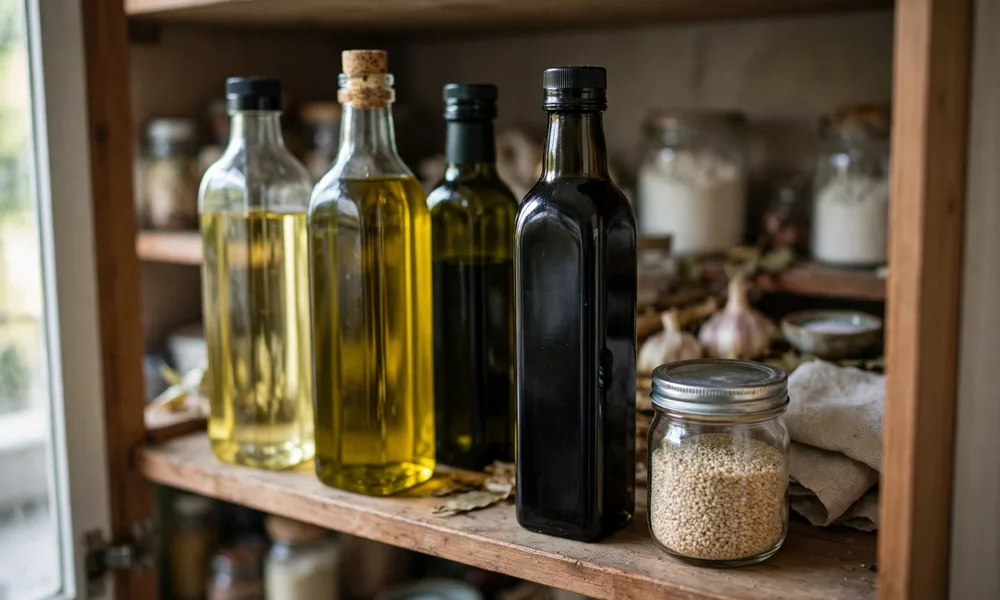
Keep the bottle away from the stove and out of direct sunlight, and always close the cap tightly after use, because oxygen is the other enemy after light and heat. Buy small bottles, use the oil regularly, and replace a bottle the moment it starts to smell flat or paint-like rather than nutty. The same freshness-first habit pays off across the pantry, and our guide to the best flaxseed of 2026 explains how another seed-based staple rewards the same attention to storage.
Common Mistakes When Buying Sesame Oil
The first mistake is buying toasted oil and cooking with it at high heat, which burns the flavour compounds and turns the dish bitter. The second is buying a blend and expecting the flavour of pure sesame oil, which is like expecting a weak tea to taste like espresso. The third is buying a large bottle of toasted oil and using it slowly for a year, by which time it has gone stale and tastes of old paint. Many cooks also store it next to the stove, or keep a bottle for years, forgetting that flavour fades long before the oil looks wrong. Another common error is confusing sesame oil with tahini, which is ground sesame seeds, thick and creamy, while sesame oil is the pressed fat. They are not interchangeable, although they complement each other beautifully in dressings and sauces. For the sweet side of that same dressing, a good vinegar matters just as much, and our guide to the best apple cider vinegar of 2026 covers what to look for there.
Sesame Oil Buying Checklist
- Decide first whether you need toasted oil for finishing or light oil for cooking, and buy the right one.
- Check the ingredient list reads 100 percent sesame oil, with no soybean, canola, or other oil blended in.
- Choose a dark glass bottle with a recent pressing or best-before date, and a small opening for measuring.
- Smell the oil when you open it: toasted oil should smell rich and nutty, light oil clean and gently nutty.
- Buy a small bottle of toasted oil, 150ml to 250ml, and use it within three to six months of opening.
- Store it in a cool, dark cupboard, or in the fridge once opened, with the cap tightly closed.
Frequently Asked Questions
What is the best sesame oil for stir-fries?
A cold-pressed toasted sesame oil is the best choice for stir-fries, because it has the richest roasted-nut aroma. Add it at the end of cooking, off the heat or in the final minute, using about a teaspoon per pan.
Can you fry with sesame oil?
Yes, but only with light sesame oil, which has a smoke point of around 210 to 230 degrees Celsius. Toasted sesame oil should never be used for frying: it burns at around 175 degrees and turns bitter.
How long does sesame oil last once opened?
Toasted sesame oil is at its best for three to six months after opening, while light sesame oil lasts six to nine months. Storing an opened bottle in the fridge extends both.
Should sesame oil be refrigerated?
It helps, especially for toasted sesame oil. The fridge slows oxidation and keeps the aroma bright for months longer. The oil may cloud when cold, which is harmless and reverses as it warms.
What is the difference between sesame oil and tahini?
Sesame oil is the fat pressed from sesame seeds, a liquid oil used for cooking and finishing, while tahini is whole sesame seeds ground into a thick, creamy paste. They complement each other in dressings and sauces.
Is sesame oil healthy?
Sesame oil is rich in unsaturated fats and contains antioxidants like sesamol, which help it resist oxidation better than some oils, but it is still a calorie-dense fat.
The Bottom Line
The best sesame oil in 2026 is two bottles, not one: a small dark bottle of cold-pressed toasted sesame oil for finishing stir-fries, noodles, and dressings, and a larger bottle of light sesame oil for everyday cooking. Buy pure oil, check the date, and store it cool and dark, in the fridge once opened. Used at the right moment, by the teaspoon, toasted sesame oil is the small bottle that changes everything it touches.