
Best Caramel 2026: Sauces, Chews and Salted Varieties Worth Buying
The best caramel in 2026 is the one that tastes of butter and slow-cooked sugar before it tastes of sweetness. It pours in a thick, glossy ribbon or yields softly between your teeth, leaving a warm, buttery note rather than a sticky film. Caramel is one of the oldest sweets in the kitchen, and one of the easiest to get wrong: rushed sugar turns bitter, cheap syrups taste flat, and a sauce that looks golden in the jar can set like glue on ice cream. This guide looks at what makes caramel worth buying, which forms suit which uses, and how to tell a careful jar from a sugary imitation.
Caramel shows up in more places than most people notice. It tops ice cream, fills chocolates, glazes flan, sweetens coffee, and holds its own as a chew straight from the wrapper. Because it wears so many hats, the first decision is not which brand to buy but which form you need. A pouring sauce and a wrapped chew share the same family of ingredients yet behave completely differently, and buying the wrong one is the most common caramel mistake.
5 Key Takeaways
- Great caramel lists butter, cream, and sugar first, and tastes buttery before it tastes sweet.
- Sauce is for pouring and drizzling; chews are for eating straight and for baking that needs structure.
- Salted caramel should taste of salt as a seasoning, not as a gimmick on the label.
- A candy thermometer is the single best tool for repeatable caramel at home.
- Store sauce in the fridge for up to a month and chews airtight at room temperature for weeks.
What Good Caramel Tastes Like
Flavour is the first test, and it tells you almost everything about how the caramel was made. A good caramel tastes of browned sugar and butter, with a deep, almost nutty warmth that builds as it melts. The sweetness should support that flavour, not bury it. When a caramel tastes only sweet, the maker has leaned on sugar or syrup to carry a flavour that butter and careful cooking never delivered.
Texture is the second test. A good sauce pours slowly, coats the back of the spoon in a glossy layer, and thins just enough when warm to drizzle in a clean ribbon. It should never be gloopy, grainy, or so thin that it runs straight off a scoop of ice cream. A good chew gives way gently, stretches a little, and softens without sticking to your teeth. If a chew pulls at fillings or turns to a hard lump in the cold, it was cooked too far or made with too much syrup and too little butter.
Colour is the third clue. Proper caramel is amber, from pale gold for a light sauce to deep copper for a dark, bitter-edged one. A very pale sauce probably never developed much flavour, while one that is almost black may taste burnt. The best makers aim for the middle: a warm amber with a gloss that comes from butter and cream rather than added shine.

Sauce, Chews and Everything Between
Caramel sauce is the most versatile form, and the one most kitchens reach for first. It goes over ice cream, into coffee, across pancakes, and under a slice of cake, and a good jar earns its shelf space quickly. Look for a sauce that lists cream and butter high on the ingredients, with sugar rather than glucose syrup doing the sweetening. It should pour when warm, thicken when cold, and reheat smoothly in a pan of hot water without splitting.
Soft caramel chews are a different pleasure entirely: the sweet you unwrap one at a time, the filling you press into a cookie, the centre that slowly melts inside a chocolate. A good chew is made with real butter and cream, wrapped in wax paper, and firm enough to hold its shape at room temperature. The best chews soften the moment they warm in your mouth. Avoid chews that are rock hard in the packet or taste waxy, which usually means vegetable fat has replaced the butter.
Salted caramel deserves its own mention, because the salt changes the buying rules. In a good one, the salt is a seasoning: it sharpens the butter and cuts the sweetness. In a poor one, it is a label claim, either too faint to taste or so heavy it overwhelms the caramel. Trust your own palate over the packaging. Hard caramel, meanwhile, is a showpiece rather than an everyday sweet: golden shards that shatter over a dessert, best eaten the day they are made.
Caramel Compared
| Form | Best for | Texture | Keep |
|---|---|---|---|
| Pouring sauce | Ice cream, coffee, pancakes | Thick, glossy, flows when warm | Fridge, up to a month |
| Soft chews | Eating, baking, gifts | Gentle give, melts in the mouth | Airtight, room temperature, weeks |
| Salted caramel | Drizzling, dipping, desserts | Buttery with a salty edge | Fridge for sauce, cool for chews |
| Hard caramel | Dessert shards, decoration | Crisp, shatters cleanly | Dry tin, days before it softens |
How to Judge a Jar Before You Buy
The label is the best tool you have in the shop, and reading it takes less than a minute. Check the ingredient order first: butter, cream, and sugar should appear before any syrup, and the list should be short enough to read at a glance. A long list of syrups, starches, and flavourings is a warning, and so is a caramel that lists water first.
Look at the jar itself. A good sauce is a warm amber with a clear, glossy surface, and it should move slowly when you tilt the jar. Very dark may taste bitter; very pale may taste thin. For chews, the sweet should be a soft golden brown, evenly coloured, without white bloom or dry edges. Price is a useful signal too: real butter and cream cost more than syrup and fat, so the cheapest caramel is rarely the best value. Buy the smallest jar from a maker with a short ingredient list, taste it at home, and let that decide whether you buy bigger next time.
Making Caramel at Home Without the Fear
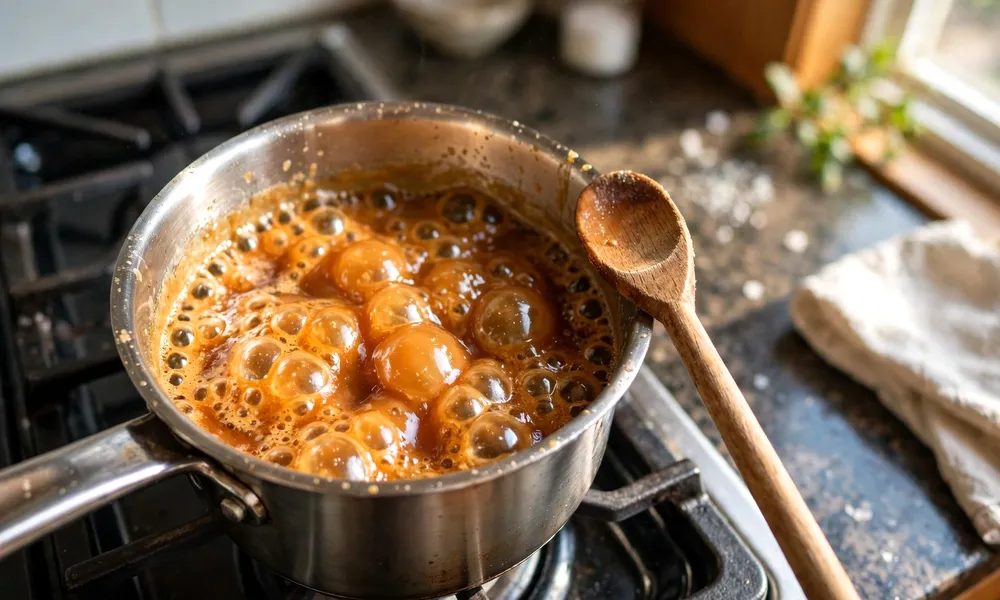
Homemade caramel has a reputation for being difficult, and most of that reputation comes from two mistakes: stirring the sugar while it melts, and walking away at the wrong moment. Sugar melts best when it is left alone. Put the sugar and a splash of water in a heavy pan, set it over medium heat, and let it melt without stirring. Stirring crystallises the sugar, and crystallised sugar is the grainy caramel nobody wants.
Have everything ready before you start: measure the butter and cream, warm the cream slightly, and keep a candy thermometer to hand. When the sugar reaches a deep amber, take the pan off the heat and add the butter first, then the cream, standing back as it bubbles up. A thermometer takes the guesswork out of it: around 115 degrees Celsius gives a soft sauce, a few degrees more a firmer chew. Add the salt last, taste, and adjust. The whole process takes about fifteen minutes, and the result beats most shop-bought jars.
If your caramel does go wrong, it is usually fixable. Grainy caramel can often be rescued by adding a splash of water and reheating gently until the crystals dissolve. The only true failure is burnt caramel, which tastes of smoke and cannot be saved, so keep the heat moderate and stay in the kitchen.
Where Caramel Earns Its Keep
Caramel is at its best when it is allowed to be the star. Over vanilla ice cream, a warm sauce turns a simple scoop into a dessert, and the contrast between cold cream and warm caramel is half the pleasure. Inside a sticky toffee pudding, caramel is the whole point: the sponge soaks up the sauce, and the dish would be ordinary without it, which is why our guide to the best sticky toffee pudding puts the sauce first.
As a sweet in its own right, caramel sits comfortably beside fudge in the old-fashioned sweet jar: fudge is a set square that melts on the tongue, while caramel is a pour or a chew that stretches and softens, so if you enjoy one, our guide to the best fudge is worth a read. In the wider sweet aisle, caramel is one of the few sweets that rewards honest label reading, which is why it features in our comparison of the best and worst candies alongside toffee and gummies. In coffee, a spoonful of caramel sauce turns a plain cup into something worth lingering over, though it should never be so sweet that it hides the coffee itself.
Storing Caramel So It Stays Soft
Good caramel deserves good storage. Keep sauce in a sealed jar in the fridge, where it will last up to a month, and warm it gently in a pan of hot water before serving. Chews keep best in their wrappers, in an airtight tin at cool room temperature, where they will stay soft for several weeks. Keep different sweets separate, because strong flavours like mint will creep into caramel if they share a jar.

Your Caramel Checklist
- Butter, cream, and sugar appear first on the label, before any syrup.
- Sauce pours in a thick, glossy ribbon when warm and thickens when cold.
- Chews give way gently and melt without sticking to your teeth.
- Salted caramel tastes seasoned, not salty, with the butter still leading.
- Colour is warm amber, not very pale and not almost black.
- Buy the smallest jar first, taste it at home, then buy bigger.
Caramel FAQs
What is the difference between caramel and toffee?
Caramel is made with cream and butter, which keeps it soft and pourable or gently chewy. Toffee is cooked further without cream, so it sets harder and snaps rather than stretches. They share browned sugar, but the cream is what makes caramel soft.
Why does my homemade caramel turn grainy?
Grainy caramel almost always comes from stirring the sugar while it melts, or from sugar crystals on the pan sides falling back in. Let the sugar melt undisturbed, and use a clean pan every time.
How long does caramel sauce last?
In a sealed jar in the fridge, caramel sauce lasts up to a month. If it smells sour or shows mould, throw it away. Chews in their wrappers in an airtight tin keep for several weeks at cool room temperature.
Can you freeze caramel?
Yes. Sauce freezes well in small tubs for up to three months; thaw it in the fridge overnight and warm it gently before serving.
Is salted caramel actually better?
Usually, yes, because salt rounds out the sweetness and lets the butter come forward. But it depends on balance: the salt should season the caramel, not dominate it.
What is the best use for leftover caramel sauce?
Stir it into coffee, drizzle it over pancakes or apple slices, or warm it and pour it over ice cream. It also works as a dip for fruit and a filling for sandwich cookies.
The Bottom Line
The best caramel in 2026 is the one that tastes of butter and slow-cooked sugar, whether it pours from a jar or unwraps from wax paper. Buy sauce for pouring and chews for eating, read the label before the price, and choose the smallest jar from a maker who lists real ingredients first.


