
The best card games for family game night in 2026 are the ones that get everyone to the table without a single complaint. No screens, no batteries, no forty-page rulebook — just a deck of cards, a clear table, and half an hour where the whole family is actually looking at each other instead of at their phones. A good card game is the cheapest evening there is, and the best ones stay in rotation for years.
Classic games like Uno and Rummy still hold their place, but they now sit beside clever modern designs that take two minutes to learn and never play the same way twice. Some are pure luck, which lets a seven-year-old beat a parent fair and square. Others reward memory, bluffing, or quick thinking. The trick is matching the game to the people at your table.
This guide rounds up the card games that earned their spot through thousands of real family evenings: quick to teach, hard to get bored of, and sturdy enough to survive small hands and spilled drinks. Whether your crew is three generations around a kitchen table or two parents and a competitive ten-year-old, there is a game here that will fit.
Key takeaways
- Pick games that take under five minutes to teach — if the rules need a video, the youngest players will check out before the first hand.
- Mix luck and skill so younger children can genuinely win.
- Most family card games play best with three to six players, so check the player count before you buy.
- A game that lasts twenty to thirty minutes fits a school-night game night far better than an hour-long epic.
- Keep two or three different games in the cupboard and rotate them — variety is what keeps game night from going stale.
The best card games at a glance
| Game | Players | Ages | Playing time | Best for |
|---|---|---|---|---|
| Uno | 2–10 | 7+ | 15–30 min | Big groups, all ages |
| Exploding Kittens | 2–5 | 7+ | 15 min | Quick laughs |
| Sleeping Queens | 2–5 | 8+ | 20 min | Younger children |
| Love Letter | 2–6 | 10+ | 20 min | Bluffing and deduction |
| Skyjo | 2–8 | 8+ | 30 min | Quiet strategy |
| Phase 10 | 2–6 | 7+ | 30–45 min | Rummy fans |
| Coup | 2–6 | 10+ | 15 min | Teens who love bluffing |
| The Game | 1–5 | 8+ | 20 min | Playing together, not against |
| Point Salad | 2–6 | 8+ | 20 min | Fast, clever drafting |
| Monopoly Deal | 2–5 | 8+ | 15 min | Monopoly without the marathon |
Our top picks in detail
1. Uno — the game everyone already knows
Uno survives because it does one thing perfectly: anyone can learn it in two minutes and a full game fits inside half an hour. Match a colour or a number, play a Skip or a Reverse, and try not to be the player left holding a fistful of cards when someone shouts the magic word. The wild cards and Draw Fours keep every round unpredictable, and the game scales gracefully from two players to ten, which is rare. Settle whether Draw Fours can be stacked before the first card is dealt, not during it.
2. Exploding Kittens — fast, silly, and impossible to take seriously
Exploding Kittens is Russian roulette with a deck of cards and a sense of humour. Players draw cards until someone hits an exploding kitten and is out, unless they can defuse it. The art is daft, the cards have names that make children giggle, and a game rarely lasts more than fifteen minutes, which makes it ideal as a warm-up or a closer. It works best with three to five players, and the attack and skip cards let you push the explosion onto someone else.
3. Sleeping Queens — a gentle classic for younger players
Sleeping Queens was designed by a six-year-old, and it shows in the best way: the rules are simple, the pictures are charming, and children genuinely stand a chance against adults. Players wake sleeping queens with matching cards, steal them with knights, and put rivals back to sleep with sleeping potions, all while adding up points. It teaches basic addition without feeling like homework, and for families with children under ten, this is often the game that starts the whole habit.
4. Love Letter — sixteen cards, endless bluffing
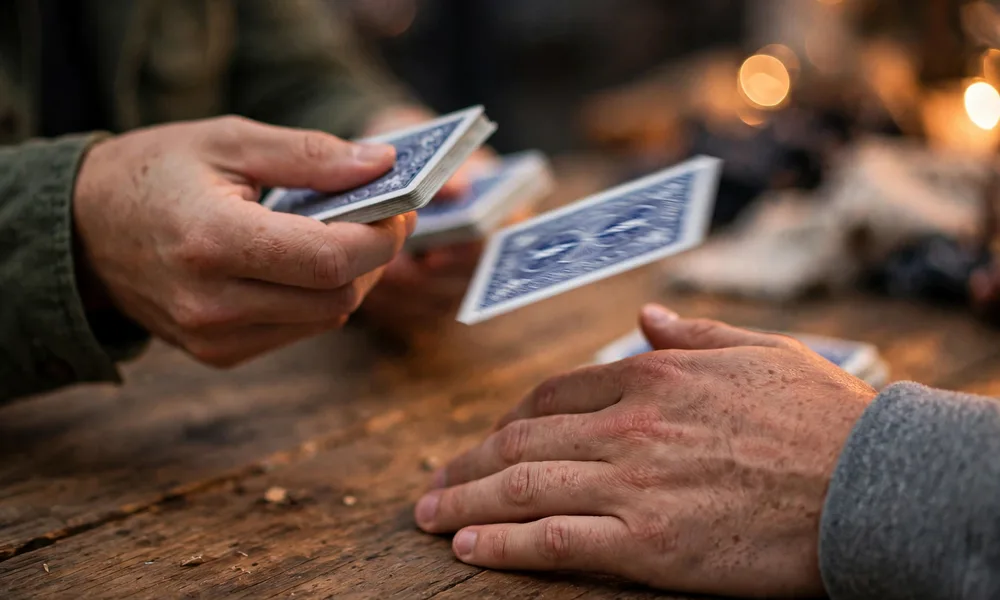
Love Letter fits in a pocket and plays in twenty minutes, yet it packs more tension than games ten times its size. Each player holds a single card and tries to deliver a love letter to the princess, using deduction and bluffing to eliminate rivals one by one. The guard guesses, the priest peeks, the baron compares — every card matters, and a single wrong guess can end your round. It suits families with older children who enjoy outsmarting each other, and it travels well enough to play in a restaurant or on a train.
5. Skyjo — the quiet surprise hit
Skyjo is the game nobody expects to love and everybody ends up requesting. Each player has a grid of twelve face-down cards and must swap and flip them to build the lowest total score, remembering where the good cards are hiding. It is part memory, part luck, part arithmetic, and it plays beautifully with two to eight players, which covers almost any family gathering. Rounds take about half an hour, the rules fit on a single page, and it is calm enough for a wind-down game before bed.
6. Phase 10 — rummy with a mission
Phase 10 takes the familiar comfort of rummy and gives it a twist: each player must complete ten phases in order, from sets of three to runs of seven, before anyone else. The twist is that falling behind is part of the fun — a player stuck on phase three can still win if the leader stalls on phase nine. Games run thirty to forty-five minutes, so save it for a weekend evening. It suits families who already love traditional card games and want a little more structure.
How to pick the right game for your family
Start with the youngest regular player, not the oldest. A game rated for ages ten and up will frustrate an eight-year-old who cannot follow the strategy, and a frustrated child leaves the table. Check the age on the box before you buy.
Player count matters just as much. Many games shine at three to five players but drag with two, and a few are miserable with more than six. If grandparents visit often and the table grows to seven or eight, keep a big-group game like Uno or Skyjo ready.
Finally, be honest about how much chaos your family enjoys. Some households love take-that games where you steal, skip, and sabotage each other; others prefer cooperative games where everyone wins or loses together. Mixing the two styles in one evening keeps the peace.
Card games by age group
Ages 5 to 7
At this age, keep it visual and short. Games with pictures rather than text work best, and a round should finish in fifteen minutes or less. Sleeping Queens and simple matching games are ideal, and even a standard deck can work for games like Go Fish or Snap. The goal is not strategy; it is learning to take turns, hold cards, and enjoy the ritual of sitting down together.
Ages 8 to 11
This is the golden age of family card games. Children can read the cards, follow a strategy, and handle a little friendly sabotage, and Uno, Exploding Kittens, Skyjo, and Point Salad all hit their stride here.
Ages 12 and up
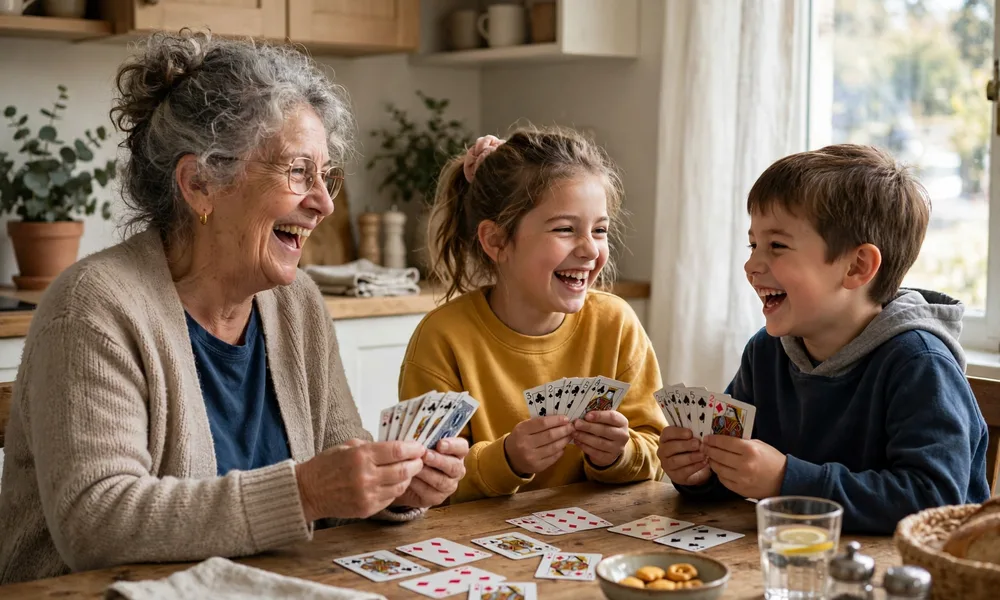
Teenagers want games that respect their intelligence. Love Letter, Coup, and Monopoly Deal offer bluffing, negotiation, and real decisions, and they play fast enough that nobody is checking a phone by round three. Let them choose the game sometimes — nothing hooks a teenager like beating a parent fair and square.
Keeping game night fun, week after week
The best card games will gather dust if game night feels like a chore. Pick a regular slot — Friday after dinner works for most families — and protect it. Keep sessions short: thirty minutes of a game everyone enjoys beats an hour of one half the table resents. Snacks help, and so does a rule that phones stay in another room until the last card is played.
Rotate who picks the game, and rotate who deals. A small scoreboard on the fridge, tracking wins across the month, turns a casual evening into a friendly season-long competition that children will talk about at school. And when a game stops working, retire it without guilt — a cupboard with three beloved games beats a shelf of twenty that nobody touches. For families who enjoy tabletop play in general, board games for families pair well with a card game as a second act, while puzzles make a calm alternative on evenings when nobody feels competitive. Younger children who outgrow card games for an evening often enjoy board games for kids as a gentler option.
Family game night checklist
- Check the player count and age rating on the box before you buy, not after.
- Read the rules once yourself before game night, so the first round is not a rules lesson.
- Agree house rules — stacking Draw Fours, for example — before the first card is dealt.
- Keep sessions to thirty minutes on school nights and save longer games for weekends.
- Put phones in another room so the table has everyone’s attention.
- Let the winner of the last game choose the next one, so everyone has a reason to play well.
Frequently asked questions
What is the best card game for a family with young children?
Sleeping Queens is the strongest choice for ages five to eight: the rules are simple, the pictures do the talking, and children can genuinely win. Uno is the best follow-up once they can read numbers and colours.
How many card games should a family own?
Three is the sweet spot: one quick game for short evenings, one strategic game for weekends, and one big-group game for visitors. More than five usually means some never get played, and a tight rotation keeps every game feeling fresh.
Are card games good for children?
Yes. Card games build number sense, memory, patience, and sportsmanship in a way that feels like play rather than practice. Children learn to wait their turn, cope with losing, and think a move ahead — skills that transfer well beyond the table.
What card game works best with just two players?
Skyjo and Love Letter both play well with two, and a standard deck opens up classics like Gin Rummy and Cribbage. Avoid games built for big groups, which tend to feel empty with only two at the table.
How do I stop game night arguments?
Settle house rules before you start, keep sessions short, and mix competitive games with cooperative ones. If a particular game always causes tears, retire it — no game is worth a ruined evening, and there are hundreds of alternatives.
Can card games replace screen time?
They can replace some of it on a regular evening slot. Let children pick the game, keep the atmosphere light, and treat game night as something the family looks forward to rather than a rule imposed from above.

The bottom line
The best card games for family game night in 2026 are not the flashiest or the most expensive — they are the ones your family actually asks for again. Start with Uno for reliability, add Exploding Kittens for laughs, and keep Skyjo or Love Letter ready for the evenings when everyone wants a little more thinking. Pick for the youngest player, keep sessions short, and let the winner choose next time. Do that, and the cards will do the rest.


