Finding the best chia seeds in 2026 is simpler than most superfood shopping, because the whole seed is the product. There are no extracts to compare and no blends to decode. You are buying tiny black or white seeds, and the difference between a great bag and a mediocre one comes down to freshness and cleanliness.
The best chia seeds earn their place in a pantry because they do so many jobs at once. Stirred into water they form a gel that keeps you full for hours. Soaked overnight they turn into pudding with almost no effort. Blended into smoothies they disappear while adding fibre, protein, calcium and plant-based omega-3. They are cheap per serving, they keep for months, and they ask nothing of the cook beyond a spoon and a little patience.
This guide explains what makes one bag better than another, how black and white seeds compare, when ground chia beats whole, and how to use chia every day without getting bored of it.
Key Takeaways
- Black and white chia are nutritionally almost identical, so buy on price, freshness and cleanliness rather than colour.
- Whole chia keeps longest and works best for pudding and gel; ground chia suits smoothies and baking.
- A serving is one to two tablespoons a day, always with enough liquid, because dry chia absorbs many times its weight in water.
- Look for clean, dry, uniform seeds with a recent packing date and an unbroken seal.
- Store chia in a cool, dry, airtight container away from light, and it stays fresh for well over a year.
What Are Chia Seeds, and Why Do They Work So Well?
Chia seeds come from the Salvia hispanica plant, grown for centuries in Mexico and Guatemala. The seeds are tiny, oval and speckled, usually black, grey or white, with a mild, slightly nutty flavour that barely registers in food. That neutrality is their superpower: they add nutrition without changing the taste of whatever they join.
What makes chia unusual is its behaviour in liquid. Each seed can absorb roughly ten times its weight in water, forming a soft gel coat. That gel is why chia pudding sets, why chia thickens a smoothie, and why a spoonful of seeds in water feels far more filling than a spoonful of almost anything else. The gel slows digestion, which steadies energy and keeps hunger away longer after breakfast.
The Nutrition Behind the Hype
Per two-tablespoon serving, chia seeds deliver around ten grams of fibre, about five grams of protein, and a solid dose of calcium, magnesium and iron. They are also one of the richest plant sources of alpha-linolenic acid, the plant form of omega-3, with roughly five grams per serving. Our guide to the best omega-3 of 2026 explains how plant omega-3 compares with fish-based sources. That combination of fibre, protein, minerals and healthy fat is rare in a single ingredient, and it is why dietitians keep recommending chia even as trendier superfoods come and go.
Chia also contains antioxidants that protect its fats from going stale, which is why the seeds keep far better than ground flaxseed or fish oil. Because the seeds are eaten whole, you get the full package in every spoonful.
Black Chia Seeds vs White Chia Seeds
Walk down any health-food aisle and you will see bags of black chia, bags of white chia and bags that mix the two. The colour difference is real but the nutritional difference is not worth worrying about. Black seeds are simply the most common variety, while white seeds come from a plant bred to produce pale seeds. In laboratory tests the two are effectively equal in fibre, protein, omega-3 and mineral content.
White chia disappears more easily into light-coloured foods such as yoghurt, porridge and white bread dough, and looks neater in a pale pudding. Black chia is usually cheaper and easier to find, because it is grown in larger volumes. If white chia costs much more, there is no nutritional reason to pay the premium.
Mixed bags are often the best value on the shelf. What matters far more than colour is the quality of the batch: seeds should be dry, clean and uniform in size. A bag with broken seeds, pale husks or grit has been poorly cleaned, whatever colour it claims to be.
Whole Chia Seeds vs Ground Chia Seeds
Whole chia seeds are the default choice for most people. They last the longest, they make the best pudding, and their gel-forming ability is strongest when the seed coat is intact. A spoonful stirred into water or milk and left for twenty minutes turns into a thick gel for puddings, jams and overnight oats.
Ground chia, sold as chia meal, has its own strengths. Grinding breaks the seed coat, which may help the body absorb the omega-3 fats more easily, and the powder blends invisibly into smoothies, soups and baked goods. It also suits anyone who finds whole seeds gritty. The trade-off is shelf life: ground chia goes stale faster, so buy small bags and keep them sealed in the fridge once opened.

Best Chia Seeds 2026: What to Look For When You Buy
A few checks separate the best bags from the rest. Start with the packing date: chia keeps well, but a bag that has sat in a warehouse for two years will taste flat and may have lost some of its healthy fats. Fresher is better.
Next, check the seal and packaging. A resealable pouch or a sturdy jar protects the seeds from moisture and light far better than a thin bag that tears open. Organic certification is a bonus rather than a necessity: chia is a hardy crop that needs little spraying, so conventional chia is usually clean.
Origin, Purity and Price per Serving
Most chia sold in 2026 comes from Mexico, Guatemala, Bolivia, Argentina or Australia. What matters more is cleaning and grading: the best suppliers sieve out dust, stems and broken husks. Judge this at home on a white plate: good chia looks uniform, with few pale fragments or specks of dust.
Judge price per serving, not per bag. A one-kilo bag that looks expensive is usually the cheapest option once divided into servings, while a small pretty pouch is often the dearest. Be suspicious of a price far below the rest of the shelf, which usually means old stock or poor cleaning.
How to Use Chia Seeds Every Day
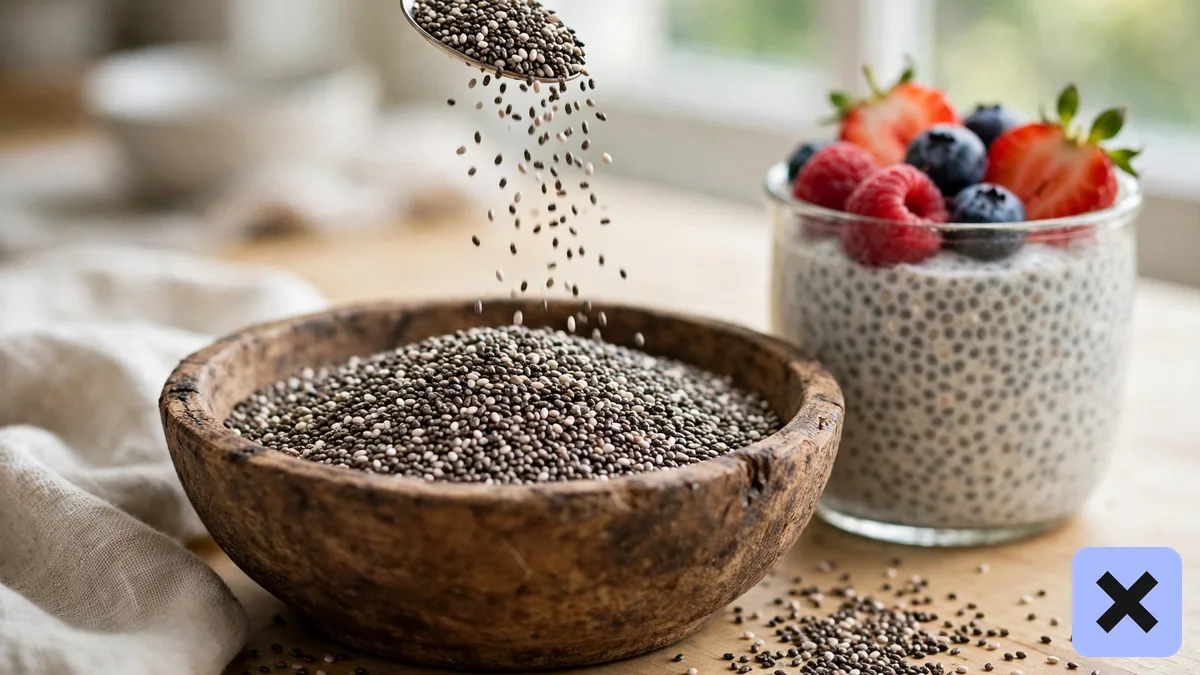
The easiest way to start is overnight pudding. Mix three tablespoons of chia seeds with a cup of milk or a dairy-free alternative, add a little honey and vanilla, stir well, and leave it in the fridge overnight. By morning it has set into a thick pudding that takes any topping: berries, banana, granola or nut butter. Make two or three jars at once and breakfast is sorted for days.
Smoothies are the second home of chia. A tablespoon blended into a fruit smoothie adds body and fibre without changing the flavour, and letting it sit for ten minutes gives a thicker, milkshake-like texture. Our guide to the best smoothies of 2026 covers more combinations that work with a spoonful of seeds.

Chia Gel, Baking and Hydration
Chia gel is a useful staple. Stir one part seeds into nine parts water, wait fifteen minutes, and you have a gel that keeps in the fridge for a week. A spoonful can replace an egg in many baking recipes or thicken a dressing.
In baking, chia adds moisture and structure. A tablespoon or two of ground chia in bread dough keeps the crumb soft for longer, and whole seeds sprinkled on a loaf look and taste wonderful. Chia also thickens homemade jam: simmer berries with a little sweetener, stir in chia, and the mixture sets as it cools, with no pectin needed. One caution: never eat a spoonful of dry chia and then drink water, because the seeds swell as they absorb liquid.
Best Chia Seeds Compared
| Chia Type | Best For | Shelf Life | Price | Why Choose It |
|---|---|---|---|---|
| Black chia, whole | Everyday use, pudding, drinks | 18 months or more | Lowest | Cheapest, easiest to find |
| White chia, whole | Light-coloured foods, yoghurt | 18 months or more | Higher | Blends invisibly into pale dishes |
| Ground chia | Smoothies, baking, easy digestion | 6 to 9 months | Mid-range | Absorbs fast, disappears into food |
| Organic chia | Certified farming standards | 18 months or more | Higher | Certified organic, same nutrition |
| Mixed black and white | Best value everyday bag | 18 months or more | Low | Same benefits, cheapest per kilo |
| Chia in bulk, 1 kg plus | Daily users, families | 18 months or more | Lowest per serving | Best value if you use it every day |
Buying and Storing Chia Seeds: A Simple Guide
Buying chia well is mostly about freshness and storage. Choose a bag with a recent packing date, a solid seal and clean, uniform seeds, and avoid bags stored in sunlight or near heat. A faint nutty smell is normal; a sharp or paint-like smell means the fats have gone stale.

Storage is straightforward. Keep chia in its original resealable bag, or decant it into a glass jar with a tight lid, and store it somewhere cool, dark and dry. Ground chia is the exception: once ground, the fats are exposed to air, so keep it in the fridge and use it within a few months. Whole seeds kept properly stay fresh for eighteen months or more. If you are building a stronger breakfast routine, our guide to the best plant protein of 2026 shows how seeds fit alongside protein-rich foods.
Chia Seeds Shopping Checklist
- Pick whole black or mixed chia for the best value, and white chia only to blend into pale foods.
- Check the best-before date and choose the freshest bag on the shelf.
- Pour a spoonful onto a white plate and look for clean, uniform seeds with little dust.
- Choose a resealable pouch or a jar, and transfer opened seeds to an airtight container.
- Compare price per serving, not per bag, and buy the larger bag if you use chia daily.
- Store whole seeds in a cool, dark cupboard and ground chia in the fridge, and never eat dry seeds without liquid.
Frequently Asked Questions
How much chia seed should I eat per day?
One to two tablespoons a day is the standard serving. Increasing fibre quickly can cause bloating, so build up gradually and drink enough water.
Do chia seeds need to be soaked before eating?
Soaking is recommended but not strictly required for small amounts sprinkled on food. Soaking for at least fifteen minutes lets the seeds form their gel, which improves digestion and nutrient absorption. Always soak chia when eating a full serving.
Are white chia seeds better than black chia seeds?
No, they are nutritionally almost identical. White chia blends into light-coloured foods, while black chia is usually cheaper and easier to find. Choose on price and appearance.
Can chia seeds replace eggs in baking?
Yes, for many recipes. Mix one tablespoon of ground chia with three tablespoons of water and wait fifteen minutes to form a gel that replaces one egg as a binder. It works best in muffins, pancakes and quick breads.
How long do chia seeds last?
Whole chia seeds kept in a cool, dry, airtight container last eighteen months or more. Ground chia lasts six to nine months and should be kept in the fridge once opened. Discard any that smells sharp or paint-like.
Are chia seeds safe for children?
Chia seeds are generally safe for children in small, soaked servings, such as a spoonful in porridge or a smoothie. Serve them soaked rather than dry, and keep portions small. If a child has a seed allergy, check with a doctor first.
The Bottom Line
The best chia seeds in 2026 are the freshest, cleanest bag you can find at a fair price per serving, and for most people that means whole black or mixed chia in a resealable bag. The colour barely matters, the brand matters less than the batch, and the form should follow your cooking: whole seeds for pudding and gel, ground chia for smoothies and baking. Buy well, store them properly, soak them before eating, and one bag will improve breakfast after breakfast for months.