
Clotheslines That Dry Laundry Fast Without the Tangles in 2026
A clothesline is the oldest laundry dryer there is, and it is still the best at one thing no machine can match: drying a full wash quickly, cheaply, and without wear, while the sun and the breeze do the work for free. The trouble starts when the line is wrong for the garden or the load is hung in a heap. Then the laundry dries slowly, tangles, and comes in smelling damp.
This guide covers the types of clothesline worth buying in 2026, how to match the line to your garden and your washing, and the hanging habits that stop tangles before they start.
Key Takeaways
- A clothesline dries laundry fastest when the line is taut, the washing has space around it, and the air can move freely on all sides.
- A rotary line suits a family wash in a medium garden, a retractable line suits a small space, and a fixed washing line suits a long, open garden.
- Plastic-coated steel wire resists sagging and rust, while natural rope stretches, holds damp, and needs replacing often.
- Wooden pegs grip best in the wind, plastic pegs are kinder to delicate fabrics, and stainless steel pegs last the longest.
- Hang heavy items on the outside lines and light items in the middle, peg each item at two points, and bring the washing in as soon as it is dry.
Why a Clothesline Still Beats a Dryer
Line drying is not nostalgia. Sunlight is a natural freshener, the breeze dries fabric from both sides at once, and the gentle movement of washing on a line is far kinder to fibres than the heat and tumbling of a dryer. Towels come in softer, sheets smell better, and clothes keep their shape longer. The running cost is nothing, and a good line lasts for years with almost no maintenance.
Speed is the surprise. A well-hung load on a breezy day can dry in two to three hours, often faster than a dryer cycle once loading and unloading are counted. The catch is that a line only works this well when it is set up properly: a slack line or a load hung shoulder to shoulder will dry slowly whatever the weather.
What Dries Fastest on a Line
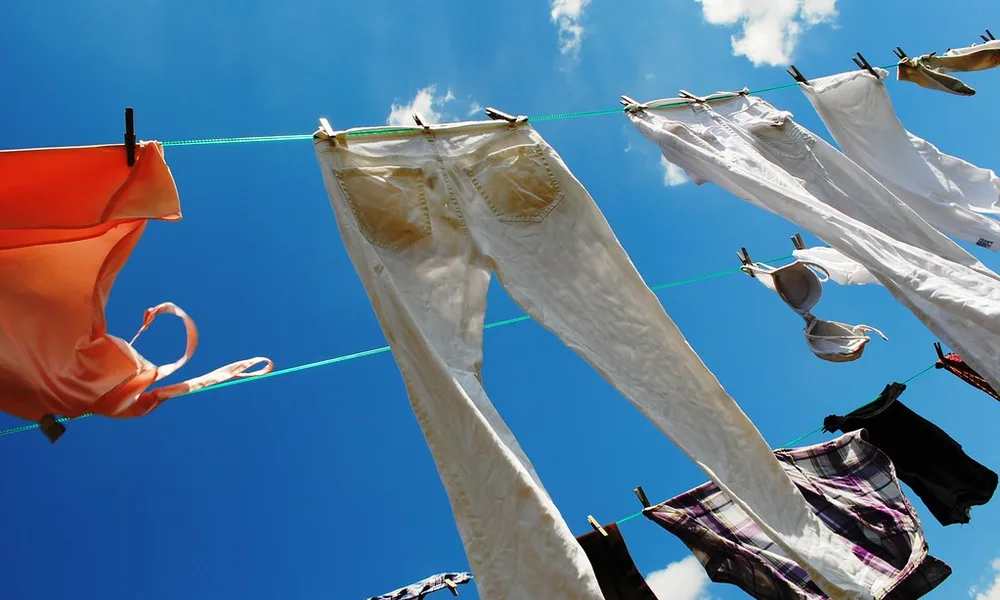
Thin fabrics dry fastest: shirts, tea towels, and light cottons can be dry within the hour on a warm, breezy day. Jeans, towels, and hoodies take longer because they hold more water, so they need the most open position on the line and the most space around them.
The Main Types of Clothesline
There are four types worth considering, and the right one depends on the space you have and the size of your wash. A line that is too small for the load will always tangle, and a line that is too big for the garden will always be in the way.
Rotary Washing Lines
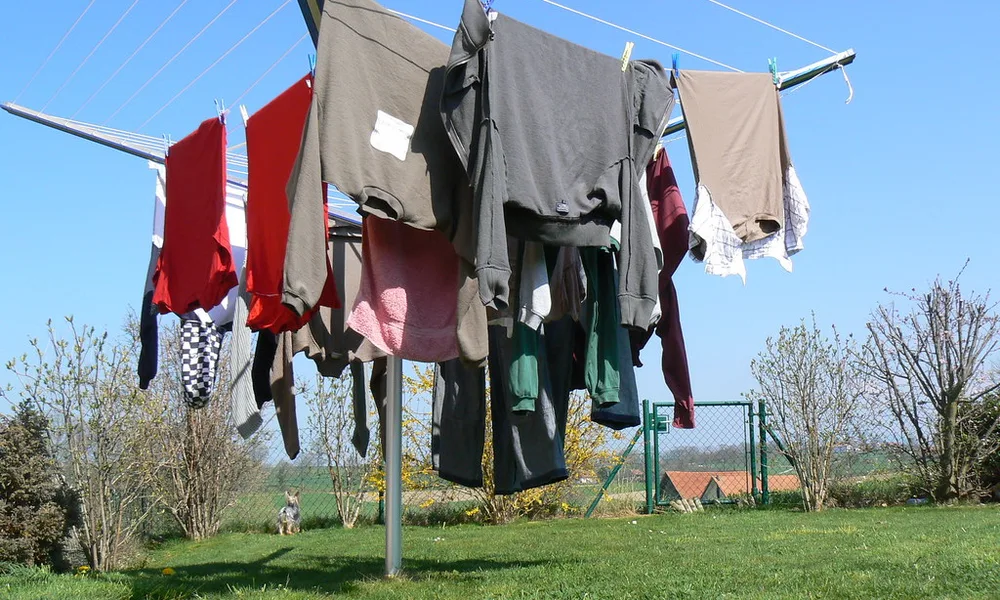
A rotary line is the workhorse of the family garden. Four arms spin around a central pole, giving four long lines in a compact footprint, and the whole thing folds away when it is not in use. It holds a full family wash, and you can rotate it to keep the washing in the sun. Check the arm length, the ground socket, which should be concreted in, and the line tension, because a slack rotary line sags under a wet load.
Fixed Washing Lines
A fixed line runs between two posts, a post and a wall, or two walls, and it is the simplest and the strongest option. It never folds away, so it suits a garden where the line can stay up all year, and it takes the heaviest loads, including wet duvet covers. The posts need to be solid and set in concrete, with the line pulled taut between them.
Retractable and Wall-Mounted Lines
A retractable line pulls out from a wall-mounted case when you need it and winds back when you do not, which makes it the best choice for a small yard, a patio, or a balcony. Most models offer one or two lines of three to five metres, enough for a couple of loads a week, though not for a big family wash. Fit the case to a solid wall at a height that keeps the line clear of heads, and pull the line taut before you peg anything to it.
Portable and Indoor Lines
A portable line, such as a folding airer, belongs on a balcony or indoors near an open window. It will not dry a full wash as fast as an outdoor line, but it is the only option when there is no garden at all, and it is useful in winter when the outdoor line is frozen. Put it where the air moves and turn the items once halfway through drying so both sides get the air.
| Type | Best for | Wash capacity | Weak point |
|---|---|---|---|
| Rotary line | Family garden | Full wash, 4 lines | Sags if tension is slack |
| Fixed line | Long open garden | Heaviest loads | Always in place |
| Retractable line | Small yard, balcony | 1–2 loads a week | Short lines, limited load |
| Portable airer | No garden, indoors | Small loads | Slowest drying |
Line, Pegs, and Fixings: The Parts That Decide How Fast It Dries
The line itself matters more than most people expect. Plastic-coated steel wire is the best all-round choice: it does not stretch, it does not rust, and it wipes clean, so it never marks the washing. Plain steel wire is strong but rusts at the ends. Natural rope is cheap, but it stretches when wet, sags under a load, and rots within a season or two.
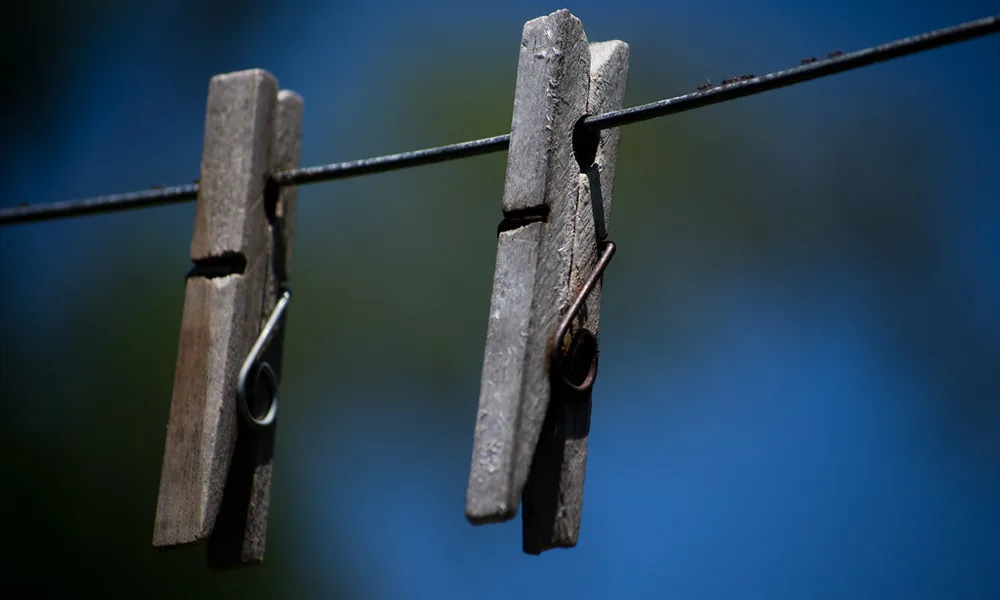
Pegs are the other half of the system, and they are worth buying properly. Wooden pegs grip hardest in the wind, which makes them best for exposed gardens and heavy items, though they can stain pale fabric if left out in the rain. Plastic pegs are lighter and kinder to delicates, but cheap ones snap in cold weather. Stainless steel pegs last longest but cost more.
Fixings deserve the same attention. A rotary line needs its ground socket set in concrete, or the pole will lean the first time a wet duvet goes on it. A fixed line needs its posts set deep and its line tensioned with a proper tensioner. Check the fixings every spring and replace any peg that has lost its spring.
How to Hang Washing So It Never Tangles
Tangles happen for a simple reason: items hung too close together catch each other in the breeze, twist around the line, and dry in a knot. The fix is space and order, and it takes no extra time once it becomes a habit.
Start by shaking each item out before you peg it. A good shake removes creases and lets the air reach the fabric. Hang shirts by the hem, hang trousers by the waistband with the legs spread, and hang sheets folded over the line with a peg at each end and one in the middle. Peg every item at two points, never one, and leave a hand’s width between items.
Hang the slowest items first so they get the longest drying time, and put the heavy things on the outside lines where the breeze is strongest. In a strong wind, peg small items inside a pillowcase and peg the pillowcase to the line. Take the washing in as soon as it is dry: left overnight it goes damp again with the dew.
Laundry Habits That Make the Line Work Harder
A clothesline works best as part of a routine, not as an afterthought. Washing hung early in the day gets the full warmth of the afternoon, while washing hung in the evening may need a second day. An extra spin leaves less water in the fabric, which can cut drying time by a third, and sorting the wash by weight helps, because heavy towels and light shirts dry at different speeds.
Weather reading is a skill worth learning. A warm breeze dries faster than still heat, so a breezy, cloudy day often beats a hot, still one. In winter, the line still works on a bright, windy day, though it is slower. The habit of checking the line each morning and hanging the wash early is what turns a clothesline from a fair-weather extra into the main way the household dries its washing, and it pairs naturally with the rest of the laundry routine, from the basket the wash starts in, as the guide to best vs worst laundry baskets shows, to the detergent that goes in the machine, which the guide to the best laundry detergents for sensitive skin covers in detail.
Checklist: A Clothesline That Dries Fast Without Tangles
- Match the line to the space: rotary for a family garden, retractable for a small yard, fixed for a long open garden.
- Use plastic-coated steel wire, kept clean and pulled taut, so the line never sags under a wet load.
- Set rotary sockets and fixed posts in concrete, and check the tension and fixings every spring.
- Shake each item out, peg it at two points, and leave a hand’s width between items so the air can move.
- Put heavy, slow items on the outside lines and light items in the middle, and hang the slowest load first.
- Bring the washing in as soon as it is dry, before the evening dew or the strong afternoon sun can undo the work.
Frequently Asked Questions
What is the best type of clothesline for a family?
A rotary washing line suits most family gardens, because it holds a full wash on four lines in a small footprint and folds away when it is not needed. In a long, open garden, a fixed line holds even more and takes the heaviest loads, including duvet covers.
Why does my washing tangle on the line?
Tangles happen when items are hung too close together or pegged at only one point, so they catch each other and twist in the breeze. Shake each item out, peg it at two points, and leave a hand’s width between items.
What line material dries washing fastest?
Plastic-coated steel wire, because it stays taut, does not stretch when wet, and does not rust or mark the washing. Natural rope stretches, sags, and holds damp, which slows drying and leaves the washing creased.
Can I use a clothesline in winter?
Yes, on a bright, windy day, though drying is slower and the washing may feel stiff in frost until the sun reaches it. Hang the wash early and bring it in before the evening damp settles.
How do I stop pegs from marking my washing?
Use wooden pegs for heavy items and plastic or stainless steel pegs for delicates, and do not clamp pegs over a fold or a seam. Replace wooden pegs that have gone soft in the rain, and keep the pegs in a dry bag between washes.
Is line drying better than using a dryer?
For most everyday washing, yes. It costs nothing to run, it is kinder to fibres, and sunlight freshens the fabric in a way heat cannot. A dryer is faster on a still, wet day, which is why many households use both. The comparison is covered in the guide to best vs worst dryers, which sets out when a dryer earns its keep and when the line does the job better.
The Bottom Line
The best clothesline in 2026 is the one that fits your garden, stays taut under a wet load, and lets you hang the washing with space around every item. A rotary line suits a family garden, a retractable line suits a small space, and a fixed line suits a long garden and the heaviest loads. Use plastic-coated steel wire, good pegs, and solid fixings, hang the slowest items first with two pegs each, and bring the washing in the moment it is dry.


