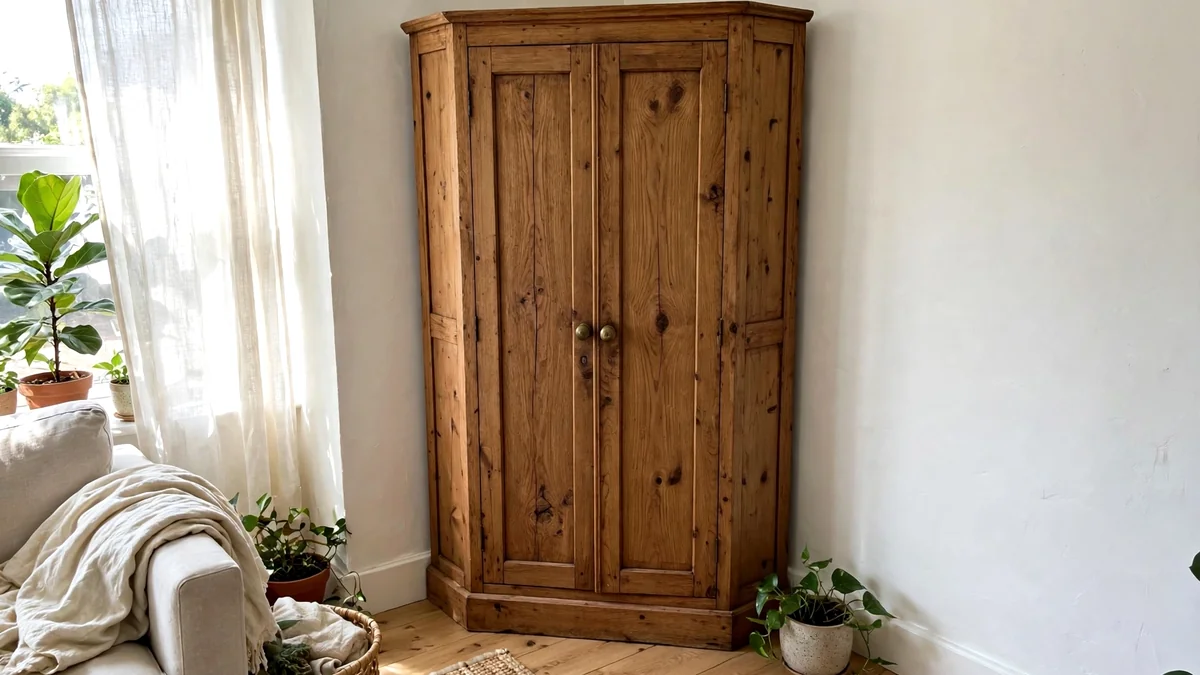
Every home has a corner that wastes space. Two walls meet at an angle nothing quite fits, so the spot collects a plant, a pile of books, or nothing at all. Corner cabinets change that. They turn the dead angle into closed, tidy storage — plates and glasses in the kitchen, towels in the bathroom, games and photo albums in the living room — without pushing furniture out into the middle of the room. The best corner cabinets in 2026 are built for the corner they sit in, not just squeezed into it, with doors that open cleanly and shelves you can actually reach.
Key Takeaways
- A corner cabinet earns its place when you need hidden storage in a spot no straight cabinet can use — if you want display, open shelves usually win.
- Measure both walls from the corner, at the height the cabinet will sit, and buy shorter than the shorter wall
- Doors matter more than the carcass: soft-close hinges, a full 90-degree swing and a handle that clears the neighbouring wall decide whether the cabinet is pleasant to use daily.
- Lazy Susan turntables and pull-out trays are what make a deep corner usable — without them the back third of the cabinet becomes a place things go to be forgotten.
- Solid wood and good plywood outlast flat-pack particleboard in damp rooms, so spend the extra money in kitchens and bathrooms and save it in dry bedrooms.
Corner Cabinets 2026 at a Glance
| Type | Best for | Typical size | Storage style |
|---|---|---|---|
| Wall-mounted corner cabinet | Kitchens, bathrooms | 60–80 cm wide | Closed, eye level |
| Tall floor-standing cabinet | Living rooms, hallways | 150–190 cm high | Closed, full height |
| Glass-front corner cabinet | Dining rooms, collections | 160–180 cm high | Half display, half hidden |
| Kitchen corner base cabinet | Kitchens | 90–120 cm along each wall | Closed, worktop height |

What a Corner Cabinet Actually Is
A corner cabinet is a cabinet shaped to sit where two walls meet, usually with a triangular or L-shaped footprint that fills the angle instead of leaving a gap behind it. The front is what you see — one or two doors, sometimes glass — and the body reaches back into the corner where a normal rectangular cabinet would leave a dead triangle of wasted space. That shape is the whole point: the corner is the hardest space in a room to use, and a cabinet built for it uses space no other piece of furniture can.
The trade-off is access. A straight cabinet opens onto everything inside at once, while a corner cabinet hides its deepest part behind the angle. The best designs solve this with a turntable, a pull-out tray or a door that folds right back, so the back of the cabinet is as reachable as the front. A cheap corner cabinet skips those fittings, and within a month the back shelf holds things you have forgotten you own.
Corner Cabinets vs Corner Shelves: Which One Earns the Corner?
The honest answer depends on what lives in the corner. Corner shelves are open, light and cheap, and they suit things you want to see: plants, books, a few favourite objects. Our guide to the best corner shelves covers floating triangles, tiered sets and ladder shelves, The limit is load and clutter. A floating corner shelf holds about three to five kilograms, and every object on it is on show, so the corner only looks good when the things on it are tidy.
Corner cabinets are the opposite bargain. They hold far more — a tall cabinet swallows board games, photo albums, spare bedding or a whole shelf of kitchenware — and they hide all of it behind a door, so the corner looks calm even when the inside is full. The cost is money and floor space: a floor-standing cabinet needs a real footprint, and a good one costs several times what a set of shelves costs.
So the decision is simple. If the corner holds display pieces and you enjoy styling them, buy shelves. If the corner holds clutter you want out of sight — cleaning supplies, spare linen, the board games nobody puts away — buy a cabinet. Many homes end up with both, and that split is usually the right one.
The Main Types of Corner Cabinet Compared
Wall-Mounted Corner Cabinets
A wall-mounted corner cabinet hangs at eye level and suits kitchens and bathrooms, where floor space is precious and the things being stored are used daily. It holds glasses, spices, medicines or toiletries, and because it is off the floor the room underneath stays easy to clean. The catch is the fixing: it must be anchored into solid wall or studs on both walls, not just plasterboard, because a loaded wall cabinet is heavy. Budget for proper cavity anchors if the walls are plasterboard.
Tall Floor-Standing Cabinets
A tall corner cabinet runs from the floor to near the ceiling and is the workhorse of the range. It holds the most, hides the most, and suits hallways, living rooms and bedrooms where a whole category of stuff needs a home. The risk is proportion: a tall cabinet in a small room can dominate the corner and make the room feel smaller, so measure the height against the ceiling and leave a gap at the top.
Glass-Front Corner Cabinets
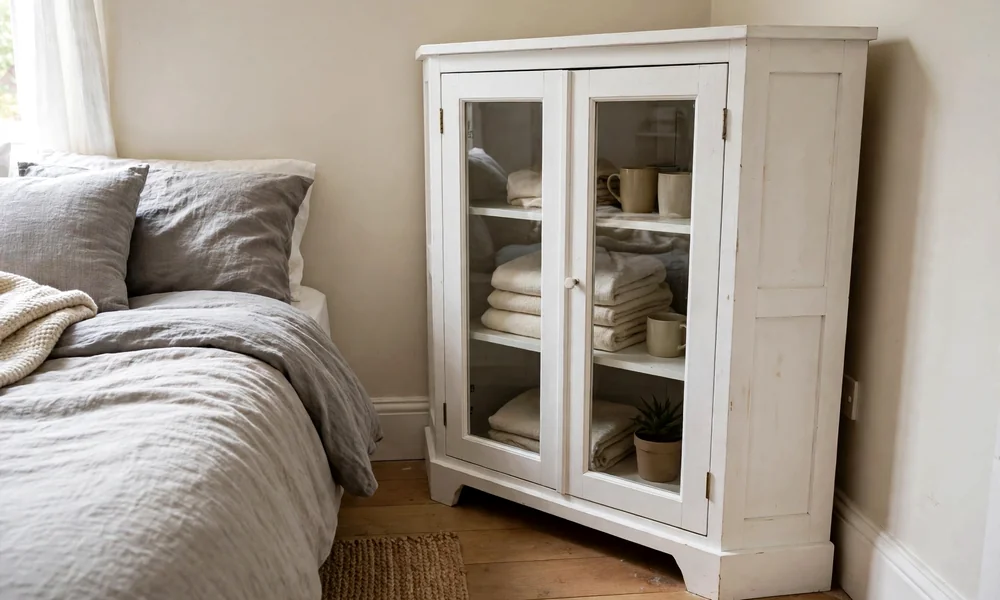
A glass-front cabinet splits the difference between a cabinet and a shelf: the top half shows a collection behind glass, the bottom half hides the rest. It suits dining rooms, where glasses and crockery look good on display but still need protection from dust.
Kitchen Corner Base Cabinets
A kitchen corner base cabinet sits under the worktop and is the hardest-working type of all, because the kitchen corner is the deepest dead space in the house. The good ones come with a lazy Susan or a pull-out carousel that brings the back of the cabinet to you. Without that fitting, the back of the cabinet is effectively unusable, so treat the turntable as part of the price, not an optional extra.
Getting the Size Right
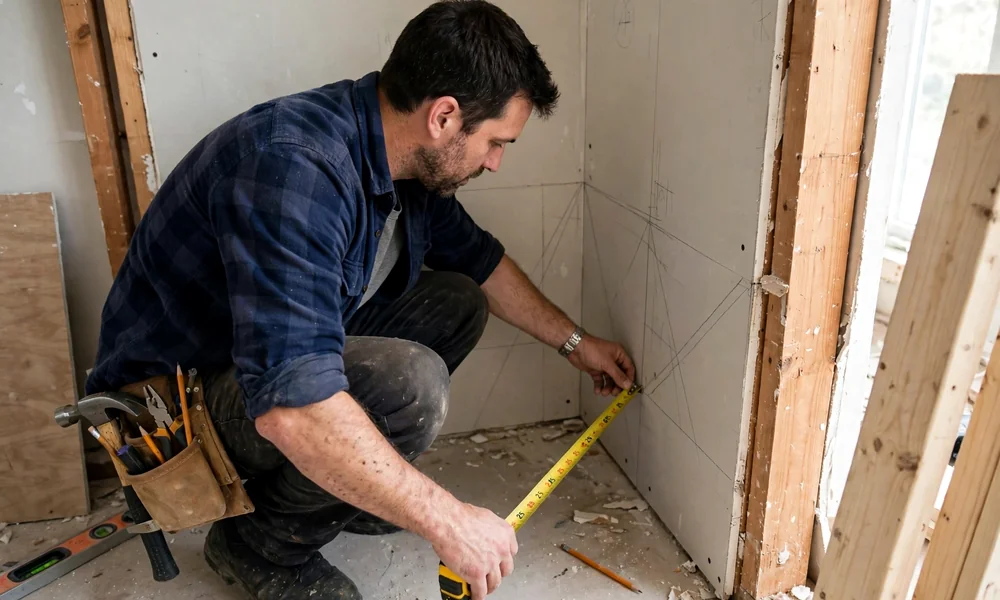
Size matters more with a corner cabinet than with any other piece of furniture, because it has to fit two walls at once. Measure each wall from the corner outwards, at the height the cabinet will sit, and buy shorter than the shorter measurement. A cabinet that overhangs one wall looks wrong from every seat in the room, and a door that swings into the skirting or the next piece of furniture will annoy you every single day.
Check the angle too. Two walls rarely meet at a perfect right angle, especially in older houses. Measure the angle with a square, and accept a small gap at the back: walls are rarely square, and a cabinet that sits slightly proud of one wall looks far better than one forced into a corner it does not fit.
Materials and Build Quality Worth Paying For
Solid wood is the best material for a corner cabinet, and it shows in the weight, the joints and the way the doors close after five years instead of five months. Good plywood is a close second and suits painted cabinets well, because it stays flat and does not warp. Particleboard with a foil finish is the budget option: fine in a dry bedroom, risky in a kitchen or bathroom, where steam and splashes swell the edges and the doors start to sag.
Look at the hinges before anything else. Soft-close hinges that hold the door steady at any angle are worth paying for, and they are the first thing to fail on a cheap cabinet. Check the shelf fixings too: metal shelf pins and adjustable shelves beat fixed shelves, because the things you store change over time. The back panel should be solid, not thin hardboard, since the back is what keeps a tall cabinet square.
Mistakes That Make a Corner Cabinet Feel Wrong
The most common mistake is buying for the corner you wish you had instead of the corner you have. A tall cabinet in a low room, a deep cabinet in a narrow hallway, a glass-front cabinet for things nobody wants to see — all of them feel wrong within a week, and none of them can be fixed by rearranging the shelves. Measure first, buy second, and be honest about how much space the room can spare.
The second mistake is ignoring the inside. A cabinet with one fixed shelf and no turntable wastes its deepest third, which is exactly the space you bought the cabinet for. Budget for the interior fittings at the same time as the cabinet, and fit them before the cabinet is loaded. Decide the contents first — a cabinet bought for board games needs deep shelves, one bought for glasses needs shallow ones — and the cabinet becomes easy to choose. Our guide to the best floating shelves makes the same point for open storage, and it matters even more behind a closed door.
Corner Cabinet Checklist
- Measure both walls from the corner, at the cabinet’s height, and buy shorter than the shorter wall.
- Check the corner angle with a square and accept a small gap rather than forcing a flush fit.
- Open both doors fully on the diagram and confirm they clear the skirting, radiator and neighbouring furniture.
- Choose a turntable or pull-out tray for any cabinet deeper than 45 centimetres, and budget for it up front.
- Pick solid wood or good plywood for kitchens and bathrooms, and a sealed finish for any damp room.
- Test the hinges: soft-close, steady at any angle, and adjustable so the doors stay aligned over time.
Corner Cabinet FAQs
Are corner cabinets a good use of space?
Yes, when the corner would otherwise sit empty. A corner cabinet uses space no straight cabinet can reach, and it hides clutter behind a door. It is a poor use of space when the corner is the only place for a chair, a plant or a radiator,
Do corner cabinets need a lazy Susan?
Any corner cabinet deeper than about 45 centimetres benefits from one. Without a turntable or pull-out tray, the back third of the cabinet is hard to reach and fills with things you forget.
Can a corner cabinet fit a wonky corner?
Usually, yes, with a small gap at the back. Walls are rarely perfectly square, and a cabinet that sits slightly proud of one wall looks far better than one forced in.
What is the best material for a bathroom corner cabinet?
Good plywood or solid wood with a sealed painted or lacquered finish. Avoid raw particleboard in damp rooms, since steam swells the edges and the doors sag.
Are glass-front corner cabinets hard to keep tidy?
They need more discipline than a solid-door cabinet, because everything behind the glass is on show. Keep the shelves inside to one row of matching pieces, leave a third of each shelf empty, and put the clutter in the closed section below.
How much should a good corner cabinet cost?
A small wall-mounted cabinet starts at a modest price, while a tall solid-wood cabinet costs several times more. The fittings matter more than the carcass: a mid-priced cabinet with a good turntable and soft-close hinges usually serves better than an expensive cabinet with a bare interior. Our guide to the best pantry cabinets shows the same trade-off.
Bottom Line
A corner cabinet earns its corner when it hides real clutter in space nothing else can use, with doors that open cleanly and an interior that reaches the back without a struggle. Measure both walls, buy for the contents rather than the photograph, and spend the extra money on the hinges and the turntable.