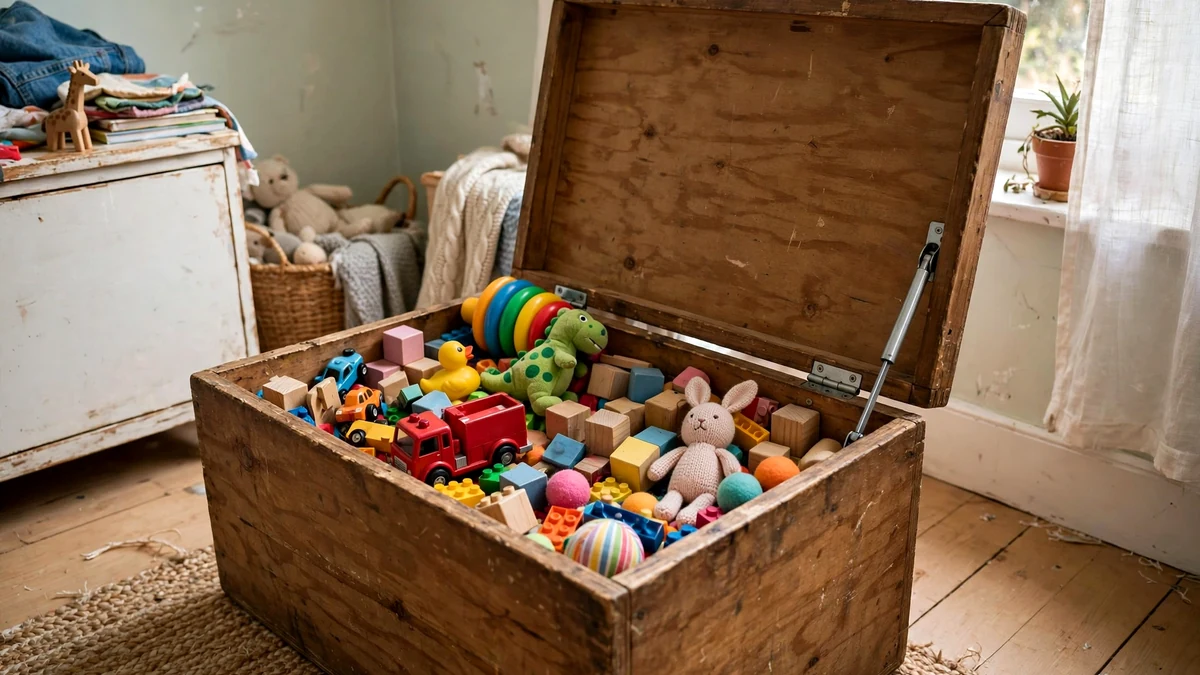
A storage trunk is the oldest storage solution in the house, and it still works. A big lidded box that holds blankets, keepsakes, out-of-season clothes or childhood toys, sits at the foot of a bed or against a wall, and doubles as a seat or a side table. The best storage trunks in 2026 do that job without the problems that made old trunks annoying: lids that slam shut, hinges that pinch fingers, interiors that smell of damp, and locks that jam the first time you need something in a hurry. A good trunk is easy to open, safe to close, and deep enough to hold the bulky things that never fit in a drawer.
Key Takeaways
- Buy the trunk for the contents, not the room: blankets need depth, keepsakes need a dry interior, and children’s toys need a lid that cannot slam.
- A stay hinge or soft-close lid is not a luxury — it is the safety feature that stops a heavy lid falling on fingers, and it is the first thing to check.
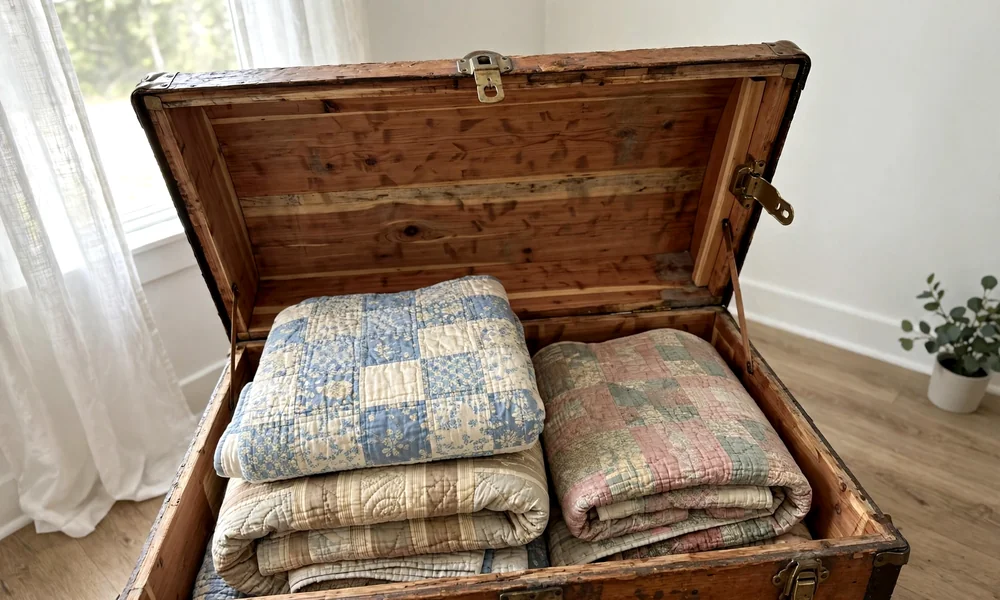
- Cedar lining keeps moths away and smells good, but it suits clothes and blankets, not damp rooms, where a sealed plastic or metal interior lasts longer.
- Measure the spot before you buy: a trunk at the foot of a bed must leave room to walk past, and a trunk against a wall needs clearance to open its lid fully.
- Wheels or handles matter more than they look — a full trunk is heavy, and the one you can move is the one that gets used.
Storage Trunks 2026 at a Glance
| Type | Best for | Typical size | Interior |
|---|---|---|---|
| Cedar storage trunk | Blankets, woollens | 90–120 cm long | Cedar lined, moth resistant |
| Wooden storage trunk | Bedrooms, living rooms | 80–120 cm long | Plain or lined wood |
| Metal storage trunk | Garages, lofts, travel | 70–110 cm long | Bare metal, wipe clean |
| Fabric storage trunk | Light clothes, toys | 60–90 cm long | Soft, collapsible |
| Plastic storage trunk | Damp rooms, outdoors | 70–100 cm long | Sealed, waterproof |

What a Storage Trunk Actually Is
A storage trunk is a large lidded box, usually rectangular, with a hinged lid that opens from the top. It is different from a storage box, which is usually smaller, stackable and made to sit on a shelf, and different from a chest of drawers, which opens from the front. The trunk’s strength is its single big space: bulky things that do not fold into drawers — duvets, winter coats, photo albums, a child’s dressing-up box — fit in one place, and the lid closes over all of it.
That single space is also its weakness. Things at the bottom are hard to reach without taking everything out, so a trunk works best for things used seasonally or occasionally, not for things needed every day. The smart way to use one is in layers: the things used least at the bottom, the things used most on top, and a small tray or bag inside for the little things that would otherwise sink. Our guide to the best storage boxes covers the smaller alternative, and the two work well together.
The Main Types of Storage Trunk Compared
Cedar Storage Trunks
A cedar trunk is lined with cedar wood, which smells good and keeps moths away from woollens. It is the classic choice for blankets, jumpers and anything made of wool, and the scent lasts for years if the lining is real cedar rather than a cedar-scented coating. The catch is damp: cedar suits dry bedrooms, not damp lofts or garages, where the wood can warp and the scent fades. Check that the lining is solid cedar panels, not a thin veneer,
Wooden Storage Trunks
A wooden trunk — pine, oak or painted MDF — is the all-rounder. It looks like furniture, holds a lot, and suits any dry room in the house. Solid wood lasts longest and ages well, while painted MDF is cheaper and suits a bedroom where the trunk will be covered with a throw. Look for dovetail or box joints at the corners rather than staples, and a lid that sits flat when closed,
Metal Storage Trunks
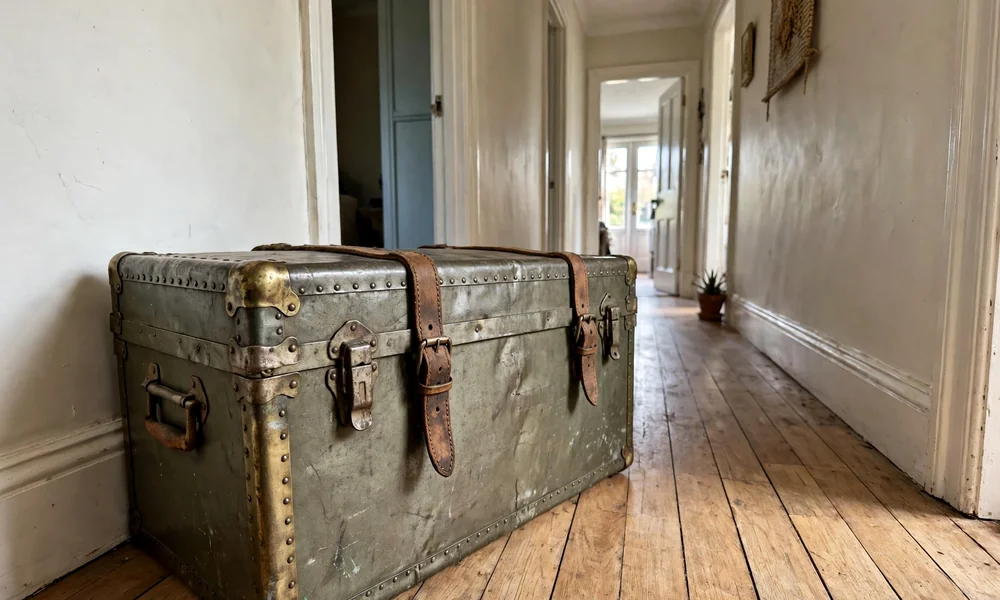
A metal trunk is the tough one: steel or aluminium, often with leather straps and corner protectors, built to survive a loft, a garage or a move. It keeps dust and damp out better than wood, and it wipes clean. The trade-off is weight and noise — a metal trunk is heavy when full, and the lid clangs — so it suits storage rather than a bedroom,
Fabric Storage Trunks
A fabric trunk is light, soft-sided and often collapsible, which makes it easy to move and easy to store flat when empty. It suits light things — spare clothes, soft toys, craft supplies — and children’s rooms, where soft sides cannot hurt. It is not the choice for heavy or damp storage, since fabric sags under weight and absorbs moisture,
Plastic Storage Trunks
A plastic trunk is the practical choice for damp rooms, garages and outdoor storage. A sealed lid keeps water out, the box wipes clean, and it will not warp, rust or attract moths. The trade-off is looks: it reads as a storage box, not as furniture, so it suits the rooms where nobody is looking at it. Choose one with a gasket seal if it will sit somewhere damp,
How to Choose the Right Size
Size is the first decision, and it is easier than it looks. Measure the spot where the trunk will live, then measure the things that will go in it. A trunk for a double duvet needs to be at least 90 centimetres long and 45 deep; a trunk for a child’s toys can be smaller,
Check the height too. A trunk at the foot of a bed should be no higher than the mattress, or it blocks the view across the room and becomes a shin-height obstacle in the dark. A trunk against a wall should leave room for the lid to open fully — measure the lid swing, not just the footprint, since a lid that hits the wall or the bed only opens halfway. Our guide to the best under-bed storage covers the alternative for tight bedrooms.
Finally, think about weight. A full trunk is heavy — a cedar trunk full of blankets can weigh more than a person — so if the trunk will ever need to move, choose one with handles, castors or a lighter material.
Materials and Build Quality Worth Paying For
The lid is the part that matters most, and it is where cheap trunks fail first. A good lid has a stay hinge that holds it open at any angle, or a soft-close mechanism that lowers it gently, so it cannot fall on fingers. Test it in the shop if you can: lift the lid halfway and let go. If it falls, walk away. If it stays, the hinge is doing its job. This matters most in a child’s room, where a falling lid is a real injury, and it matters in every room, because a lid that slams wakes the house.
Check the corners and the base. A trunk that will be sat on needs a reinforced lid and strong corner joints, since sitting puts the whole weight on the lid and the corners. A trunk that will be dragged across the floor needs a solid base and, ideally, feet or castors,. The inside should be smooth and clean:rough wood snags clothes. For clothes and blankets, a cedar lining or a cotton liner is worth paying for; for keepsakes, the priority is a dry, dust-free interior with a tight-fitting lid.
Mistakes That Make a Storage Trunk Feel Wrong
The most common mistake is buying a trunk that is too small. It fills up in a week, the lid will not close, and the overflow ends up beside it, which defeats the purpose. Measure the contents first — lay the blankets or toys out and measure the pile — then buy a trunk a little bigger than the pile,
The second mistake is ignoring the lid. A trunk with a lid that slams, a hinge that pinches, or a lock that jams is a trunk that gets left open or never opened, and both are worse than no trunk at all. Test the lid before you buy, and if the trunk will live in a child’s room, choose one with a safety stay hinge and no lock a child can get trapped behind. The third mistake is putting the trunk in a damp place. A wooden trunk in a damp loft warps, smells and grows mould, and the contents go with it. If the only space is damp, choose a sealed plastic or metal trunk. Our guide to the best deck boxes covers sealed outdoor storage.
Storage Trunk Checklist
- Measure the contents first, then buy a trunk a little bigger than the pile — storage always grows.
- Test the lid: lift it halfway and let go; it must stay open, never fall, and close without slamming.
- Check the lid clearance — the lid must open fully without hitting the bed, the wall or the radiator.
- Choose cedar lining for woollens, a sealed interior for damp rooms, and a soft fabric trunk for children’s rooms.
- Confirm the trunk can be moved when full: handles, castors or a light material, and a base that will not splinter.
- Check the corners and joints for strength if anyone will sit on the trunk, and fit a safety stay hinge for children’s toys.
Storage Trunk FAQs
What size storage trunk do I need for blankets?
For a double duvet and a couple of spare blankets, a trunk at least 90 centimetres long and 45 deep is about right. Measure the pile before you buy, and buy a little bigger than the pile.
Are cedar trunks good for moths?
Yes, real cedar lining repels moths and keeps woollens safe, and the scent lasts for years. It works best in a dry bedroom; in a damp room the wood can warp and the scent fades. Check the lining is solid cedar, not a scented coating.
Is a storage trunk safe for a child’s room?
Yes, if the lid has a stay hinge that holds it open and cannot slam, and the trunk has no lock a child can get trapped behind. Soft fabric trunks are the safest choice for very young children, since they have no heavy lid at all.
Can a storage trunk go in a damp loft or garage?
A wooden trunk should not. Damp warps wood, grows mould and ruins the contents. Choose a sealed plastic or metal trunk for damp spaces.
What is the difference between a storage trunk and a storage box?
A trunk is a large, lidded, furniture-sized box that sits on the floor and often doubles as a seat or table. A storage box is smaller, usually stackable, and made to sit on a shelf or under a bed. Trunks suit bulky seasonal things; boxes suit small, everyday things.
How do I keep a storage trunk smelling fresh?
Store only clean, dry things, air the trunk out a few times a year, and use a cedar lining or a cotton liner for clothes. Never put damp washing in a trunk, since trapped moisture causes the musty smell.
Bottom Line
A storage trunk earns its place when it holds the bulky things that never fit anywhere else, with a lid that opens easily and closes safely, in a spot measured before it was bought. Choose the size from the contents, the material from the room, and the lid from safety — and the trunk will still be doing its job in ten years’ time.