Cotton candy looks like a trick. A spoonful of plain sugar goes into a small machine, the head spins, heat does its work, and out comes a cloud of pink floss bigger than the sugar that went in. Children love it, adults pretend they do not, and at a fair or a birthday party it is the one treat everyone gathers around to watch being made. A home cotton candy machine brings that small show into the kitchen, and the best ones do it without smoke, without a sticky mess across the worktop, and without a motor that gives up after the third batch. The difference between a good machine and a bad one is in the details: how evenly the head heats, how fast the motor spins, how easy the bowl is to clean, and whether the whole thing stays put on the counter. The best cotton candy machines of 2026 get those details right, at prices that make sense for a treat that is mostly air.
How a Cotton Candy Machine Works
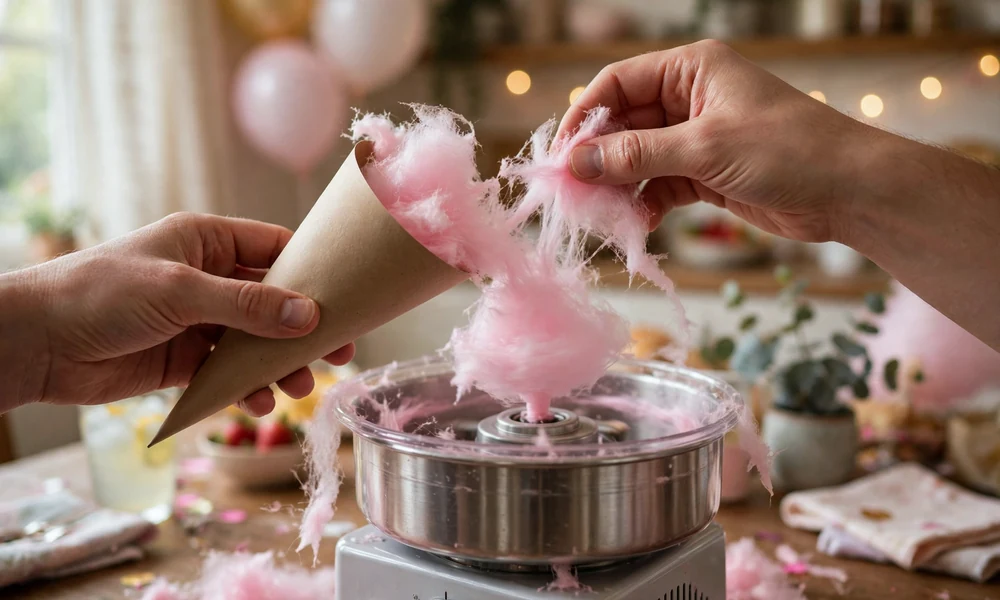
Inside every machine there is a heating element and a spinning head. Sugar is poured into the centre of the head, the element melts it, and centrifugal force pushes the liquid sugar out through small holes in the rim. As the thin streams hit the cooler air they solidify into the fine threads we call cotton candy. The bowl around the head catches the threads so they can be gathered onto a cone, and the whole process takes about a minute once the machine is warm.
Most home machines use ordinary granulated sugar, sometimes with a spoonful of flavouring or a few drops of food colouring mixed in. Some also take hard sweets, which melt in the same way and give flavours plain sugar cannot, from strawberry to cola. The better machines come with a measuring scoop so the same amount of sugar goes in every time, which keeps the floss consistent and stops the head from being overloaded. Too much sugar at once will not melt evenly, and the result is gritty threads and a sticky head that takes twice as long to clean.
What Makes a Good Machine
Heat is the first thing to judge. A machine that heats evenly melts the sugar fully before it spins out, giving fine, dry threads that hold their shape. A machine with hot spots melts some sugar and scorches the rest, and the floss comes out clumpy, damp, or faintly burnt. The best machines reach working temperature in two or three minutes and stay there, so the third cone tastes as good as the first. Warm-up time matters at a party, where nobody wants to wait five minutes between batches while children queue up with empty cones.
The second thing is the motor. It has to spin fast enough to throw the sugar into fine threads, and keep that speed steady while the head is loaded. A weak motor slows down as soon as sugar goes in, and the threads come out thick and heavy instead of light and wispy. Suction feet or a heavy base help here too, because a machine that walks across the worktop while it spins is a machine that will end up on the floor.
The third thing is cleaning. Melted sugar is glue, and every part that touches it will need washing. The best machines have a bowl and a head that lift off and rinse clean under a tap, with no fiddly corners where sugar can hide and harden. Some parts go in the dishwasher, which is worth having if the machine will be used often. Machines that have to be wiped down with a damp cloth while the sugar is still warm are a chore, and a chore is what turns a fun gadget into a cupboard ornament.
The Main Types of Machine
Countertop machines are the classic home choice. They are about the size of a large mixing bowl, they sit on the kitchen worktop, and they make one cone at a time. They are the cheapest type, the easiest to store, and the right pick for families who want cotton candy at birthday parties and film nights. Most make a cone in under a minute and come with a few paper cones to get started. Their only real limit is size: they make one serving at a time, so a queue of ten children takes ten minutes.
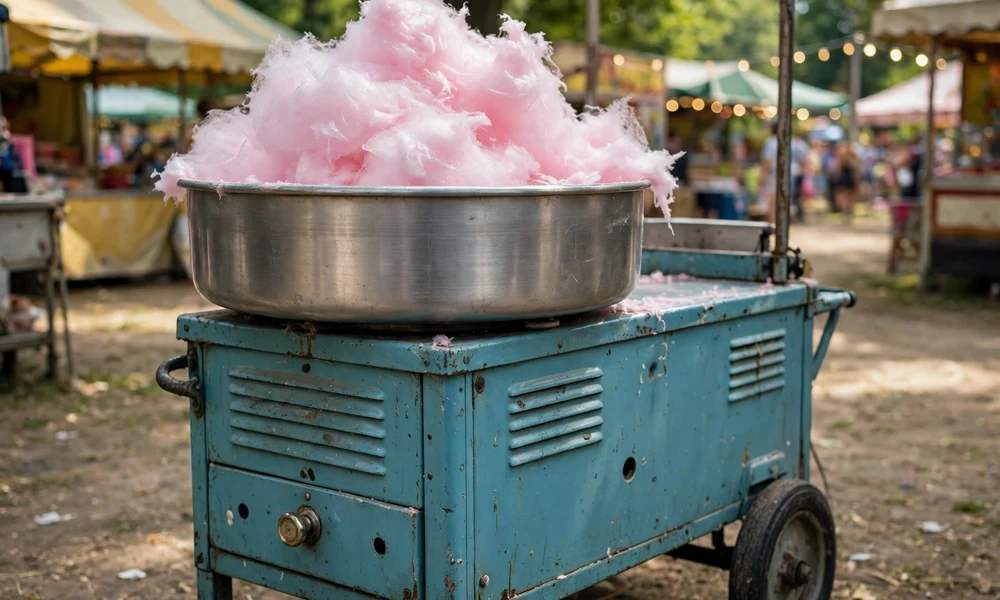
Cart machines are the bigger, showier option. They stand on a wheeled cart with the machine on top and storage underneath, and they look like the ones at a fairground. They are made for people who run stalls, hire out for events, or throw very large parties, and they usually have a bigger head, a stronger motor, and a larger bowl. They cost several times as much as a countertop machine and need somewhere to live when not in use, but for volume they have no equal. A cart machine can keep a queue moving all afternoon without a break.
Choosing the Right Size and Power
Size is mostly about storage. A countertop machine needs a shelf or cupboard space roughly the size of a large salad bowl, and the bowl usually lifts off so it can be stored separately. Measure the cupboard before buying, because a machine that does not fit anywhere will live on the worktop and get in the way of everything else. Bowl diameter matters for use too: a wider bowl catches more floss and makes a bigger cone, while a narrow bowl means more stray threads drifting onto the counter.
Sugar, Flavouring and Hard Sweets
Plain granulated sugar is the starting point, and it makes the classic white or pale pink floss that tastes of nothing but sweetness. Flavoured sugar, sold ready-made in tubs, adds colour and flavour in one step: strawberry pink, blue raspberry, lemon yellow, and a dozen more. It costs more than plain sugar, but it takes the guesswork out of colouring, and the colours come out even instead of streaky.
The Best Cotton Candy Machines of 2026
The best machine for most homes this year is a mid-priced countertop model with a wide bowl, a quick warm-up, and a head that lifts out for washing. It makes a full cone in under a minute, the floss comes out fine and dry, and the motor holds its speed through batch after batch. For birthday parties, film nights, and the occasional fairground afternoon at home, this is the pick that makes the most sense for the most people.
The best budget machine is a compact countertop model that costs little more than a takeaway meal. It is smaller and slower than the best overall pick, and the bowl is narrower, so a little more floss escapes onto the counter. But it still makes proper cotton candy, it warms up in a few minutes, and it cleans up easily. It suits a household that will use it a few times a year rather than every weekend.
The best machine for parties is a larger countertop model with a stronger motor and a wider bowl, built to run for an hour without a break. It warms up fast, recovers its temperature between cones, and catches nearly all the floss in a bowl big enough for generous servings. It costs more than the budget pick, but it earns the difference the first time it serves a room full of children. It also comes with enough cones in the box to get through a party, which the smaller machines rarely do.
The best cart machine of 2026 is a full-size fairground-style model on a wheeled base, made for stalls, school fairs, and people who hire themselves out for events. It has a big head, a powerful motor, and a bowl that swallows the floss from a whole afternoon of spinning. It is heavy, it needs storage space, and it costs several times what a countertop machine does, but it is the only type that can serve a crowd all day. For anyone turning cotton candy into a small business, or running a regular stall, this is the machine to buy.
The best novelty machine is a small, cheerful model that a child can use with supervision. It makes a smaller cone, it takes a little longer, and it will not keep up with a party, but it is safe, simple, and fun on a rainy afternoon. It suits a family with young children who want to make one or two cones at a time, and it makes a good gift. Buy it for the fun of making cotton candy together, not for feeding a crowd, and it will not disappoint.

How to Make a Perfect Cone
Start with a warm machine. Turn it on, wait for the head to reach temperature, and drop in a spoonful of sugar only when the machine is fully warm. Hold the cone upright over the bowl, tilt it slightly, and turn it slowly as the floss appears. The threads will catch on the cone and wrap themselves around it, and a slow, steady turn builds a round, even puff. Turning too fast makes a thin, straggly cone, and holding the cone still makes a lopsided one. The whole thing takes less than a minute once the technique clicks.
Cleaning Up After the Fun
Cleaning is easiest while the sugar is still slightly warm. Switch the machine off, let the head cool just enough to touch, and lift the bowl and head off for washing. Warm water dissolves sugar quickly, so a rinse under the tap usually does most of the work, and a soft sponge takes care of anything left behind. Never put a hot head under cold water, and never use a scouring pad on the bowl, because scratches give sugar somewhere to grip next time.
Other Treats for the Same Party
Cotton candy rarely appears on its own. It belongs at a party table alongside other homemade treats, and the same spirit of making dessert at home carries across to frozen desserts, which are the natural partner for a summer party. Readers who enjoy making treats from scratch will find plenty to like in the best ice cream makers, which cover the same idea from a colder angle: a simple machine, a few ingredients, and a dessert that tastes better for being homemade.
The kitchen skills overlap more than people expect. The same patient stirring and careful measuring that makes good cotton candy also makes good waffles and smoothies, and a party spread is better when the treats are varied. The best waffle makers and the best blenders guides cover the rest of the table, from crisp waffles to fruit smoothies, and together they turn a single sweet treat into a proper homemade spread.
The Verdict
The best cotton candy machine of 2026 is the one that matches how often it will be used. For most homes that means a mid-priced countertop machine: quick to warm up, easy to clean, and steady enough to serve a party without fuss. For occasional use, a compact budget model does the same job more slowly and more cheaply. For big parties, a larger countertop machine is worth the extra money, and for stalls, only a full cart machine will keep up. Buy the machine that fits the occasion, keep the sugar dry, clean the head while it is still warm, and let the children hold the cone.