Ice Cream Makers That Churn Like the Parlour in 2026
Ice cream makers that churn like the parlour are not the cheapest machines on the shelf, and they are not the most complicated either. The best ones share a simple trick: they freeze and churn at the same time, fast enough that ice crystals stay tiny, so the finished scoop is smooth, dense and creamy instead of icy and hard. This guide explains how that trick works, which type of machine does it best, and how to choose one that fits your kitchen, your budget and how often you will actually use it, so the machine you buy is still churning next summer, not gathering dust by September.
Key Takeaways
- Compressor machines freeze as they churn, so you can make batch after batch with no advance planning, while freezer-bowl machines need 16 to 24 hours in the freezer first.
- Fast churning is what makes ice cream smooth: slow freezing grows large ice crystals, and large crystals are what make homemade ice cream taste icy.
- A 1.5 to 2 litre bowl is the sweet spot for most households, big enough for a family dessert and small enough to store.
- Churn time matters: most good machines finish in 30 to 45 minutes, and anything over an hour is a sign of a weak motor or poor freezing.
- The best machine is the one you will use: a simple, easy-to-clean model beats a clever one that takes twenty minutes to wash up.
How an Ice Cream Maker Actually Works
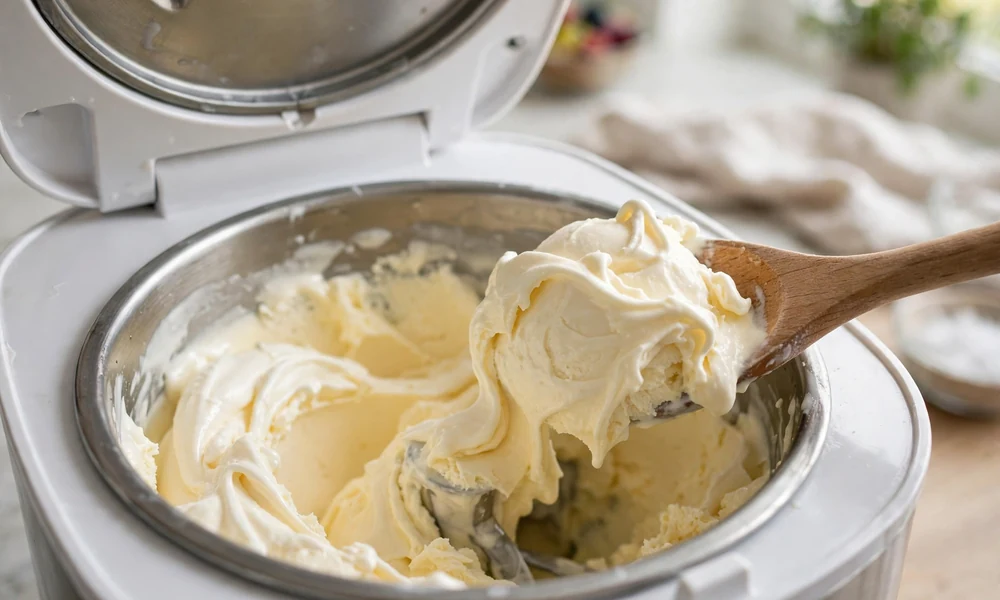
Ice cream is a balancing act between freezing and stirring. A base of cream, milk, sugar and flavourings needs to freeze slowly enough to set, but it must be stirred constantly while it freezes, so the ice crystals that form stay tiny. Stop stirring and the mixture freezes into a solid block. Stir too slowly and the crystals grow large, giving the grainy, icy texture that puts people off homemade ice cream. A good machine does two jobs at once: it holds the bowl below freezing and it turns a paddle through the mixture at a steady speed, scraping the frozen layer off the bowl wall and folding it back in, again and again, for half an hour.
Compressor vs Freezer Bowl: The Choice That Decides Everything
Every ice cream maker falls into one of two families, and the choice between them decides how you will actually use the machine. A freezer-bowl machine is a bowl with a double wall filled with a freezing liquid, plus a motor and paddle that sit on top. You freeze the bowl for 16 to 24 hours, pour in the chilled base, switch it on, and wait 30 to 45 minutes. It is cheaper, lighter and quieter, and it makes excellent ice cream, but it demands planning: no frozen bowl, no ice cream, and one batch per day unless you own a second bowl. A compressor machine has a built-in freezer unit, like a tiny fridge, so it freezes the bowl itself. You pour in the base whenever you like, it churns for 30 to 45 minutes, and you can start another batch straight away.
| Feature | Freezer-Bowl Machine | Compressor Machine |
|---|---|---|
| Advance planning | 16 to 24 hours freezing the bowl | None, ready whenever you are |
| Batches per day | One, unless you own a spare bowl | Unlimited, back to back |
| Typical price | Lower, often under half the price | Higher, a real investment |
| Size and weight | Light, easy to store | Heavy, needs a permanent spot |
| Noise | Quieter, just the paddle motor | Louder, compressor hums |
| Best for | Occasional makers, small kitchens | Regular makers, families, parties |
The contrast is clearest in real life. A freezer-bowl machine suits someone who makes ice cream once or twice a month and is happy to plan a day ahead, while a compressor machine suits a family that makes it every weekend, or anyone who wants to try three flavours in one afternoon. If you buy a freezer-bowl machine and then discover you want ice cream on a whim, you will be frustrated. If you buy a compressor machine and use it twice a year, you will have spent good money on a heavy box. For the related question of keeping ice on hand, our comparison of the best and worst ice makers of 2026 covers countertop ice machines, which solve a different problem but share the same freezer logic.
What to Look For Beyond the Freezing Type
Capacity comes next, and smaller is usually wiser than it looks. A 1.5 to 2 litre bowl sounds modest, but a churned batch expands by roughly a third as air is folded in, so a 1.5 litre bowl makes about 2 litres of finished ice cream, which is four generous family servings. A larger bowl looks generous in the shop and then proves awkward to store, heavy to lift when full, and slow to freeze. Check the bowl dimensions against your freezer before you buy a freezer-bowl model, because a bowl that does not fit your freezer is an expensive ornament, and this is the most common buying mistake of all.
Churn time, motor strength and noise are the next three numbers to check. Most good machines finish a batch in 30 to 45 minutes; anything over an hour suggests a weak motor or poor freezing, and the ice cream will suffer for it. A strong motor matters most with thick bases, like a rich chocolate or a dense custard, where a weak paddle stalls and leaves a frozen ring on the bowl wall. Noise is easy to forget in a shop and impossible to forget at home: a compressor machine hums like a small fridge for the whole churn, so if your kitchen is open plan, check the decibel figure or read reviews from people who use theirs in a flat. Ease of cleaning decides whether you use the machine twice or twenty times. A removable bowl, a paddle that lifts out, and parts that rinse clean in under five minutes are worth more than a third flavour setting you will never touch.

Getting Parlour Texture at Home
Parlour texture is not magic, and it is not about the machine alone. It comes from four things you control. The first is the base: chill it thoroughly, ideally overnight in the fridge, before it goes anywhere near the machine, because a warm base takes longer to freeze and longer freezing means larger crystals. The second is sugar and fat in the right balance: too little sugar and the ice cream freezes rock hard, too much and it never sets properly, while cream gives richness and body that milk alone cannot. The third is churning until the mixture looks like soft-serve, thick enough to hold a peak, and then stopping: over-churning turns it buttery, under-churning leaves it slushy. For a benchmark, our comparison of the best and worst ice creams of 2026 shows the flavours and textures worth aiming at. The fourth is the final freeze: transfer the soft ice cream to a shallow container, press cling film directly onto the surface to stop ice forming, and freeze for two to four hours before serving.
How Much Should You Spend?
Price tracks the freezing type more than anything else, and the gap is honest. A good freezer-bowl machine costs a modest amount, a good compressor machine costs two to three times as much, and the extra money buys convenience, not better ice cream from a single batch. A well-made freezer-bowl machine, used with a properly chilled base, makes ice cream just as smooth as a compressor machine; the compressor simply makes it whenever you want, as often as you want. Spend the extra money if you will use the machine weekly, if you entertain, or if you know you will never plan a day ahead. Save it if you make ice cream occasionally and are happy to freeze the bowl the night before.

Your Ice Cream Maker Checklist
- Decide freezer-bowl or compressor first: plan-ahead and occasional, or spontaneous and regular, and be honest about which you are.
- Check the bowl fits your freezer, and that 1.5 to 2 litres is enough, because bigger bowls are harder to store and slower to freeze.
- Look for a 30 to 45 minute churn time, a motor strong enough for thick chocolate and custard bases, and parts that clean in under five minutes.
- Chill your base overnight before churning, and add chocolate chips, nuts and swirls only in the last five minutes.
- Freeze the finished ice cream in a shallow airtight container with cling film on the surface, and eat it within three to five days.
- Take it out ten minutes before serving, so it softens to scooping temperature instead of needing a hot spoon.
Frequently Asked Questions
Do I need to freeze the bowl before every batch?
Only with a freezer-bowl machine, where the bowl needs 16 to 24 hours in a freezer at minus 18 degrees or colder before each batch. A compressor machine freezes its own bowl, so it needs no advance freezing at all, and it can start a second batch immediately after the first.
Why is my homemade ice cream icy instead of smooth?
Icy ice cream almost always means the mixture froze too slowly, so the ice crystals had time to grow large. The usual causes are a base that was not chilled before churning, a bowl that was not cold enough, or a churn that took over an hour. Chill the base overnight, freeze the bowl fully, and aim for a 30 to 45 minute churn.
How long does homemade ice cream keep?
At its best for three to five days in a shallow airtight container, with cling film pressed onto the surface. After that it is still safe to eat, but it slowly hardens, loses its creamy texture and picks up flavours from the freezer, so make batches you will finish within the week.
Can I make sorbet and frozen yoghurt in an ice cream maker?
Yes, most machines handle sorbet and frozen yoghurt well, and they often churn faster than dairy ice cream because the bases are lighter. Sorbet needs enough sugar to stay scoopable, and frozen yoghurt benefits from a little cream for body, but both are straightforward once you have made a plain vanilla batch.
Is a compressor machine worth the extra money?
It is worth it if you make ice cream weekly, entertain often, or know you will never plan a day ahead, because it removes the freezing step entirely and makes batch after batch. If you make ice cream once or twice a month and are happy to freeze the bowl the night before, a good freezer-bowl machine makes equally smooth ice cream for far less money.
What size ice cream maker should I buy?
A 1.5 to 2 litre bowl suits most households, because a churned batch expands by about a third and makes four generous servings. Larger bowls look generous but are awkward to store, heavy when full and slower to freeze, so check the bowl against your freezer before you buy.
The Bottom Line
The ice cream maker that churns like the parlour is the one that matches how you actually cook: a compressor machine if you want ice cream on a whim, a freezer-bowl machine if you plan ahead and make it occasionally, and either way a 1.5 to 2 litre bowl, a 30 to 45 minute churn, and a base chilled overnight. Get those right, add your flavours in the last five minutes, and the machine stops being a gadget and becomes the reason summer desserts taste better at your table than they do in the shop. And if you need a bowl for the mixing that comes before the churn, our guide to the best mixing bowls of 2026 covers the ones that make the prep as easy as the churning.