
The best cycling gloves in 2026 are the ones you forget you are wearing until the ride gets long, rough or cold. A good pair of cycling gloves cushions your palms against road buzz, keeps your grip steady when your hands sweat, and protects your skin if you come off the bike. A bad pair does the opposite: it bunches at the fingers, soaks through in the first shower, and leaves your hands numb by the second hour. This guide sorts the good from the bad, so you can pick a pair that suits the way you actually ride, whether that is a daily commute, a weekend club run or a muddy trail.
Cycling gloves are built around a hand wrapped around a handlebar, with padding where pressure builds, breathable fabric where heat builds, and grip that works with brake levers and shifters. Get those details right and your hands stop being the thing that ends a ride early.
Key takeaways
- Padding matters most on long rides: gel or foam pads under the heel of the palm cut the vibration that causes numbness on rough roads.
- Fingerless gloves suit warm weather and road riding, while full-finger gloves suit cold, wet and off-road riding where protection matters more.
- Fit beats brand every time: a glove should feel snug across the palm with no loose fabric at the fingertips and no tight band at the wrist.
- Look for a grippy palm, a sweat-wipe panel on the thumb and a pull-off tab, because those small details make a big difference on every ride.
- Replace cycling gloves when the padding flattens, the palm wears smooth or the stitching pulls, because a worn glove protects nothing.
What makes a cycling glove different
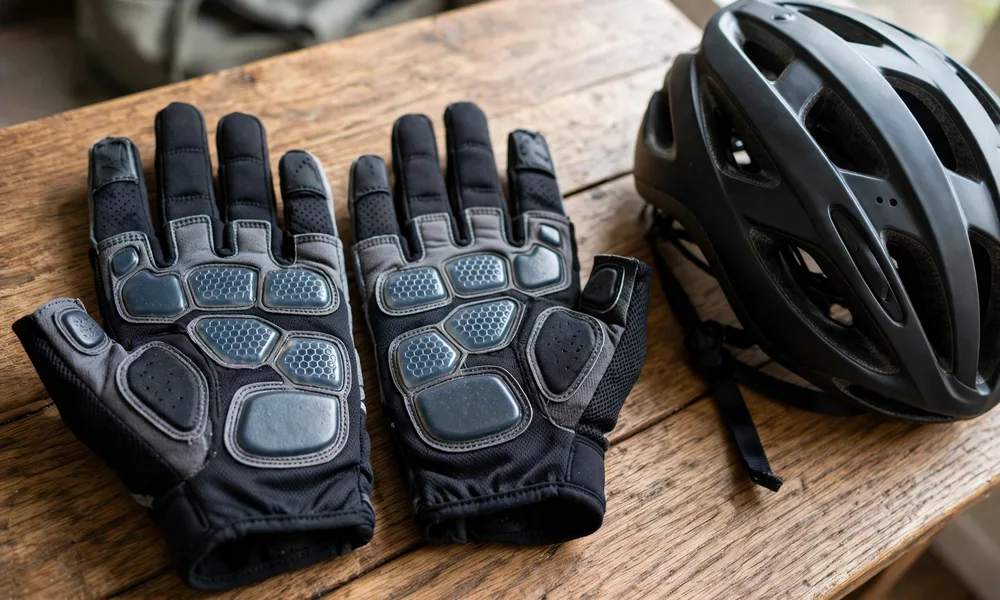
A cycling glove starts with the palm. When you ride, most of your upper-body weight rests on the heel of your palm, right where the ulnar nerve runs close to the surface. Hours of pressure and vibration there can leave your little finger and ring finger tingling, a problem riders call handlebar palsy. Cycling gloves fight it with pads of gel or dense foam placed under that exact spot, spreading the load across a wider area. Ordinary gloves have no padding there at all, which is why they feel fine for ten minutes and useless after two hours.
The second difference is grip. A cycling glove palm uses silicone print, textured synthetic leather or a tacky rubber pattern that holds a handlebar even when wet with sweat or rain. That grip also helps with braking, because your fingers stay planted on the levers instead of sliding. The back of the glove is a different job entirely: it must breathe. Mesh panels, perforated fabric and lightweight stretch material let heat escape, so your hands stay dry instead of stewing inside a sealed glove.
Draw the line clearly against the other gloves on this site. Warm winter gloves trap heat with thick insulation and are too bulky for precise braking. Work gloves resist cuts with tough leather and stiff seams, and are too rigid for hours on a handlebar. Motorcycle gloves survive a slide on tarmac with armour and heavy leather, and are far too heavy for pedalling. Cycling gloves are lighter, more breathable and more precisely padded, because their job is comfort and control over hours in the saddle, not warmth alone, hazard protection or crash armour.
Fingerless or full-finger: which should you choose
Fingerless cycling gloves, sometimes called mitts, are the classic warm-weather choice. They leave your fingertips free, which makes shifting, braking and handling food or a phone much easier, and they ventilate far better than a closed glove. Road riders love them because the padding sits exactly where it is needed and nothing else gets in the way. Their weakness is protection: in a fall, bare fingertips meet the ground first, and on cold mornings your fingers will feel every degree.
Full-finger cycling gloves cover the whole hand, which makes them the better choice for mountain biking, gravel riding, cold weather and wet conditions. They protect against branches, grit thrown up by the front wheel and the sting of cold wind, and they keep your hands warmer on descents. The trade-off is heat and dexterity: a thick full-finger glove can feel clumsy on small shift buttons, and a poorly ventilated one turns sweaty on a climb. The best full-finger designs solve this with thin, stretchy fabric on the fingers and a windproof layer only where it is needed.
How we judged the best cycling gloves
We judged every glove on the same five points. First, comfort over distance: does the padding actually reduce numbness after two hours, or does it create new pressure points of its own? Second, grip in wet and dry conditions: does the palm hold the bar when it is sweaty, and does it stay put on the brake levers in rain? Third, fit and sizing: does the glove match its size chart, and does it stay comfortable when your hands swell slightly on a long ride? Fourth, breathability and weather handling: does the back of the hand dry out, and does the glove cope with a shower? Fifth, durability: does the palm survive a season of regular use without going smooth, and does the stitching hold at the fingers?
The best cycling gloves at a glance
| Glove | Best for | Style | Standout strength |
|---|---|---|---|
| Best all-round road mitt | Road riding | Fingerless | Even gel padding and a secure, cool fit |
| Best for long distances | Endurance rides | Fingerless | Thick multi-density pads that stay comfortable for hours |
| Best full-finger trail glove | Mountain biking | Full-finger | Tough palm and knuckle protection without bulk |
Best all-round road mitt
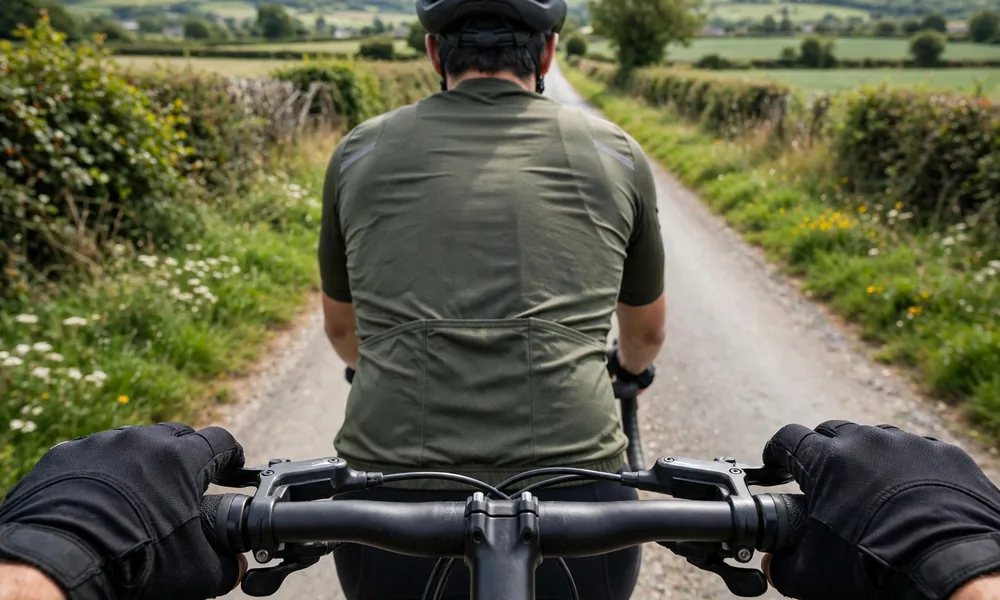
The best all-round road mitt is the pair most riders should buy first. Its gel pads sit under the heel of the palm and the base of the fingers, exactly where pressure builds on drop handlebars, and the padding is thick enough to dull vibration without feeling like a cushion strapped to your hand. The mesh back keeps air moving on climbs, and the silicone grip pattern holds the bar securely even when your palms sweat. A soft thumb panel wipes sweat away, and a small pull tab makes the glove easy to remove after a ride. It is not the warmest glove, and it is not the toughest, but for regular road riding in mild weather it is the hardest to fault.
Best for long distances
Long-distance riders need padding that works in the fifth hour as well as the first, and this is where multi-density foam earns its place. The pads use a firmer layer against the palm and a softer layer against the bar, so they spread pressure without bottoming out. Riders who suffer numb fingers on century rides often find this design is the one that finally fixes it, especially when paired with a good pair of cycling shoes and a sensible riding position that takes weight off the hands. The glove is slightly bulkier than a race mitt, and it takes longer to dry, but on rides over three hours that trade is worth making.
Best full-finger trail glove
Trail riding asks more of a glove than road riding does. Branches whip across the back of the hand, grit sprays up from the front wheel, and a fall usually means putting a hand down on rock or dirt. The best trail glove answers with a tough synthetic leather palm, a reinforced thumb, and a lightly padded knuckle panel, all without turning into a bulky winter glove. The fingers are thin enough to feel the brake lever properly, and the cuff is short and stretchy so it fits under a jacket sleeve. It also pairs naturally with a good helmet, so it is worth reading our guide to the best cycling helmets before a first trail season.
Getting the fit right
Measure around your palm at the knuckles, excluding the thumb, and compare that number with the maker’s size chart rather than guessing from your usual clothing size. Glove sizes vary more between brands than shoe sizes do, so a medium in one brand can be a large in another. Try the glove with your hand wrapped around a handlebar, or at least a broom handle, and check three things. A glove that fits well also works better with the rest of your kit, from padded shorts to a breathable top like the ones in our guide to the best cycling jerseys. the padding should sit under the heel of your palm, not halfway up your fingers; the fingertips should reach the end of the glove without loose fabric; and the wrist closure should be snug without cutting in. If you are between sizes, size up for a full-finger glove and size down for a fingerless one, because a tight fingerless glove stretches slightly while a tight full-finger glove only gets worse.
Buyer checklist
- Choose fingerless for warm road riding and full-finger for cold, wet or off-road riding.
- Check the padding sits under the heel of your palm when your hand grips a bar.
- Test the grip with damp hands, not just dry ones, before you commit.
- Make sure the back of the glove breathes and the thumb has a sweat-wipe panel.
- Try the glove on with your hand curled as if holding a handlebar.
- Plan to replace the pair when the padding flattens or the palm goes smooth.
Frequently asked questions
Do I really need cycling gloves?
Not for a ten-minute ride to the shops, but for any ride over half an hour they make a real difference. They cut vibration, stop blisters, keep your grip steady when you sweat, and protect your palms in a fall.
Are gel pads better than foam pads?
Gel pads spread pressure well and feel comfortable straight away, while foam pads are lighter and breathe better. Multi-density foam, which layers firm and soft foam together, is often the best compromise for long rides. The shape and placement of the pad matters more than the material alone.
Should cycling gloves be tight or loose?
Snug, not tight. The glove should follow the shape of your hand with no loose fabric at the fingertips and no pinching at the wrist. Loose gloves let the padding slide and cause blisters, while gloves that are too tight cut off circulation and make your hands go numb faster.
Can I wear cycling gloves in winter?
Yes, but choose a full-finger winter cycling glove with a windproof front and light insulation, not a summer mitt. For very cold rides, add a thin liner underneath. Ordinary winter gloves are too bulky for safe braking.
How long do cycling gloves last?
A regularly used pair lasts about one season of heavy riding, roughly six to twelve months. Replace them when the grip fades, the padding flattens, or seams start to pull.
Are fingerless gloves safe?
Fingerless gloves are safe for road riding and give the best feel for the brakes, but they leave fingertips unprotected in a fall. Off-road or in traffic, a full-finger glove gives more protection for a small loss of dexterity.
Bottom line
The best cycling gloves are the ones that match your riding: a light fingerless mitt for warm road days, a protective full-finger glove for trails and cold mornings, and solid padding and grip in either case. Buy for fit first, check the padding position with your hand on a bar, and replace the pair when the padding flattens. Do that, and your hands will stop being the reason a good ride ends early.


