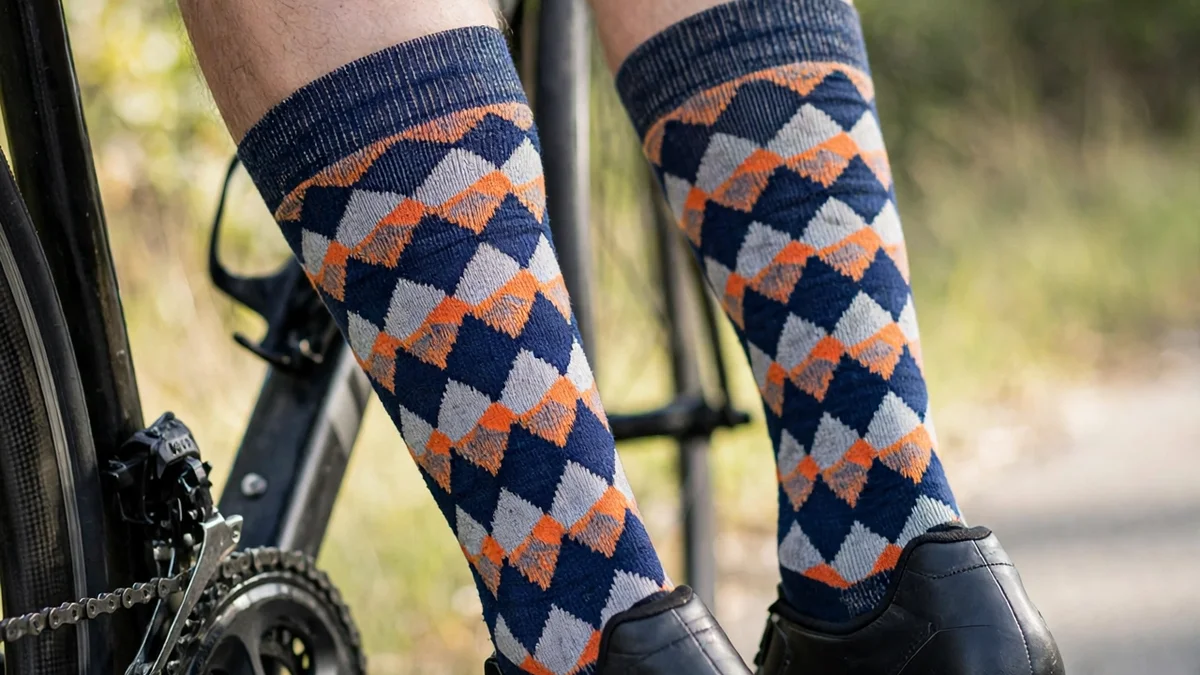
The best cycling socks in 2026 are not ordinary socks with a sporty label. They are built for feet clipped into cycling shoes, pedalling for hours: padded where the shoe presses, snug where a loose sock would bunch, and made from fabric that moves sweat away before it can cause a blister. A good pair disappears once you are riding, and a bad pair announces itself within the first hour, sliding down, soaking through, or rubbing a sore spot on your heel.
Our guide to the best and worst socks covers everyday socks for walking, desk days and cold evenings at home. Cycling socks are a different product for a different job: they work inside stiff cycling shoes, cope with constant pedalling, and keep feet cool and dry on long rides.
Key Takeaways
- Padding matters most where the shoe presses: a padded heel and toe stop blisters on long rides, while thin socks leave feet sore.
- Moisture-wicking fabric beats cotton every time, because cotton soaks up sweat, stays wet and causes blisters.
- Fit is everything: a cycling sock should hug the arch and stay put, with no loose fabric and no cuff that slips down.
- Cuff height is a real choice, from ankle socks for hot days to tall aero socks for racing, and each suits a different kind of ride.
- Replace cycling socks when the padding flattens, the heel thins or the cuff loses its grip, because a worn sock protects nothing.
What Makes Cycling Socks Different
The first difference is the padding. When you ride, your foot presses against a stiff shoe for hours, and the heel and the ball of the foot take most of the pressure. Cycling socks put dense padding exactly there, stopping the hot spots that turn into blisters. Ordinary socks have no padding in those places, which is why they feel fine for ten minutes and useless after two hours.
The second difference is the fabric. Cycling socks use thin, stretchy material that wicks sweat away from the skin and dries fast, often a blend of synthetic fibres with a little merino wool for warmth and smell resistance. Cotton socks soak up sweat, stay wet, and go cold on a descent, which is why experienced riders never wear them on a long ride. Look for mesh ventilation panels over the top of the foot, where heat builds up fastest inside a closed shoe.
The third difference is the fit. A cycling sock is knitted with a shaped heel, a ribbed arch band that supports the foot as it pedals, and a cuff that grips the leg without leaving a red ring. It should feel snug like a second skin, with no wrinkles anywhere, because a wrinkle inside a tight cycling shoe becomes a blister within an hour. Buy the right size: a sock that is too large bunches, and one that is too small pulls tight and cuts off circulation.
The fourth difference is compression. Many cycling socks use gentle graduated compression, tighter at the ankle and looser up the calf, which supports the muscles and helps blood flow back up the leg on long rides. It can leave legs feeling fresher at the end of a long day, though some riders find it uncomfortable in the heat, so try a mid-weight pair before buying a drawer full of them.

The Main Types of Cycling Socks
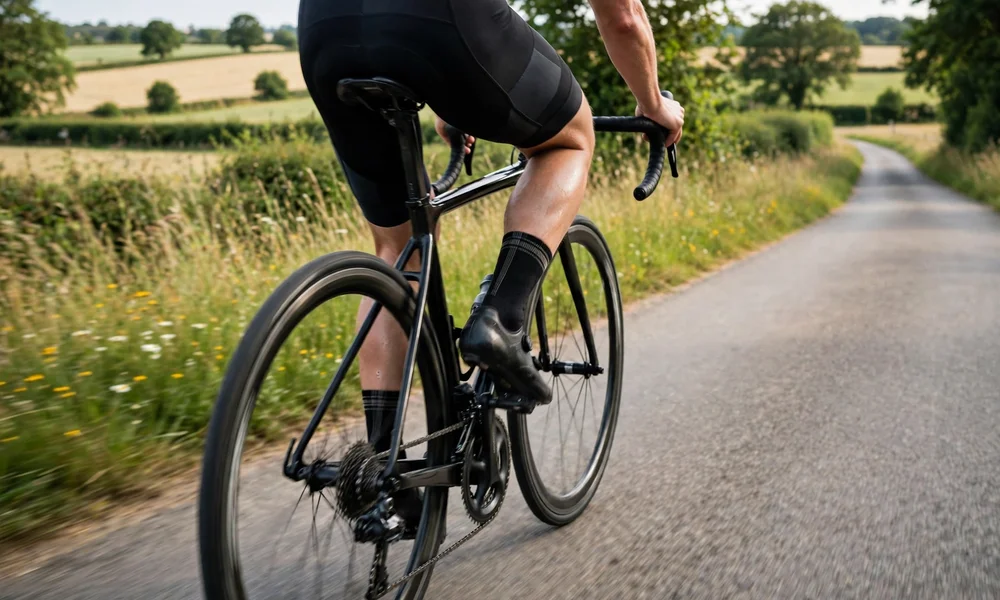
Road cycling socks are the classic choice: thin, light and tall enough to sit a few centimetres above the shoe, with padding at the heel and toe and a breathable mesh top. They suit road riding in warm weather, where ventilation matters more than warmth, and they pair with the stiff shoes that most road riders wear. Look for a cuff that stays put without digging in, and a flat toe seam that does not rub.
Mountain bike socks are tougher. They are usually a little thicker, with more padding under the foot to absorb vibration on rough trails, and a taller cuff that keeps mud, grit and brambles out of the shoe. They also need to survive being pulled on and off with muddy hands, so the fabric should be hard-wearing. If you ride trails, buy socks that can take a beating rather than the thinnest road socks you can find.
Winter cycling socks use thicker fabric, often with merino wool, to keep feet warm when the temperature drops, and they are tall enough to tuck under leg warmers. They are too hot for summer, but on a cold morning they are the difference between a pleasant ride and numb toes.
Aero socks are the racing option. They are very tall, reaching halfway up the calf, and use a smooth, tight fabric claimed to cut drag at speed. Whether they save measurable watts is debated, but they are popular in time trials. For most riders they are a luxury, and ordinary road socks do the same job on a weekend club run.
Cuff Height, Thickness and Warmth
Cuff height is partly fashion and partly function. Ankle socks are the coolest option and suit hot days, but they leave the ankle exposed to sunburn and to grit flicked up by the front wheel. Mid-calf socks, the most common choice, protect the ankle, stay put better, and look right with most cycling shoes. Tall aero socks suit racing and cold weather, when extra coverage helps, but they can feel too warm on a summer climb.
Thickness is a trade-off between comfort and fit. A thicker sock cushions better and warms the foot, but it takes up room inside the shoe. If you buy winter socks, try them on with your cycling shoes first, and loosen the straps a notch if needed. A sock that squeezes the foot cuts off circulation and makes feet colder, not warmer.
Warmth depends on the fabric as much as the thickness. Merino wool keeps feet warm when it is cold and cool when it is warm, and it resists smell far better than most synthetics. Synthetic blends dry faster and cost less, and they suit hot weather and racing. A blend of the two is what most good cycling socks use.
How Cycling Socks Work With the Rest of Your Kit
Socks are the bottom layer of the cycling kit, and they work as a team with the shoes, the shorts and the jersey. The shoes matter most: a stiff cycling shoe with a snug fit needs a thin, smooth sock, while a looser shoe can take a thicker one. Our guide to the best cycling shoes explains how to get the fit right, and the sock is the layer between your foot and that shoe, so the two have to work together.
The shorts matter too, because the pad in a good pair of cycling shorts cushions the saddle while the socks cushion the feet. Our guide to the best cycling shorts covers the chamois and the fit, and the same rule applies to socks: buy for the riding you do. A commuter needs durable socks that survive daily washing, while a racer needs light ones that dry fast.
Cycling Socks Compared
The table below sums up the main choices, so you can match the sock to the way you actually ride.
| Type | Best for | Padding | Warmth |
|---|---|---|---|
| Road socks | Warm-weather road riding | Light, heel and toe | Cool |
| Mountain bike socks | Trails and rough ground | Medium, full foot | Medium |
| Winter socks | Cold mornings and winter riding | Medium to thick | Warm |
| Aero socks | Racing and time trials | Light | Cool |
| Commuter socks | Daily riding and washing | Medium | Medium |
Mistakes That Ruin a Good Pair
The most common mistake is wearing cotton socks on a bike. Cotton soaks up sweat, stays wet, and causes blisters, so leave cotton for the sofa. The second mistake is buying the wrong size: a sock that is too big bunches inside the shoe, and one that is too small cuts off circulation. The third mistake is wearing the same pair for every ride, because a sock still damp from yesterday will blister your feet today. Own at least three pairs and let each pair dry fully between rides.
Looking After Your Cycling Socks
Cycling socks last longer if you look after them. Wash them in cold water with a mild detergent, never with fabric softener, which coats the fibres and stops them wicking sweat. Turn them inside out before washing, and let them air dry rather than tumble drying them, because heat breaks down the elastic. A good pair should survive dozens of washes. Replace them when the heel thins, the cuff sags, or the padding flattens, because a worn sock is a blister waiting to happen. Everyday sport socks work differently again: running and gym socks are shaped for those shoes, not for stiff cycling shoes.

Before You Buy Checklist
- Choose the type for your riding: road, mountain bike, winter, aero or commuter.
- Check the padding: dense at the heel and toe, with a flat toe seam that will not rub.
- Pick moisture-wicking fabric, never cotton, with mesh ventilation over the top of the foot.
- Buy the right size, so the sock hugs the arch with no bunching and no tight spots.
- Decide the cuff height: ankle for hot days, mid-calf for most riding, tall for racing or cold weather.
- Own at least three pairs, so each pair can dry fully between rides.
Frequently Asked Questions
Are cycling socks really different from normal socks?
Yes. Cycling socks are padded where a stiff shoe presses, knitted to fit a foot in a cycling shoe, and made from fabric that wicks sweat away. Ordinary socks have no padding there, bunch inside a tight shoe, and cause blisters on long rides.
Can I wear running socks for cycling?
You can, and running socks are better than cotton, because they wick sweat and have some padding. But they are shaped for running shoes, not cycling shoes, and they often lack the arch support and the thin, smooth fit that cycling demands on a long ride.
What height of cycling sock should I buy?
Mid-calf is the safest choice for most riders: it protects the ankle, stays put, and suits most shoes and weather. Ankle socks suit hot days, while tall aero socks suit racing or cold weather, when extra coverage helps.
Do I need special socks for winter cycling?
Yes, if you ride through winter. Winter cycling socks use thicker fabric, often with merino wool, to keep feet warm, and they are tall enough to tuck under leg warmers. Thin summer socks will leave your toes numb on a cold morning.
How many pairs of cycling socks do I need?
At least three pairs, so you can rotate them and let each pair dry fully between rides. Daily riders may want five or six, and it is worth owning a winter pair and a summer pair rather than one pair for the whole year.
When should I replace cycling socks?
Replace them when the padding flattens, the heel or toe thins, the cuff loses its grip, or a hole appears. A worn sock no longer protects your foot, and it is cheaper to replace socks than to deal with blisters.
Bottom Line
The best cycling socks in 2026 are the ones that fit your feet, pad the places a cycling shoe presses, and keep sweat moving away from the skin. Buy the type for your riding, choose wicking fabric over cotton, get the size right, and replace them when the padding flattens. Do that, and a small, cheap piece of kit will make every long ride noticeably more comfortable.


