
A dog bowl looks like the simplest thing you will ever buy for your dog. It holds food or water, and any dish should do. Then you live with one for a year. The cheap plastic bowl starts to smell even after washing. The light bowl slides across the kitchen floor at every meal. The deep bowl makes your spaniel’s ears drag through dinner. Suddenly the simplest purchase in the house is the one you think about twice a day, every day.
That is why this guide exists. We looked at the five bowl types that matter in 2026 — ceramic, stainless steel, slow-feeder, elevated and travel bowls — and judged them the way an owner judges them: by how they survive daily use, how easy they are to clean, how steady they stay on the floor, and how comfortable they are for the dog. There is no single best dog bowl for every dog. The right answer depends on your dog’s size, age, eating speed and health.
One honest note before we start. Our broader guide to pet food bowls covers bowls for every kind of pet, cats included. This guide goes narrower and deeper: it is about dogs only, and about the details that matter specifically to dogs, from gulping and bloat risk to long ears and muddy paws.
What makes a good dog bowl
Every good dog bowl shares the same two qualities, whatever it is made of. First, it is heavy enough or grippy enough to stay put. A bowl that moves while a dog eats teaches the dog to chase its food around the kitchen, and that chasing makes a mess and can make a nervous dog eat faster. Second, it is easy to clean properly. Dogs leave saliva, food grease and bacteria in their bowls, and a bowl that cannot be scrubbed clean will slowly become a hygiene problem.
Stainless steel bowls: the best all-rounder
If you buy only one kind of dog bowl, make it stainless steel. A well-made steel bowl is the best all-rounder in this guide, and it is the bowl most vets and trainers reach for first. It is unbreakable in normal use, it does not hold smells, it is safe in the dishwasher, and it will still be going strong years after a plastic bowl has been thrown away. For water, steel is especially good: it keeps water cool and does not flavour it.
Not all steel bowls are equal. The best ones have some weight, a wide flat base, and a rubber ring underneath that grips the floor. The worst ones are thin, light and noisy, and they skate across tiles the moment a large dog starts eating. When you shop, pick the bowl up. If it feels flimsy in your hand, it will feel flimsy on your floor. Look for food-grade steel, a smooth rim, and a size that holds a full meal plus a little extra.

Ceramic bowls: the best for calm eaters and kitchens
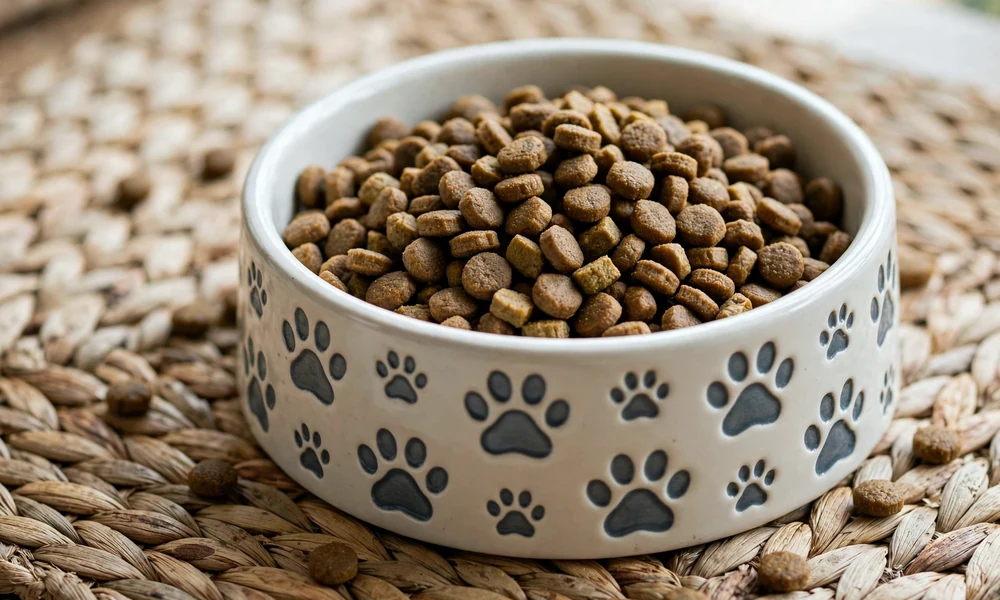
Ceramic bowls win on stability and looks. A glazed ceramic bowl is heavy enough that even an enthusiastic eater struggles to push it around, and it sits quietly on the floor without the clatter of metal. For dogs that are nervous or easily startled, that quiet matters. The glaze is the key: a well-glazed bowl is non-porous, so it does not absorb smells or bacteria, and it washes clean as easily as a dinner plate.
The trade-off is fragility. Drop a ceramic bowl on a tiled floor and it will chip or break, and a chipped bowl should be retired immediately, because the exposed edge can be sharp and the crack can hide bacteria. Ceramic is also heavier to carry and to wash, which matters if you have several dogs. For a calm adult dog on hard floors, ceramic is excellent. For a boisterous puppy, steel is the safer bet.
Slow-feeder bowls: the best for dogs that gulp
Some dogs do not eat; they inhale. If your dog finishes a meal in under a minute, burps, or sometimes brings food back up straight after eating, a slow-feeder bowl is the most useful purchase you can make. These bowls have ridges, mazes or bumps moulded into the base, so the dog has to work its tongue around the obstacles to pick up the kibble. A meal that took forty seconds can take four or five minutes, and that change alone reduces gulping, gas and the risk of bloat.
Slow feeders work best with dry kibble. Wet food can be smeared into the grooves and becomes harder to clean, and very small kibble can get stuck in narrow channels. Cleaning is the real test: the same ridges that slow the dog down also trap food, so the bowl needs a proper scrub or a dishwasher cycle after every meal, not just a rinse. Look for wide, smooth ridges rather than tight maze walls, because wide ridges slow the dog without frustrating it, and they are far easier to clean.
One more thing worth knowing: a slow feeder changes how much food looks like a lot. Because the kibble spreads across the ridges, a normal portion can look small, and owners sometimes add extra to compensate. Measure the food first, put it in the bowl, and trust the measure. Our guide to dog food will help you work out the right portion for your dog’s size and age.
Elevated bowls: the best for tall, old and stiff dogs
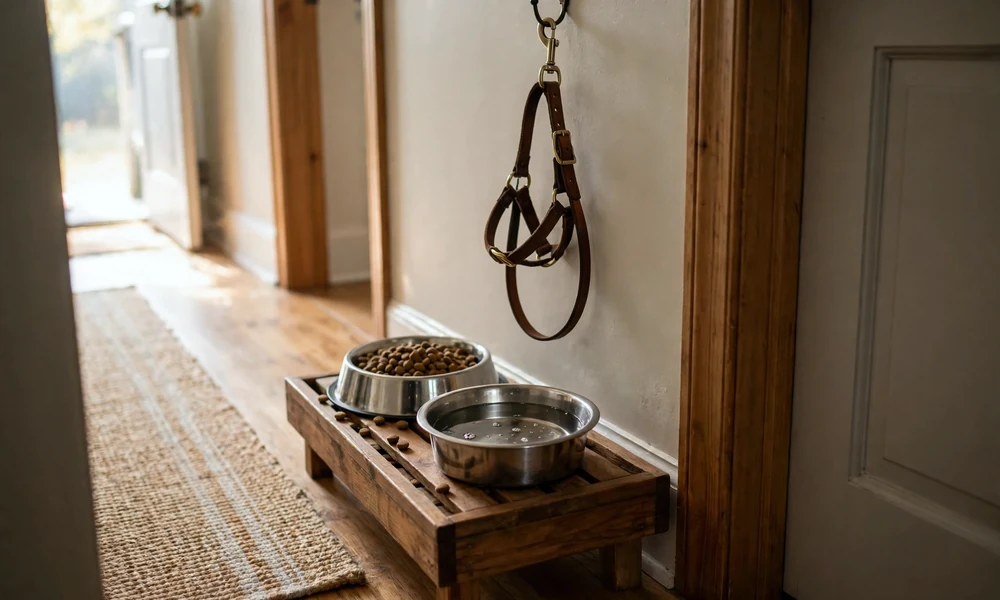
Elevated bowls sit in a raised stand, so the dog eats with its head up rather than down at floor level. For tall dogs, older dogs with stiff necks, and dogs with arthritis or after surgery, that small change in posture can make meals noticeably more comfortable. Instead of lowering its head to the floor and raising it again for every mouthful, the dog eats in a more natural standing position, and swallowing is easier.
The height has to be right, and this is where elevated bowls go wrong. The rim should sit roughly at the dog’s chest height, not at its chin and not at its knees. Too high and the dog has to reach up, which is just as uncomfortable as reaching down. Measure your dog standing normally, from the floor to the top of its shoulders, and subtract a few centimetres. Many stands are adjustable, which is worth paying for, because a puppy will grow.
Travel bowls: the best for days out
A travel bowl is not a replacement for the bowls at home; it is a tool for walks, car journeys, holidays and vet visits. The best travel bowls are collapsible silicone bowls that fold flat and clip to a lead or a bag, or lightweight fabric bowls that pack into a pocket. They weigh almost nothing, they cost very little, and they mean your dog always has access to water when you are out, which matters far more than most owners realise. Dogs dehydrate faster than people on a hot day.
The worst travel bowls are too small, too flimsy or too hard to clean. A tiny bowl that holds three mouthfuls is useless on a long walk, and a bowl that collapses under the weight of the water is worse than no bowl at all. Buy one that holds at least half a litre for a medium or large dog, check that it stands flat when open, and wash it after every trip rather than leaving it damp in a bag. Keep one in the car and one in your walking bag.
Getting the size right
Size is the detail most owners get wrong, and it is easy to fix. A bowl that is too small means food spills, water runs out too soon, and the dog’s whiskers and ears are constantly in the way. A bowl that is too big means a small dog has to climb into it to reach the bottom. As a rough guide, a small dog under ten kilos needs about half a litre for food and a litre for water. A medium dog of ten to twenty-five kilos needs about one litre for food and up to two litres for water.
Depth matters as much as volume. Long-eared breeds like spaniels do better with a tall, narrow bowl that keeps their ears out of the food. Flat-faced breeds like pugs and bulldogs do better with a shallow, wide bowl that lets them scoop food with a flat face, and a deep narrow bowl will frustrate them. Watch your dog eat for a week after buying a new bowl. If the ears are in the food, or if food ends up on the floor every time, the bowl is the wrong shape, not the dog.
Cleaning and hygiene: the part nobody enjoys
A dog bowl is a food dish, and it should be treated like one. Wash the food bowl after every meal and the water bowl at least once a day, with hot water and washing-up liquid, and dry it before refilling. A bowl that is only rinsed grows a slippery film called biofilm, and biofilm is a home for bacteria. Studies of pet bowls have found them among the dirtiest objects in a home, and the fix is simply regular washing. Steel and glazed ceramic can go in the dishwasher, which is the easiest way to keep them truly clean.
The worst choices: what to avoid
The worst dog bowl we can name is a light plastic bowl with no grip on the base. It slides, it scratches, it holds smells, and it is the bowl most likely to be chewed by a puppy, which can leave sharp edges and swallowed pieces. Close behind it is a bowl far too deep for a flat-faced dog, which turns every meal into a struggle, and a slow feeder with narrow maze walls that cannot be cleaned, which becomes a hygiene problem within a week. A bowl with a painted design on the inside is another bad choice, because the paint can chip into the food.
Our verdict
For most dogs, the best dog bowl in 2026 is a heavy stainless steel bowl with a rubber base, one for food and one for water, in the right size for your dog. It is the safest, easiest and longest-lasting choice, and it is the one we would buy first. Add a ceramic bowl if you want something quieter and better looking for a calm adult dog, and add a slow feeder if your dog gulps its meals. Consider an elevated stand if your dog is tall, old or stiff, and only after checking with your vet if it is a large deep-chested breed.
That combination covers almost every dog and almost every home. The bowl will not make your dog healthier on its own, and no bowl can fix a bad diet or a rushed mealtime. But the right bowl makes every meal easier, cleaner and more comfortable, twice a day, for years, and that is a lot of value from a very simple object. Choose the bowl that fits your dog, wash it properly, and replace it when it is worn. If you are still deciding what to put in the bowl, our guide to dog treats is a good place to start for rewards and training.


