
Best Pet Food Bowls 2026
A pet food bowl looks like the simplest thing in the house, until you watch a dog push it across the kitchen floor or a cat refuse to eat from it. The wrong bowl slides, tips, chips, or makes whiskers brush the sides with every bite, and a pet that eats badly soon eats less happily.
Get the bowl right, though, and mealtimes settle into a quiet routine: the bowl stays where you put it, the food stays in it, and the pet finishes without fuss. These are the best pet food bowls of 2026, chosen for size, material, stability, and how easy they are to keep clean.
Key Takeaways
- Buy the bowl for the pet you own, because a bowl that is too deep makes a cat’s whiskers brush the sides, while a bowl that is too shallow lets a large dog scatter kibble everywhere.
- Stainless steel is the safest everyday choice, since it does not chip, does not hold smells, and survives the dishwasher without complaint.
- Ceramic bowls look better and stay put, but they need checking for chips, because a cracked glaze can harbour bacteria.
- A non-slip base matters more than it looks, since a bowl that slides across a hard floor turns every meal into a chase.
- Measure the portion before you buy, because a bowl that holds a day’s food in one serving invites overfeeding.
Pet Food Bowls 2026 at a Glance
| Best for | Bowl type | Size | Standout strength |
|---|---|---|---|
| Best overall | Stainless steel bowl | Medium to large | Tough, hygienic, and easy to wash |
| Best for cats | Wide shallow ceramic bowl | Small to medium | Whisker-friendly and steady |
| Best for large dogs | Elevated feeder with steel bowls | Large | Comfortable height and less mess |
| Best for fast eaters | Slow-feeder bowl | Medium | Slows gulping without a fight |
| Best for travel | Collapsible silicone bowl | Small | Folds flat and weighs almost nothing |
| Best for style | Heavy ceramic bowl | Medium | Looks good and stays where it is put |
What a Pet Food Bowl Is Really For
A pet food bowl does three jobs at once. First, it holds the food at a height and angle the pet can reach without strain. Second, it keeps the food in one place, so kibble does not end up under the fridge. Third, it stays clean between meals, because a bowl that holds old food residue is a bowl that smells.
Most people buy a bowl the wrong way round. They fall for a pattern or a colour, then discover the bowl slides across the tiles or the dog can tip it with one paw. Choose the material and the size first, and only then worry about how it looks in the kitchen.
It helps to know the difference between a bowl and its close cousins. A pet feeder dispenses food on a schedule or in measured amounts, and our guide to the best and worst pet feeders of 2026 covers those machines in detail. A bowl is simpler: it is the dish the food is eaten from, and the right one depends on your pet and your floor.
Getting the Size Right
Size is where most pet food bowl purchases go wrong. A bowl that is too small means topping up mid-meal, while a bowl that is too big means the pet eats from a mountain of food and you lose track of the portion. Measure the usual serving, not the pet, and buy the bowl that fits that serving with a little room to spare.
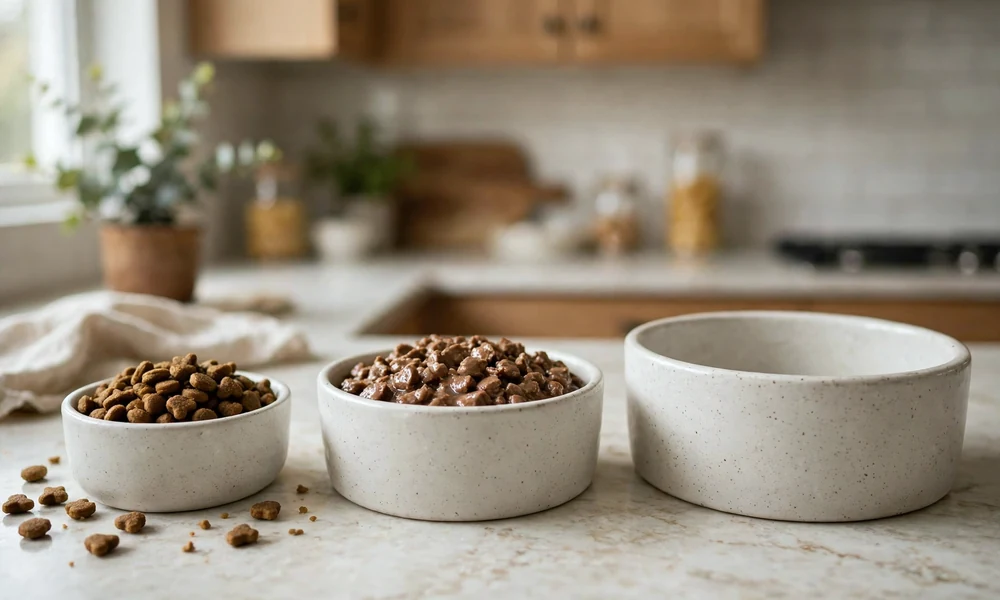
Depth matters as much as width. A flat-faced dog with a short muzzle struggles with a deep bowl, while a long-nosed dog manages fine. If you are still deciding what goes in the bowl, our guide to the best dog food for your dog’s age and size in 2026 explains portions first, so you can match the bowl to the meal.
The Main Types of Pet Food Bowl
Pet food bowls fall into a handful of types, and each suits a different kind of pet and household. The right choice depends less on taste than on how your pet eats and how much mess you are willing to clean up.
The stainless steel bowl is the safest choice for most homes: a simple, sturdy dish that does not chip, does not absorb smells, and goes straight into the dishwasher. Its strength is hygiene, so it suits pets with sensitive skin or allergies. Its weakness is noise, since a steel bowl clatters on a hard floor unless it has a rubber base.
The ceramic bowl is the prettiest choice, and the heaviest. A thick ceramic bowl stays put on the floor and looks at home in a tidy kitchen. The trade-off is fragility, so check it for chips every week. A chipped glaze can harbour bacteria, and a cracked bowl belongs in the bin, however much you liked the pattern.
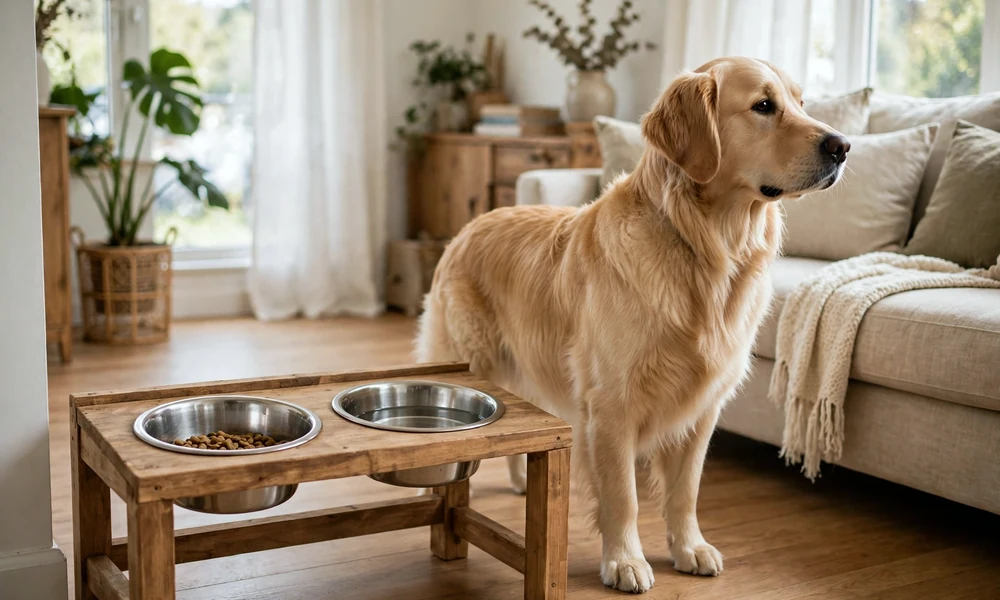
Elevated feeders raise the bowls off the floor on a stand, which suits large and older dogs. Eating from a raised bowl means less bending, and the stand keeps the bowls from sliding. If your dog is tall, stiff, or simply messy, an elevated feeder is the most comfortable option in the house.
Materials and Build Quality
Stainless steel is the classic choice, and it earns its price. Food-grade steel does not rust, does not stain, and does not hold the smell of yesterday’s dinner. Look for a bowl with a rubber ring on the base, because that ring is what stops the bowl skating across the kitchen when a hungry dog arrives.
Ceramic is the sensible middle ground between looks and weight: it looks better than steel and stays put without a rubber ring, but it chips if it is dropped on tiles. Whatever the material, test the build if you can. Push the bowl gently from the side: it should not slide easily, and the base should sit flat without rocking. A bowl that rocks will spill, and a bowl that slides will end up in the hallway.
Cleaning and Hygiene
A bowl that is never washed is not a food bowl, it is a petri dish. Wash the bowl every day, just as you would wash your own plate, and give it a proper scrub once a week. Stainless steel makes this easy, since it goes in the dishwasher without fading or warping.
Stability and Safety
A food bowl is light, cheap, and easy to knock over, and a pet is strong, enthusiastic, and hungry. A heavy bowl is inherently stable, which matters in homes with large dogs or boisterous puppies. A light bowl on a smooth floor is the opposite, and it should have a rubber base or sit on a non-slip mat.
Matching the Bowl to the Pet
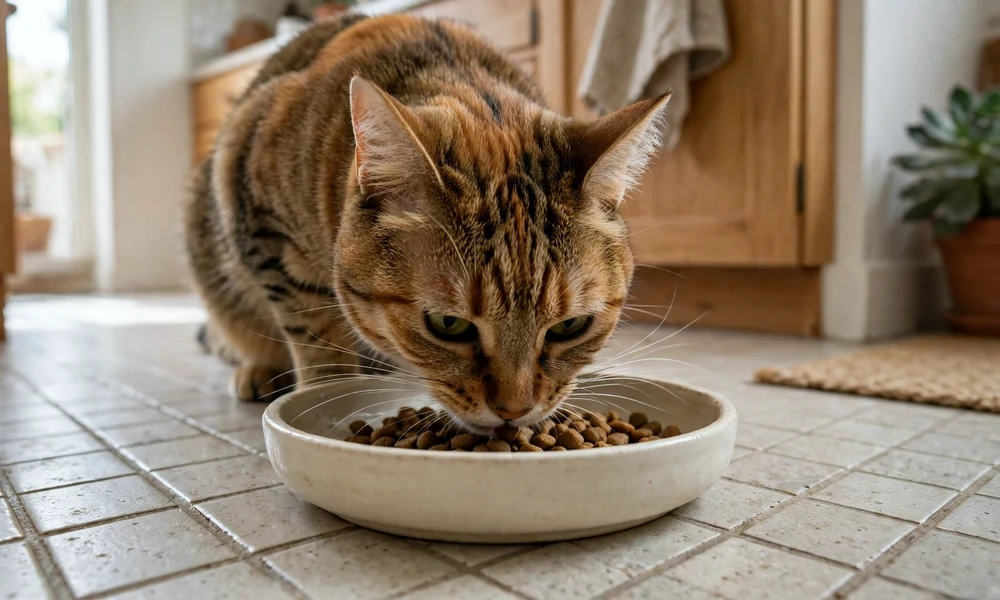
A bowl should suit the pet that eats from it, not just the kitchen it lives in. In a home with a cat, a wide shallow bowl respects the whiskers and keeps the cat eating calmly, while a deep bowl invites food to be dragged onto the floor. In a home with a large dog, a big steel bowl on a mat handles enthusiasm, while a small ceramic bowl looks lost and tips over.
Think about the food itself, too. Wet food sticks to ridges and corners, so a smooth bowl with gently sloping sides is easier to clean after a wet meal. Dry kibble suits almost any bowl, but a slow feeder makes a real difference for a dog that bolts it. If you want a broader view of what belongs in the bowl, our guide to the best and worst pet food of 2026 compares the options, so you can match the bowl to the food as well as the pet.
Common Mistakes to Avoid
The most common mistake is buying the bowl before measuring the portion: people remember the pet’s size and forget the serving size, then discover the bowl overflows or the pet is still hungry. The second is choosing a deep bowl for a cat, which leads to whisker stress and food on the floor. The third is keeping a chipped ceramic bowl because it still looks fine. The fourth is ignoring the base, especially on a smooth floor. The fifth is using one bowl for food and water, which means the water is always full of crumbs. Finally, do not buy a bowl you cannot wash easily: if it does not fit in the sink or the dishwasher, it will not get washed often enough.
Before You Buy: A Short Checklist
- Measure the usual serving, and buy a bowl that holds it with a little room to spare.
- Check the width against your pet’s face, so whiskers and muzzles clear the sides.
- Choose stainless steel for hygiene, or heavy ceramic for stability and looks.
- Look for a rubber base or a non-slip mat, especially on hard floors.
- Check the rim for smoothness, and the glaze for chips before every wash.
- Buy separate bowls for food and water, and wash the food bowl every day.
- Consider a slow feeder if your dog finishes dinner in under a minute.
Frequently Asked Questions
What size bowl does a cat need? A wide, shallow bowl about fifteen centimetres across suits most cats. The width matters more than the depth, because whiskers should not touch the sides while the cat eats.
Is stainless steel or ceramic better for a dog? Stainless steel is better for hygiene and durability, since it does not chip and survives the dishwasher. Ceramic is better for stability and looks, provided you check it for chips and replace it when the glaze cracks.
Do slow-feeder bowls really work? Yes, for most fast eaters. The ridges force the dog to eat more slowly, which reduces gulping and the risk of bloating. Start with a simple pattern, since a very complex maze can frustrate a nervous dog.
Should a large dog eat from a raised bowl? A raised bowl suits many large and older dogs, since it means less bending and a more comfortable posture. Choose a stand that puts the rim roughly level with the dog’s chest.
How often should I wash a pet food bowl? Every day, after the last meal. A quick wash with hot water and washing-up liquid is enough, with a deeper scrub once a week, and the dishwasher whenever the bowl allows it.
The Bottom Line
The best pet food bowl of 2026 is the one that fits your pet, your food, and your floor, and then quietly does its job at every meal. It is wide enough for whiskers and muzzles, heavy or grippy enough to stay put, smooth enough to wash in seconds, and sized to the portion you actually serve.
Start with the serving, not the shelf. Measure the meal, watch how your pet eats, and then choose the type that fits: steel for everyday hygiene, ceramic for a steady and stylish kitchen, a shallow bowl for a cat, a slow feeder for a greedy dog, or an elevated stand for a tall or older one.


