
Door Knobs That Feel Solid Every Time in 2026
A door knob is the smallest hardware in a home, and the one your hand meets dozens of times a day. A good one you never think about: you grab it, turn it, and the door opens. A bad one announces itself every time, wobbling, sticking, or slipping in a wet hand. The best door knobs in 2026 feel solid every time, and the difference comes down to weight, grip, and finish.
We judged them on feel, turn, durability, and looks after a year of use. A solid knob is not always the most expensive, and a pretty knob is not always a good one.
Key Takeaways
- A solid door knob has real weight, a smooth turn, and no wobble.
- Round ball knobs suit most doors, egg knobs suit older hands, and mushroom knobs suit period homes.
- Solid brass and stainless steel last longest; hollow knobs feel cheap and loosen fastest.
- Matte black shows fingerprints least, polished brass needs polishing, and crystal suits bedrooms, not busy hallways.
- Check the backset before you buy: a knob that does not fit your door is useless however good it feels.
How We Judged the Door Knobs
We judged every door knob on five things. First, the feel: whether it sits comfortably in the palm, turns smoothly, and has enough weight to feel substantial. Second, the grip: whether fingers find purchase, even with wet hands, or the surface is so smooth it spins uselessly. Third, the mechanism: whether the latch clicks home cleanly and the knob returns to centre without sticking or rattling. Fourth, the finish: whether it resists fingerprints, scratches, and tarnish, or looks tired within months. Fifth, the fitting: whether it suits a standard door or a thick old one, and whether the screws and spindle feel solid.
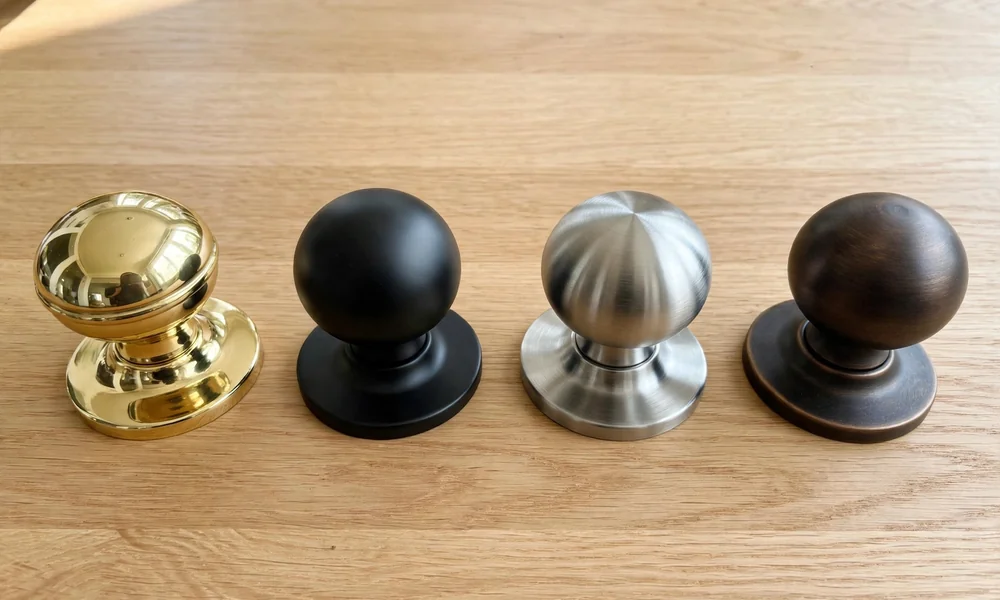
The Best Door Knobs of 2026
The best door knobs feel balanced and sure the moment you close your hand around them: cool metal, an even turn, and a latch that engages with a quiet click. No play in the spindle, no rattle in the rose.
The Round Ball Knob: Best All-Rounder
The round ball knob is the strongest all-round choice, and the one most homes should start with. Its familiar shape fits any hand, suits any door from plain white to dark wood, and comes in every finish from polished brass to matte black. The best are solid brass or stainless steel, heavy enough to tell you the metal is real. They turn smoothly, are easy to clean, and look right anywhere. A ball knob that feels light and hollow is a cheap copy, and it will loosen within a year.
The Egg Knob: Best for Comfort
The egg knob is the best choice for comfort, because its elongated shape gives fingers more to hold than a perfect sphere. It suits older hands and stiff fingers well, since the grip is natural and the turn needs less force. The best examples come in solid brass and bronze, with a warm, traditional look that suits period homes and cottage doors. They also work well on heavy doors, where the extra grip helps pull the door closed.
The Mushroom Knob: Best for Period Homes
The mushroom knob, with its wide, flat cap and short stem, is the best choice for period homes and panelled doors. Its broad face spreads the pressure across the palm, so it feels gentle even on a stiff latch, and its classic shape suits Victorian and Edwardian interiors. The best are solid brass with a lacquered finish, or porcelain with a brass base. They are less suited to very modern homes, where their old-fashioned silhouette can look out of place, but on the right door they are the most charming knob you can buy. Choose one with a solid spindle, because a cheap mushroom knob wobbles more visibly than any other shape.
Crystal and Glass Knobs: Best for Bedrooms
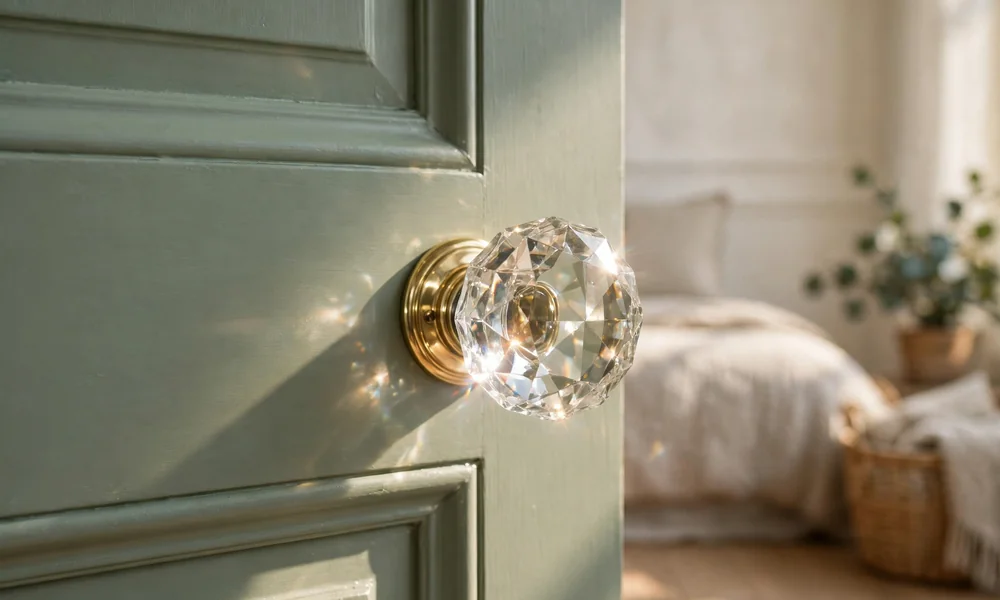
Crystal and glass knobs are the best choice for bedrooms and dressing rooms, where their sparkle catches the light and turns an ordinary door into a feature. A good crystal knob is cut from solid glass, feels cool and heavy, and throws small rainbows across the wall. The best sit on a solid brass base, which gives them the weight glass alone cannot provide. They are not right for a busy hallway or bathroom, where wet hands and hard knocks can chip the glass. But for a quiet bedroom door, nothing else looks quite so elegant.
Ceramic and Porcelain Knobs: Best for Character
Ceramic and porcelain knobs are the best choice for character, because they come in colours and patterns metal never can, from plain cream to hand-painted blue. A good ceramic knob feels smooth and cool, turns easily, and adds craft to a plain door. The best have a solid brass stem and a thick, well-fired body that resists chipping. They suit kitchens, bedrooms, and cottage doors. The trade-off is fragility: a hard knock can chip a ceramic knob, so keep them away from the busiest doors.
The Worst Door Knobs of 2026
The worst door knobs fail in small, annoying ways. The most common failure is the hollow knob, a thin shell over an empty centre that feels light, tinny, and cheap the moment you touch it. It flexes under your grip, and the spindle works loose within months.
The second failure is the knob too smooth to grip: a perfectly round, highly polished knob looks beautiful in a photograph and slips straight through a wet hand. The same goes for knobs too small for the door: a tiny knob on a heavy fire door forces your fingers to work too hard, and the latch never quite engages. The third failure is the finish that does not last: cheap lacquer peels and thin plating wears through. Finally, a poor mechanism makes the latch stick and the door rattle.
Door Knobs Compared
| Knob type | Best for | Feel | Durability |
|---|---|---|---|
| Round ball | Every room | Balanced, familiar | Excellent in solid metal |
| Egg | Comfort, older hands | Easy grip, gentle turn | Excellent in solid brass |
| Mushroom | Period homes | Broad, soft pressure | Good, if the spindle is solid |
| Crystal or glass | Bedrooms | Cool, heavy, elegant | Good, but chips if knocked |
| Ceramic or porcelain | Character, kitchens | Smooth, cool | Fair, chips on hard knocks |
| Hollow metal | Nothing | Light, tinny, loose | Poor, loosens quickly |
Solid metal wins on durability, shape decides comfort, and the worst choice is always the hollow knob.
Finishes and Materials: What Lasts
The finish decides how a knob looks after a year of use, and the material underneath decides how long it lasts. Solid brass is the classic choice: warm, heavy, and long-lasting, though unlacquered brass tarnishes and needs polishing. Stainless steel is the practical choice: cool, clean, and almost impossible to damage. Matte black hides fingerprints and suits white doors, but cheap black paint chips, so look for a powder-coated finish baked on rather than sprayed. Bronze is warm and traditional and ages gracefully; chrome is bright but shows every fingerprint. Check the knob and its rose are the same metal throughout: brass outside and plastic underneath will never feel solid.
Fitting a Door Knob Properly
Fitting a door knob is a small job, but one worth doing carefully, because a badly fitted knob will never feel solid. Start by measuring the backset, the distance from the edge of the door to the centre of the knob hole, usually 60 or 70 millimetres. Buy a knob and latch to match, and check the door thickness too, since a spindle made for a thin door will be too short for a thick old one. A good cordless drill makes the job quicker if you need to enlarge a hole, but a hand screwdriver is enough for a straight swap. Remove the old knob, fit the new latch, and slide the spindle through so both knobs sit square. Tighten the screws evenly, a little at a time on each side. Test the turn: the latch should click home cleanly and the knob should return to centre with no wobble.
Matching Knobs to Your Home
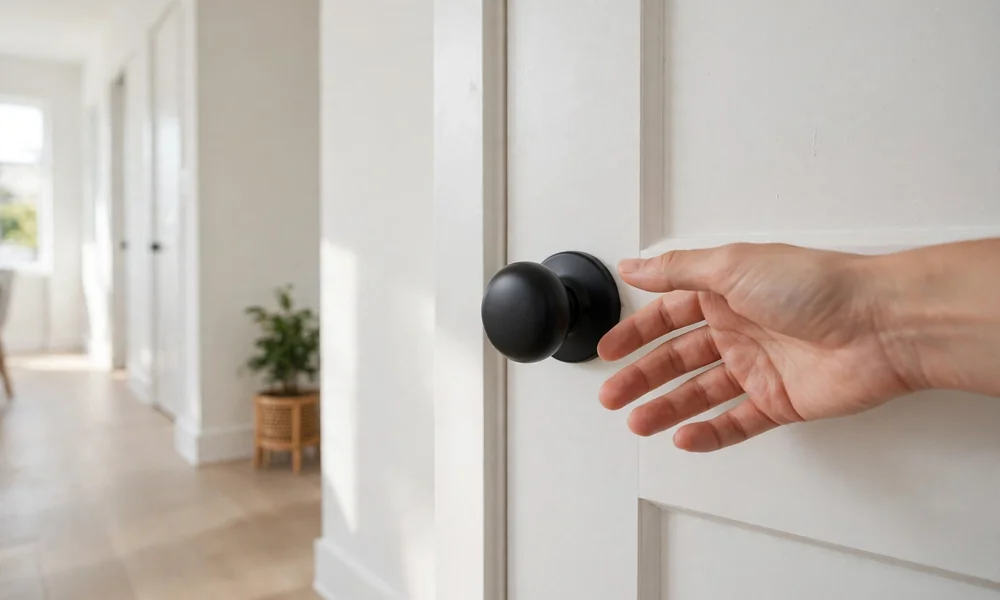
A door knob should match the room, not just the door. In a hallway, choose a hard-wearing finish like stainless steel or matte black, because hallway doors get the most use and knocks from bags and coats. A good door mat helps too, catching mud and grit that would otherwise reach the knob on dirty hands. In a bedroom, you can afford something prettier, like crystal or ceramic. In a bathroom, choose a knob that grips well when wet, such as a round ball in matte black, and avoid polished chrome, which slips in damp hands. Keep the finish consistent through the house: matching knobs, hinges, and handles make a home feel considered.
Security and Privacy: What a Knob Can and Cannot Do
A door knob is not a lock. An internal knob with a simple latch keeps a door closed and gives privacy, but it will not keep anyone out. A bathroom knob with a turn-button lock gives privacy, and a bedroom knob with a keyhole gives a little more, but neither is a substitute for a proper lock on an outside door. For the front door, the lock matters far more than the knob, and our guide to the best and worst door locks of 2026 explains which locks are worth the money. A good knob helps in a small way: a solid knob with a well-fitted latch keeps a door properly closed, so it does not drift open.
Checklist: Choosing a Door Knob
- Pick it up first: a solid knob has real weight, a hollow one feels light and tinny.
- Turn it in your hand: the movement should be smooth and even.
- Check the backset and door thickness before you buy, so the latch fits.
- Match the finish to the room: hard-wearing for hallways, pretty for bedrooms.
- Choose a grip that suits the hands that will use it, especially older fingers.
- Wipe metal knobs weekly and tighten any loose screws once a year.
Frequently Asked Questions
What is the best door knob for everyday use?
A solid round ball knob in brass or stainless steel is the best everyday choice: it suits any door, feels balanced, and lasts for years with almost no care.
Are door knobs or levers better?
Knobs suit traditional homes and are harder for small children to open, while levers are easier for older hands. For feel and looks, a good knob wins; for ease of use, a lever wins.
How do I stop a door knob from wobbling?
Tighten the screws on both sides evenly, and check the spindle is the right length. If the screw holes are worn, pack them with a matchstick and wood glue, let it dry, and refit the screws.
Can I fit a new door knob myself?
Yes, a straight swap takes about fifteen minutes with a screwdriver. Measure the backset and door thickness first, then fit the latch and tighten the screws a little at a time on each side.
Do matte black door knobs show fingerprints?
Matte black shows fingerprints less than polished chrome or brass. Choose a powder-coated finish rather than painted, so it does not chip.
How long should a good door knob last?
A solid brass or stainless steel knob should last twenty years or more. A hollow knob may loosen within a year or two, which is why weight is the simplest test of quality.
The Bottom Line
The best door knobs in 2026 are the ones you never think about: solid, smooth, and sure in the hand. Choose a solid round ball for everyday doors, an egg knob for comfort, a mushroom knob for a period home, and crystal or ceramic where you want elegance. Avoid hollow knobs and finishes that chip. You touch a door knob every day, and a solid one makes the whole house feel better made.


