
Top Electric Fireplaces That Warm a Room Without a Chimney in 2026
The best electric fireplaces warm a room properly on a cold evening and give it the glow of a real fire, all without a chimney, a gas line or a weekend of building work. A good one plugs into an ordinary socket, heats a bedroom or a small living room in minutes, and looks convincing enough that guests ask when the fire was lit. A bad one glows like a television and heats nothing beyond arm’s length.
The flame effects have improved fast. LED flames, water-vapour mist and reflected light now move, flicker and change colour in ways that look genuinely fire-like from across a room, and the heaters have improved too, with quiet fans and thermostats that hold a steady temperature. This guide sorts out the types, sizes, heat and flame effects that matter.
5 Key Takeaways
- Most electric fireplaces put out 1,400 to 1,500 watts, about 4,000 to 5,000 BTUs: enough for a bedroom or a small living room, not a large open-plan space.
- Wall-mounted, insert, freestanding stove and media-console models suit different rooms: measure the wall before you fall for a style.
- LED flames are the standard, water-vapour mist looks the most real up close, and flame-only mode lets you enjoy the glow year-round.
- Buy for the room, not the headline wattage: too small leaves the far side cold, too big cycles on and off all evening.
- It needs only a socket and a flat wall: no flue, no gas line, no annual service.
What an Electric Fireplace Actually Is
An electric fireplace is, at heart, a stylish electric heater with a flame effect. A heating element warms the air, a fan circulates it, and LEDs create the illusion of flames. The flame effect and the heater work independently, so you can run the glow on a mild evening with no heat at all.
The comparison that matters most is against gas. Our guide to gas vs electric fireplaces compares the two on heat, cost, installation and safety: gas gives far more real heat and keeps working in a power cut, while electric is cheaper to buy and needs no flue or gas line. This guide is about choosing within the electric side of that choice.
It also helps to separate an electric fireplace from the accessories of a real fire. A fireplace screen is a guard for a wood-burning hearth, not something an electric fireplace needs, and our guide to the best fireplace screens for safety and style covers that world. An electric fireplace has cool-touch glass, no sparks and no embers, so the safety questions are different: a socket that is not overloaded and a heater kept clear of curtains.
The Four Types of Electric Fireplace
Wall-mounted models hang on the wall like a wide, slim television. They suit modern living rooms and bedrooms, take up no floor space, and are the easiest to fit: two brackets, a level and a socket. The trade-off is depth, since a wall-mounted unit sticks out a few centimetres.
Insert models fit into an existing fireplace opening, a purpose-built recess or a mantel surround, so they look like a fire that was always there. They suit homes with a redundant chimney breast. The catch is measuring: the insert has to fit the opening with only a small gap, so measure twice, including the depth.
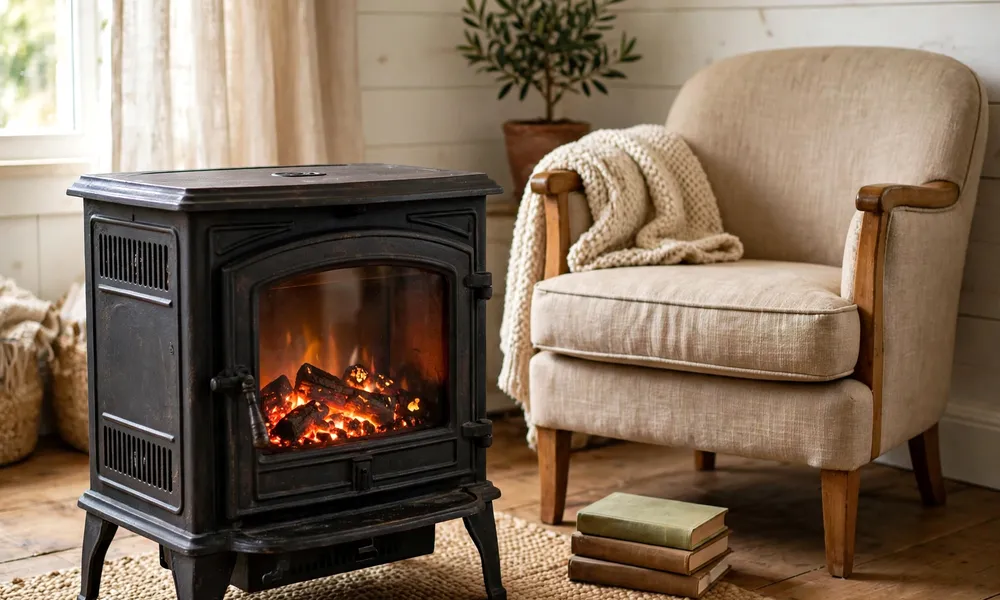
Freestanding stove models look like a small cast-iron wood burner, complete with legs, a door and a little chimney stub, but they plug in and glow. They suit cottages and period rooms, and they are the easiest to move. They take up floor space and need a clear patch of wall behind them.
Media-console models are a television stand with a fireplace built into the front. They suit living rooms where the television and the fire share one wall. The trade-off is commitment: the console is a large piece of furniture, and moving it means moving the fire too.
Electric Fireplaces Compared
| Type | Best for | Heat output | Typical price |
|---|---|---|---|
| Wall-mounted | Modern living rooms and bedrooms | 1,400–1,500W | $250–$700 |
| Insert | Existing fireplace openings | 1,400–1,500W | $200–$600 |
| Freestanding stove | Cottages and period rooms | 1,200–1,500W | $180–$450 |
| Media console | TV walls and living rooms | 1,400–1,500W | $400–$900 |
| Corner | Small rooms and awkward layouts | 1,200–1,400W | $250–$600 |
How Much Heat Do You Actually Need?
Most electric fireplaces produce around 1,400 to 1,500 watts, roughly 4,000 to 5,000 BTUs, about the same as a good portable heater. That warms a bedroom or a small living room comfortably. It will not heat a large open-plan space on its own, and in a big room an electric fireplace works best as a secondary source that takes the edge off while the main heating does the heavy work.
Judge it by the room you will actually use it in. Measure the floor area, note the ceiling height, and think about how cold the room gets: a draughty room with high ceilings needs more heat than a snug, well-insulated one of the same size. If the room is large, two smaller sources of heat beat one fireplace working flat out.
Running costs follow the same maths. A 1,500-watt heater running for three hours uses about 4.5 kilowatt-hours, and the cost depends on your tariff. Flame-only mode costs almost nothing, since it runs only the LEDs. Electric is often cheaper overall than gas once you include the lower purchase price and no installation or servicing costs.
Flame Effects: What Looks Real and What Does Not
LED flame effects are the standard: rows of lights project flame shapes onto a back panel, and the best ones vary the brightness and colour so the flames seem to move. They look convincing from across a room, especially in the evening. Up close, the flames are clearly a projection, and the same pattern can start to look repetitive.
Water-vapour flame effects use a fine mist lit from below, and they look the most real of all, because the mist actually moves like smoke and flame. They suit anyone who will sit close to the fire and watch it. The trade-off is upkeep: the water tank needs refilling, and the mist unit needs occasional cleaning.
Reflected-light effects sit between the two: a rotating drum throws moving light onto a screen, giving a softer flame than a fixed LED strip. Whichever effect you choose, look for adjustable flame brightness and colour, because a fire that is too bright in a dark room looks harsh.

Size, Placement and the Socket Question
Size is the decision most buyers get wrong after heat, and it is almost entirely about proportion. A fireplace that is too wide for the wall dominates the room; one that is too narrow looks lost. As a rule, the fireplace should span roughly two-thirds of the width of the wall or the furniture beneath it, and its centre should sit at about eye level from the sofa.
Placement has a practical side too. The fireplace needs a socket within reach of its cable, and that socket should not be shared with a tumble dryer, a kettle or another heavy appliance. Give it a socket of its own and never run it from a long extension lead. Keep curtains at least a metre away, and leave the vents clear: a blocked heater runs hotter and lasts less long.
For inserts, measure the opening three ways: width at the top and the bottom, since old openings are rarely square, height from the hearth to the top, and depth. A small gap around the insert is normal and can be filled with a trim kit, but a gap of several centimetres on each side looks unfinished.
The Features Worth Paying For
A thermostat is the single most useful feature, and it is worth paying for. Without one, the heater runs at full power until you switch it off, so the room swings between too hot and too cold. With one, you set a temperature and the fireplace holds it, switching the heater on and off quietly while the flames keep glowing.
A remote control is the second feature that earns its keep, and a sleep timer is the third: a timer that turns the heat off after an hour or two means you can fall asleep in front of the fire. Safety features should be non-negotiable: overheat protection, a cool-touch glass front, and tip-over protection on freestanding models. A child lock on the controls is a small extra that matters in a family home.

Through the Seasons, and Outdoors
An electric fireplace earns its keep in winter, but summer shows off its best trick. In flame-only mode the heater stays off and only the LEDs run, so you get the glow of a fire on a mild spring evening or a cool summer night for almost no electricity at all. In winter, run the heater to take the chill off, then turn it down and let the flames do the rest.
Outdoors is the one place an electric fireplace does not belong: rain, frost and damp will kill it. If the evenings outside need warming, that is a different purchase, and our guide to the best patio heaters for longer evenings outside covers the outdoor options, from freestanding gas heaters for large patios to tabletop models for balconies. Keep the electric fireplace inside, and let the patio heater do the garden.
Your Electric Fireplace Checklist
- Measure the wall or the opening, width, height and depth, before you choose a type.
- Match the heat output to the room: 1,400 to 1,500 watts suits a bedroom or a small living room.
- See the flame effect in person if you can, and check its brightness and colour adjust.
- Choose a model with a proper thermostat, a remote control and a sleep timer.
- Confirm overheat protection, cool-touch glass and tip-over protection.
- Give it a socket of its own, keep the vents clear, and keep curtains at least a metre away.
Electric Fireplace FAQs
Do electric fireplaces actually heat a room?
Yes, within their limits: most put out 1,400 to 1,500 watts, enough for a bedroom or a small living room, but not a large open-plan space on their own.
How much does an electric fireplace cost to run?
A 1,500-watt heater running for three hours uses about 4.5 kilowatt-hours, and the cost depends on your electricity tariff. Flame-only mode costs almost nothing, since it runs only the LEDs.
Can you leave an electric fireplace on overnight?
It is safer than a real fire, but use the sleep timer so the heat switches off after an hour or two. Keep the vents clear, give it a socket of its own, and never run it from a long extension lead.
Do electric fireplaces need a chimney or a vent?
No. They need only a socket and a flat wall. There is no flue, no gas line, no combustion and no fumes, so they suit almost any room.
Which flame effect looks the most realistic?
Water-vapour mist looks the most real up close, because the mist actually moves like flame and smoke. LED effects are the standard and look convincing from across a room, especially in the evening, and they need no water tank or cleaning.
Wall-mounted or insert: which should I choose?
Choose wall-mounted for a modern room with a flat wall and no existing fireplace, and insert for a home with a redundant fireplace opening or chimney breast. The insert looks more traditional; the wall-mounted model is easier to fit.
Bottom Line
The best electric fireplace is the one that fits the room it will live in: the right type for the wall, the right size for the space, a flame effect that looks real from the sofa, and a thermostat that holds the room steady. Buy for the room and the glow, not the headline wattage, give it a socket of its own, and it will warm the evenings and light the room for years.


