The best electric scooters for kids balance fun with real safety. A good kids scooter is not a shrunken adult scooter: it has a lower top speed, a smaller deck, a lighter frame, and a throttle a child can control without sudden jumps. When those pieces line up, a scooter becomes a confident way for a child to ride to a friend’s house or cruise around the park.
Choosing well matters because models that look alike can differ sharply in braking, stability, range, and weight limit. A scooter too fast for a six-year-old can suit a twelve-year-old, while a model built for a teenager can feel heavy in younger hands. Age, height, weight, and where it will be ridden should shape the choice far more than colour.
This guide compares the strongest kids electric scooters for 2026. Every pick is judged on what matters for young riders: a sensible top speed, reliable brakes, a sturdy deck, a battery that lasts a real outing, and a build that handles bumps and kerbs.
Key takeaways
- Match the scooter to the rider’s age, height, and weight, not just the age range on the box.
- For most children under ten, a top speed of 8 to 10 mph is plenty, and slower is safer while they learn.
- Look for two ways to stop, such as a hand brake plus a foot brake, and test both before the first ride.
- A helmet is essential on every ride, and knee and elbow pads are worth it while a child is learning.
- Check the real range, not the headline figure, because hills shorten it.

What makes a great electric scooter for kids
Speed control comes first. Most children do not need to go fast to have fun, and a scooter capped at around 8 to 10 mph feels exciting without becoming hard to control. Some models offer a slower learning mode and a faster standard mode, so a child builds confidence gently and moves up only when steering and braking are steady.
Stability and braking come next. A wide, low deck gives a child room for both feet, while larger wheels roll more smoothly over cracks and stones. The safest scooters give two ways to stop, usually a hand brake and a foot brake, which is a genuine safety net when a child panics.
Weight, size, and battery decide whether the scooter works day to day. A model under 20 pounds is easy to carry or lift into a car boot, while a 30-pound scooter can be a struggle for a younger rider. Folding handlebars help with storage, and an adjustable stem lets the scooter grow with the child. Expect about two-thirds of the headline range in normal use, and half on hilly routes. A range of 5 to 8 miles is plenty.
Best electric scooters for kids 2026 compared
The table below gives a quick side-by-side view of the leading models before the detailed reviews.
| Scooter | Best for | Top speed | Range | Max rider weight |
|---|---|---|---|---|
| Razor Power Core E90 | First scooter, ages 8 and up | 10 mph | Up to 10 miles | 120 lb |
| Segway Ninebot ZING E8 | Younger riders, ages 6 and up | 8.7 mph | Up to 6 miles | 110 lb |
| Segway Ninebot ZING C8 | Smallest riders, ages 6 and up | 10 mph | Up to 6 miles | 110 lb |
| Razor E100 | Everyday riding, ages 8 and up | 10 mph | Up to 10 miles | 120 lb |
| Gotrax GKS | Lightweight pick, ages 6 and up | 7.5 mph | Up to 4 miles | 110 lb |
| Razor E300 | Older kids and teens | 15 mph | Up to 10 miles | 220 lb |
The best electric scooters for kids in 2026
Razor Power Core E90: best first scooter
The Razor Power Core E90 is the safest starting point for most families, thanks to a simple, forgiving design. Its top speed of 10 mph feels lively without being frightening, and the throttle responds smoothly rather than surging forward. The hand brake plus rear fender brake give two ways to stop, and the range of up to 10 miles means several short outings between charges. At around 22 pounds it is light enough for most eight-year-olds, and at 120 to 160 dollars it is one of the best-value picks here.
Segway Ninebot ZING E8: best for younger riders
The Segway Ninebot ZING E8 is built for children aged six and up, and it shows in every detail. Its top speed of 8.7 mph is gentle enough for a first electric scooter, and its three riding modes let a child start in Safe mode and step up only when ready. The frame is light at 17 pounds and the deck is low for balance. Range is up to 6 miles, enough for park laps and short trips. It costs 200 to 250 dollars, but the speed modes and light weight justify the price.
Segway Ninebot ZING C8: best for smallest riders
The Segway Ninebot ZING C8 is the smallest scooter in this guide, and that is exactly its strength. Designed for children as young as six, it has a shorter deck, lower handlebars, and a lighter frame than the E8, so smaller riders can steer and balance without stretching. Its top speed is 10 mph in its fastest mode, but the slower modes keep it gentle while a child learns. Range is up to 6 miles, and at around 18 pounds it is easy to carry and store. It suits families who want the best fit now, at around 180 to 230 dollars, though children outgrow it sooner.
Razor E100: best everyday scooter
The Razor E100 has been a favourite for years: a sturdy scooter with a top speed of 10 mph, a range of up to 10 miles, and a kick-start motor that teaches children to push off before the throttle engages. That kick-start habit is a quiet safety feature, because the scooter never lurches away from a standstill. The E100 suits children aged eight and up who want a scooter for daily use. At around 26 pounds it is heavier than the Segway models, but on the move it feels planted and stable. Prices usually sit around 130 to 180 dollars. Families weighing a scooter against two wheels can compare options in our guide to the best electric bikes for kids.
Gotrax GKS: best lightweight scooter
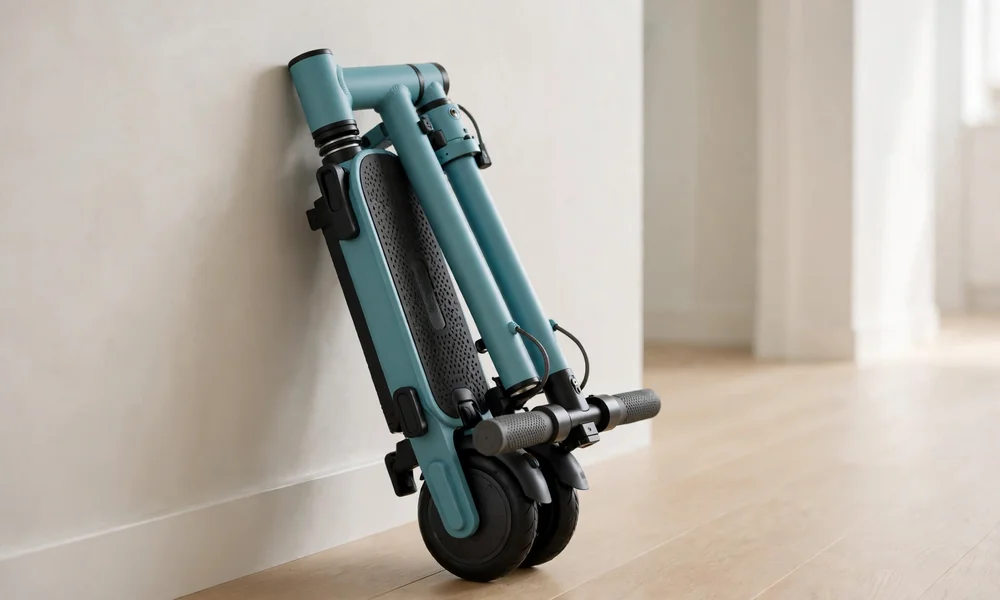
The Gotrax GKS is the lightest scooter in this guide, and for many families that matters more than top speed. Weighing around 18 pounds, it is easy for a child to pick up, carry upstairs, or lift into a car. Its top speed of 7.5 mph is the slowest here, which makes it a good choice for cautious riders aged six to nine who are still building confidence. Its range of up to 4 miles suits short rides around the home and park. The solid tyres mean no punctures, and the folding stem makes storage easy. At around 150 to 200 dollars it is a fair price for a light, simple scooter.
Razor E300: best for older kids and teens
The Razor E300 is the right pick when the rider has outgrown the smaller scooters but is not ready for an adult model. Its top speed of 15 mph is noticeably faster than the others here, so it suits confident riders aged thirteen and up who already brake and steer well. The maximum rider weight of 220 pounds means it will last through the teenage years. That extra speed is also the reason to be careful: the E300 needs a rider who respects traffic, wears a helmet every time, and practises stopping before riding anywhere busy. Treat it as a step up, not a first scooter. If the rider’s usual routes are quiet, it is excellent value at 250 to 300 dollars, and it bridges the gap to the best electric scooters for adults when the time comes.
Before you buy checklist
- Check the rider’s height and weight against the scooter’s limits, not just the age on the box.
- Confirm the top speed and look for a slower learning mode for new riders.
- Test both brakes, and make sure small hands can reach the hand brake easily.
- Measure where the scooter will be stored, and check that it folds if space is tight.
- Ask about the real range on hills and the time a full charge takes.
- Buy a helmet at the same time, and check that it fits properly before the first ride.
Safety rules every young rider should know
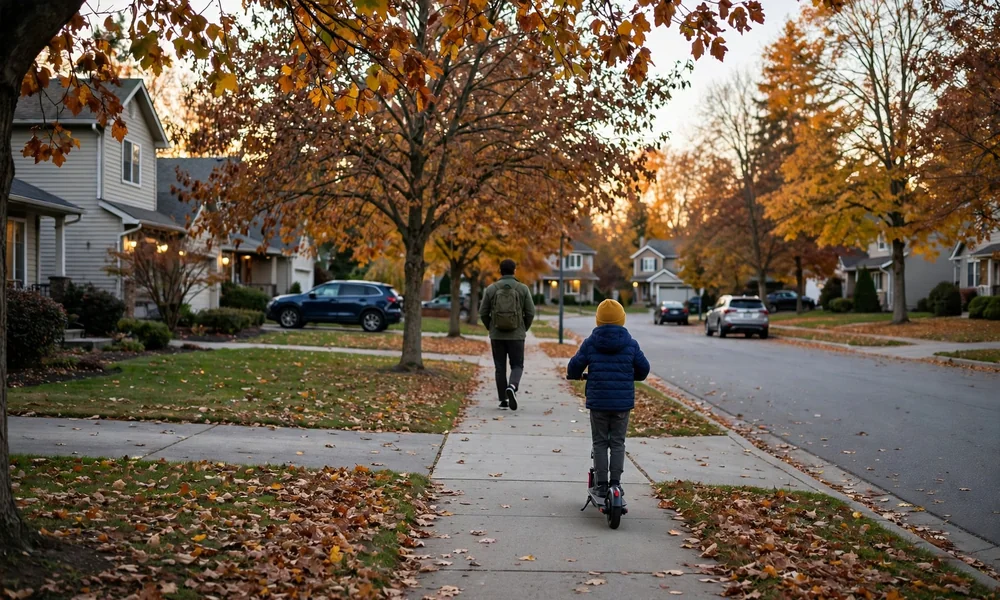
Safety starts before the scooter moves. A helmet should be worn on every ride, sitting level on the head with the strap snug under the chin. Knee and elbow pads are worth wearing while a child is learning, and closed-toe shoes protect feet and help with braking. A well-fitting helmet makes the biggest single difference, and our roundup of the best cycling helmets explains how to choose one a child will actually wear.
First rides should happen somewhere quiet and flat, such as an empty car park or a wide park path, with an adult nearby. Practise starting, steering, and stopping smoothly before moving on to busier places. Teach the child to look ahead, to slow down at corners, and to give way to people on foot. Most children should not ride on roads. Never ride at night without lights, avoid wet surfaces, and charge the battery indoors, away from bedding and exits.
Frequently asked questions
What age is best for a first electric scooter?
Most children are ready between six and eight, depending on balance and coordination. Choose a model under 10 mph with a slower learning mode. Children under six are usually better off with a manual kick scooter.
How fast should a kids electric scooter go?
For children under ten, 8 to 10 mph is the right range, and slower is better while they learn. Older children and teenagers can handle 12 to 15 mph in quiet places. Speed matters less than control, so a scooter with a slower mode is more useful than a fast one.
Are electric scooters safe for kids?
They can be safe when the scooter matches the rider and the basics are followed: a helmet on every ride, a suitable top speed, working brakes, and an adult supervising early rides. Most injuries come from falls at speed or riding somewhere unsuitable, both avoidable with the right model and habits.
How long does a kids electric scooter battery last?
Most kids scooters run for 40 to 90 minutes, covering roughly 4 to 10 miles depending on the model, the rider’s weight, and the terrain. Expect less than the headline range on hills. A full charge usually takes three to five hours.
Can a kids electric scooter be used in the rain?
Light rain is usually fine for a short ride home, but heavy rain and puddles are best avoided. Water can damage the battery and motor, and wet surfaces make braking much less effective. If the scooter gets wet, dry it off and let it dry fully before charging.
What should I do if my child outgrows their scooter?
First check whether the handlebar height can be raised and whether the weight limit still has room to spare, because many scooters last an extra year that way. If it is genuinely too small or too slow, pass it on and move up to a larger kids model or an adult scooter.
The bottom line
The best electric scooters for kids in 2026 are the ones that fit the rider, not the ones with the biggest numbers on the box. For most families, the Razor Power Core E90 or the Segway Ninebot ZING E8 is the right place to start, with the Gotrax GKS as the lightest option and the Razor E300 waiting for confident older riders. Choose a sensible top speed, check the brakes, buy a helmet that fits, and let your child learn somewhere quiet.