Epsom salts vs magnesium flakes is the question that decides whether the bag you buy actually does what you bought it for. Both are white crystals you dissolve in warm water, both are sold for tired muscles and better sleep, and both cost very little per soak. Yet they are not the same salt, and the cheap bag is not always the good value it looks like.
This guide explains what Epsom salt really is, how it differs from magnesium flakes, and how to choose a bag by grade, grain and price per soak. It covers the honest science, the amounts that work, and the mistakes that waste a good bag.
Key Takeaways
- Epsom salt is magnesium sulphate, while magnesium flakes are magnesium chloride, and the two dissolve and cost differently.
- Buy USP or pharmaceutical grade for bathing; agricultural and technical grades can carry impurities that have no place on skin.
- Fine grain dissolves fastest and suits foot soaks, coarse grain suits long baths, and neither is better in itself.
- A large plain bag is the cheapest way to soak regularly; small scented bags cost several times more for the same salt.
- Warm water does most of the work, the evidence for magnesium passing through skin is mixed, and twenty minutes is enough.
What Epsom Salt Actually Is
Epsom salt is magnesium sulphate, a mineral compound first found in the spring waters of Epsom in England in the seventeenth century. It is not table salt: table salt is sodium chloride, and Epsom salt contains no sodium. The crystals are white, odourless and bitter to taste, and they dissolve easily in warm water, which is why they have been sold as a bath remedy for three hundred years.
Magnesium flakes look similar, and that is where the confusion starts. Flakes are magnesium chloride, the same family of salt found in Dead Sea salt, pressed into flat, snow-like flakes rather than grains. They dissolve more slowly, leave the water feeling slightly silkier, and usually cost more per bath. They are two different salts, and the right one depends on what you want the soak to do. Our guide to bath salts compares Epsom salt with Himalayan, Dead Sea and sea salt blends side by side.
The magnesium in both salts is the reason people reach for them after exercise or a long day on their feet: magnesium helps muscles relax, and it plays a part in sleep and nerve signalling. The honest science is mixed on how much magnesium actually passes through the skin during a soak. What is not in doubt is that a warm soak relaxes tired muscles, that warm water followed by a drop in temperature helps you fall asleep, and that a large bag of Epsom salt costs very little per bath. Buy it for the soak, not for a miracle.
Epsom Salts vs Magnesium Flakes Compared
The two salts differ in five ways that matter when you are standing in the shop. The table below compares them side by side.
| Feature | Epsom Salts | Magnesium Flakes |
|---|---|---|
| Chemical salt | Magnesium sulphate | Magnesium chloride |
| Crystal shape | Small grains | Flat flakes |
| Dissolving speed | Fast | Slower |
| Feel on skin | Clean, no residue | Slightly silky |
| Price per bath | Low | Medium to high |
| Best for | Everyday baths | Sensitive skin |
If you soak often, Epsom salt is the sensible everyday buy: it dissolves fast, it costs the least per bath, and a plain bag does the job without scent or colour. If your skin is dry or sensitive, flakes are worth trying as a treat, because the water feels softer. The mistake is paying flake prices for what is really Epsom salt in a prettier bag, so check the ingredients before you pay.

How to Choose the Best Epsom Salts
Start with the grade, the one thing you cannot see. Epsom salt is sold in three grades, and only one belongs in your bath. USP grade, also sold as pharmaceutical or food grade, is purified for use on the body. Agricultural grade is made for soil and can carry impurities, and technical grade is made for industry, not bathing. A good bag says USP, pharmaceutical or food grade on the front and lists magnesium sulphate as the only ingredient. If the grade is not stated, put it back.
Grain size is simpler than the labels make it sound. Fine grain dissolves fastest, which suits a foot soak in a shallow basin. Coarse grain dissolves more slowly, which suits a long bath. Medium grain is the everyday compromise and the right first buy if you only want one bag. Grain size changes nothing about what the salt does, only how fast it disappears.
Scented or plain is a matter of taste and skin. Plain Epsom salt has no scent, which suits sensitive skin and anyone who adds their own oils. Scented blends mix the salt with fragrance oils, usually lavender or eucalyptus. The catch is price: a scented bag often costs two or three times as much per bath as a plain bag of the same salt, and the scent is the only difference. If you like lavender, buy a plain bag and add a few drops of oil yourself.
Pack size decides the price per soak more than any other choice. A small bag of 500 grams lasts about five baths and is the most expensive way to buy Epsom salt, while a bag of two or five kilograms costs far less per bath. Work it out before you pay: divide the price by the number of baths in the bag, using half a cup to a cup per bath, and compare that figure, not the price on the shelf. A resealable bag matters too, because Epsom salt pulls moisture from the air and sets into a hard lump, so if the bag does not reseal, tip the salt into a jar with a tight lid.
How Much Epsom Salt to Use, and How to Use It
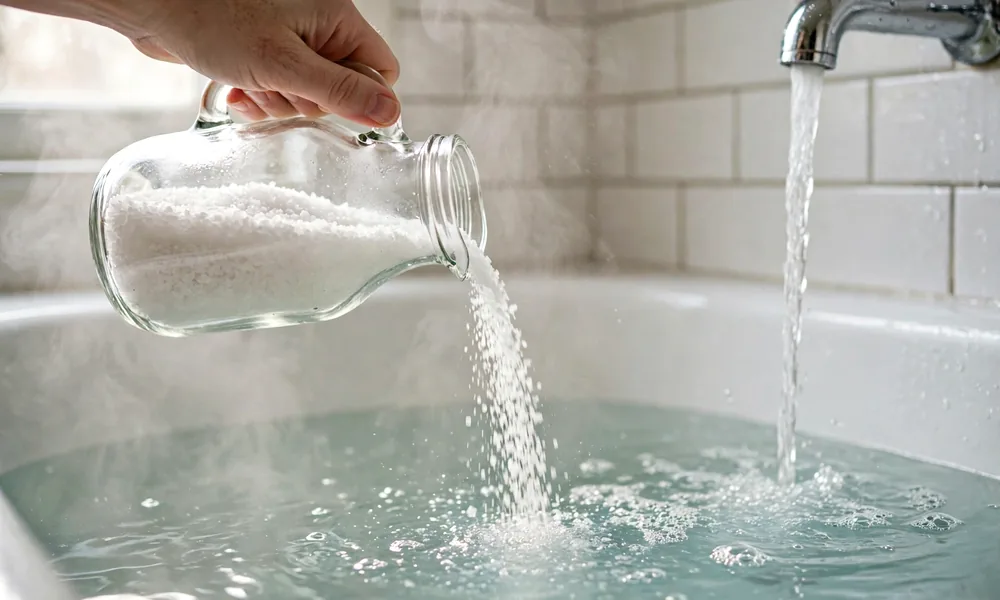
For a full bath, use half a cup to a cup of Epsom salt, roughly 100 to 200 grams, added while the water is still running so the flow dissolves it. Give the water a swirl to check that no gritty crystals are sitting on the bottom of the tub. Run the bath warm, not hot, about body temperature or a little above. Water that is too hot dries the skin out and leaves you light-headed. Soak for fifteen to twenty minutes: long enough for the warmth to do its work, and short enough that your skin does not dry out.
When you climb out, rinse off briefly with plain water, pat dry, and moisturise while the skin is still slightly damp. An evening soak works best for sleep, because the drop in temperature when you get out mimics the natural cooling that helps you fall asleep. For a foot soak, use half a cup in a basin of warm water, deep enough to cover your feet to the ankles, and soak for fifteen to twenty minutes. Our guide to foot soaks covers the full routine. Dry your feet properly afterwards, including between the toes.
Epsom salt has uses beyond the bath, and they are the reason a large bag earns its place. A warm compress, a spoonful dissolved in warm water with a cloth soaked in it, suits a sore muscle or a stiff joint. Mixed with a little oil, the crystals make a simple body scrub for rough elbows and heels, though it is too harsh for the face. In the garden, a spoonful dissolved in water is a long-standing feed for tomatoes and roses. Keep the uses separate: a scrub needs fine grain, and the garden is the one place where agricultural grade is fine.

Mistakes That Waste a Good Bag of Epsom Salt
The first mistake is buying the wrong grade. Agricultural Epsom salt is sold in garden centres in large cheap bags and looks identical to the bathing kind, but it is not purified for skin, so save it for the tomatoes. The second mistake is paying for scent: a small scented bag can cost as much as a large plain bag, and the salt inside is the same. The third mistake is using too much: a cup per bath is plenty, and two cups leaves a gritty film on the tub and dries the skin out.
The fourth mistake is storing it badly: a bag left open in a steamy bathroom sets into a solid lump within weeks, so keep it sealed and dry, in a jar with a tight lid if the bag does not reseal. The fifth mistake is soaking too hot and too long: very hot water and hour-long soaks dry the skin, make feet swell, and leave you dizzy, and they do nothing extra for tired muscles. The sixth mistake is expecting Epsom salt to fix a medical problem. It soothes tired muscles and helps you unwind, but it does not treat cracked skin, infections, or circulation problems, and it is not a substitute for magnesium in your diet. If your muscles cramp often or your sleep is poor for weeks, see a doctor instead of soaking longer. To close a magnesium gap properly, a supplement is the reliable route, and our guide to the best magnesium explains which form matches which goal.
Your Epsom Salts Checklist
- Check the grade first: buy USP or pharmaceutical grade for bathing, and save agricultural grade for the garden.
- Read the ingredients: the bag should list magnesium sulphate only, unless it is a scented blend that says so plainly.
- Pick the grain for the use: fine for foot soaks, coarse for long baths, medium if you only want one bag.
- Work out the price per bath and buy the large plain bag if you soak weekly.
- Store it sealed and dry in a jar with a tight lid, so it does not set into a hard lump.
- Soak warm for fifteen to twenty minutes, rinse, moisturise, and skip it if you have broken skin.
Frequently Asked Questions
Are Epsom salts the same as bath salts?
No. Epsom salt is one type of bath salt, made of magnesium sulphate. Bath salts is the general name for a family that also includes Himalayan, Dead Sea and sea salt blends. Epsom salt is the cheapest and the best value for tired muscles.
How much Epsom salt should I put in a bath?
Half a cup to a cup, added while the water is still running. More salt does not help more, so stick to a cup at most.
Can I use Epsom salt in a foot soak?
Yes, it is the classic foot soak salt. Use half a cup in a basin of warm water, soak for fifteen to twenty minutes, then dry your feet properly, including between the toes, and moisturise. Skip it if you have open cuts.
Do Epsom salts really help tired muscles?
A warm Epsom soak feels good on aching muscles, and warm water relaxes tired muscles on its own. The evidence for magnesium passing through the skin is mixed, so buy Epsom salt for the soak, not for a guaranteed magnesium boost.
What is the difference between Epsom salts and magnesium flakes?
Epsom salt is magnesium sulphate in small grains, which dissolve fast and cost the least per bath. Magnesium flakes are magnesium chloride in flat flakes, which dissolve more slowly, leave the water feeling silkier, and cost more. Flakes suit sensitive skin.
Can I use Epsom salt every day?
Yes, if your skin is healthy and you keep the water warm rather than hot and the soak to twenty minutes. Moisturise afterwards, because daily soaks can dry the skin.
The Bottom Line
The best Epsom salt is a plain USP-grade bag in the grain that suits your soak, bought large enough that each bath costs a few pence. Choose flakes only if your skin is sensitive. Half a cup, warm water, twenty minutes, then rinse and moisturise.