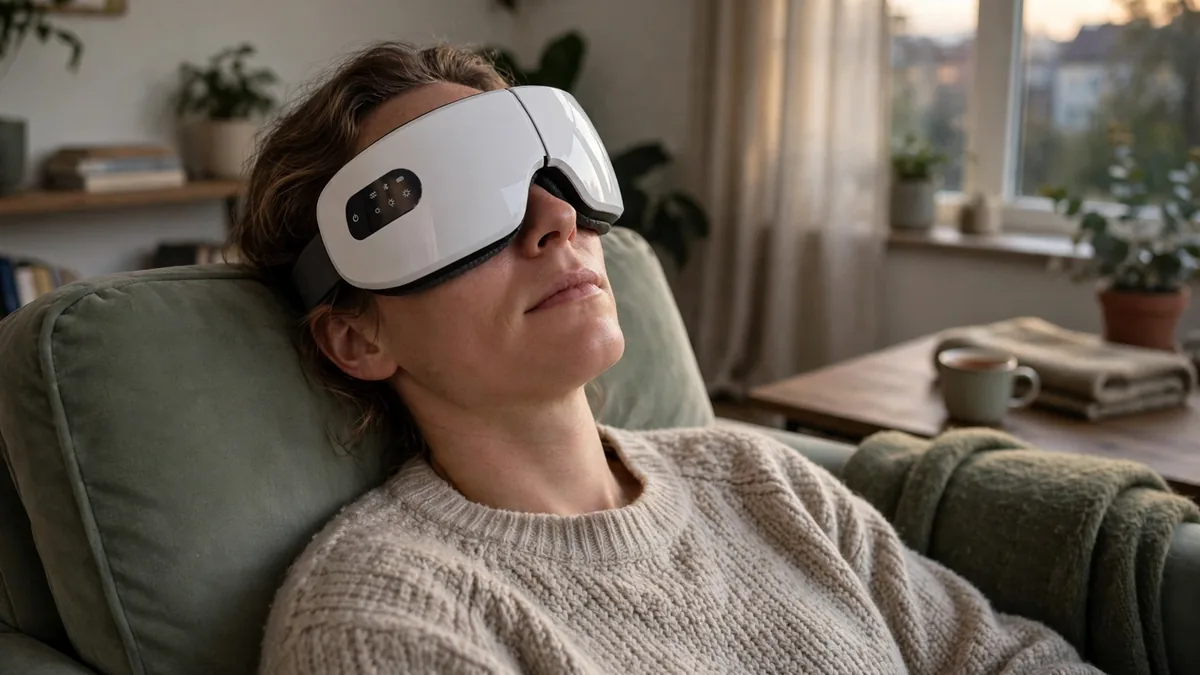
How do you choose an eye massager that actually helps, when every one of them promises the same thing? Tired eyes are a modern complaint: hours of screens, dry office air, poor sleep and long commutes leave eyes feeling strained, heavy and dry by evening. An eye massager is a small device that sits over the eyes and uses heat, gentle air pressure, vibration or a mix of all three to relax the muscles around the eyes and give you ten quiet minutes with your eyes closed. The best ones genuinely help tired eyes feel lighter.
The difference is in the details: how the pressure is delivered, how hot it gets, how it fits your face, how loud it is, and whether you can actually relax while wearing it. This guide explains how eye massagers work, compares the main types, and shows how to pick one that eases tired eyes safely.
Key Takeaways
- An eye massager works by relaxing the muscles around the eyes with heat, air pressure or vibration, and it helps tired, strained eyes, not eye disease.
- Heat is the most useful feature for dry, screen-tired eyes, while air compression suits tension and headaches around the eyes.
- Fit matters more than features: a mask that presses on the eyeballs or leaks light is uncomfortable no matter how many modes it has.
- Never use an eye massager if you have an eye infection, recent eye surgery, glaucoma or an eye injury, and ask a doctor first if you are unsure.
- Ten to fifteen minutes a day is enough, and a rechargeable mask with a washable cover and a quiet motor is the one you will keep using.

How an Eye Massager Actually Works
Your eyes get tired because the muscles that focus them work all day. Staring at a screen makes you blink less, so the tear film dries out, and the small muscles inside the eye stay locked at one distance for hours. An eye massager breaks that cycle in three ways. Heat, usually between 38 and 42 degrees, warms the eyelids and helps the oil glands along the lash line release oil, which slows tear evaporation and eases dryness. Air compression inflates small airbags around the eyes in a slow rhythm, pressing gently on the temples and brow, which relaxes tension. Vibration adds a light buzzing massage, though it does the least of the three.
None of this fixes your eyesight, and no eye massager should claim to. What a good one does is give your eyes a proper rest: warmth, gentle pressure and ten minutes with your eyes closed, which is more rest than most eyes get all day. If your eyes are red or painful, or your vision changes suddenly, see a doctor.
The Main Types of Eye Massager Compared
Eye massagers come in a few distinct designs, and each one suits a different kind of tired eye. The table below compares them side by side.
| Type | Best For | Heat | Pressure | Price |
|---|---|---|---|---|
| Heated air-compression mask | Dry, screen-tired eyes | Yes | Strong | Medium |
| Heated eye mask, no compression | Dry eyes, bedtime | Yes | None | Low |
| Vibration eye massager | Tension, puffiness | Sometimes | Light | Low |
| Handheld eye wand | Targeted spots, travel | Sometimes | Manual | Low |
| Music and Bluetooth mask | Relaxation, sleep | Yes | Medium | High |
For most people, a heated air-compression mask is the best starting point, combining warmth for dryness with gentle pressure for tension. A heated mask without compression suits anyone who dislikes pressure or wants something simple for bedtime. Vibration massagers and wands are cheaper and more portable but do less for dry eyes, and a Bluetooth mask is worth it only if music helps you relax.
The Best Eye Massagers of 2026
After comparing heat, pressure, fit, noise, battery life and ease of cleaning, five eye massagers stood out for different needs. The picks below are described by type, so you can match them to your eyes and your routine.
1. Best All-Round: The Heated Air-Compression Mask
The best all-round eye massager is a heated mask with air compression, three heat levels, adjustable pressure and a fifteen-minute auto-off timer. The airbags inflate in a slow wave around the temples and brow, never pressing directly on the eyeballs, and the heat warms the eyelids enough to ease dryness without feeling hot. It folds flat for travel, charges by USB, and runs quietly enough to use in an office or on a train. Look for a washable inner cover and an easily adjusted strap. This is the one to buy first.
2. Best for Dry Eyes: The Gentle Heated Mask
If dryness is your main problem, heat matters more than pressure. The best heated mask for dry eyes holds a steady, gentle warmth for a full fifteen minutes, with no airbags squeezing your face, and it is light enough to wear lying down. The warmth helps the oil glands in your eyelids release oil, which keeps tears from evaporating so fast, and many people find their eyes feel comfortable for hours afterwards. Use it once in the evening, after screens are off. Avoid masks hotter than about 42 degrees, because too much heat irritates the eyes.

3. Best for Tension and Headaches: The Air-Compression Mask
Some tired eyes come with tension: a tight feeling around the brow, temples that ache after a long day, and the start of a headache behind the eyes. The best mask for that is one with strong, rhythmic air compression and a vibration mode, because the pulsing pressure relaxes the muscles around the eyes the way a hand massage relaxes a stiff neck. Use the lowest pressure first, and never use a massager during a migraine. If headaches are frequent, our guide to the best neck massagers of 2026 covers the devices that ease neck tension.
4. Best for Travel: The Folding Handheld Wand
A full mask is hard to carry, and a handheld wand is the best travel option. The best wands are small, rechargeable and quiet, with a warm metal tip that you glide slowly around the eye socket, never on the eyeball itself. They suit targeted spots, such as a sore temple or a puffy under-eye, and they take up no more room than a toothbrush. A wand is a supplement to a mask, not a replacement for one.
5. Best for Relaxation: The Bluetooth Music Mask
If you struggle to switch off, a mask with built-in Bluetooth speakers is the best relaxation pick. The best ones play soft music or white noise through small speakers near your ears, while heat and gentle compression work on your eyes, and the combination helps many people fall asleep faster. Check the battery life, because music drains it faster, and check the speakers sit flat. Our guide to the best massage chairs of 2026 covers chairs that pair well with an evening eye massage.
How to Use an Eye Massager Safely
Safety comes before comfort, because the eyes are delicate. Never use an eye massager if you have an eye infection, a stye, recent eye surgery, glaucoma, a detached retina or any eye injury, and ask your doctor first if you have diabetes, high eye pressure or any eye condition you are being treated for. Remove contact lenses and eye makeup before every session. Start on the lowest heat and the lowest pressure, and use it for ten minutes, not thirty: longer sessions do not help more, and they dry the eyes out again.
Fit is the part most people get wrong. The mask should sit on the brow and cheekbones, with the airbags pressing around the eyes, never directly on the eyeballs. If you feel pressure on the eyeballs themselves, loosen the strap or choose a different mask, because pressing on the eyeball is uncomfortable and, for people with eye conditions, unsafe. The mask should block light completely and not slide down your nose. Try it on before the first full session, and sit somewhere comfortable.

Mistakes to Avoid With Eye Massagers
The most common mistake is buying the cheapest mask and expecting it to work: cheap masks often have uneven heat, airbags that inflate too hard, and straps that do not adjust, so they hurt instead of helping. The second mistake is using the highest heat and pressure from day one, which irritates the eyes and puts people off the device entirely. The third is using a massager to treat a real eye problem, such as an infection or sudden vision changes, instead of seeing a doctor. The fourth is never cleaning the mask. The fifth is falling asleep with a heated mask on, which is a burn risk if the timer fails. The sixth is expecting a massager to fix eyesight: it eases tired eyes, it does not correct vision, and anyone who promises otherwise is selling, not helping. Our guide to the best foot massagers of 2026 shows how a well-chosen massager earns its place by being used daily, not by promising miracles.
Eye Massager Buying Checklist
- Choose heat with at least two levels, and check it never goes above about 42 degrees on the highest setting.
- Check the airbags press around the eyes, on the brow and cheekbones, never directly on the eyeballs.
- Try the fit: the strap must adjust, the mask must block light, and it must not slide down your nose.
- Pick a mask with a washable inner cover and a fifteen-minute auto-off timer.
- Check the noise: a loud motor stops you relaxing, so look for a quiet model under about 45 decibels.
- Buy rechargeable with USB charging, and expect at least four full sessions per charge.
Frequently Asked Questions
Do eye massagers really work?
Yes, for tired, strained eyes. Heat eases dryness by helping the oil glands in your eyelids, air compression relaxes the muscles around the eyes, and ten minutes with your eyes closed is genuine rest. They do not fix eyesight, cure eye disease or replace glasses.
Are eye massagers safe?
They are safe for most healthy adults when used as directed: lowest heat and pressure first, ten to fifteen minutes, no contact lenses, and never on the eyeballs themselves. They are not safe if you have an eye infection, recent eye surgery, glaucoma or an eye injury.
How long should I use an eye massager each day?
Ten to fifteen minutes once a day is enough, usually in the evening after screens are off. Longer sessions do not help more, and using it for half an hour can dry the eyes out again.
Can I use an eye massager with contact lenses in?
No. Always remove contact lenses before a session, because heat and pressure can dry the lenses out, move them on the eye, or trap makeup and debris underneath.
Do eye massagers help with dark circles?
They can help slightly, because gentle massage improves blood flow around the eyes and reduces puffiness, which makes dark circles look less obvious. They do not remove dark circles.
Can I fall asleep wearing an eye massager?
You should not try to. Most masks switch off after fifteen minutes for safety, and falling asleep with a heated device on your face is a burn risk if the timer fails. Use the mask to relax, then take it off and sleep normally.
The Bottom Line
The best eye massager is the one you will actually use every evening: a heated air-compression mask that fits your face, presses around the eyes rather than on them, warms gently, runs quietly and switches itself off after fifteen minutes. Start on the lowest settings, remove your contact lenses, keep it clean, and see a doctor if your eyes hurt or your vision changes. Do that, and ten quiet minutes a day is enough to make screen-tired eyes feel human again.