
Eyeglass Cases That Keep Daily Glasses Safe and Scratch-Free in 2026
The best eyeglass cases of 2026 do a quiet job that matters every day: they keep the prescription glasses you live in safe between wears. Everyday glasses are on your face from morning to night, then set down on a nightstand or a desk — and that is when the damage happens. A lens dragged across wood, a frame sat on by accident, a pair dropped into a pocket full of keys: a good case stops all of it. The worst cases look neat in a shop and then quietly fail — a soft pouch that lets the glasses get crushed, or a case too bulky to carry.
Key Takeaways
- A hard shell is the only case that truly protects everyday glasses from crushing in a bag; soft pouches stop dust, but not crushing.
- The lining matters as much as the shell: soft microfibre cleans lenses, a rough lining scratches them.
- Buy a case that fits your frames with room to spare — forcing it shut bends temples and loosens hinges.
- Slim matters for daily carry: a case that fits a jacket pocket is a case you will actually carry.
- Keep a case everywhere your glasses rest — by the bed, at the desk, in the bag — because the unprotected pair is the one that gets scratched.
What an Eyeglass Case Actually Does
An eyeglass case has one job: protect the glasses you depend on when they are not on your face. Sunglasses come out for a walk and go straight back in the case; everyday glasses are worn for sixteen hours a day. Each time they are set down unprotected, the lenses risk a scratch and the frames risk a bend. A case breaks that cycle. It gives the glasses a home, so they are never left lens-down on a table or dropped into a pocket beside keys and coins. The best cases suit that rhythm: they open easily with one hand, close with a clean click, and hold the glasses still so the lenses never touch anything hard. If you also wear sunglasses, our guide to sunglasses cases that actually protect your lenses covers the tougher transport cases, built for bags and beaches.
Hard Shell vs Soft Pouch
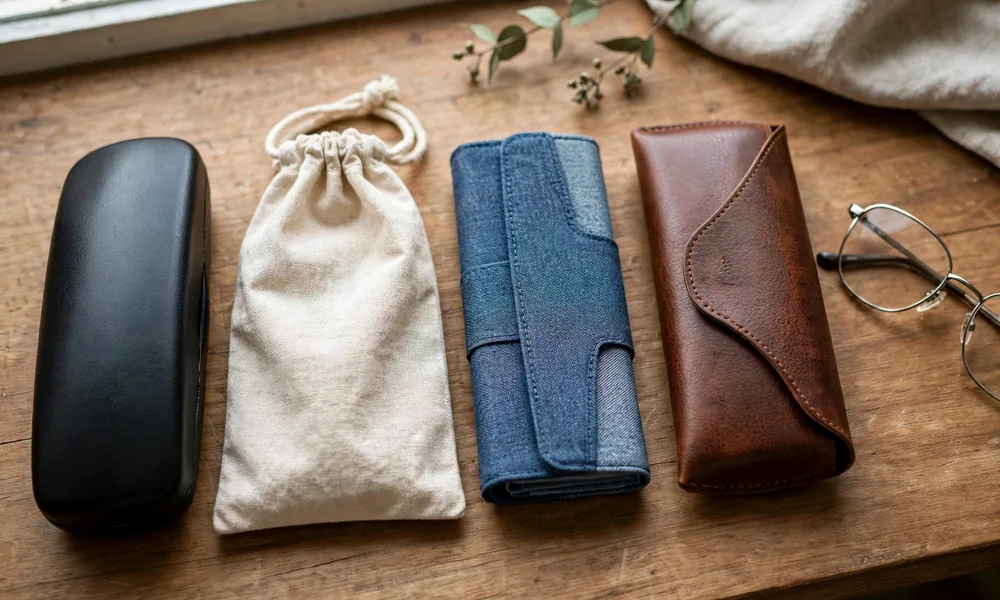
The first choice is the shell. A hard shell case is rigid enough that you can press it between your hands and feel no give at all. It is the only style that protects against crushing: a bag sat on, a pair stepped on in the dark. A soft pouch, usually microfibre or felt, is lighter and flatter, and it stops scratches and dust well. What it cannot do is stop pressure. For most people the right answer is a hard shell for the bag and a soft pouch as a second case for a pocket or drawer.
The Main Types of Eyeglass Case
Hard Shell Clamshell Cases
The clamshell is the classic eyeglass case: two rigid halves joined by a hinge, lined in soft fabric, closing with a clasp or a magnet. It is the safest all-round choice: it protects against scratches and crushing, and opens wide so the glasses slide in without a fight. Look for a firm hinge and a lining firmly attached rather than peeling.
Slim Pocket Cases
Slim pocket cases are built for people who carry their glasses rather than store them. They are flatter and lighter than a clamshell, and they slide into a shirt pocket or small handbag without a bulge. The trade-off is protection: a slim case resists scratches and light knocks, but it will not survive being sat on. That is a fair trade for a second pair, and a poor one for an expensive progressive pair in a crowded bag.
Folding and Flat Cases
Folding cases collapse flat when empty, which makes them the best choice for travel. Folded flat they take up almost no room in a suitcase; opened up they hold a full pair securely. Check the folding mechanism: it should open smoothly and lock firmly, with no wobble. Cheap folding cases wear out at the folds within months. A good folding case is a clever second case, not a replacement for a solid clamshell at home.
Leather Cases
Leather cases are the dressiest option, and the most pleasant to carry. A good leather case — full-grain leather over a rigid core — looks better with age, feels good in the hand, and protects as well as any clamshell. The key phrase is “over a rigid core”: a leather case with no structure inside is just an expensive pouch that will sag and stop protecting the glasses within a year. Check the stitching, that the case holds its shape when empty, and that the lining is soft suede or microfibre rather than rough hide.
Cases With a Cleaning Cloth Pocket
Some cases build in a small pocket for a microfibre cloth. Prescription lenses pick up fingerprints and face oil all day, and a cloth kept in the case is a cloth you actually have when you need it. For more on keeping lenses clear, our guide to the top lens cleaners for cameras and glasses covers sprays, cloths and wipes.
Eyeglass Cases at a Glance
| Case type | Protection | Best for | Watch out for |
|---|---|---|---|
| Hard shell clamshell | High | Everyday glasses, bags, travel | Hinges that loosen and gap |
| Slim pocket case | Medium | Jacket pockets, second pairs | No crush protection when sat on |
| Folding flat case | Medium | Travel, spare pairs, drawers | Folds that wear out and wobble |
| Leather case | Medium–high | Dressier pairs, the office, gifts | Thin leather that sags and loses shape |
| Soft microfibre pouch | Low | Dust protection, desk drawers | No crush protection at all in a bag |
| Case with cloth pocket | High | Daily wearers who clean lenses often | Cloth pressing against the lenses |
What Separates a Good Case From a Pretty One
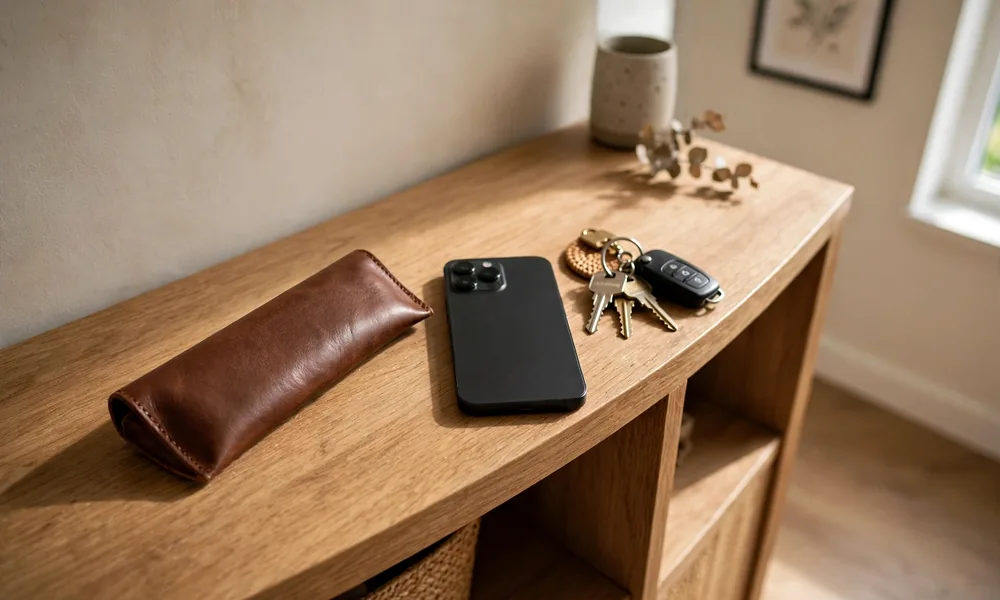
The closure is the part that fails first, and it is the part almost nobody checks before buying. A good closure — a clasp, a magnet or a zip — stays shut when the case is shaken upside down in a bag. A bad one pops open at the slightest knock, and then the glasses slide out onto the keys. When you pick up a case, close it and shake it gently: if it opens, it will open in your bag too. The lining deserves the same scrutiny. A good lining is soft, smooth and firmly attached, so it cleans the lens as the glasses slide in. A bad lining is rough, loose, or thin enough that you can feel the hard shell through it — and a rough lining is worse than no lining at all, because it scratches the coating every time.
The Nightstand Test
The simplest test of an eyeglass case is the nightstand test. Put the glasses in the case, close it, and leave it where you sleep. In the morning the glasses should come out exactly as they went in: lenses clean, frames straight. If the case is hard to open half-asleep, you will stop using it.
Fit: Matching the Case to the Glasses You Own
Most owners buy a case for the pair they wear most, and that is the right instinct — but measure first. A standard prescription frame is about 13 to 14 centimetres wide when folded, and most hard cases are built for exactly that. A wide frame can be 15 centimetres or more, and thick acetate frames need more depth than slim metal ones. The numbers are printed on the inside of the arm: the first is the lens width, and a lens wider than 54 millimetres usually means a frame that needs a larger case. Buy a case that fits your largest pair with room to spare — forcing it shut bends frames and loosens hinges.
One exception is worth knowing about: folding glasses collapse into a smaller shape and need a case built for that folded form. And if you wear reading glasses as well as distance glasses, the two pairs need different cases: reading glasses live in a pocket and suit a slim case, while distance glasses need a proper hard shell. Our guide to reading glasses that do not hurt your eyes covers how to choose the glasses themselves, which decides the case size you need.
Caring for the Case So It Keeps Protecting
A case only protects as long as it is in good shape, and cases wear out quietly. Check the hinge every few months: if the lid wobbles, the case is no longer keeping dust out. Check the lining for wear, because a worn lining exposes hard shell that scratches. Shake the case out once a week — grit inside a case is sandpaper on a lens. Wipe a leather case with a dry cloth and keep it out of direct sunlight. Wash a microfibre lining occasionally with mild soap and air-dry it. Replace a case the moment the closure stops holding.
Checklist: Choosing the Right Eyeglass Case
- Pick a hard shell for your main pair; keep a slim case only as a spare.
- Measure your frames first and buy a case with room to spare.
- Run a fingertip over the lining: suede or microfibre, firmly attached, no rough patches or peeling edges.
- Test the closure in the shop: close it, shake it gently upside down, and make sure it stays shut.
- Check the case fits where it will live: a jacket pocket, a small bag, or the nightstand.
- Keep a microfibre cloth in the case, and wipe the lenses before they go in.

Frequently Asked Questions
Are hard shell cases better than soft pouches for eyeglasses?
Yes, for your main pair. A hard shell protects against crushing, while a soft pouch only stops dust and scratches. A pouch is fine as a second case for a pocket or drawer, but not as the only protection for expensive glasses.
How do I know what size eyeglass case I need?
Measure the folded width of your frames and check the lens width printed on the inside of the arm. A standard frame is about 13 to 14 centimetres wide when folded; a lens wider than 54 millimetres usually means an oversized frame that needs a larger case.
Can I use a sunglasses case for my eyeglasses?
You can, but it is rarely ideal. Sunglasses cases are built larger, for aviators and wraparounds, so everyday frames rattle around inside. An eyeglass case sized for your frames holds them still.
How often should I replace an eyeglass case?
Replace it when the closure stops holding firmly, the hinge wobbles, or the lining wears through to the hard shell. For a daily case, that is usually every one to two years.
Is a leather eyeglass case worth the extra money?
It can be, if the leather covers a rigid core. Full-grain leather over a hard shell looks better with age and protects as well as any clamshell. But a leather case with no structure inside is just an expensive pouch that sags and stops protecting the glasses. Check it holds its shape when empty before you pay.
Should I keep a spare case by the bed?
Yes. Glasses are most often damaged at night, set down on a nightstand or dropped on the floor in the dark. A cheap hard shell by the bed removes the most common risk. One case in the bag, one by the bed and one at the desk covers nearly every moment your glasses are off your face.
The Bottom Line
The best eyeglass cases of 2026 fit your routine: a hard shell that fits your frames with room to spare, a soft lining that cleans rather than scratches, a closure that stays shut, and a size you will actually carry. Spend on the case for your main pair and keep a spare by the bed.


