
A hem comes down on a favourite skirt, a patch lifts on a child’s jeans, and the sewing machine is buried at the back of a cupboard. Fabric glue that holds without stitching in 2026 fixes all of that in minutes, with no needle, no thread and no machine. A good fabric glue bonds cloth to cloth, dries soft and flexible, and survives the washing machine.
Choosing the best fabric glue is not about grabbing the strongest adhesive on the shelf. It is about matching the glue to the fabric and the job, because a glue that holds denim will stiffen silk, and a glue that works on a hem will fail on a stretchy waistband. This guide explains how fabric glue works, compares the main types, and shows you how to use it so the repair holds through wash after wash.
Key Takeaways
- Fabric glue is a flexible textile adhesive, not a general glue: it dries soft, stays flexible, and is made to survive washing.
- Match the glue to the fabric: permanent liquid for cotton and denim, washable formulas for children’s clothes, and flexible formulas for stretch fabrics.
- A thin, even layer beats a thick one: excess glue stiffens the fabric, shows through, and weakens the bond.
- Let the glue cure fully before washing, usually a full day, even if it feels dry to the touch within the hour.
- Fabric glue suits hems, patches, appliqué and no-sew repairs, but it cannot replace stitching on seams that take real strain.
How Fabric Glue Actually Works
Fabric glue is made to do one thing other glues cannot: bond fibres while staying flexible. Most fabric glues are water-based polymers that soak into the weave and cure into a thin, rubbery film that grips the fibres on both sides. Because the film bends with the fabric instead of cracking, the repair feels soft to the touch, while a super-glued repair feels like a hard crust.
Grabbing the wrong glue is the most common way a repair fails. Wood glue is made for wood joints and dries rigid, so on cloth it turns a patch into a stiff board; a guide to wood glue for joints that hold is excellent for furniture and useless for a skirt hem. Super glue dries brittle and cracks on flexible fabric. Epoxy is a two-part gap-filling adhesive for hard materials, far too rigid for textiles. And a glue gun leaves a thick, stiff bead that shows through thin fabric and peels off in the wash. Fabric glue is the only one of the family designed to stay soft, stay invisible and survive laundry, and that is why it earns its own place in the drawer.
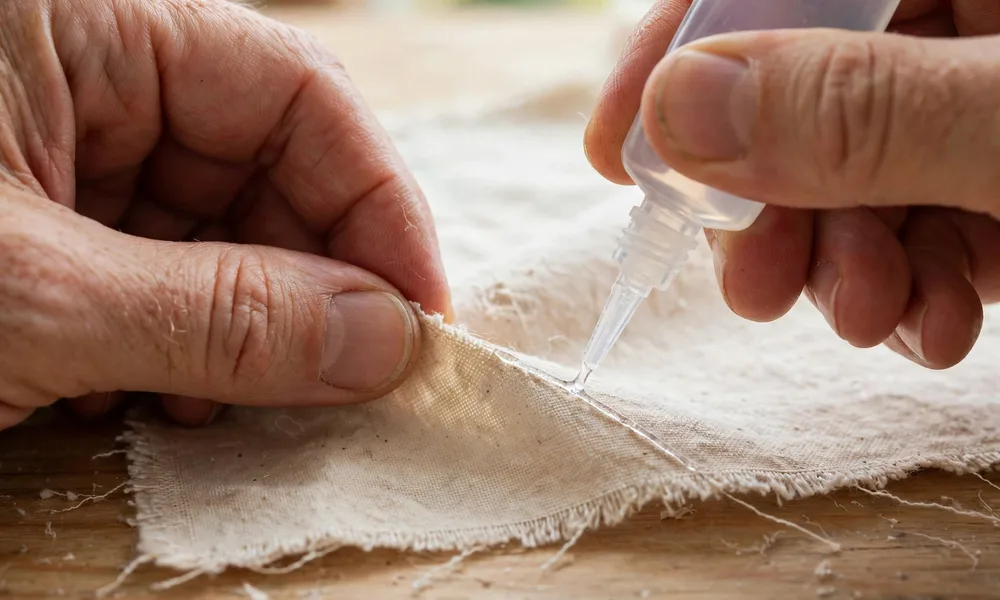
Fabric glue is not magic, and knowing its limits is part of using it well. It holds hems, patches, appliqué, ribbons and trims beautifully, because those jobs ask the glue to hold two flat layers together. It is a poor choice for a seam that takes strain, such as a trouser inseam, where stitching spreads the load. If a garment keeps splitting in the same place, that is a sewing job, and a guide to sewing machines for beginners will serve you better than any bottle.
The Main Types of Fabric Glue
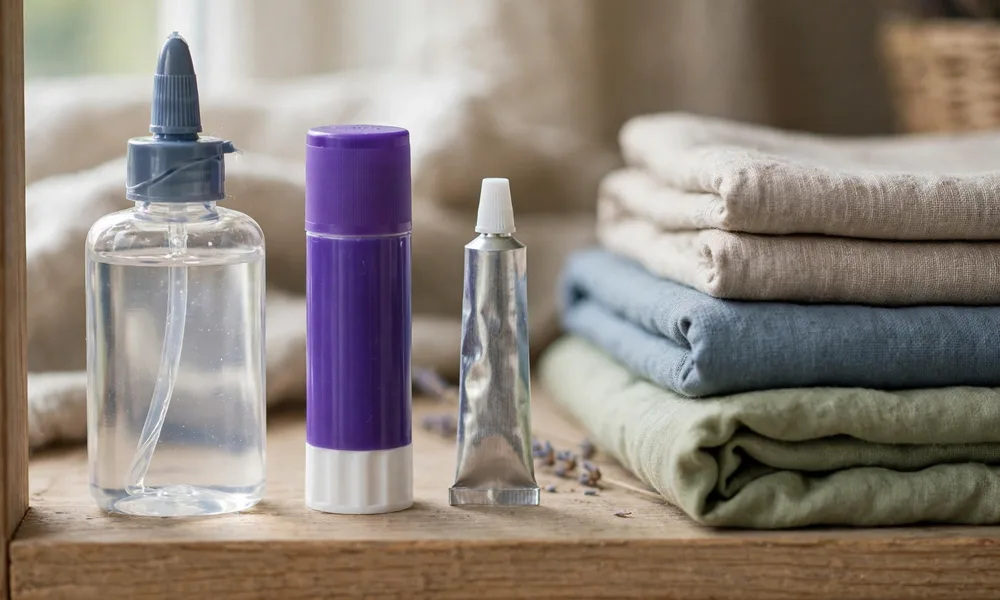
Permanent liquid fabric glue is the workhorse: a bottle with a fine nozzle, applied as a thin white liquid that dries clear, forming a washable, permanent bond on cotton, denim, linen and most synthetics. It is the right choice for hems and patches you want to last, and the type most households should buy first. It needs several hours to set and a full day to cure.
Washable fabric glue is the gentler cousin, designed for children’s clothes, costumes and temporary fixes. It holds well enough for everyday wear and is forgiving if you put it in the wrong place, which makes it a good first bottle for anyone nervous about ruining a garment. It is not the best choice for heavy denim or a hem that takes daily strain.
Sticks, Sprays and Hem Tapes
Fabric glue sticks suit appliqué, small patches and craft work, where you want a thin, controlled layer with no drips. They are clean to use but cover less area per stroke, so they suit small jobs better than long hems. Fabric glue sprays cover a wide area evenly and suit large pieces such as bag linings, but they need ventilation and masking.
There is also a close relative worth knowing about: iron-on hem tape, which is not a glue at all but a strip of heat-activated adhesive that bonds when pressed with an iron. It is fast and strong for straight hems. Between liquid glue for general repairs, a stick for small jobs and tape for straight hems, most households can fix almost anything without a needle.
Fabric Glue Compared
| Glue type | Best for | Sets in | Washproof | Flexibility |
|---|---|---|---|---|
| Permanent liquid | Hems, patches, denim | 1 to 2 hours | Yes, after full cure | Very good |
| Washable liquid | Children’s clothes, costumes | 30 to 60 minutes | Light, washes out over time | Excellent |
| Glue stick | Appliqué, small patches, crafts | 15 to 30 minutes | Yes, for light use | Good |
| Spray adhesive | Large areas, linings, backing | Minutes | Varies by product | Good |
| Iron-on hem tape | Straight hems | Seconds with heat | Yes | Fair |
There is no single best fabric glue, only the best glue for the job in front of you. A permanent liquid is the best all-rounder, and the bottle to buy if you only buy one. Buy for the repairs you actually do, and read the label first: a glue that promises to be washable and one that promises to be permanent are making opposite promises.
How to Use Fabric Glue So It Holds
Start with clean, dry fabric. Wash and dry the garment first, because glue bonds to fibres, not to dust, oil or fabric softener, which leaves a coating that weakens the bond. Check the fit before any glue comes out: once the two sides touch, repositioning is difficult.
Apply a thin, even line along the edge of the repair, not a thick bead down the middle. Less is more, because a thin layer cures faster, stays flexible and does not seep through to the right side of the fabric. Press the layers together firmly, smooth out bubbles from the centre outward, and wipe away squeeze-out with a damp cloth. Then leave it alone and let it cure for a full day before washing or wearing: the glue may feel dry within the hour, but the bond is still forming, and washing it early is the most common reason a repair fails.
For a hem, apply the glue in short sections, folding and pressing as you go. For a patch, glue the edges and a few dots in the centre, press firmly, and leave it flat overnight. For appliqué, a glue stick gives the cleanest edge, with a few drops of liquid glue at the corners. A guide to glue guns that flow smooth without dripping is worth reading if you do a lot of craft work, but for a washable garment repair, fabric glue is the better tool: it stays thin, soft and laundry-proof.

What Fabric Glue Holds, and What It Does Not
Fabric glue holds best on natural fibres and their blends: cotton, linen, denim, canvas and polyester-cotton all bond well, because the glue can grip the weave. It holds patches on jeans, hems on skirts and trousers, appliqué on children’s clothes, and ribbons and trims on costumes and bags.
It struggles on three things. The first is stretch fabric: Lycra, jersey and knitwear move so much that a repair on a waistband will usually lift within weeks. A flexible formula helps, but stitching is the better answer there. The second is very smooth or coated fabric, such as waterproof nylon, where the glue has nothing to grip. The third is anything that takes hard, repeated strain, such as a bag handle or belt loop: glue holds flat layers together, and it cannot do the job of a seam.
Heat is the other limit. Most fabric glues tolerate a normal wash and a low iron, but a very hot dryer can soften the bond. Wash repaired garments inside out on a cool cycle, skip the hottest dryer setting, and iron from the back of the repair. Treated gently, a repair on cotton or denim should last as long as the garment itself.
Mistakes That Make a Repair Fail
The most common mistake is using too much glue. A thick layer dries stiff, shows through thin fabric, and bonds worse than a thin layer, because the outer skin dries while the middle stays wet. A thin, even line is stronger, softer and invisible. The second mistake is washing too soon. Glue that feels dry is not glue that has cured, and a wash within the first day can dissolve a bond that would otherwise have lasted for years.
The third mistake is gluing dirty or softener-coated fabric, which stops the glue gripping the fibres at all. Wash first, skip the softener, and let the fabric dry fully. The fourth mistake is choosing the wrong glue for the fabric: super glue on a shirt, wood glue on a hem, or a hot glue gun on a washable garment all fail because the adhesive was designed for a different job. Super glue shines on hard, rigid materials, not on cloth. Keep each glue in its lane and every repair gets easier.
Fabric Glue Checklist
- Match the glue to the fabric and the job before you open the bottle.
- Wash and dry the fabric first, with no fabric softener on the repair wash.
- Apply a thin, even layer and wipe away squeeze-out straight away.
- Press firmly, smooth out bubbles, and leave the repair flat to cure.
- Wait a full day before washing or wearing the repaired garment.
- Wash inside out on a cool cycle and iron from the back of the repair.
Frequently Asked Questions
Does fabric glue survive the washing machine?
Yes, if it is a permanent fabric glue that has cured fully, usually a full day. Wash inside out on a cool cycle and avoid the hottest dryer setting.
Can fabric glue replace sewing completely?
No. It replaces stitching for hems, patches and trims, but not a seam that takes strain, such as a trouser inseam. Those need thread to spread the load.
How long does fabric glue take to dry?
Most formulas feel dry within an hour, but full cure takes about a day. Do not wash or wear the garment until that day has passed.
Will fabric glue show through thin fabric?
It can, if you use too much. A thin layer dries clear and stays invisible, while a thick layer can darken thin cloth. Test on a hidden scrap first if the fabric is sheer or pale.
Is fabric glue safe for children’s clothes?
Yes, water-based fabric glues are generally safe once cured, and washable formulas are the gentlest choice for children’s clothes. Let the repair cure fully before the garment is worn.
Can I use fabric glue on leather or vinyl?
Not well. Smooth, coated surfaces give the glue little to grip, so the bond is weak and peels. Leather and vinyl need a specialist adhesive made for them, or stitching, rather than ordinary fabric glue.
The Bottom Line
The best fabric glue in 2026 is a permanent liquid that dries soft, clear and flexible, applied thinly to clean fabric and left a full day to cure. Used for hems, patches and trims on cotton, denim and linen, it holds without a single stitch and survives the wash. Keep it away from stretch seams and heavy strain, and a torn hem becomes a ten-minute repair instead of a trip to the tailor.


