A chair that wobbles, a drawer that sags, a table leg that comes loose: almost every failed piece of furniture fails at a joint. Wood glue is the cheapest part of any project and the one that decides whether it lasts a year or a lifetime.
This guide to wood glue for joints that hold in 2026 explains how it works, which type suits which joint, and the clamping and drying habits that turn a bottle of glue into furniture you can trust. It is for home woodworkers building and repairing chairs, tables, shelves and boxes with a few clamps and a brush.
Key Takeaways
- Ordinary PVA is right for most indoor joints: strong, cheap and easy to clean up.
- Glue only works on wood that fits: a gappy joint is weak, no matter how much glue you pour in.
- A thin, even layer beats a thick one.
- Match glue to conditions: polyurethane for damp work, epoxy for gaps, hide glue for repairs you may need to undo.
- Give glue its full cure time before stressing the joint, even if it feels dry.
How Wood Glue Actually Holds
Wood glue soaks into the open fibres on the wood surface and hardens there, locking the pieces together. When a joint is pulled apart, the glue rarely fails; the wood next to the glue line fails, because the joint is stronger than the timber around it.
That explains the one rule that matters more than any brand: glue needs wood to grip. A tight joint gives the glue a huge area of fibre to lock into. A loose joint, where parts rattle or rock, gives it almost nothing, and no glue can fix a gap that big. Dry-fit before you open the bottle: it tells you whether the joint is ready or needs a shim or a fresh cut.

The Main Types of Wood Glue, and When to Use Each
PVA, the familiar yellow or white bottle, is the standard for indoor furniture. It dries in about an hour, reaches full strength in a day, and cleans up with water while wet. Yellow PVA is slightly stronger and more water-resistant than white. Its weakness is water: a standard PVA joint softens if it stays damp, so it belongs indoors.
Polyurethane is the answer for outdoor and damp work. It expands slightly as it cures, helping it grip rougher surfaces, and it is fully waterproof once set. It also sticks to metal and stone, which PVA will not touch. The trade-offs are real: it foams out of the joint and needs trimming, it stains skin, and it needs moisture to cure, so dry wood should be misted first. Wear gloves.
Epoxy is a two-part glue that fills gaps, which no other wood glue does well. Mixed with sawdust, it forms a strong filler that bonds where PVA would fail. It is waterproof and very strong, used for boat repairs and oily woods like teak. The price is time and mess: mixing, a short working window, and a cure that can take a full day. Hide glue, made from animal collagen, reverses with heat and moisture, so a joint glued with it can be taken apart and fixed again, which is why restorers use it on antiques.
Choosing Glue for the Joint in Front of You
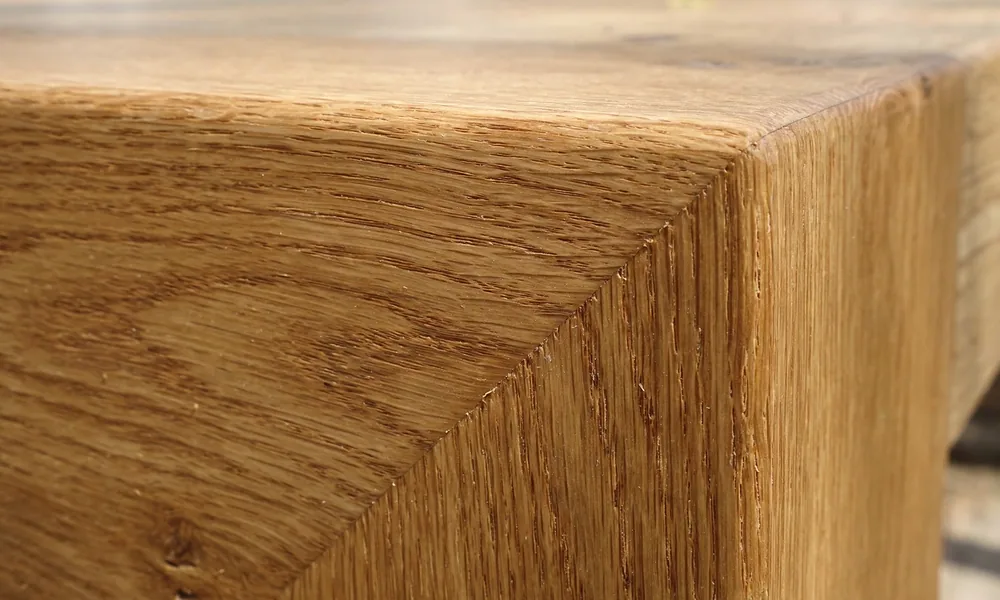
A mortise and tenon joint wants PVA. It fits tightly, the glue has plenty of surface to grip, and the result is stronger than the wood itself. A dowel joint is the same: PVA, a little on the dowel and a little in the hole, and a firm push together. A mitre joint, where two boards meet at 45 degrees, is trickier, because it is mostly end grain, and end grain drinks glue without holding it. Size the joint first: a thin coat, let it soak in, then a second coat and clamp.
End grain is the hardest surface to glue. Wood fibres run lengthways, so the end of a board is a bundle of open straws, and glue soaks straight down them instead of sitting on the surface. Sizing is the answer, and so is a joint that gives the glue more long grain, like a dovetail or a lap joint. If you are cutting those joints, the right saw makes the difference, and our comparison of the best vs worst jigsaws of 2026 covers blades and control. For edge-gluing boards into a wide panel, PVA is again the answer, with a thin coat and evenly spaced clamps. The same care applies to floors, where the wrong adhesive causes gaps and squeaks, as our guide to hardwood vs laminate floors explains.
Wood Glue Compared at a Glance
| Glue type | Best for | Water resistance | Open time |
|---|---|---|---|
| PVA (yellow) | Indoor furniture joints | Moderate | About 10 minutes |
| Polyurethane | Outdoor and damp work | Waterproof | About 20 minutes |
| Epoxy | Gaps and oily woods | Waterproof | 5 to 60 minutes |
| Hide glue | Repairs and antiques | Low | About 5 minutes |
| Cyanoacrylate | Small, quick fixes | Low | Seconds |
Cyanoacrylate, the superglue of the workshop, earns its row for small fixes: a loose veneer edge, a tiny split, a knob that needs holding while the real glue cures. It bonds in seconds, but it is brittle, so it is never the main glue for a structural joint. Open time, the minutes before the glue starts to set, decides whether a complicated glue-up is calm or a panic. For a four-corner frame, PVA’s ten minutes is enough; for an eight-board tabletop, you may want a slower glue or a helper.
Applying Glue So the Joint Holds
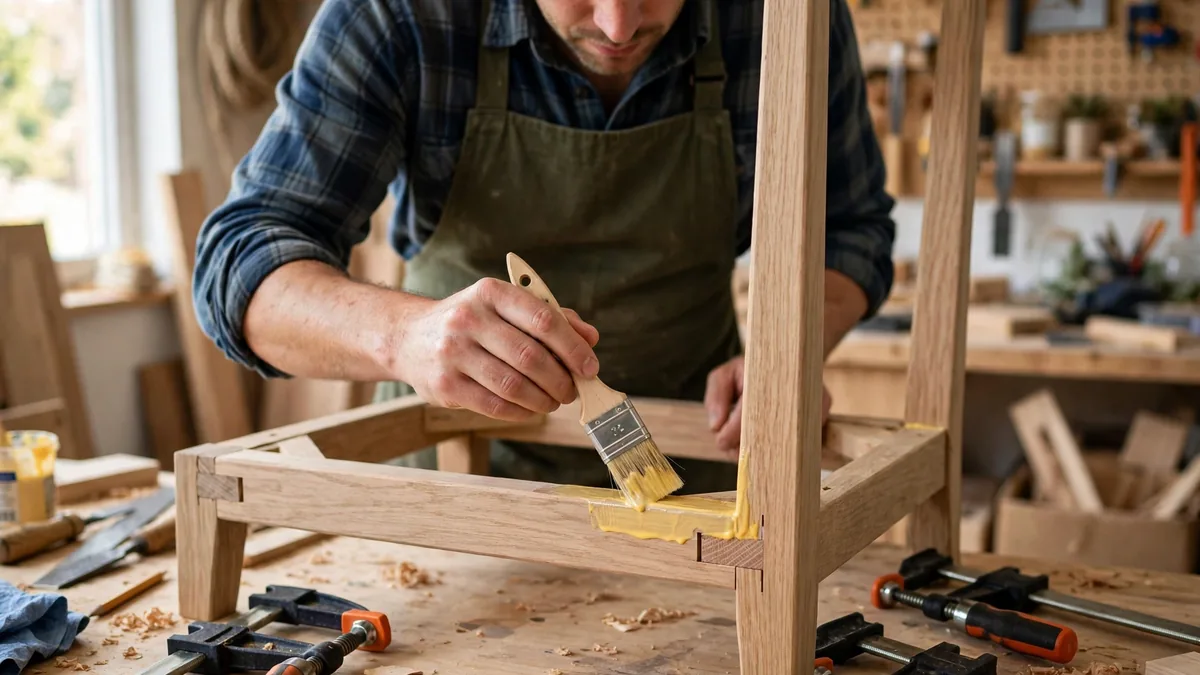
Spread a thin, even layer on one surface, or both for end grain. It should cover the whole joint without pooling. Too little starves the joint, and too much squeezes out everywhere and shows under the finish. A thin, even bead of squeeze-out when you clamp means about the right amount.
Clamping is where the joint is made. Clamps press the surfaces together and hold the joint square while it sets. Use enough clamps to spread pressure evenly, and check the piece is square: measure the diagonals of a frame, and if they match, it is square. Protect the wood with small offcuts under the jaws, because a clamp jaw leaves a dent that shows under varnish. Do not over-tighten: cranking until glue pours out starves the joint and can crush the wood. Snug is enough.
Clean up squeeze-out while the glue is wet, or wait until it is rubbery and peel it off. A damp cloth works for PVA, but it can push glue into the pores, where it shows as a pale patch under stain. Safer is to let the bead skin over for twenty minutes, then pare it away with a sharp chisel. Never sand glue off a surface you intend to stain: sanded glue smears into the pores and blocks the stain. A steady bench makes this easier, and our guide to the best workbenches of 2026 covers benches that hold a glue-up square while it cures.

Mistakes That Make Joints Fail
Gluing dusty or oily wood is the most common cause of a failed joint. Dust stops glue reaching the fibres, and oil stops it sticking at all. Brush or vacuum the joint first, and wipe oily woods with a little acetone. Gluing in a cold workshop is the second cause: most wood glues need at least 10 degrees to cure properly, and a joint glued in a freezing garage may never reach full strength. Warm the room, or wait for a warmer day.
Moving the joint too soon is the third. PVA feels dry in an hour, but it is not at full strength for a day, and a chair leg stressed after two hours can creep out of position. Leave clamps on for an hour, and the piece alone overnight. The fourth mistake is trusting glue alone where a joint needs a mechanical helper. Glue is strong, but a wide tabletop needs a proper joint or reinforcement, and a chair leg that takes a sideways load needs a dowel or tenon as well as glue. Glue and joinery work together; neither replaces the other.
Drying Times Worth Knowing
PVA is workable for ten minutes, can be unclamped after an hour, and reaches full strength in 24 hours. Polyurethane also needs a day to cure. Epoxy varies: a five-minute epoxy is handleable in an hour but needs a day for full strength, while a slow epoxy may need two days. Cold and damp slow everything down, so if you can wait until tomorrow, wait.
Your Wood Glue Checklist
- Dry-fit every joint first, and fix the fit before you open the bottle.
- Pick the glue for the job: PVA indoors, polyurethane outdoors, epoxy for gaps, hide glue for repairs.
- Brush the joint clean and, for end grain, size it with a thin first coat.
- Spread a thin, even layer and look for a thin bead of squeeze-out.
- Clamp snugly, protect the wood with offcuts, and check the piece is square.
- Leave clamps on for an hour and the piece alone overnight.
Frequently Asked Questions
Is wood glue stronger than the wood itself?
Yes, for a well-fitted joint. A PVA glue line is usually stronger than the timber around it, which is why a broken joint usually breaks in the wood next to the glue, not in the glue itself. The key is the fit: tight, clean and well clamped. A loose, gappy joint is weak no matter how good the glue is.
Can I use wood glue on its own, without screws or dowels?
For many joints, yes. A tight mortise and tenon, a dowel joint or an edge-glued panel needs no screws at all. But joints that take a sideways or pulling load, like a chair leg, are safer with a mechanical helper as well. Think of glue as the bond and the joint as the structure: the best pieces use both.
How long should I leave clamps on a glued joint?
At least an hour for PVA in a warm room, longer in the cold. The joint can be handled carefully after that, but not stressed for 24 hours. For epoxy, follow the maker’s times, and for polyurethane, leave clamps on for at least two hours. When in doubt, leave them on longer.
Why did my glued joint come apart?
The usual causes are a loose fit, a dusty or oily surface, too little glue, or moving the joint before it cured. Check the fit first: if the parts rocked before gluing, the glue never had a chance. Then check the surfaces were clean, the glue was in date, and the workshop was warm enough.
Can I glue end grain?
Yes, but it needs sizing. End grain soaks up glue like a bundle of straws, so a single coat starves the joint. Brush on a thin coat, wait a few minutes, then apply a second coat and clamp. Even better, use a joint that gives the glue more long grain to hold, such as a dovetail or a lap joint.
How do I remove dried wood glue from a surface?
For PVA, warm water and a damp cloth will soften it, and a sharp chisel will pare away a rubbery bead. For cured polyurethane or epoxy, a chisel and sandpaper are the only options, so wipe squeeze-out while it is wet. Never sand glue into a surface you plan to stain: it blocks the stain and leaves a pale patch.
The Bottom Line
Wood glue for joints that hold is ordinary PVA, used on a joint that fits, spread thin and even, clamped snugly and left alone until it cures. Match the glue to the job, size the end grain, clean the surfaces, and give the joint a day. Do that, and the furniture you build will outlast the fashion that inspired it.