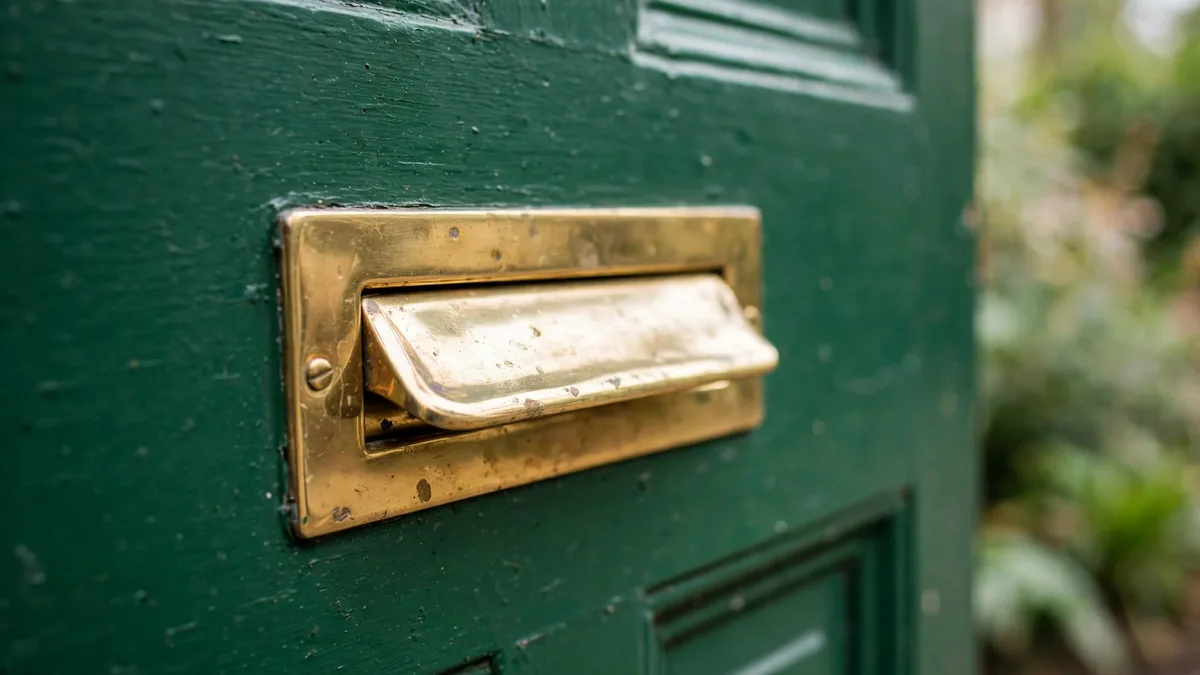
The mail slots that keep drafts out in 2026 do far more than let the post through the door. A mail slot is a hole in your front door, and every hole is a gap that cold air, rain and noise can use. The best mail slots of 2026 solve that contradiction: they open easily when the post arrives, then seal tight for the rest of the day, so your hallway stays warm, dry and quiet.
Most people never think about their mail slot until something goes wrong. The flap rattles in the wind at night, cold air pours through on a winter morning, or a heavy parcel bends the flap out of shape. A good mail slot fixes all of that, and it costs far less than most front-door upgrades. This guide compares the main types and helps you choose one.
Key Takeaways
- A brush-sealed slot blocks most of the cold air a plain flap lets through, for only a little more.
- Measure the opening before you buy: most doors use a standard slot size, but older doors often differ.
- Solid brass and stainless steel last longest; thin stamped metal bends, rattles and rusts within a couple of winters.
- An internal cover plate stops draughts and prying eyes.
- Match the finish to your other door hardware.
Why Your Mail Slot Matters More Than You Think
A standard letterbox opening is roughly 30 centimetres wide and 6 centimetres high. That is a small gap, but it is open to the weather all day and night, and on a windy day it works like a small open vent. Cold air is pushed through it by wind pressure, while warm air escapes from the top of the house. Stand by your front door on a cold morning and you will feel it at knee height.
The draught matters more than the heat loss alone. A cold current across the hallway floor makes the whole entrance feel several degrees colder than the thermostat reading, because your legs feel the moving air directly. Block the draught and the hallway feels comfortable at a lower setting. A well-sealed mail slot is one of the cheapest draught-proofing jobs in the house, and it pairs naturally with the rest of your entrance: a good outdoor mailbox for parcels and a sealed door frame make the whole doorway work as a system. A brush seal and cover plate also block the view in and stop anyone fishing for keys.
The Main Types of Mail Slot
Mail slots come in a few basic designs, each suited to a different door, climate and household. The right choice depends on how much post you receive, how exposed your front door is, and whether you can fit something to the inside of the door as well as the outside.
The Brush-Sealed Slot
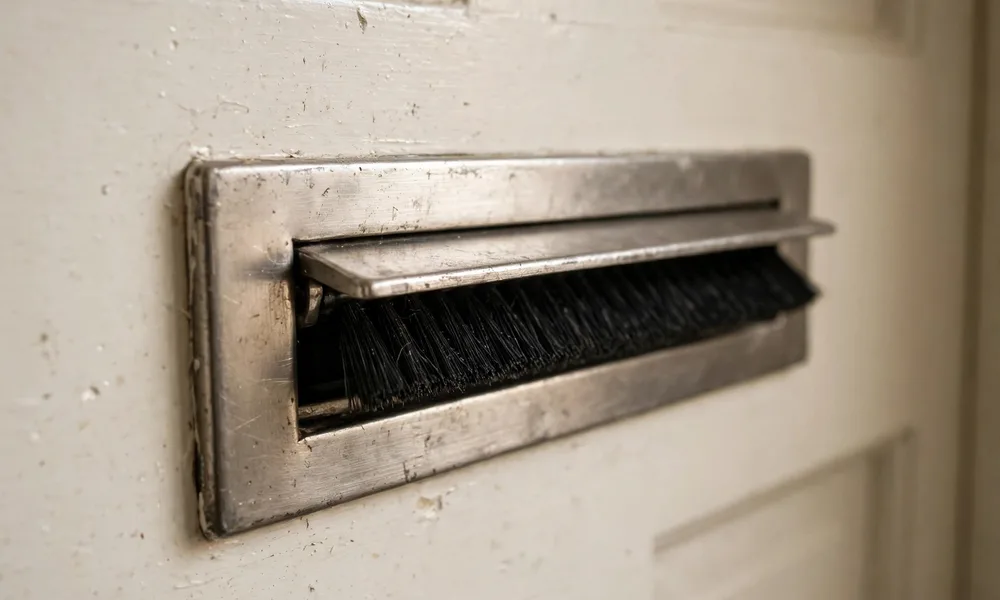
A brush-sealed slot adds dense nylon bristles inside the opening, and those bristles make it the best all-round choice for draught-proofing. Post pushes through the brushes easily, and they spring back to close the gap the moment the flap shuts. They block most of the wind, cut the rattling, and muffle street noise. The brushes wear slowly and can usually be replaced without changing the whole fitting, which makes this type the best value over a few winters.
The Double-Flap Slot
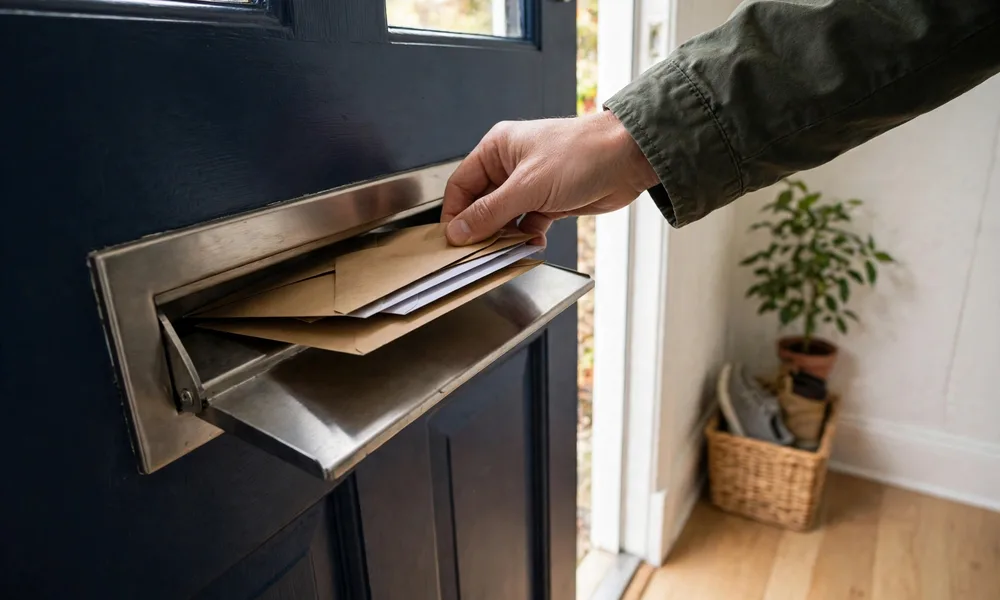
A double-flap slot has a flap on both sides of the door, with a sealed tunnel between them. It is the warmest option by a clear margin, because the two flaps and the tunnel break the wind path completely. It suits exposed doors, cold climates and anyone who feels the draught every winter. The trade-off is depth: it needs a door thick enough to hold the tunnel, and very thick post can jam if the tunnel is narrow. Measure your door thickness before ordering one.
The Internal Cover Plate Slot
An internal cover plate slot pairs a normal outside flap with a draught-excluding cover on the inside of the door. The cover lifts when post arrives and falls back under its own weight or a light spring. It is the best retrofit for a door you cannot easily modify, because the plate screws to the inside face with no cutting. It also hides the post from view through the slot, which is a real privacy gain on a door with glass panels nearby.
What to Look for When You Buy
Size and Aperture
Measure the existing opening, not the old plate. The aperture is the hole through the door, and the new slot must cover it with at least a centimetre of overlap on every side. Most modern doors use a standard opening, but older doors, custom doors and composite doors often differ. If you are cutting a fresh hole, check the door construction first: a solid timber door is easy, while a hollow or foam-filled door needs care and a proper seal around the cut edge.
Material and Finish
Solid brass is the classic choice and it ages gracefully, developing a patina that suits period doors. Stainless steel is the practical choice: it never rusts, it suits modern doors, and it is easy to wipe clean. Powder-coated finishes offer any colour you like, but cheap coatings chip at the edges and rust starts underneath. Whatever you choose, match it to the rest of the hardware. The door knobs and hinges set the tone, and a slot in a clashing finish is the first thing a visitor notices.
Seal and Spring Strength
Press the flap and feel the spring. It should close firmly and quietly, without slamming, and sit flat against the frame with no visible gap. A weak spring rattles in the wind; a spring that is too strong fights the postman and bends thin envelopes. Brushes should feel dense and even, with no bare patches, and the flap should open wide enough for a thick bundle of letters without sticking halfway.
Mail Slots Compared
The main types side by side:
| Type | Draught-proofing | Noise reduction | Best for | Typical cost |
|---|---|---|---|---|
| Standard flap | Basic | Low | Sheltered porches | Low |
| Brush-sealed | Very good | Good | Most homes | Moderate |
| Double-flap | Excellent | Excellent | Exposed, cold doors | Higher |
| Internal cover plate | Good | Good | Retrofit, privacy | Low to moderate |
The Best Mail Slots of 2026
The best mail slots are not the most expensive ones. They are the ones that seal well, open smoothly, and still look right after years of daily use. These are the strongest choices in each category.
The Brush-Sealed Slot: Best All-Rounder
The brush-sealed slot is the one most homes should buy. It cuts draughts dramatically, it is quiet, it fits a standard opening, and it costs little more than a plain flap. The best versions use dense, replaceable brushes and a solid stainless or brass plate at least 2 millimetres thick. Avoid the thinnest budget plates: they flex when post is pushed through, and the flap never sits flat again. Fit one of these and the hallway draught usually disappears the same day.
The Double-Flap Slot: Best for Cold, Exposed Doors
If your front door faces the wind and your hallway is cold all winter, the double-flap slot is worth the extra cost and the deeper fitting. Two flaps and a sealed tunnel break the wind path in a way a single flap never can, and the difference is obvious on a stormy night. Buy the version with a draught-excluding tunnel liner and check your door thickness first, since it needs around 45 millimetres of depth to fit properly.
The Internal Cover Plate: Best Retrofit
The internal cover plate is the best choice when you do not want to cut or replace anything. It screws to the inside face of the door in ten minutes, seals the slot from the warm side, and hides the post from view. It works especially well on rented homes and listed buildings, where the outside of the door cannot be changed. Pair it with a brush seal on the outside flap and you get most of the benefit of a double-flap design for a fraction of the work.
Fitting a Mail Slot
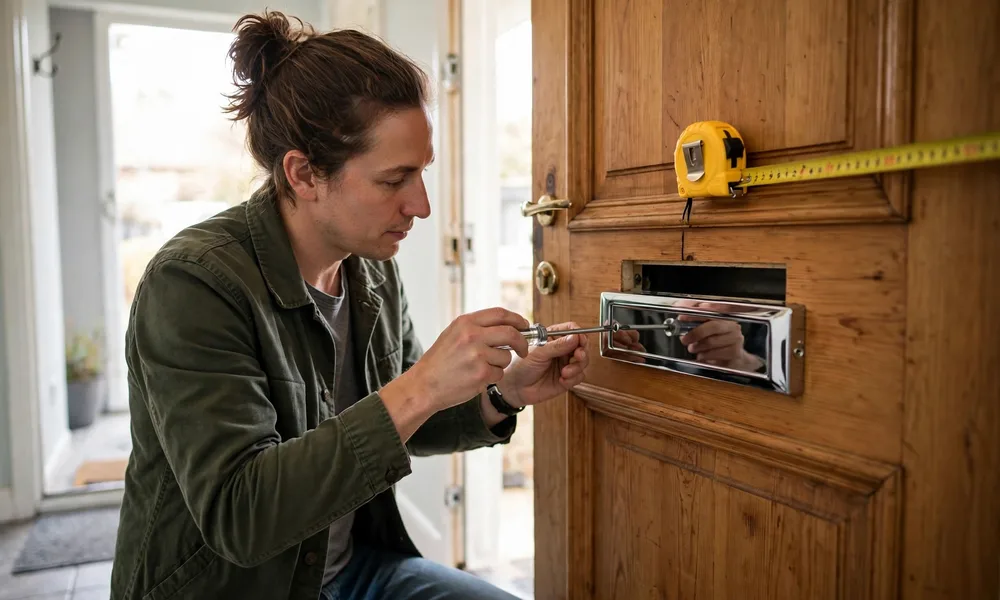
Fitting a mail slot usually takes under an hour. Remove the old fitting and clean the opening, then hold the new plate in place and mark the screw holes. If you are cutting a new opening, drill a starter hole at each corner, cut between them with a jigsaw, and seal the raw timber edge so it cannot absorb moisture. Fit the outside plate first, then the inside plate or cover, checking that the flap swings freely before you tighten the last screws.
Test the fit before you finish. Push a thick bundle of envelopes through and check that the flap closes flat and quiet, then stand inside on a windy day and feel for air around the plate; a thin bead of sealant behind it usually fixes a draught. If your door also has a large gap at the bottom, a mail slot alone will not solve it: our guide to door draft stoppers covers the other half of the job.
Mail Slot Checklist
- Measure the aperture, not the old plate, and confirm at least a centimetre of overlap on every side.
- Choose a brush-sealed slot for the best balance of warmth, quiet and price.
- Pick solid brass or stainless steel, and match the finish to your other door hardware.
- Add an internal cover plate if the door faces the street or the hallway is overlooked.
- Check the spring: firm and quiet, with the flap sitting flat when closed.
- Seal the cut edge and test with a thick bundle of post before finishing.
Frequently Asked Questions
What size mail slot do I need?
Measure the hole through your door, then choose a plate that overlaps it by at least a centimetre on all sides. Most modern doors use a standard opening, but older doors vary, so always measure first.
Will a brush-sealed slot stop all draughts?
It stops most of them. A good brush seal blocks the great majority of wind through the slot, and adding an internal cover plate gets you close to a fully sealed door. Any remaining draughts usually come from the door frame or the gap under the door.
Can I fit a mail slot to a composite or uPVC door?
Yes, but check the construction first. Composite and uPVC doors often have a reinforced or foam-filled core, so you need the right cutting tools and a proper seal around the new opening. If you are unsure, ask the door manufacturer or a locksmith before cutting.
Do mail slots make a home less secure?
A plain wide slot can be a weak point, because it offers a view and a reach into the hallway. A brush seal, an internal baffle or a cover plate removes most of that risk, so choose one of those if your lock or keys sit near the door.
How do I stop my mail slot rattling in the wind?
Rattling usually means a weak spring or a warped flap. A brush-sealed slot is much quieter because the bristles hold the flap steady, and a small foam draught strip behind the flap can silence an older fitting. If the plate itself is bent, replace it rather than trying to straighten it.
How often should I replace a mail slot?
A good brass or stainless slot lasts fifteen years or more. Replace it when the spring weakens, the flap no longer sits flat, the brushes are worn bare, or rust appears around the edges. Those are the signs the seal has gone, and with it the draught-proofing.
The Bottom Line
Brush-sealed slots suit most homes, double-flap slots suit cold and exposed doors, and cover plates suit easy retrofits. Measure your opening, buy solid metal, and fit it properly. Your hallway will feel warmer the same evening.


