Starting solids is one of the messiest, happiest milestones of the first year, and the spoon in your hand matters more than most parents expect. A good baby spoon is small, soft where it touches the mouth, easy to hold when your hands are full, and shaped so that a tiny mouth can actually get the food off it. A bad one is too deep, too hard, too long, or too slippery, and every spoonful turns into a small negotiation. The best baby spoons of 2026 are not complicated tools. They are simple, well-shaped, easy to clean, and kind to sore gums, and this guide sorts the ten types worth buying from the rest.
How to choose a baby spoon
Start with the tip. For a baby just beginning solids, usually around six months, a soft silicone tip is the safest and most forgiving choice. It is gentle on gums, it does not clink against new teeth, and it lets you scrape the last of the puree from the bowl without scratching it. Stainless steel tips suit older babies who are feeding themselves, because they are firmer, easier to clean, and better at scooping thicker foods, but they can feel cold and hard in a very young mouth.
Next, look at the bowl. A shallow, narrow bowl is easier for a small mouth to clear, and it helps you offer the right amount of food at a time, about a small mouthful rather than a heaped spoon. Deep bowls look generous but they make babies work harder, and they leave food behind in the corners. A slightly rounded bowl with a flat edge is the easiest shape to scrape clean, and it slides neatly out of a small mouth without dragging food across the chin.

1. Best overall: the soft silicone-tip spoon with a long handle
This is the spoon to buy first, and the one most families reach for every day. A soft silicone tip is gentle on gums and new teeth, a shallow bowl holds just the right amount of puree, and a long handle keeps your fingers out of the food while you feed. It works for thin first purees and for thicker mashes, it does not scratch bowls, and it is quiet when it is dropped, which matters more than it sounds at six in the morning. Look for a one-piece design with no seams where food can hide, a tip that is soft but not floppy, and a handle with enough grip to stay put in a wet hand. Buy at least four, because one will always be in the wash, one will be under the high chair, and one will be in the nappy bag.
2. Best first-stage spoon: the shallow-bowl silicone spoon
First-stage spoons are built for babies who have never eaten from a spoon before, and their defining feature is a very shallow bowl. The spoon carries only a small amount of food, which helps a baby learn to close their lips around the spoon and swallow without gagging, and it makes it easy for you to judge how much they are actually eating. The tip is extra soft, the handle is usually a little shorter than a standard spoon, and the whole thing is light enough that a baby can hold it without tiring. This is the spoon to use for the first month of solids, and many parents keep using it for thin purees long after that, because it is simply the easiest way to offer a small, controlled mouthful.
3. Best stainless steel spoon: the short-handle steel self-feeding spoon
Once your baby is around nine to twelve months and wants to hold the spoon themselves, stainless steel comes into its own. A steel spoon is firm, so it scoops thicker foods like mashed potato and porridge without bending, and it is the easiest material to clean properly, with no staining from carrots or beetroot and no lingering smells. A short handle with a chunky, easy grip suits a baby’s fist, and a small, rounded bowl is safer than a large one. The trade-off is that steel feels hard and cold at first, so introduce it gradually, and keep a silicone spoon in reserve for sore-gum days. For families who want one spoon that lasts from the first birthday well into toddlerhood, this is the strongest choice.
4. Best for self-feeding: the chunky-grip spoon with a choke guard
Self-feeding spoons are designed to be grabbed, waved, and occasionally jammed into a mouth with enthusiasm, and the best ones are built for that reality. A thick, textured handle gives a small fist something to hold, and a choke guard, a wide disc or shield near the bowl, stops the spoon going too far into the mouth. The bowl is usually shallow and slightly flexible, which helps a baby scoop food without needing a precise angle. These spoons are messier than parent-fed spoons, because the baby is in charge, but they build confidence and coordination faster than any other type. Keep two or three in rotation, and accept that the floor will need wiping.

5. Best long-handle spoon: the jar and pouch spoon
Long-handle spoons solve a specific, daily annoyance: reaching the bottom of a jar or a pouch without getting food on your knuckles. A handle of around fifteen centimetres or more lets you scrape the last of the puree out cleanly, and it keeps your hand clear of the bowl when you are feeding a baby in a high chair. The best versions pair the long handle with a soft silicone tip and a shallow bowl, so the extra length does not make the spoon hard to control. This is a parent’s spoon rather than a baby’s spoon, and it is at its best in the early months, when you are doing most of the feeding and every jar needs emptying. Buy a couple and keep one in the nappy bag.
6. Best for toddlers: the angled, bent-handle spoon
Toddlers hold a spoon differently from babies, and an angled or bent handle meets them halfway. The bend brings the bowl up towards the mouth without the wrist having to twist, which is the movement toddlers find hardest, and it cuts down on the food that slides off before the spoon arrives. The best angled spoons have a gentle bend rather than a sharp one, a handle that is easy to grip from either side, and a bowl that is a little deeper than a first-stage spoon, because toddlers eat more at a sitting. Left-handed toddlers benefit just as much as right-handed ones, so look for a spoon that is bent in a neutral way rather than shaped for one hand only. This is the spoon that turns a frustrated toddler into a proud one.
7. Best easy-clean spoon: the one-piece silicone spoon
One-piece silicone spoons have no joints, no seams, and no hidden crevices, and that makes them the easiest spoons to clean properly. Food has nowhere to hide, so a quick wash under hot water is usually enough, and most can go in the dishwasher without warping or losing their shape. The best ones are made from a single piece of food-grade silicone, with a handle that is firm enough to control and a tip that is soft enough for gums, and they come in bright colours that are easy to spot in a drawer. They do stain eventually, especially with tomato and carrot, but a stain is cosmetic, not a hygiene problem, and it does not affect the spoon’s safety. If you value a fast wash-up above all else, this is your spoon.
8. Best budget multi-pack: the simple everyday spoon set
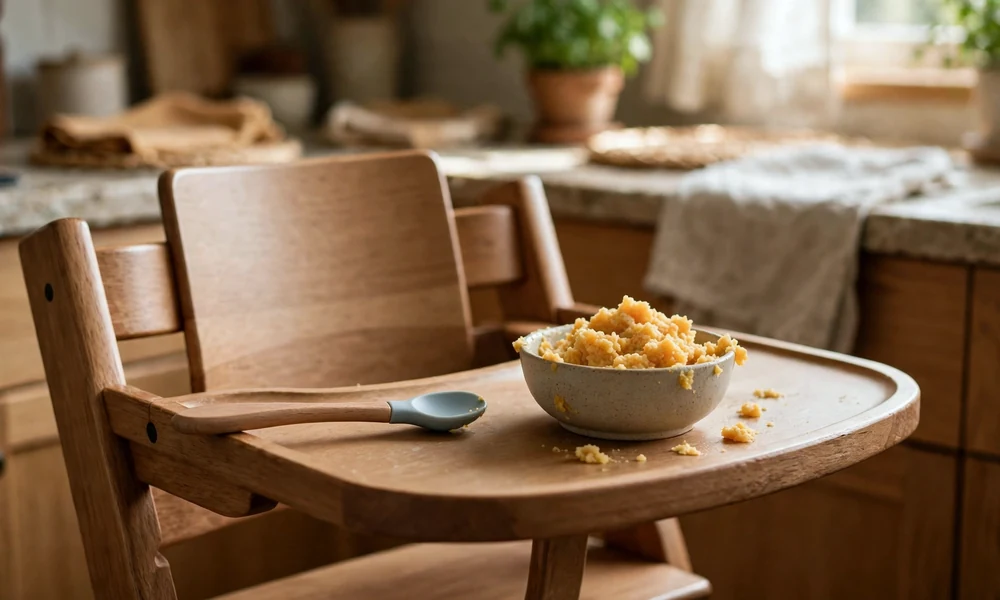
Sometimes the right answer is not a clever design but a drawer full of simple, reliable spoons. A budget multi-pack of plain silicone-tip or steel spoons costs very little, and it means you always have a clean spoon ready, one in the dishwasher, one in the bag, and one on the tray. The best budget sets keep the essentials right: a soft tip, a shallow bowl, a handle that is not slippery, and no decoration that can wear off. They will not impress anyone, and they will not last as long as a premium spoon, but they do the job honestly, and losing one does not matter. For grandparents’ houses, nurseries, and second homes, a budget multi-pack is the most practical purchase on this list.
What to buy for each stage
At around six months, start with three or four soft silicone-tip spoons with long handles and shallow bowls, and keep a couple of first-stage spoons for the earliest tastes. This is the stage where you are doing the feeding, so your comfort matters as much as the baby’s, and a long handle is worth more than any clever feature. Pair the spoons with a baby food maker if you are cooking purees at home, because smooth, well-blended food is easier to offer from a shallow spoon than lumpy food is.
From around nine months, add short-handled spoons your baby can hold, including a chunky-grip self-feeding spoon and a stainless steel spoon for thicker foods. This is the messy stage, and it helps to have plenty of spoons, plenty of bibs, and a realistic attitude to the floor. A good high chair with a wipe-clean tray makes the whole process easier, because the spoon, the bowl, and the mess all stay in one place.
Care, cleaning, and common mistakes
Wash baby spoons in hot, soapy water after every meal, and dry them fully before putting them away, because damp spoons in a closed drawer develop smells quickly. Most silicone and steel spoons are dishwasher-safe, but check the maker’s guidance, and put small spoons in the cutlery basket so they do not fall through. Sterilising is not necessary for spoons once a baby is eating solids, unless your doctor advises it, but a thorough wash is. Inspect the tip before every meal for tears, cracks, or bite marks, and throw away any spoon that is damaged, because a torn silicone tip can shed small pieces.
The most common mistake is buying a spoon that is too big. Adult teaspoons and even children’s spoons are usually too deep and too wide for a baby’s mouth, and they deliver too much food at once, which causes gagging and spills. The second mistake is buying only one or two spoons, because spoons disappear at an astonishing rate, and mealtimes are stressful enough without hunting for the clean one. The third mistake is choosing a spoon for its looks rather than its shape, because a pretty spoon with a deep bowl and a slippery handle is worse than a plain spoon that fits a small mouth. If you are building the rest of the feeding kit, a guide to baby bottles is a useful companion, because bottles and spoons are the two tools you will use at almost every feed.
Our verdict
The best baby spoon is a soft, shallow, easy-to-hold spoon that suits your baby’s age, and for most families that means starting with a silicone-tip long-handle spoon, adding a short self-feeding spoon at nine months, and moving to an angled toddler spoon after the first birthday. Buy several, keep them clean, replace them when they are damaged, and let your baby practise, because the mess is part of learning. A good spoon does not make mealtimes perfect, but it makes them easier, calmer, and a little less messy, and that is worth more than any clever feature on the packet.